
 Translate

































 | Loading... |
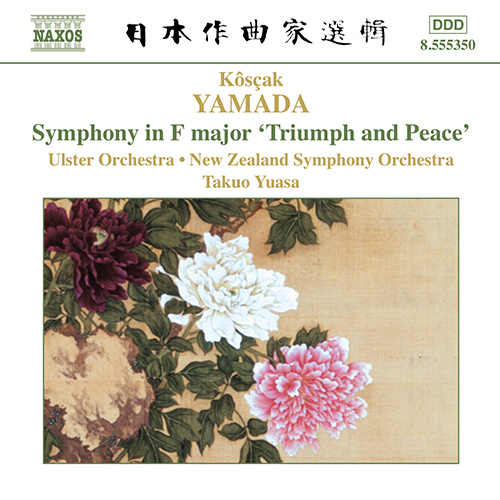
YAMADA: Symphony in F Major, 'Triumph and Peace'
Kôsçak Yamada was one of the great pioneers of 20th century Japanese music, who played a defining rôle in helping Western music take root in Japan. During his studies in Berlin with, among others, Max Bruch, Yamada composed the first-ever work for a western orchestra, the Overture in D major, and the first-ever symphony, ‘Triumph and Peace’, by a Japanese composer. Dating from 1912 and written along traditional classical lines, both works show Yamada’s indebtedness to Mozart, Beethoven, Schubert, Mendelssohn, Brahms and Dvořák. One year later, in a completely different vein, Yamada composed the two symphonic poems The Dark Gate and Madara No Hana which, while absorbing the influence of Richard Strauss, Debussy and Scriabin, were written freely with no restraints imposed by his teachers. It is possible to hear in these two works a prototype of Japanese composition which was eventually to lead to the music of Toru Takemitsu.
Tracklist

Yuasa, Takuo (Conductor)
|
 |
1 | Overture in D Major | 03:32 |
Yuasa, Takuo (Conductor)
Yuasa, Takuo (Conductor)
|
|
2 | I. Moderato | 08:46 |
Yuasa, Takuo (Conductor)
|
|
3 | II. Adagio non tanto e poco marciale | 11:22 |
Yuasa, Takuo (Conductor)
|
|
4 | III. Poco vivace | 05:48 |
Yuasa, Takuo (Conductor)
|
|
5 | IV. Adagio molto - Molto allegro e trionfante | 10:21 |
Yuasa, Takuo (Conductor)
Yuasa, Takuo (Conductor)
|
|
6 | Symphonic Poem, "The Dark Gate" | 10:53 |
Yuasa, Takuo (Conductor)
Yuasa, Takuo (Conductor)
|
|
7 | Symphonic Poem, "Madara No Hana" | 07:40 |
Yuasa, Takuo (Conductor)
Loading...