
 Translate
































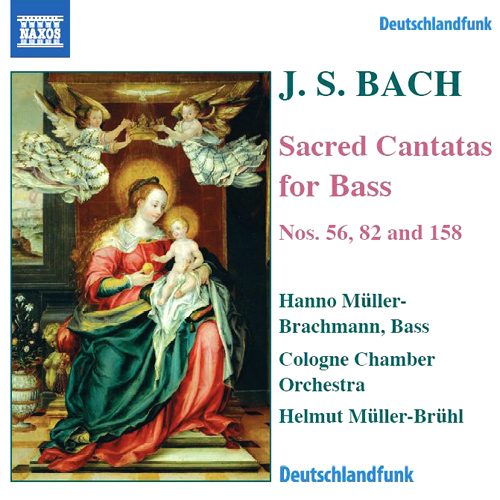

Composer(s): Bach, Johann Sebastian
Lyricist(s): Albinus, Johann Georg; Bible - New Testament; Franck, Johann; Luther, Martin
Conductor(s): Müller-Brühl, Helmut
Orchestra(s): Cologne Chamber Orchestra
Choir(s): Siegen Collegium Vocale
Artist(s): Müller-Brachmann, Hanno
Label: Naxos
Genre: Choral - Sacred; Vocal
Period: Baroque
Catalogue No: 8.557616
Barcode: 747313261628
Release Date: 11/2006
BACH, J.S.: Bass Cantatas, BWV 56, 82, 158
Intimately bound up with the Lutheran tradition, Bach�s sacred cantatas are among his greatest, most heart-felt and life-affirming works. Ich will den Kreuzstab gerne tragen (I will gladly carry the suffering cross), with its repeated use of the metaphor of life as a voyage over troubled waters, depicts man�s suffering and the joyful expectation of redemption. Ich habe genug (I have enough!), while expressing contempt for earthly suffering, includes one of Bach�s most popular arias, the deeply moving Schlummert ein (Close now, ye tired and weary eyelids), with its fervent expression of the hope of �blessed rest and perfect peace� in the afterlife.
Tracklist

Bach, Johann Sebastian
Franck, Johann - Lyricist
Franck, Johann - Lyricist
Cologne Chamber Orchestra (Orchestra)
Müller-Brachmann, Hanno (bass-baritone)
Müller-Brühl, Helmut (Conductor)
Siegen Collegium Vocale (Choir)
Müller-Brachmann, Hanno (bass-baritone)
Müller-Brühl, Helmut (Conductor)
Siegen Collegium Vocale (Choir)
|
 |
1 | Aria: Ich will den Kreuzstab gerne tragen (Bass) | 06:51 |
Cologne Chamber Orchestra (Orchestra)
Müller-Brachmann, Hanno (bass-baritone)
Müller-Brühl, Helmut (Conductor)
Müller-Brachmann, Hanno (bass-baritone)
Müller-Brühl, Helmut (Conductor)
|
|
2 | Recitative: Mein Wandel auf der Welt (Bass) | 01:56 |
Müller-Brachmann, Hanno (bass-baritone)
Müller-Brühl, Helmut (Conductor)
Cologne Chamber Orchestra (Orchestra)
Müller-Brühl, Helmut (Conductor)
Cologne Chamber Orchestra (Orchestra)
|
|
3 | Aria: Endlich, endlich wird mein Joch (Bass) | 06:35 |
Müller-Brachmann, Hanno (bass-baritone)
Müller-Brühl, Helmut (Conductor)
Cologne Chamber Orchestra (Orchestra)
Müller-Brühl, Helmut (Conductor)
Cologne Chamber Orchestra (Orchestra)
|
|
4 | Recitative and Arioso: Ich stehe fertig und bereit (Bass) | 01:38 |
Müller-Brühl, Helmut (Conductor)
Müller-Brachmann, Hanno (bass-baritone)
Cologne Chamber Orchestra (Orchestra)
Müller-Brachmann, Hanno (bass-baritone)
Cologne Chamber Orchestra (Orchestra)
|
|
5 | Chorale: Komm, o Tod, du Schlafes Bruder (Chorus) | 01:25 |
Müller-Brühl, Helmut (Conductor)
Cologne Chamber Orchestra (Orchestra)
Siegen Collegium Vocale (Choir)
Cologne Chamber Orchestra (Orchestra)
Siegen Collegium Vocale (Choir)
Bach, Johann Sebastian
Bible - New Testament - Lyricist
Bible - New Testament - Lyricist
Cologne Chamber Orchestra (Orchestra)
Müller-Brachmann, Hanno (bass-baritone)
Müller-Brühl, Helmut (Conductor)
Müller-Brachmann, Hanno (bass-baritone)
Müller-Brühl, Helmut (Conductor)
|
|
6 | Aria: Ich habe genug (Bass) | 06:58 |
Cologne Chamber Orchestra (Orchestra)
Müller-Brachmann, Hanno (bass-baritone)
Müller-Brühl, Helmut (Conductor)
Müller-Brachmann, Hanno (bass-baritone)
Müller-Brühl, Helmut (Conductor)
|
|
7 | Recitative: Ich habe genug! Mein Trost ist nur allein (Bass) | 01:11 |
Müller-Brühl, Helmut (Conductor)
Müller-Brachmann, Hanno (bass-baritone)
Cologne Chamber Orchestra (Orchestra)
Müller-Brachmann, Hanno (bass-baritone)
Cologne Chamber Orchestra (Orchestra)
|
|
8 | Aria: Schlummert ein, ihr matten Augen (Bass) | 09:06 |
Cologne Chamber Orchestra (Orchestra)
Müller-Brachmann, Hanno (bass-baritone)
Müller-Brühl, Helmut (Conductor)
Müller-Brachmann, Hanno (bass-baritone)
Müller-Brühl, Helmut (Conductor)
|
|
9 | Recitative: Mein Gott! wenn kommt das schöne: Nun! (Bass) | 00:51 |
Müller-Brachmann, Hanno (bass-baritone)
Müller-Brühl, Helmut (Conductor)
Cologne Chamber Orchestra (Orchestra)
Müller-Brühl, Helmut (Conductor)
Cologne Chamber Orchestra (Orchestra)
|
|
10 | Aria: Ich freue mich auf meinen Tod (Bass) | 03:36 |
Müller-Brühl, Helmut (Conductor)
Müller-Brachmann, Hanno (bass-baritone)
Cologne Chamber Orchestra (Orchestra)
Müller-Brachmann, Hanno (bass-baritone)
Cologne Chamber Orchestra (Orchestra)
Bach, Johann Sebastian
Luther, Martin - Lyricist
Albinus, Johann Georg - Lyricist
Luther, Martin - Lyricist
Albinus, Johann Georg - Lyricist
Cologne Chamber Orchestra (Orchestra)
Müller-Brachmann, Hanno (bass-baritone)
Müller-Brühl, Helmut (Conductor)
Siegen Collegium Vocale (Choir)
Müller-Brachmann, Hanno (bass-baritone)
Müller-Brühl, Helmut (Conductor)
Siegen Collegium Vocale (Choir)
|
|
11 | Recitative: Der Freide sei mit dir (Bass) | 01:42 |
Cologne Chamber Orchestra (Orchestra)
Müller-Brachmann, Hanno (bass-baritone)
Müller-Brühl, Helmut (Conductor)
Müller-Brachmann, Hanno (bass-baritone)
Müller-Brühl, Helmut (Conductor)
|
|
12 | Aria with Chorale: Welt, ade, ich bin dein mude (Bass, Soprano) | 06:01 |
Cologne Chamber Orchestra (Orchestra)
Müller-Brachmann, Hanno (bass-baritone)
Müller-Brühl, Helmut (Conductor)
Müller-Brachmann, Hanno (bass-baritone)
Müller-Brühl, Helmut (Conductor)
|
|
13 | Recitative and Arioso: Nun Herr, regiere meinen Sinn (Bass) | 01:16 |
Müller-Brühl, Helmut (Conductor)
Müller-Brachmann, Hanno (bass-baritone)
Cologne Chamber Orchestra (Orchestra)
Müller-Brachmann, Hanno (bass-baritone)
Cologne Chamber Orchestra (Orchestra)
|
|
14 | Chorale: Hier ist das rechte Osterlamm (Chorus) | 01:10 |
Siegen Collegium Vocale (Choir)
Müller-Brühl, Helmut (Conductor)
Cologne Chamber Orchestra (Orchestra)
Müller-Brühl, Helmut (Conductor)
Cologne Chamber Orchestra (Orchestra)
Total Playing Time: 50:16