
 Translate































Composer(s): Villa-Lobos, Heitor
Arranger(s): McGhee, Lorna; Nicholls, Alison
Ensemble(s): Mobius
Artist(s): Honore, Philippe; McGhee, Lorna; Nicholls, Alison; Pillai, Ashan; Stirling, Michael
Label: Naxos
Series: Latin American Classics
Genre: Chamber Music
Period: 20th Century
Catalogue No: 8.557765
Barcode: 747313276523
Release Date: 07/2006
 | Loading... |
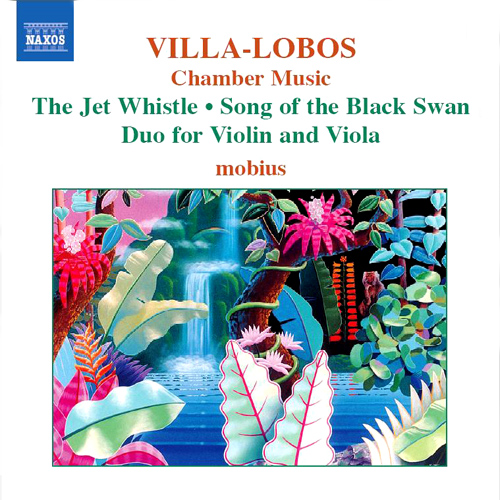
VILLA-LOBOS: Chamber Music
Heitor Villa-Lobos put Brazilian music on the cultural map with an output that can be compared to the vastness and diversity of his own country. This survey of Villa-Lobos’ chamber works spans his entire career, from the attractively wistful Song of the Black Swan (1917) to the refined, and rarely-recorded Quintette instrumental (1957). The Duo for Violin and Viola (1946), as substantial a piece as those by Mozart and Martinů, includes one of the composer’s most haunting Adagios.
Tracklist

Villa-Lobos, Heitor
McGhee, Lorna (flute)
Stirling, Michael (cello)
Stirling, Michael (cello)
|
 |
1 | I. Allegro non troppo | 03:08 |
McGhee, Lorna (flute)
Stirling, Michael (cello)
Stirling, Michael (cello)
|
|
2 | II. Adagio | 03:00 |
McGhee, Lorna (flute)
Stirling, Michael (cello)
Stirling, Michael (cello)
|
|
3 | III. Vivo | 03:35 |
McGhee, Lorna (flute)
Stirling, Michael (cello)
Stirling, Michael (cello)
Mobius (Ensemble)
|
|
4 | I. Allegro non troppo | 04:05 |
Mobius (Ensemble)
|
|
5 | II. Lento | 07:16 |
Mobius (Ensemble)
|
|
6 | III. Allegro poco moderato | 05:07 |
Mobius (Ensemble)
Honore, Philippe (violin)
Nicholls, Alison (harp)
Nicholls, Alison (harp)
|
|
7 | O canto do cysne negro (Song of the Black Swan) | 02:52 |
Honore, Philippe (violin)
Nicholls, Alison (harp)
Nicholls, Alison (harp)
Honore, Philippe (violin)
Pillai, Ashan (viola)
Pillai, Ashan (viola)
|
|
8 | I. Allegro | 06:44 |
Honore, Philippe (violin)
Pillai, Ashan (viola)
Pillai, Ashan (viola)
|
|
9 | II. Adagio | 05:10 |
Honore, Philippe (violin)
Pillai, Ashan (viola)
Pillai, Ashan (viola)
|
|
10 | III. Allegro agitato | 04:34 |
Honore, Philippe (violin)
Pillai, Ashan (viola)
Pillai, Ashan (viola)
Villa-Lobos, Heitor
Nicholls, Alison - Arranger
Nicholls, Alison - Arranger
McGhee, Lorna (flute)
Nicholls, Alison (harp)
Nicholls, Alison (harp)
|
|
11 | No. 2. Vida formosa (Beautiful Life) | 02:48 |
McGhee, Lorna (flute)
Nicholls, Alison (harp)
Nicholls, Alison (harp)
|
|
12 | No. 3. Nesta rua (On this Street) | 02:27 |
McGhee, Lorna (flute)
Nicholls, Alison (harp)
Nicholls, Alison (harp)
Villa-Lobos, Heitor
McGhee, Lorna - Arranger
Nicholls, Alison - Arranger
McGhee, Lorna - Arranger
Nicholls, Alison - Arranger
McGhee, Lorna (flute)
Nicholls, Alison (harp)
Nicholls, Alison (harp)
|
|
13 | Serestas: No. 5. Modinha (arr. L. McGhee and A. Nicholls for flute and harp) | 01:46 |
McGhee, Lorna (flute)
Nicholls, Alison (harp)
Nicholls, Alison (harp)
Villa-Lobos, Heitor
Nicholls, Alison - Arranger
Nicholls, Alison - Arranger
McGhee, Lorna (flute)
Nicholls, Alison (harp)
Nicholls, Alison (harp)
|
|
14 | Chanson de cristal (Song of Crystal) (arr. flute and harp) | 03:28 |
McGhee, Lorna (flute)
Nicholls, Alison (harp)
Nicholls, Alison (harp)
McGhee, Lorna (flute)
Nicholls, Alison (harp)
Nicholls, Alison (harp)
|
|
15 | Modinhas e cancoes, series I: No. 1. Cancao do Marinheiro (arr. flute and harp) | 03:18 |
McGhee, Lorna (flute)
Nicholls, Alison (harp)
Nicholls, Alison (harp)
Total Playing Time: 59:18
Loading...