
 Translate

































 | Loading... |
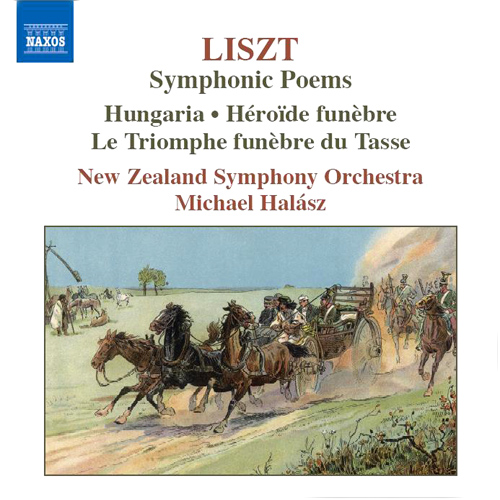
LISZT: Symphonic Poems, Vol. 4
In his 13 symphonic poems, inspired by the visual or literary arts, Liszt broke away from the standard four-movement-symphony, to create a one-movement composition of frequently contrasting moods unified through thematic transformations of a single, recurring musical idea. This recording includes Hungaria, a patriotic reflection on the Hungarian uprising of 1848, and the sombre Héroïde funèbre, described by Liszt as casting a ‘transfiguring veil over the tomb of the brave … in the wars and slaughter that follow one another.’ Le Triomphe funèbre du Tasse was intended as an epilogue to Liszt’s earlier symphonic poem on the tragic fate of the sixteenth-century Italian poet Torquato Tasso. Volumes 1-3 of the symphonic poems conducted by Michael Halász are available on 8.550487, 8.553355 and 8.557846.
Tracklist

Halász, Michael (Conductor)
|
 |
1 | Hungaria, S103/R420 | 21:52 |
Halász, Michael (Conductor)
Halász, Michael (Conductor)
|
|
2 | Heroide Funebre, S102/R419 | 23:19 |
Halász, Michael (Conductor)
Halász, Michael (Conductor)
|
|
3 | 3 odes funebres, S112/R429: No. 3. Le triomphe funebre du Tasse | 13:05 |
Halász, Michael (Conductor)
Loading...