
 Translate

































Composer(s): Not Applicable, na
Artist(s): Timson, David
Label: Naxos Educational
Series: Naxos Opera Explained
Genre: Music Education
Catalogue No: 8.558172
Barcode: 636943817223
Release Date: 04/2005
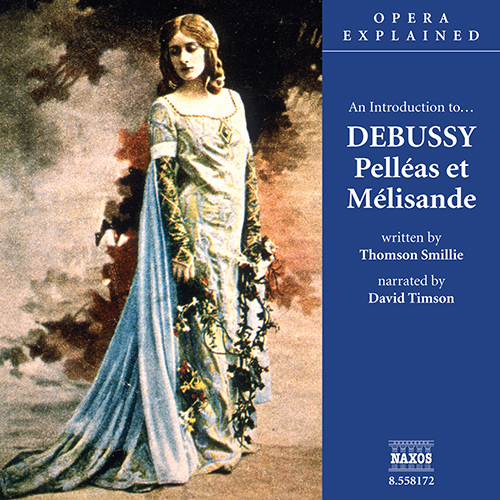
Opera Explained: DEBUSSY - Pelleas et Melisande (Smillie)
Dating from the last decade of the nineteenth century, Pelléas et Mélisande points the way into the twentieth century. The score is hauntingly beautiful, but there is more to the work than shifting panels of elusive, impressionistic sound. Debussy retains the text of Maeterlinck’s play, allowing its linguistic subtleties to be matched perfectly by the musical detail. Taking a little time to explore the romantic, elusive world of this opera is particularly rewarding.
Tracklist

Not Applicable, na
Timson, David (reader)
|
 |
1 | Introduction to Claude Debussy | 04:08 |
Timson, David (reader)
|
|
2 | The influence of Wagner and atonality | 03:14 |
Timson, David (reader)
|
|
3 | Debussy's childhood and development | 05:47 |
Timson, David (reader)
|
|
4 | Maurice Maeterlinck | 04:50 |
Timson, David (reader)
|
|
5 | The story and opening | 05:28 |
Timson, David (reader)
|
|
6 | Golaud encounters Melisande | 05:07 |
Timson, David (reader)
|
|
7 | King Arkel's acceptance and the entrance of Pelleas | 05:44 |
Timson, David (reader)
|
|
8 | Pelleas and Melisande together | 04:41 |
Timson, David (reader)
|
|
9 | Golaud lies ill | 05:12 |
Timson, David (reader)
|
|
10 | Melisande at the window and Golaud's suspicion | 06:15 |
Timson, David (reader)
|
|
11 | Golaud uses Yniold | 04:45 |
Timson, David (reader)
|
|
12 | Act IV: Pelleas to depart; Arkel and Melisande; Golaud's anger | 05:51 |
Timson, David (reader)
|
|
13 | Yniold's scene; the love duet | 04:46 |
Timson, David (reader)
|
|
14 | Pelleas: 'We have broken the ice with red hot irons' | 06:07 |
Timson, David (reader)
|
|
15 | Act V | 06:48 |
Timson, David (reader)
Total Playing Time: 01:18:43