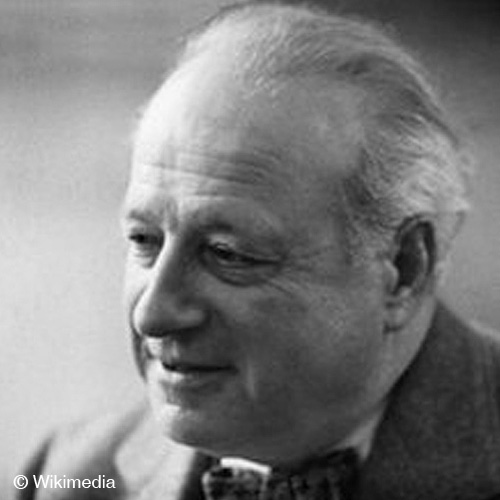
Celtic Tiger of C19th piano: William Vincent Wallace (1812–1865)
William Vincent Wallace |
Born into a musical family in Waterford, Ireland, William Vincent Wallace was a wandering, restless personality who traversed the world as the “Australian Paganini”, an international virtuoso and composer of considerable renown. In his wake, tales of romantic trysts, improbable adventures, drama and deceit provided a smokescreen which has effectively clouded his memory even today. Against this backdrop, and aside from a parallel and brilliantly successful career as a composer of opera, Wallace rode the wave of popularity of C19th piano—an instrument which became as indispensable to the family parlour as it was to the concert hall, and one which created a never ending demand for his free flowing melodic voice and virtuosic flair.
Tales of grappling with tigers, whale hunting, duels at dawn and polygamy with New Zealand natives all fed the legend that was the touring celebrity virtuoso, and certainly the brilliance of his performance on both violin and piano never failed to disappoint his audiences as he made his way across Australia and the Americas. Yet, as with life, while his fiendishly difficult high-wired acts tended to dominate public awareness; truly heartfelt, well-crafted works were being turned out by a man who could be by contrast quiet, modest, half dreaming and somewhat subdued by his very nature.
A remarkable figure in C19th musical circles, Wallace left his native Ireland for firstly Australia, and then the Americas. The Australians made him their “Australian Paganini”, a title which stayed with him throughout his life. While in Australia he not only opened a Music Academy and an Australian Musical Repository; but also founded the first Australian Music Festival in Sydney. Reaching America, having escaped debts largely incurred from importing pianos into Australia, Wallace then created a stir from Valparasio, through New Orleans to the East Coast: “New York is alive with a new musical prodigy, Vincent Wallace. There is no doubt that he is the best pianist ever heard in this country” New York Mirror.
Time and again we hear of his brilliant fantasias on La Cracovienne and d’Halevy’s L’Eclair being programmed for the concert hall—hugely successful virtuoso works in the grand style which started life in concerto form. They were performed not only by Wallace himself, but also by names such as Arabella Goddard, while virtuosos of the caliber of Eugene d’Albert incorporated Wallace’s operatic melodies into concert pieces proudly bearing their own name.
Yet Wallace also wrote many nocturnes, romances, mazurkas and valses which made their way into the salons where the piano in his day flourished. Often dreamy, intense and deeply heartfelt, they show an altogether different side to his musical make-up. Especially the nocturnes express these qualities, and Le Chant des Oiseaux, Nocturnes Dramatique and Melodic and Le Zephyr bear testament to this with some truly exquisite moments. The otherworldly elements that consistently fall in his Celtic Fantasies, and the well-crafted and inventive elements of the Mazurkas also show exceptional qualities.
Wallace had large hands with long, yet tapered fingers—very much like Liszt’s, and, just as Liszt had been himself, Wallace was directly influenced by the great virtuoso genius Paganini. Hearing Paganini perform at the Dublin Festival of 1832 had a profound impact on Wallace’s future, and while clearly influencing his violin playing, it also undoubtedly had considerable effect on his music for piano. Some of the pages are black with notes. There are fiendish skips of over two 8ves to be taken at lightening speed, pages at a time of repeated notes and alternating tenths and melodies surrounded by intricate textures, spanning several octaves at a time:
“He performs upon the piano a grand introduction and variations on the theme of the Cracovienne, composed by himself. The instrument becomes a full orchestra, under his hands, which seems multiplied into a dozen; while in the rapid passages, his fingers are invisible as the spokes on a locomotive wheel in full career. He has no left hand, but two right ones, equally independent of each other…” New York Mirror, Nathaniel Parker Willis
All of this is even more extraordinary when the fact that he was often regarded an even more brilliant violinist is taken into account. However, as musical fashions tend often to dictate musical offerings, it was the piano which ultimately won over Wallace’s attention; and so much so, that he also became interested in its new developments, fast evolving in America at the time. He experimented with a new harmonic pedal by Edward Walker, for which he wrote a nocturne, and was involved with Spencer Driggs in the Wallace Piano Forte Company, which featured a new design of frame. All of this represented a keen interest in the instruments capabilities, which he fully exploited with the sheer resourcefulness and joy found in much of his piano writing. Occasionally Wallace would push this aspect too far, and pieces such as his Winter Polka or the Concert Polkas tend to be light on content and development and as a result exist mainly to amuse the ear.
Of course, not all the music is fiendish or intended for the concert hall, and there are many charming parlour pieces intended for domestic use, which sold in great numbers—often under different titles and in different keys, depending on the publisher.
The many light waltzes he wrote also contain titles such as La Mexicana and La Chilena, and he incorporated Peruvian melodies into his piano music, most unusually for the time. This aspect of course was echoed in his famous opera Maritana, which sensationally incorporated elements of spanish dance music. On the piano, his Jaleo de Jerez emulates this most successfully, and is a highly colourful virtuosic show piece, while his great Maritana piano fantasie evokes all these elements present in his famous opera bearing that name.
In the many operatic fantasies he produced, full use of piano resource and inventiveness prove a composer who can hold his own with Liszt. As such, I like to think of Wallace as not only the Australian Paganini, but also an Irish Liszt, and one who wrote an impressive and worthwhile body of piano music reflective of his life, his times and the golden age of piano music. While his influences were clearly for the most part Chopin and his contemporaries, Wallace’s own influence can be traced through to Gottschalk in America, Grainger in Australia and from John Ireland to Albert Ketelbey in The British Isles.
It is extraordinary to think that a composer who is noted in Groves as being paid for a concert with one hundred sheep was nevertheless accomplished enough to be paid $100 for a composition, of any length, by his American publishers William Hall. At the time of his death, The Illustrated London News wrote that his operas, “his numerous songs, and pieces for the pianoforte, which are well known to the public, have given him a place in the highest rank of English musicians”. Hopefully in his Bicentennial year some of that due respect will be his again.
Rosemary Tuck
Reference:
Andrew Lamb: William Vincent Wallace Composer, Virtuoso and Adventurer
Peter Jaggard: CD notes to Naxos Operatic Fantasies and Paraphrases 8.572774 and Celtic Fantasies 8.572775