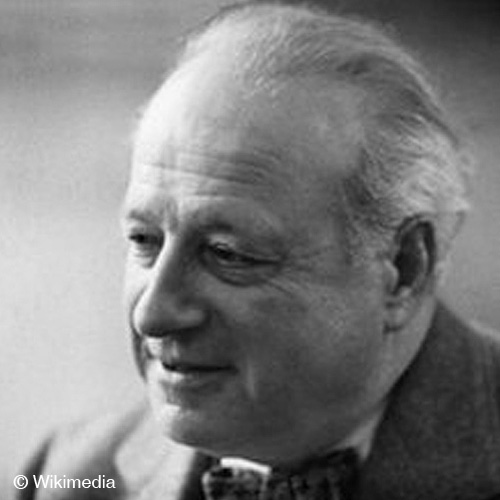
Next month conductor Marin Alsop will answer your questions.
Submit your enquiries for the Maestra at the bottom of the page!
|
Q: Do you have any pets?
A: A wonderful,
five-year-old, female, cinnamon-colored Labrador retriever named “Aza”.
Q: What
is your nickname?
A: It
really depends where I am. In Kiev or Helsinki, having a “Ted” is
already greatly exotic! In Warsaw, I get a few “Tadyu”s. In principle,
although I have been known as “Tedyk” or “Teddy” by those closest to
me, I still
find quite remarkable the degree of respect, which is not a bad thing,
colleagues and audience members show towards the conductor. In other
words, “Mr. Kuchar” or “Maestro” are extremely common when visiting an
orchestra for the first time, yet these are “titles” which I attempt to
discourage once we have gone beyond the initial greeting.
Q:
When you are preparing a piece for a performance or for a recording, to
what extent do you listen to other recordings of the work? Do you rely primarily on the score?
A: I am going to be
absolutely honest on this one, especially because I am extremely
discouraged by colleagues who swear that they, under no circumstances,
listen to other recordings before performing a work for the first time
and “only rely on the score”. If you go into an attorney’s office, you
can often see walls and walls of journals and publications, which these
professionals rely upon on a regular basis. The same can be said about
people in the medical profession, not to mention many others. Do I rely
on recordings when preparing a new work? Absolutely not! Do I listen to
existing recordings when preparing a work for the first time?
Absolutely! It would be pure ignorance not to. We are very blessed, in
the age of the compact disc and an ultra-competitive recording
industry, to have access to just about every recording ever committed
to “tape”. For any conductor, or musician, how can you approach Mozart,
Haydn or Beethoven and ignore the lifetime of experience of Szell,
Sibelius and Berglund, Shostakovich and the personal relationships of
Mravinsky, Oistrakh or Rostropovich, and so on? I was very fortunate,
in my relative “youth” to have studied and later performed in
Cleveland, where there could not have been a stronger tradition and
feeling of ownership of the central-European literature - the ghost of
George Szell was present at every turn, even when it was only Lorin
Maazel who was to be seen! During
my nearly five years in Helsinki, nowhere was there a more direct
contact and tradition between musicians and composer than those
musicians had with Sibelius. In Kiev, there are still plenty of
musicians today who speak about their collaborations with Shostakovich,
Oistrakh, Mravinsky and Kondrashin as though it were yesterday. I feel,
and am, very fortunate to have had a priceless education and
professional experience. I never listen to recordings to imitate or
copy, but to be educated and informed about traditions of the past and
approaches of the present.
Q:
I greatly admire your recordings of Prokofiev's works, especially the
symphonies. Did you do a great deal of study and research before
you began the symphony cycle? Which symphony provided the
greatest challenge?
A: As a Ukrainian, a musician who
has been genetically obsessed with the entire Slavic literature from
birth (in my earliest years, often by the force of parents and
grandparents!), I have long felt the closest contact with the entire
output of Prokofiev. As a listener and performer, much of this
literature has been a part of my life. As an orchestral musician, the
“Classical” and Fifth Symphonies, “Romeo and Juliet” and many others
are as standard a part of concert life today as the Beethoven
symphonies. On the other hand, the genius and originality of the
Second, Third and Fourth Symphonies had long obsessed me, prior to our
recordings. My goodness ... try and program these works in concert
today, especially in the USA, and see how your mental stability or
attitude towards “fiscal responsibility” are questioned! Every one of
the symphonies represents such a different extreme of Prokofiev’s
creativity. As far as the National Symphony Orchestra of Ukraine was
concerned, they had a degree of experience with the First and Fifth
Symphonies, performed the Sixth on one occasion, with Mravinsky, and
had performed the Seventh once, approximately a decade prior to my
arrival ... there was no record of the orchestra having ever performed
the Second, Third or Fourth! These may be the three “children” I took
the greatest pride and responsibility in doing absolute justice to,
because there was no doubt as to their genius and the need for
responsibility towards their advocacy. That is my feeling today. If I
reveal to you my reflections during the mid-1990s, when the symphonies
were recorded, it was the Third which I was most obsessive about.
Q:
Which one of Prokofiev's symphonies do you listen to most often while
at home? What is your second favourite?
A: This is a difficult question,
because I listen a lot and may not be completely happy with my answer!
I
find that once I begin a rehearsal period with a particular work or
have performed it frequently within a short span of time, recordings
sometimes irritate me, only because much time and thought has been
given to the work I am responsible for. As I said previously, the
genius and originality of the Second, Third and Fourth Symphonies had
long obsessed me and it saddens me that it is quite difficult to
program them nowadays. I love the Third Symphony but am especially
proud of our recordings of the Second and Fourth.
Q:
What is the general public's reaction in the Russian states to the
music of Prokofiev and Shostakovich? Do they hold the music in very
high esteem?
A: Honestly? I’ve heard just about
everything regarding Prokofiev. The “Classical” and Fifth Symphonies,
“Romeo and Juliet”, the two Violin Concertos and Third Piano Concerto
are regarded as sacred. The Second and Third Symphonies drove the
musicians, in many cases, to insanity. Especially in these two
symphonies, the writing for the violins is often very “pianistic” and
awkward. In other words, what Prokofiev, a phenomenal pianist, could
achieve in the upper octaves of his own instrument did not always
translate into his orchestral writing with the same degree of
simplicity or practicality. I believe it is most accurate to say that
Shostakovich is regarded as a sacred figure, Prokofiev a
highly-respected one.
Q:
With your recorded repertoire ranging from mainly Russian symphonic
(plus your excellent Martinu), to many of the great American 20th
century works, are there any British, French, German, or Scandinavian
pieces that you would really like to record?
A: Thank you for this question,
which has several answers. Firstly, it is one thing to perform a
wide-ranging repertoire in concert, whether it be in Kiev, Berlin,
Fresno or Amsterdam but certainly another to record. As you well know,
virtually every recording I have made has been done with the NSO of
Ukraine and Mr. Heymann and those of us involved in the planning of
each recording have done well in selecting repertoire suited for the
particular strengths of the artists in question. You ask about French
repertoire, of which I am extremely fond. Faure and Chausson were two
of the most “symphonic” composers of chamber music (I’ve often thought
of Faure’s G minor Piano Quartet and Chausson’s Piano Quartet and
Concerto for Violin, Piano and String Quartet as several of the most
symphonic works in the chamber music literature) but were quite
selective when it came to composing for large orchestra. I would
love to record the Symphony and orchestral works of Chausson, the
Symphonies of Roussel, numerous works of Ravel and Debussy. As a result
of my years in Cleveland, I have a very strong commitment to Haydn,
Mozart, Beethoven and Brahms and perform these with great frequency. I
am terribly fond of the Czech musical culture, often influenced by
Ukrainian idioms, and would love to explore much more Martinu, Dvorak,
Janacek and Smetana. Sibelius and Nielsen appear frequently in
my programming. The most important issue for me, which is a moral one,
is that there are very few of the abovementioned which I would record
in Kiev. There is no need to produce a mediocre recording and although
the NSO of Ukraine
has many strengths, Soviet cultural practices denied the training and
exposure to much repertoire we take for granted (you may have a hard
time believing that I conducted the Ukrainian premieres, in the 1990s,
of works such as the Mahler Symphony No. 2, Sibelius Symphonies Nos. 2,
4 and 7, lots of Mozart and Beethoven, not to mention Shostakovich and
Prokofiev ... nor had the orchestra ever played a work of Martinu until
the recordings came about). There are works I would love to record, yet
the choice of orchestra would play a large role in influencing what and
where.
Q: The competition for the position in Reno
was extremely intense. Are you as gratified about your appointment as
the orchestra and city of Reno obviously are? That is, do you consider
the new position a great career enhancement?
A: Anytime one is invited to take up
an appointment with an organization which is made up of musicians with
a burning desire and enthusiasm to succeed, a Board of Directors and
community which take such pride in the life and existence of the
orchestra, and a season which, in my first year, is almost sold-out by
subscription, how could one not be gratified? With four positions in
the
USA, continuing to serve as the Artistic Director of the Australian
Festival of Chamber Music, not to mention seven trips to Europe during
these four months to guest conduct in cities including Amsterdam,
Berlin, Prague and London, I would not have accepted the Reno position
if I didn’t feel it to be a career enhancement. Based on the limited
time we have spent together, I believe this to be a win-win situation
for all concerned ... and I am very thankful for this!
Q:
I'm currently a 2nd year music student interested in studying
conducting. How should I go about it and what should I expect?
A: I assume that when you say
“studying conducting” you mean
“wishing to become a conductor”. I will begin by telling you what my
parents and others told me when I began asking the same question nearly
twenty years ago. I was told to practice the violin (later the viola)
as productively as possible and to allow the instrument to open the
doors. As absurd as that advice sounded to this teenager at that time,
it is exactly what I would say to you. I must confess that I never
studied conducting but having performed, by the time I was 25 years
old, under conductors including Bernstein, Maazel, Colin Davis, Ozawa,
Previn, Berglund and Rozhdestvensky was as wonderful an education as
any conductor could have hoped for. I continue serving as the Artistic
Director of the Australian Festival of Chamber Music, where I also
perform as a violist, with one selfish purpose - playing great chamber
music with first-class colleagues is a microcosm of the orchestral
situation, not only musically speaking but also psychologically. I wish
all conductors had the ability to speak to the musicians of an
orchestra, with efficiency and respect, as colleagues deal with
each other in a chamber music situation.
Thanks to Theodore
Kuchar and everyone who submitted questions!
|