|
Next
Month
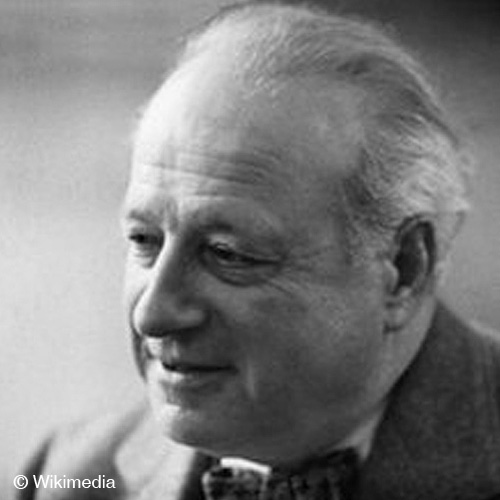
Send your questions for
conductor and Music Director of the Seattle Symphony Orchestra, Gerard Schwarz. Current
highlights for the Maestro include the Seattle Symphony's Carnegie Hall
debut and Centennial Season this year, as well as the ongoing
success of the Milken Archive of American Jewish music, for which
Schwarz is an adviser. Send your questions for Gerard Schwarz to editor@naxos.com, or read more
below.
|
This
month members from the Nashville Symphony answered questions sent by
Naxos.com visitors. Below are the selected questions with
answers from individual musicians as well as the symphony organisation
as a whole. Keep reading to learn more about preparation for
performance, community activities, and favourite works.
How do you prepare in
mind-body-soul for a performance?
--T.B.
“I
try to be well rested for one thing. I perform much better after
having a nap in the afternoon. I used to feel guilty about doing
so, but
when you think about it, sometimes we have to play the most challenging
part of
the concert between 10 and 10:30
p.m.
It makes sense to refresh yourself, so it's easier to
focus.” -Carrie
Bailey, Principal Second
Violin
“When I am
preparing,
first I like to sit down with my part and a recording and get a general
idea of
what I'm dealing with. Then I deal with the practical aspect of just
learning
the notes and rhythms in my part. But these things are just the bare
bones of
it.....after you establish that base you need to spend time thinking
about the
composer, the style, the time period the music was composed in, and how
all
those things are going to factor into the picture you are trying to
create with
the piece. Then when you go to rehearsal you find out what tempi you
will be
playing, and do your best to present the conductor's vision of the
music.” -Zeneba Bowers, Assistant Principal Second
Violin
“Most of
our preparation has already taken place days, weeks, sometimes years
before a
particular program, so it's a matter of total focus and concentration. I try to pace myself, so that I 'peak' in
performances. This means eating carefully (high
protein),
resting ahead of time if possible, a slow and careful warm-up
before the
concert, listening to recordings, and then--right before the moment of
delivery--some centered breathing. If all goes well, I realize
later that
I was ‘in the zone.’” -Lee Levine, Principal
Clarinet
For the violinists: Do you use a
carbon fiber bow? If so, what kind? What is the best rosin?
-D.D., USA
"I have never used a carbon fiber bow, but
have heard good things about their durability (particularly for outdoor
concerts). I use a French rosin by P. Guillaume. It grips
well, but isn't sticky. Plus, (and here's the best part) it comes
in a beautiful little box."
-Carrie Bailey, Principal Second Violin
Has the Tennessee state
legislature
been pretty forthcoming with funding for the Nashville Symphony?
-B.G.
“The Nashville Symphony
is fortunate
to receive funding from a variety of individuals, foundations and
corporations.
The State of Tennessee is one of our many
supporters.” -The Nashville Symphony
Can you tell--as you're
all playing--if a performance is
phenomenal? Does the sound just "lift off" for everyone?
-T.B.
“Absolutely...our
concert in
Carnegie Hall was such an example, and not just because of the
hall. We
were fortunate to be able to make the whole event a tour, and as we
performed
the program each time we improved. By the time we were in New
York, it
was an amazing sound and feeling. Subsequently, there have
been times that we've achieved the same feeling and sound, and not
always
in a classical setting. Things just seem to click into place and
the
result is a wonderful sound and feeling that we're all working
together.
It is exciting.” -Carrie Bailey, Principal
Second Violin
“This is an
interesting
question. Frequently, after concerts as we are out having beers and
discussing
the show, we have differing opinions of what went well and what we'd
like to
fix. I think things are very different for each musician based on where
they
are sitting (acoustically), their own personal performance, and their
individual opinion. Sometimes it seems to me that it's like having a
bunch of
people all in the same house, but in different rooms, and then asking
them to
offer their opinion of the house based on the one room they were in. I
guess
it's just the nature of playing in a large orchestra--the best place to
listen
to us is in the audience! There you can see and hear the complete
picture.” -Zeneba Bowers, Assistant
Principal Second Violin
Do you ever play free
concerts for
the community, or have special events just for students?
-C.N., USA
“The Nashville Symphony
very
regularly presents free concerts to audiences throughout Middle
Tennessee. We
occasionally venture into surrounding states, as well. Some of our most
popular
community concerts are offered during the summer months, when we
perform
outdoors at area parks. The symphony also has an
incredibly
far-reaching education program that touches the lives of most Middle
Tennessee
students at least once each school year. To learn more about our
education
programming, please visit our Web site at www.nashvillesymphony.org.”
-The Nashville Symphony
“I started
a group 2 years ago called ALIAS. We play 6 benefit concerts a year for
various
charities in town. Nearly all of our musicians are from the Nashville
Symphony.
Our last show benefited Hands on Nashville and
featured world
renowned bassist Edgar Meyer. At our concert series in May benefiting
Big
Brothers/Big Sisters, we are beginning an educational program that will
allow
students to join us for our dress rehearsals and to observe and ask
questions
of the musicians. You can learn about us on our website, www.aliasmusic.org.”
-Zeneba Bowers, Assistant Principal Second Violin
For the clarinet section: What
are your favorite pieces of all time?
-K.K.
“My
favorite pieces for clarinet and orchestra are Copland's
Concerto,
Rossini's Variations, Debussy's Rhapsody, and--most of all--the
Mozart
Concerto. Recently I have become familiar with an obscure work by
the
Israeli composer, Paul Ben-Haim, called Pastoral
Variee, a beautifully lyrical work that blends Mediterranean ideas
with
Western Classical idioms.
As a
clarinet section, our favorite works for the orchestra are
naturally
those which feature the clarinet section at its best: Bartok's
Concerto
for Orchestra, all of the Mahler, Strauss and Brahms works,
Mozart's
Symphony No. 39, and Shostakovich Symphony No. 9, to name only a
few.” -Lee Levine, Principal Clarinet
Which clarinet concerto
do you think is most likely to win a concerto
competition?
-K.K.
“The concerto
most likely to win a competition is the one the clarinetist most enjoys
playing. The
key is to play with total commitment to the music, and that is
easier to
do if you really love the piece. If the player has strengths in
technique
and articulation, then he or she might sound best on the works by von
Weber.
If tone quality and lyrical phrasing is your forte, then the Debussy
Rhapsody
or Copland Concerto might be more suitable. Mozart requires true
elegance
of style, and superb musicianship.”
-Lee Levine, Principal Clarinet
What other
CDs have you recorded?
-E.K., Canada
“In addition
to its most recent offerings
(Beethoven’s Missa Solemnis and a CD
of works by Elliott Carter), the symphony recently recorded all nine of
Brazilian composer Heitor Villa-Lobos’ works titled Bachianas
Brasileiras.
The multi-CD recording will be released in 2005. In 2002,
the symphony
recorded its widely acclaimed CD featuring works by American music icon
Amy
Beach, including the composer’s Symphony No. 2 and her
Piano
Concerto with vanguard pianist Alan Feinberg. In
this same year, the symphony released a
recording of Leonard Bernstein's West Side Story and a
recording of
works by George Whitefield Chadwick. Additionally, The Symphony
has recorded an all-Hanson CD and an
all-Ives CD, both
of which have received rave reviews from such prestigious publications
as Gramophone, Absolute Sound, Stereophile, Billboard,
and The Houston
Chronicle.” -The Nashville Symphony
What does a great
conductor do for an orchestra? How does he affect the
overall attitude of the ensemble?
-T.B.
“A
great conductor will make the focus of rehearsing and performing a
team effort. No matter the level of the players, a great
conductor will
bring you all together and work towards one goal...and, once again,
will make
the overall level of the orchestra improve and ultimately sound
better.
How does that affect the overall attitude of the orchestra? ...feelings
of hope
that we can do the pieces justice and provide enjoyment for those who
attend. And of course it's more fun to play together when things
are
going well.” -Carrie Bailer, Principal Second
Violin
“A great
conductor
brings an orchestra together, and inspires the musicians to give
everything to
their performance. To bring 85 or 100 voices together as one voice...it
is an
incredible feeling to be a part of something like that. There's nothing
else
like it that I've found, and it's the primary reason I chose this
profession. A
great conductor inspires people to learn more, do more, work harder,
think more
deeply, than they imagined they could. A great conductor is a teacher
and an
artist.” -Zeneba Bowers, Assistant
Principal Second Violin
“The
conductor has a tremendous effect on the overall attitude of the
orchestra, for
better or worse. More than anything a conductor is a
motivator:
like a great sports coach, getting many different people with diverse
beliefs
and personalities to pull together as a team, helping everyone to
achieve
a sound that was better than they thought they were capable
of
creating.” -Lee Levine, Principal Clarinet
|