|
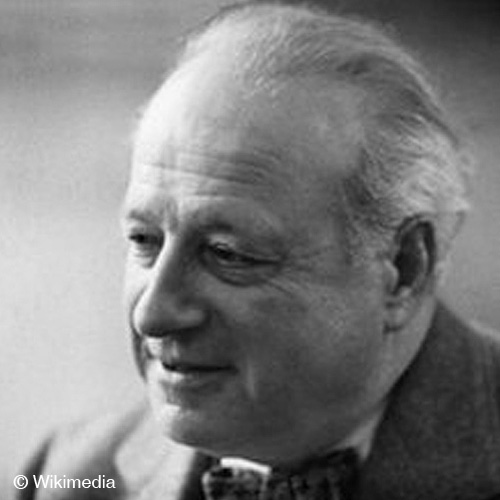
Peter Donohoe
Naxos Artist and Founder of the British Piano Concerto Foundation
Discusses Birthdays, Beginnings, and British Composers
Peter
Donohoe has soloed with many of the world’s great orchestras and
conductors and
played most of the world’s best-loved piano concertos during his long
and
rewarding career. However, even now there are new superlatives ahead
for this
Tchaikovsky winner, as he is developing a monumental project of British
piano
concertos for Naxos. His just-released
recording of the
Bliss Piano Concerto and Piano Sonata won an “Editor’s
Choice”
award from Gramophone. It was our pleasure to speak with him
recently
about a great number of topics including the new releases in the
series, his
unorthodox yet highly effective practice methods, and a mishap that
nearly cost
him his career.
Naxos: I know you’re
celebrating your
fiftieth birthday this year with a wonderful tour that takes you to
some of the
locales where your career took shape and catapulted to prominence. What
are
some of the stops that are most meaningful?
Donohoe: Of course, I would have
to include Manchester because I was born there
and gave
almost all of my early concerts there. In addition, I wanted to return
to London because of its
prominence as the
capital. London has been very good to me
since the late seventies.
Performances in Birmingham were scheduled because
of my long
association with the City of Birmingham Symphony
Orchestra and Simon Rattle, who
was music
director there for many years. I have greatly appreciated the support I
have
long found in the Channel Islands, Hong Kong, Sydney, Wellington (New
Zealand),
Los Angeles and Rotterdam, and definitely wanted to include them in the
tour as
well, because they have always supported what I do and keep on asking
for more.
I would be remiss if I did not include Russia, and in particular Moscow because of the
competition and the
unbelievable support people have always given me there.
N: In a way, it sounds
like a
birthday present from you to your many fans.
D: I gave special recitals
or performed particular
concertos during this season to try to “give something back”, as the
cliché
goes. It has been incredibly rewarding, although you have not known
embarrassment until an audience sings “Happy
Birthday” and someone appears on stage with a candle-lit cake,
which has
happened to me four times this season thus far.
N: What sort of
repertoire have you
been programming for these engagements?
D: I wanted to reflect some
of my personal musical
tastes, which was quite hard because I tend to like lots of different
things.
One of the most interesting things this season was to go back to the
Beethoven
Piano Sonata cycle because it’s so fundamental. That music was what
started me
off being a pianist in the first place, and it is essential to
everything I do.
I think it’s a great reminder of what piano music is all about. I’m
performing
the entire cycle twice this season.
N: Given the list of
plans on your
docket, it’s quite impressive that you’re able to accomplish it all.
D: It has always been
impressed on me that preparation
should be very slow and ought to start as early as possible for
anything you
do. If you actually take that across a career, it means that you can
more
easily return to the music that you did in your twenties. You can take
music
off the “mental shelf” and rethink it. It doesn’t need relearning at
that
point, but it does need rethinking.
N: That seems to relate
to your
comment that you personally don’t make an extra effort to put your own
stamp on
a piece of music. Rather than doing so, you simply perform your
work and let your personality and experiences shine through on their
own.
D: I suspect that I’m
relying upon a large amount of
experience subconsciously. If you have academic experience as I do [Writer’s note: Donohoe is an experienced
composer, conductor, and conservatory teacher] and if you have a
lot of
experience in performing, a natural performance will represent you in
an honest
way instead of a self-conscious attempt to be “different” and to shed
new light
on something. We don’t need to do that because you’re shedding new
light on it
quite naturally. I believe rather strongly that if more than one artist
plays
the same piece of music as faithfully as possible that it will still
always be
different.
N: That perspective puts
the focus
back on the music, which is refreshing.
D: It’s sometimes born from
a lack of experience on an
artist’s part. Of course, it’s more immediately noticeable when someone
does
something outrageous, and some people will go out and buy a CD just
because
it’s outrageous. In that case it would be more about the person playing
than
about the music. It may sound like a bit of a pose, but it’s true: we’re all here to communicate what the
composer wrote, not who we feel we are.
N: Tell
us more about your plans for the British Piano
Concerto Foundation,
and how things got started in the first place. It sounds like a
significant
undertaking. Is the foundation a fairly recent development?
D: Well, one of the reasons
it is a big job is that I
am very conscious of how I myself have often ignored the repertoire
throughout
my career. I’m not proud of that at all, but I don’t think I’ve been
alone by
any means. The British piano repertoire has been ignored by the musical
community as a whole. Of course, it’s up to British pianists to
popularize it.
We as a nation do have a tendency to undermine our own culture. We
certainly
don’t support our composers very much, or our artists, although I must
say I’m
rather lucky, as is Simon Rattle. The majority of British artists do
seem to
feel that being British is a drawback. I think the US has this mindset as well
. . . London and New York occupy similar
positions; they have
this gigantic blend of many cultures. The rest of the world is much
more
centred on their own culture, which is a very strong advantage. The
downside
is that you can forget about your own culture, which I think British
instrumentalists
in particular have tended to do with our music.
N: I can see how this led
to your
development of the foundation and your collaboration with Naxos. It
sounds like it could be quite
an extensive project.
D: Yes, there’s an enormous
amount of music and that
really is the point. A lot of it is very good, and some of it is
fantastically
good. I think the Bliss, for example, is a masterpiece. It’s very
important
that the British people don’t say “I think it’s a very good piece, for
a
British composer.” It doesn’t matter if it’s British or not . . . To be
honest,
I got inspired by the example of my Russian colleagues, because they
are so in
love with their own culture. I go to Russia a lot and I know how
much their
music genuinely means to them. It’s not just some kind of marketing
ploy on
their part; they really are quite proud of their art. When I compare a
Russian
soloist or conductor’s attitude to their own music with ours, the
contrast is
just embarrassing. When a Russian orchestra comes to Britain, they bring a Russian
conductor and
a Russian soloist without fail, and they play a Russian program. When a
British
orchestra goes to Russia, they play Tchaikovsky
and
Shostakovich and they take a soloist from Russia. . . I think it’s just
an automatic
reaction. What we really should be doing, at least some of the time, is
taking
an Elgar symphony or something like that and being proud of it. That’s
how I
feel about these concertos. We should be much more proud of them. What
is
encouraging to me is that as we record each of these discs, the pieces
turn out
to be even greater than I’d anticipated. The Bliss is a handful; very
difficult, very long. I always thought it was a bit overblown but that
was an
impression based on not having heard it much. When I learned the work,
I
realized it wasn’t that way at all. If Prokofiev’s Second Piano
Concerto
is a masterpiece, which a lot of people think it is, then certainly, on
every
level, the Bliss is as well. It is in the romantic tradition without
being
reactionary. It’s a great piece and very rewarding, and I think the
other discs
will be similarly greater than I had ever expected. We have a list of
147
possible concertos…
N: The last I had heard,
your list was
only one hundred!
D: Well, it seems
everywhere I go, people have
suggestions of works to add. Some of them are very long, and some are
quite
short. Given that every one of them will cost us a fortune to record,
it all
depends on how the sponsorship comes together as to how many we record
and when
they are recorded. It’s terribly rewarding; it’s almost like a new
lease on my
musical life. There’s a lot of music in my repertoire, just because I
thirst
for more all the time [Writer’s note:
Donohoe has a staggering eighty or so concertos and the like at his
command,
and just as many smaller-scale works]. I’ve played the Bartok,
Prokofiev,
Rachmaninov, Tchaikovsky, and Beethoven piano concertos endlessly.
They’re
absolutely wonderful, and that’s what brought me into the profession in
the
first place. It has been a major addition to add other works like these
British
concertos to my repertoire. They are not merely a musical curiosity
corner, but
instead are actually really great music. It makes me feel patriotic as
well.
Page 1 | Page 2
This interview was
conducted by
Lorrell Holtz-Oxley in February 2004.
|
British Piano Concertos
Current releases in the acclaimed Naxos
series:

Ask the Artist
Don't forget
to send your questions for next month's "Ask the Artist" feature with
the Nashville Symphony. Send questions to editor@naxos.com.
|