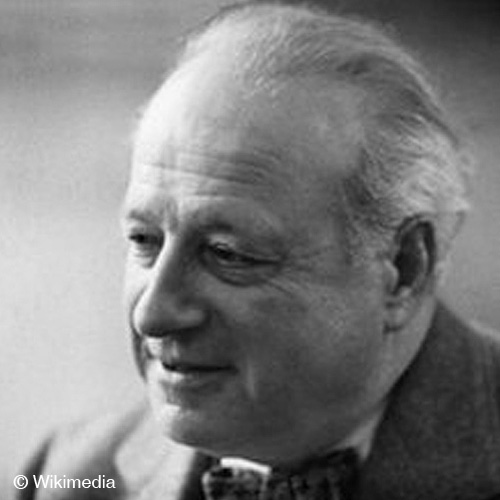
|
VIVALDI: The Four
Seasons, Opus 8, Nos. 1-4; Opus 8, Nos. 5-12;
Concerto for Two Violins in D Major, RV513
Louis Kaufman (violin), Peter Rybar (violin), Concert Hall Chamber
Orchestra, Henry Swoboda,
Winterthur
Symphony Orchestra, Clemens Dahinden
8.110297-98
|
“The Masterpiece That
Took 200 Years to Become Timeless” by Jeremy Eichler
The New York Times, Sunday, February
27th, 2005
Ah,
the timeless masterpiece. The very phrase reveals our unspoken assumptions.
With works like Beethoven's Fifth Symphony or Vivaldi's "Four Seasons,"
their merit is so manifest, their greatness so pristinely enshrined that
we tend to imagine them existing outside history, as unbounded by time
as the genius of their creators.
What
a pleasure, then, to come across a new Naxos Historical release: the first
American recording of Vivaldi's "Four Seasons," performed by
Louis Kaufman, a well-traveled soloist and ubiquitous concertmaster during
the golden age of Hollywood film scores. (You've probably heard him even
if you never knew it.) Kaufman is backed by the Concert Hall Chamber Orchestra,
under Henry Swoboda. But the salient detail is the recordings' amazingly
late date: 1948. Believe it or not, the timeless Vivaldi had been an obscure
composer in America all the way through World War II. He was studied by
scholars mostly for what he taught us about Bach. Performances were scarce,
and the public knew little of his music.
Fast-forward
roughly half a century, and these four Vivaldi concertos are perhaps the
single greatest hit of classical music. They have been recorded more than
100 times and by most respectable violinists of recent decades; they have
been used in Hollywood movies like "Pretty Woman" and in television
commercials to hawk sundry products from cars to credit cards. They grace
elevators and hotel lobbies across the land, and in what is perhaps the
ultimate test of classical hit status, they have even been transmogrified
into ring tones for cellphones. If you're a classical melody, that's when
you know you've really made it.
So what
exactly happened to "The Four Seasons"? How and why did these
concertos take off, and what has been the price of popularity? Answers
are elusive, but like most explosions in popularity, this one owes a lot
to happy timing. At least in this country, the story began one day late
in 1947, when Kaufman received a call from a CBS executive inviting him
to perform the "Four Seasons" concertos for radio broadcast.
Kaufman,
who was born in 1905 in Portland, Ore., was living in Los Angeles at the
time, playing with studio orchestras while maintaining a simultaneous
career as a concert soloist. Time was scarce, and shortly after deciding
to record the Vivaldi concertos in Carnegie Hall, he left by train for
New York along with his wife, Annette. He learned the solo part en route,
unraveling the music's mysteries as the landscape streamed by.
"We
fell in love with the pieces while he was learning them on that train,"
Ms. Kaufman said recently from her home in Los Angeles. "They just
seemed so fresh and unexpected. We couldn't get over the wonderful melodies."
Once
Kaufman arrived in New York, there was little time to linger over details.
He was racing to record the pieces before a union recording ban took effect
on Jan. 1, 1948. Carnegie Hall was booked solid with other groups also
seeking to beat the deadline, so Kaufman, along with Swoboda and a small
orchestra made up mostly of New York Philharmonic players, took the hall
the last four nights of the year, starting each session at midnight. In
his memoirs, "A Fiddler's Tale," Kaufman describes working into
the early morning hours in the darkened hall, with the stage brightly
lighted. Annette turned pages, and the fatigued musicians, who had been
recording with Stokowski in addition to playing their own concerts, stayed
attentive, thanks to this new and strangely beguiling music.
The
recording that emerged is a fine one, full of high-flown Romantic playing
that is enjoyably oblivious to Baroque performance style and peppered
with its own version of "period" effects: principally, the swooping
portamentos of the mid-20th century.
The
Naxos two-disc reissue also includes Kaufman's later recording of the
other eight concertos in the Opus 8 set.
Sticklers
for accuracy will take issue with Naxos's trumpeted claim that this is
the world premiere recording of "The Four Seasons." The Italian
conductor Bernardino Molinari recorded the concertos five years earlier,
in 1942. The restoration producers defend their claim by explaining that
Kaufman used a more accurate edition of the score, whereas Molinari's
recordings were based on his own liberal transcriptions.
Whatever
the case, there's no doubt that Kaufman's "Four Seasons" was
the first complete American recording. It was released by Concert Hall
Society and favorably reviewed in The New York Times in October 1948.
The Times critic Howard Taubman introduced the piece to his readers as
"an early and delightful experiment in program music."
At the
same time, Vivaldi's fortunes were buoyed by an event that did wonders
for Baroque music: the introduction of the LP. Smaller record companies
like Vox and Concert Hall scrambled to record Baroque repertory that had
been overlooked by the major labels. The new technology and the smaller
orchestras required for Baroque music meant that recordings could be made
more cheaply. They sold well, too.
"Sam
Goody couldn't keep the records in stock," Peter Munves, a longtime
record collector and industry executive, said recently. "It was new
stuff. It was exciting."
Gene
Bruck, another avid collector, remembers "The Four Seasons"
as his first LP: "We thought not only was this sensational music,
but you could actually play the whole thing. Everyone bought it, and boom,
off it went."
The
newly released Baroque music also fell on receptive ears. One could argue
that the music's lightness and transparency, its distance from a freshly
tainted German Romanticism, made it perfectly suited to American life
in the postwar decade of the 1950's. Other violinists soon got into the
act, recording their own versions of the "Seasons." Italian
ensembles like I Virtuosi di Roma and I Musici spread the word, and did
so with a pioneering awareness of historic style.
Of course,
timing is only part of the story. At a more basic level, "The Four
Seasons" was - and is - extraordinarily original music, full of brilliant
and glistening sonorities, ingenious formal innovations and all those
vivid solo lines bursting off the page.
And
perhaps most important for its popular appeal, "The Four Seasons"
has a program that incorporates the most basic human elements: the world
of nature, the cycle of the years, the passage of time.
Seasonal
sounds and images are inscribed into the music, yet the work's program
does not constrain the imagination. Rather, each season provides a ready-made
point of departure for a wide range of metaphors. It was no doubt in this
spirit that Alan Alda chose the work as a poetic template for his 1981
film "The Four Seasons," about the intertwined lives of three
couples and their travels in summer, fall, winter and spring.
On the
flip side, the work's instant recognizability, coupled with its classical
pedigree, has made it a handy marketing tool. "There is an association
with luxury and with elegance that is very clear," said Nick Hahn,
the managing director of Vivaldi Partners, a marketing strategy consulting
firm.
Classical
hits like "The Four Seasons" also loom large in the endless
barrage of "lifestyle-oriented" CD releases. A recent search
on Amazon.com produced a whopping 794 hits. Of these, the great majority
are compilations, some with eminently quotable titles.
Hoping
to bring a touch of class to that French toast? Try "CBS Masterworks
Dinner Classics: Sunday Brunch, Volume 2." Tired of bathing in silence?
Now there's "Baroque at Bathtime: A Relaxing Serenade to Wash Your
Cares Away." (I promise, I'm not making this up.) Or finally, a personal
favorite that cuts right to the chase: "The Only Classical CD You'll
Ever Need."
That
last title touches on a more serious problem in the way classical hits
can crowd out too much other music. Vivaldi wrote dozens of worthy violin
concertos that get barely a nod. Moreover, the heavy rotation of masterpieces
tends to numb our ears, making it hard to hear them fresh. If only this
music could take a vacation, or if performers could call a moratorium
for the sake of Vivaldi's future.
At least
there are still bracing contemporary releases like Gidon Kremer's version
(on Nonesuch) that blast away habits of complacent listening and open
the ears once more to Vivaldi's radical imagination. I like Kaufman's
version, too, for the way it can accomplish a similar effect - not through
the playing itself, but through the niche it occupies in the past.
Just
as historians are challenged to write history as if they didn't know what
was coming next, those who approach historic recordings can strive to
listen through ears of decades past, forgetting what they know of the
intervening years. Yes, of course, it's an illusion, but it can be a productive
one.
Imagine:
it is 1948. A new set of records has just arrived bearing the curious
promise of music for each season. The textures are brilliant, the writing
is breathtakingly original and the solo playing sings. You know, this
Vivaldi - he just might have some potential.
|