Requiem • Passion • Resurrection
Music for Easter

 Watch
Watch
 Listen to the podcast
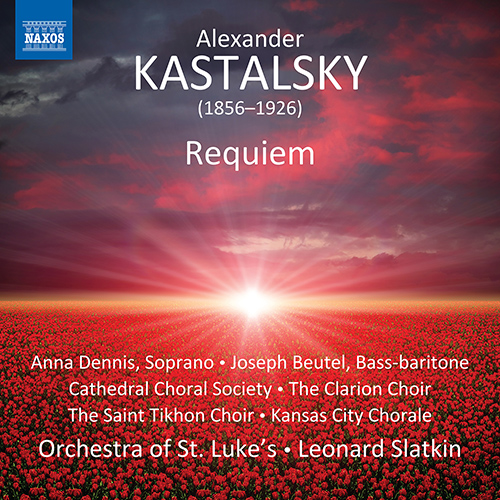
Alexander KASTALSKY (1856–1926)
Requiem
Alexander Kastalsky was a student of Tchaikovsky and a mentor to Rachmaninov, becoming director of the Moscow Synodal School until the Bolshevik regime banned all sacred music, including the extraordinary Requiem for Fallen Brothers which consequently lay forgotten for over a century. The Requiem is a rich and varied mosaic that honours those who perished in the First World War, poignantly combining Orthodox and Gregorian chant with hymns from the allied nations, even including Rock of Ages. This unprecedented and peerless monument to those who made the ultimate sacrifice was acclaimed on its 1917 premiere as a ‘uniquely Russian requiem that… gave musical voice to the tears of many nations’.









![SCHWEITZER, A.: Auferstehung Christi (Die) [Oratorio] / Missa brevis in C Major](https://www.naxos.com/sharedfiles/images/cds/hires/C5425.jpg "SCHWEITZER, A.: Auferstehung Christi (Die) [Oratorio] / Missa brevis in C Major")

Anton SCHWEITZER (1735–1787)
Die Auferstehung Christi • Missa Brevis • Cantata
There is little documentation about this now lesser-known, but once esteemed composer. Born in Coburg in 1735, Anton Schweitzer died in 1787 in Gotha, where he had settled following the Weimar Palace fire in 1774. Regrettably, relatively few of his manuscripts have survived. Some of the works recorded here (which comprise almost his entire existing church music) were preserved in several copies found recently in various archives in Thuringia. This recording presents colourful virtuoso music by an unjustly forgotten composer.
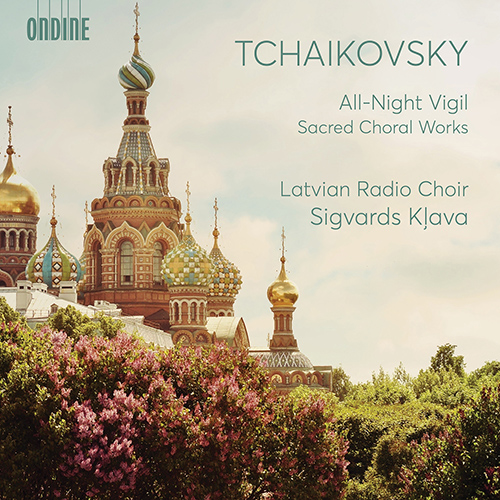
Pyotr Il’yich TCHAIKOVSKY (1840–1893)
All-Night Vigil • Sacred Choral Works
The All-Night Vigil, Op. 52 for mixed choir, also known as the Vesper Service, was written between May 1881 and March 1882. Tchaikovsky described the work as ‘an essay in harmonisation of liturgical chants’. The composer carefully studied the tradition of musical practice in the Russian Orthodox Church, which could vary considerably from one region to another. This beautiful, yet rarely recorded work is accompanied by four other choral works all written during the same decade including The Angel Cried Out, a beautiful traditional Russian Orthodox Easter hymn and Tchaikovsky’s final choral work. The Latvian Radio Choir received an International Classical Music Award (ICMA) in the Choral category for their recording of Tchaikovsky’s Liturgy of St John Chrysostom (ODE1336-2).


Franz Joseph HAYDN (1732–1809)
Missa Cellensis
Niccolò JOMMELLI (1714–1774)
Te Deum • Mass in D major
Known as the St Cecilia Mass, Haydn’s fifth Missa is his longest and most complex setting of the Latin Mass text. Rich in elaborate contrapuntal interweaving and lasting more than an hour, it reveals Haydn the opera composer. This 1982 recording of a concert performance in the Ottobeuren Basilica features the Bavarian Radio Symphony Orchestra and Choir under the baton of Rafael Kubelík. It is still considered a reference recording of the work.
Niccolò Jommelli’s Mass in D major and his Te Deum were both written during his time at Charles Eugene’s Württemberg court, where he is said to have held the highest paid post for a musician in Europe. The combination of the Württemberg court’s love of French music, the virtuoso Mannheim school and Jommelli’s Italian roots shaped the composer’s stylistically diverse sacred oeuvre. The Te Deum, which lasts barely fifteen minutes, was frequently performed right up to the early 19th century.

We trust you will find something to suit all tastes and wish you a very Happy Easter with Naxos.