Click here to download the Libretto
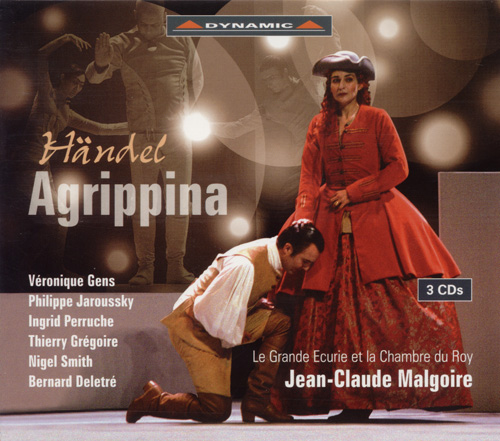
- George Frideric Handel. Dramma per musica in three acts. 1709.
- Libretto by Vincenzo Grimani.
- First performance at the Teatro S Giovanni Grisostomo, Venice, on 26th December 1709.
CHARACTERS
| Claudio (Claudius), Roman Emperor | bass |
| Agrippina, the Emperor’s wife | soprano |
| Nerone (Nero), her son | male soprano |
| Pallante (Pallas), follower & lover of Agrippina | bass |
| Narciso (Narcissus), follower & lover of Agrippina | male alto |
| Lesbo (Lesbus), servant of Claudio | bass |
| Ottone (Otho), appointed heir to Claudio | male alto |
| Poppea (Poppaea), a courtesan | soprano |
| Giunone (Juno) | contralto |
In the absence of the Emperor Claudius, presumed dead in Britain, his wife Agrippina seeks to make her son by an earlier marriage, Nero, Emperor, helped by her freedmen Pallas and Narcissus. Claudius, however, has been saved from death by Otho, now proclaimed as his heir on his return to Rome. Matters are complicated by the fact that Claudius, Otho and Nero are all in love with Poppaea, who tries to expose the machinations of the last, and of Agrippina, by arranging that all three suitors should visit her house, each unknown to the other. Claudius seeks to put matters right by keeping Otho as his heir and allowing Nero to have Poppaea, but when this proves unacceptable, he defers to Agrippina, leaving the Empire to Nero and giving Poppaea to Otho. Juno finally blesses their marriage.
Handel’s Agrippina was successfully staged in 1709 in Venice, where he was welcomed with cries of Viva il caro Sassone! (Long live the beloved Saxon!). In his score Handel again used music from earlier works as well as from an opera on a similar subject by Reinhard Keiser, under whom Handel had worked in Hamburg before moving to Italy.
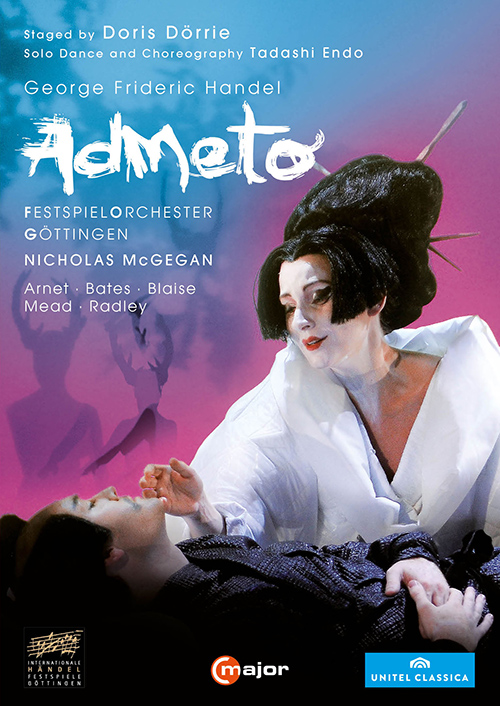
![HANDEL, G.F.: Agrippina [Opera] (Theater an der Wien, 2016) (NTSC)](https://cdn.naxos.com/sharedfiles/images/cds/hires/2.110579-80.jpg "HANDEL, G.F.: Agrippina [Opera] (Theater an der Wien, 2016) (NTSC)")
![HANDEL, G.F.: Ariodante [Opera] (Salzburg Festival, 2017) (NTSC)](https://cdn.naxos.com/sharedfiles/images/cds/hires/802408.jpg "HANDEL, G.F.: Ariodante [Opera] (Salzburg Festival, 2017) (NTSC)")
![HANDEL, G.F.: Arminio [Opera] (Karlsruhe Handel Festival, 2017) (NTSC)](https://cdn.naxos.com/sharedfiles/images/cds/hires/744408.jpg "HANDEL, G.F.: Arminio [Opera] (Karlsruhe Handel Festival, 2017) (NTSC)")
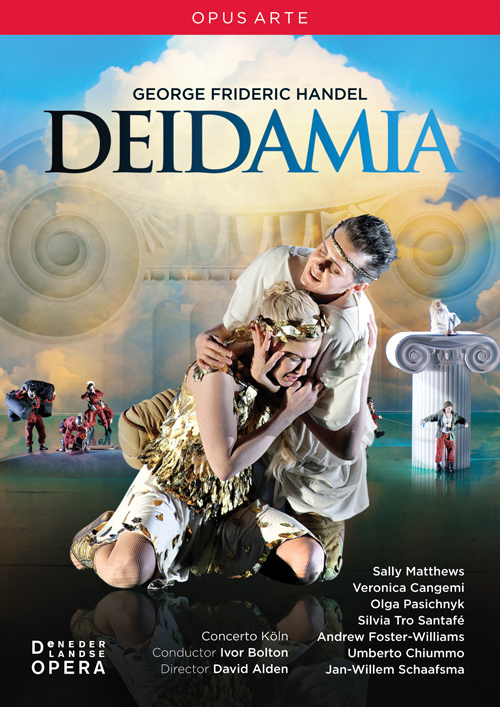
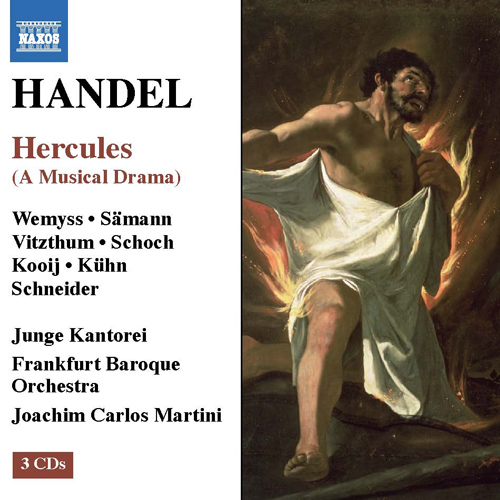
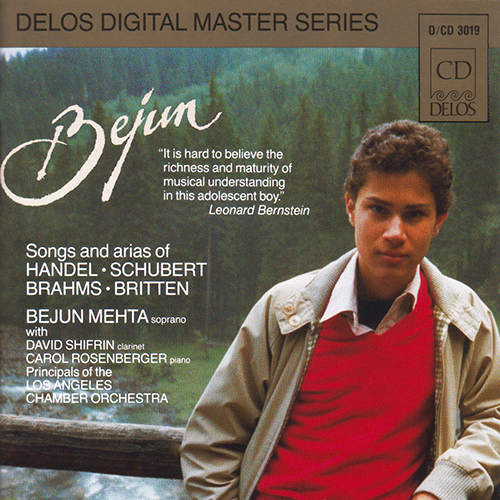
![HANDEL, G.F.: Imeneo [Opera] (Ostendorf, Baird, Fortunato, Hoch, Opalach, Brewer Chamber Orchestra, Palmer)](https://cdn.naxos.com/sharedfiles/images/cds/hires/cdx-5135.jpg "HANDEL, G.F.: Imeneo [Opera] (Ostendorf, Baird, Fortunato, Hoch, Opalach, Brewer Chamber Orchestra, Palmer)")
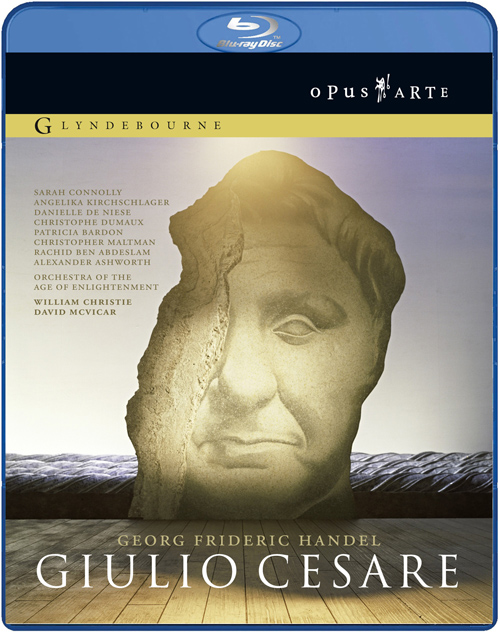
![HANDEL, G.F.: Giulio Cesare in Egitto [Opera] (Sung in German) (Popp, Ludwig, Berry, Bavarian Radio Chorus, Munich Philharmonic, Leitner)](https://cdn.naxos.com/sharedfiles/images/cds/hires/c351943d.jpg "HANDEL, G.F.: Giulio Cesare in Egitto [Opera] (Sung in German) (Popp, Ludwig, Berry, Bavarian Radio Chorus, Munich Philharmonic, Leitner)")
![HANDEL, G.F.: Lotario [Opera] (Highlights) (Rial, Zazzo, Karasiak, Markert, Basel Baroque Chamber Orchestra, Goodwin)](https://cdn.naxos.com/sharedfiles/images/cds/hires/oc902.jpg "HANDEL, G.F.: Lotario [Opera] (Highlights) (Rial, Zazzo, Karasiak, Markert, Basel Baroque Chamber Orchestra, Goodwin)")
![HANDEL, G.F.: Rinaldo [Opera] (Barber, Modolo, Hannigan, Opera in Concert, Aradia Ensemble, Mallon)](https://cdn.naxos.com/sharedfiles/images/cds/hires/8.660165-67.jpg "HANDEL, G.F.: Rinaldo [Opera] (Barber, Modolo, Hannigan, Opera in Concert, Aradia Ensemble, Mallon)")
![HANDEL, G.F.: Rinaldo [Opera] (Maggio Musicale Fiorentino, 2020) (NTSC)](https://cdn.naxos.com/sharedfiles/images/cds/hires/dyn-37896.jpg "HANDEL, G.F.: Rinaldo [Opera] (Maggio Musicale Fiorentino, 2020) (NTSC)")
![HANDEL, G.F.: Rodelinda [Opera] (Theater an der Wien, 2011) (NTSC)](https://cdn.naxos.com/sharedfiles/images/cds/hires/bve10144.jpg "HANDEL, G.F.: Rodelinda [Opera] (Theater an der Wien, 2011) (NTSC)")
![HANDEL, G.F.: Rodelinda [Opera] (Ganassi, Fagioli, Fanale, Myshketa, Orchestra Internazionale d'Italia, Fasolis)](https://cdn.naxos.com/sharedfiles/images/cds/hires/cds7724.jpg "HANDEL, G.F.: Rodelinda [Opera] (Ganassi, Fagioli, Fanale, Myshketa, Orchestra Internazionale d'Italia, Fasolis)")
![HANDEL, G.: Semele [Oratorio] (Martini)](https://cdn.naxos.com/sharedfiles/images/cds/hires/8.570431-33.jpg "HANDEL, G.: Semele [Oratorio] (Martini)")
![HANDEL, G.F.: Serse (Xerxes) [Opera] (Frankfurt Opera, 2017) (NTSC)](https://cdn.naxos.com/sharedfiles/images/cds/hires/747908.jpg "HANDEL, G.F.: Serse (Xerxes) [Opera] (Frankfurt Opera, 2017) (NTSC)")