


UPC: 4011790929125
NEW RELEASE
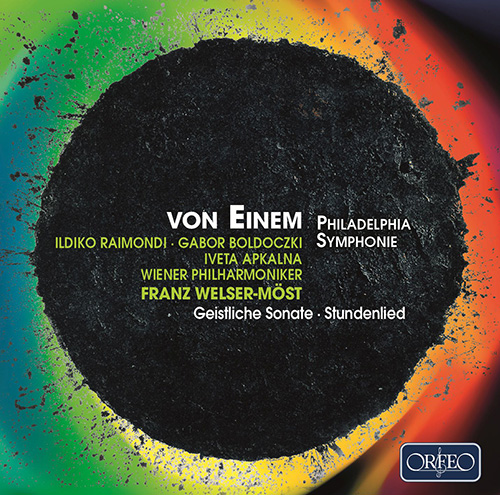
Philadelphia Symphony op. 28, 3rd movement: Allegro vivace

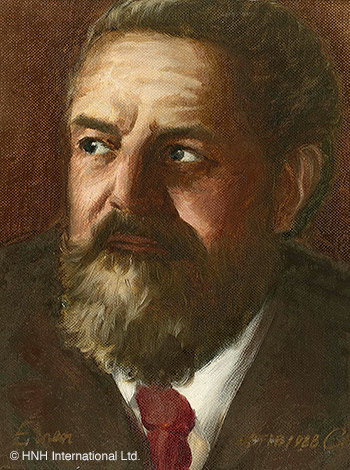
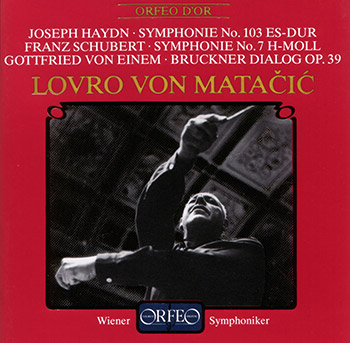
Born in Bern in 1918, Gottfried von Einem began his studies of composition in 1941 with Boris Blacher, a teacher-pupil relationship that developed into a long friendship. In 1944, he moved with his mother to the family’s estate in the municipality of Ramsau in Styria, Austria. In 1945, he studied counterpoint with Johann Nepomuk David. Before moving to Vienna in 1953, Einem spent most of his time in and around Salzburg and in Ramsau, though he sporadically stayed in Zurich too; from 1977, he withdrew gradually to the rural Waldviertel region of Lower Austria but never gave up his home in Vienna.
Einem made his international breakthrough as a composer with the 1947 premiere of his opera Dantons Tod (Danton’s death) at the Salzburg Festival. The composer increasingly gained global prominence as his works were premiered at venues in Europe, North America and Japan.
His oeuvre of 111 numbered works covers all musical genres. Initially a composer of large-scale works, much of his later repertoire comprises chamber music and works for solo instruments.
As a composer, Einem did not pursue an ivory-tower aestheticism; instead, he was a politically committed individual who regarded music as a matter of public interest. For a while, he worked on the board of directors and the artistic council of the Salzburg Festival as well as on the management board of the Vienna Music Festival; from 1963 until 1972 he was a professor at the Vienna College of Music and received a number of international awards.
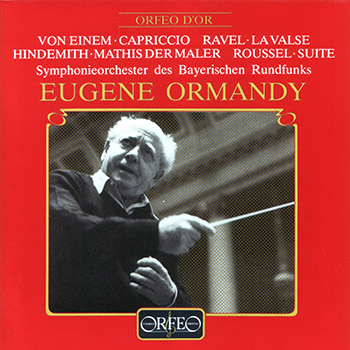
Einem was rather averse to symphonies as a genre. However, a commission from Eugene Ormandy, principal conductor of the Philadelphia Symphony Orchestra, gave him an opportunity to try his hand at writing a symphony. What Ormandy actually requested was an overture, 10 to 14 minutes in length, for the gala concert on January 21, 1961, marking the 104th anniversary of the founding of the Philadelphia Academy of Music. What he received, though, was an 18-minute symphony, so a work of different length and character. Ormandy was not at all happy.
Ingrid Fuchs – after studying all the relevant sources from Einem’s estate in the archive of the Gesellschaft der Musikfreunde (society of friends of music) in Vienna - clarified that the scheduled premiere by the Philadelphia Symphony Orchestra did not go ahead due to opposition from the orchestra and misgivings on the part of some American composers and those lobbying for their interests. The symphony did, however, create a permanent link between the composer and the orchestra that commissioned the work.
For more than a decade – between 1962 and 1973 – did Einem work on a composition that eventually became the Sacred Sonata, op. 38. The work premiered at the Carinthian Summer Festival of 1974.
After the first movement, which is reserved for the organ and trumpet, the three other movements feature a vocal line too. Einem based the two middle movements on texts from the Pauline epistles and chose a psalm text for the final movement: the apostle’s pledge of faith in God is followed by words of praise from Psalm 103.
Einem was a great admirer of Bertolt Brecht and he could persuade the poet to produce a text derived from the play Mother Courage and her Children, which he used as a basis for his Stundenlied, op. 26. (He was unsuccessful, though, to engage Brecht at the Salzburg Festival). Einem received the poem in 1949, but he only set it to music when he received a commission from the North German Radio. The premiere took place in Hamburg on March 1, 1959.
The poem portrays the final hours of the Passion of Christ. Far removed from the tradition of Passion settings, this choral work reflects on the fickleness and manipulability of the masses.
In 1973, after a performance at the Salzburg Festival, Hans Heinz Stuckenschmidt wrote in the Frankfurter Allgemeine Zeitung that the work proves “that the world of tonality still has untapped potential”. Critics have acclaimed the Stundenlied as one of Einem’s most impressive works.

Gábor Boldoczki, Trumpet
Iveta Apkalna, Organ
Live recording April 22nd, 2009 in cooperation with the Gottfried von Einem Musik-Privatstiftung
Franz Welser-Möst
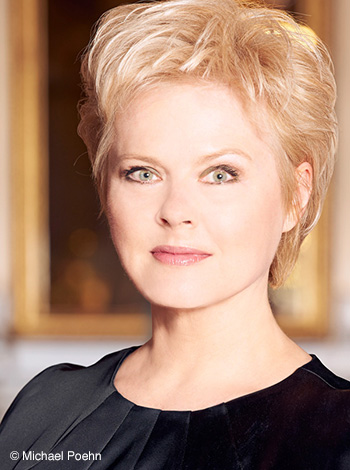
Ildikó Raimondi is not only a celebrated singer on the opera stage, but also a sought after Lied interpreter and concert singer. Since 1991 she is a member of the Vienna State Opera. At this house, she has sung more than 50 opera works until today.
Guest performances have led the Vienna-based artist, among others, to the Deutsche Oper in Berlin, the Opera house in Zurich and the Bolschoi Theatre in Moscow. On top of that comes concerts, broadcasts and TV performances in many European countries as well as Japan, New York, and Israel.
Ildikó Raimondi has a special preference for the music of the 20th century. Works by Franz Schmidt, Arnold Schönberg, Alexander von Zemlinsky, Egon Wellesz, Ernst Krenek, Gottfried von Einem, and contemporary music, among others, by Friedrich Cerha and Thomas Daniel Schlee – belong to the repertoire of this internationally sought after soprano.
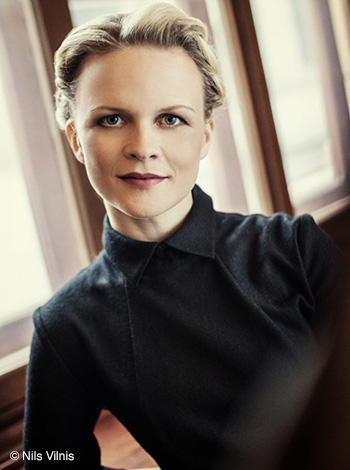
Latvian organist Iveta Apkalna is considered one of the leading instrumentalists in the world. She has performed with a number of the world’s top orchestras, including the Berlin Philharmonic, The Royal Concertgebouw Orchestra Amsterdam and the Orchestra dell’Accademia Nazionale di Santa Cecilia. She has collaborated with renowned conductors, such as Claudio Abbado, Mariss Jansons, Sir Antonio Pappano or Andris Nelsons and frequently appeared – among others – at the Lucerne, Lockenhaus, Schwetzinger, and Schleswig Holstein Music Festivals.
She was appointed a cultural ambassador of Latvia by receiving the “Excellence Award in Culture 2015” from the Latvian Ministry of Culture and became the first organist to receive the title of “Best Performing Artist” award at the 2005 ECHO Klassik. In 2003 she received the Latvian Great Music Award for special accomplishments in music, as well as first prize and four additional special prizes in the International M. Tariverdiev Organ Competition in Kaliningrad, Russia. In 2002 she advanced to the world finals of the Royal Bank Calgary International Organ Competition in Canada and received the prestigious Johann Sebastian Bach Prize.
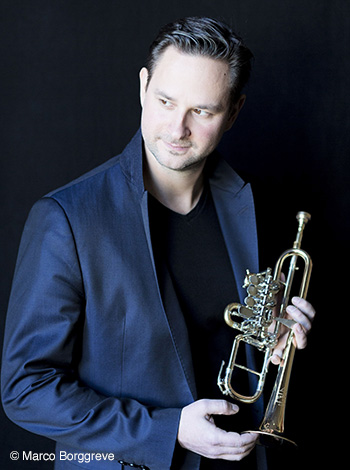
The Hungarian Gábor Boldoczki with his brilliant play is the exceptional trumpeter of his generation. At the age of 14 this young exceptional trumpeter won the first prize at the National Trumpet Competition, Hungary. By winning the internationally renowned music competition of the ARD in Munich, Boldoczki celebrated his final breakthrough. He then received the “Grand Prix de la Ville de Paris” at the most distinguished trumpet competition of all – the Third International Maurice André Competition in Paris.
During his European tours he performs – among others – with well-known orchestras like the Bavarian Radio Symphony Orchestra, Mariinsky Theatre Symphony Orchestra, Czech Philharmonic and the Vienna Symphony Orchestra as well as with internationally renowned chamber orchestras. He was the first trumpet soloist worldwide to be invited to perform the trumpet concerts of Michael Haydn at the Salzburg festival.
Boldoczki regularly gives guest performances at renowned concert halls such as Musikverein Vienna, Concertgebouw Amsterdam, Philharmonie Berlin, and many others. Furthermore, he follows concert invitations to South America, Japan and China.
There is perhaps no other musical ensemble more consistently and closely associated with the history and tradition of European classical music than the Vienna Philharmonic. In the course of its 175 year history, the musicians of this most prominent orchestra of the capital city of music have been an integral part of a musical epoch which due to an abundance of uniquely gifted composers and interpreters must certainly be regarded as unique.

Franz Welser-Möst is one of the most distinguished conductors of our day. As a guest conductor, he has a particularly close and productive relationship with the Vienna Philharmonic. He has twice appeared on the podium for their celebrated New Year’s concerts, and regularly conducts the orchestra in concert at Vienna’s Musikverein, the Lucerne Festival, the BBC Proms and on tour in Japan, Scandinavia and the USA. This special relationship was recognized in spring 2014 when he was presented with the orchestra’s Ring of Honour.
The Singverein der Gesellschaft der Musikfreunde in Vienna has been one of the leading concert choirs of the international music scene since its foundation in 1858. Since then it has been premiering central works of the choral repertory – including the “German Requiem” by Brahms, Verdi’s Ave Maria, Bruckner’s Te Deum, Mahler’s 8th Symphony and Franz Schmidt’s oratorio “The Book with Seven Seals”.
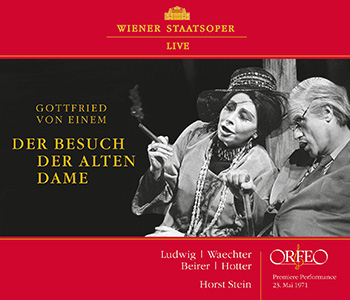
![EINEM, G. von: Dantons Tod [Opera]](images/C102842H.jpg "EINEM, G. von: Dantons Tod [Opera]")