
 Translate

































 | Loading... |
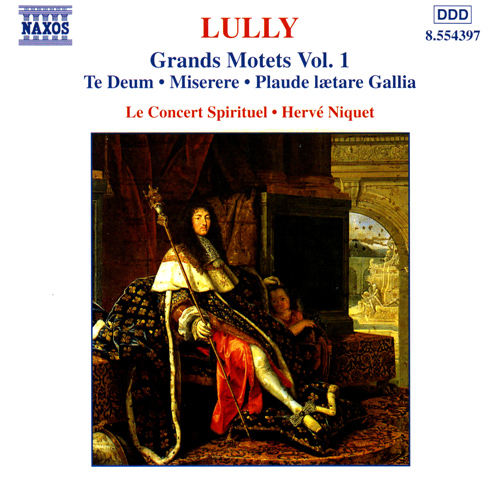
LULLY: Grand Motets, Vol. 1
By the age of twenty-one Jean-Baptiste Lully had become Composer of the King’s Instrumental Music and for the next thirty years he almost completely dominated music life at the court and in French theatres, winning in 1672 the exclusive right to produce opera. His output ranged from Church music to ballets de cour and notable collaborations with Molière in the form of comédie-ballets such as Le bourgeois gentilhomme. He died working, stabbing himself in the foot with his conducting cane whilst directing a performance of his Te Deum.
In these works, written for the Chapel Royal, Lully is inspired to paint a whole sweep of emotions, at once melancholy, plaintive, sweet, tragic, suffering, noble and victorious. Observe his mastery of colour. Listen to how choral and orchestral textures, now in five, now in ten parts, change with the rhythm of the text. Note how subtle touches of orchestral colour highlight the meaning of a word of the sweetness of a modulation.
Tracklist

Niquet, Hervé (Conductor)
|
 |
1 | Symphonie | 06:42 |
Niquet, Hervé (Conductor)
|
|
2 | Patrem immensae majestatis | 06:00 |
Niquet, Hervé (Conductor)
|
|
3 | Tu ad dexteram Dei sedes | 04:25 |
Niquet, Hervé (Conductor)
|
|
4 | Salvum fac populum tuum | 04:33 |
Niquet, Hervé (Conductor)
|
|
5 | Dignare, Domine | 05:29 |
Niquet, Hervé (Conductor)
|
|
6 | In Te, Domine, speravi | 01:53 |
Niquet, Hervé (Conductor)
Bible - Old Testament - Lyricist
Niquet, Hervé (Conductor)
|
|
7 | Symphonie | 06:21 |
Niquet, Hervé (Conductor)
|
|
8 | Ut justificeris in sermonibus | 05:08 |
Niquet, Hervé (Conductor)
|
|
9 | Averte faciem tuam | 03:04 |
Niquet, Hervé (Conductor)
|
|
10 | Docebo iniquos vias tuas | 05:16 |
Niquet, Hervé (Conductor)
|
|
11 | Benigne fac, Domine | 02:13 |
Niquet, Hervé (Conductor)
Niquet, Hervé (Conductor)
|
|
12 | Symphonie | 02:39 |
Niquet, Hervé (Conductor)
|
|
13 | O Jesu vita Precantium | 02:40 |
Niquet, Hervé (Conductor)
|
|
14 | Vivat regnet princeps fidelis | 02:01 |
Niquet, Hervé (Conductor)
Loading...