
 Translate
































 | Loading... |
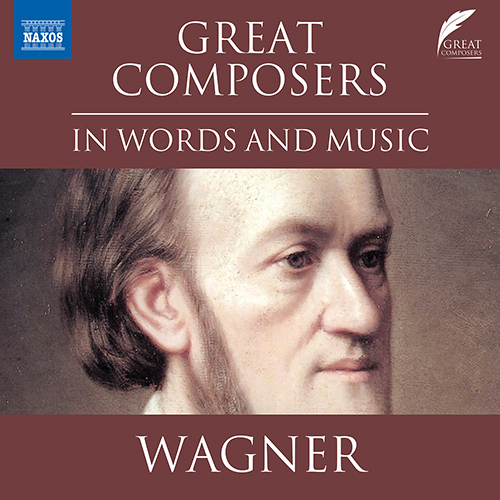
WAGNER, R.: Great Composers in Words and Music
The Bayreuth Festspielhaus stands today as a testament to Richard Wagner’s ambition and self-importance – a theatre designed and built solely for the performances of his immersive ‘music dramas’. From the influence of Beethoven to the transcendental properties of his greatest music, Wagner’s work became a cornerstone of European musical culture, but what kind of journey took him towards this remarkable achievement? In this fascinating audio biography we hear about Wagner’s tempestuous personal life, his controversial political views and his struggles to establish himself as one of the most influential musical visionaries of the 19th century. The narrative is illustrated with excerpts from all of his best-loved operas including the Ring cycle, Tristan und Isolde, Lohengrin, Der fliegende Holländer, Parsifal, and more.
Tracklist

|
 |
1 | Introduction | 00:09 |
McGlinn, John (Conductor)
|
|
2 | Lohengrin, Act III: Prelude (excerpt) | 01:32 |
McGlinn, John (Conductor)
|
|
3 | On laying the foundation stone of the Bayreuth Festspielhaus on 22 May 1872, Richard Wagner - who turned 59 years old that day - declared: 'I need a theatre such as I alone can build…' | 07:07 |
|
|
4 | String Quartet No. 14 in C-Sharp Minor, Op. 131: V. Presto (excerpt) | 00:42 |
|
|
5 | An extract from Ludwig van Beethoven's String Quartet in C sharp minor, Op. 131 is a useful place to start to sketch Wagner's life history. | 02:19 |
Märkl, Jun (Conductor)
|
|
6 | Symphony in C Major: I. Sostenuto e maestoso - Allegro con brio (excerpt) | 00:51 |
Märkl, Jun (Conductor)
|
|
7 | Given his family's theatrical pursuits, it is perhaps no surprise that Wagner turned his attention from the concert hall to the stage. | 02:37 |
Märkl, Jun (Conductor)
|
|
8 | Die Feen (The Fairies), Act I: Overture (excerpt) | 01:24 |
Märkl, Jun (Conductor)
|
|
9 | Wagner's second completed opera Das Liebesverbot ('The Ban on Love'), a comic opera in two acts modelled on Shakespeare's Measure for Measure, was written during the composer's brief tenure as… | 04:46 |
Wagner, Richard - Lyricist
Segerstam, Leif (Conductor)
|
|
10 | Rienzi, Act II: Chor der Friedensboten (Chorus of the Messengers of Peace) (excerpt) | 01:14 |
Segerstam, Leif (Conductor)
|
|
11 | Triumph, however, did not ensue. Rather, calamity, disillusionment and failure. | 03:46 |
Wagner, Richard
Vienna Radio Symphony Orchestra (Orchestra)
Steinberg, Pinchas (Conductor)
|
|
12 | Der fliegende Holländer (The Flying Dutchman), Act I: Aria: Die Frist ist um (The time has come) (excerpt) | 02:03 |
Vienna Radio Symphony Orchestra (Orchestra)
Steinberg, Pinchas (Conductor)
|
|
13 | Success with Rienzi brought immediate benefits, not least the premiere on 2 January 1843 - also at the Dresden Hoftheater - of The Flying Dutchman… | 03:25 |
Halász, Michael (Conductor)
|
|
14 | Lohengrin, Act I: Prelude (excerpt) | 01:28 |
Halász, Michael (Conductor)
|
|
15 | There was a reason that Wagner did not conduct, or even attend, the Weimar premiere of Lohengrin in the late summer of 1850. | 02:46 |
Mund, Uwe (Conductor)
|
|
16 | Die Walküre (The Valkyrie), Act III: Ride of the Valkyries (excerpt) | 01:11 |
Mund, Uwe (Conductor)
|
|
17 | It would be some time before music such as this, Ride of the Valkyries from Wagner's Die Walküre, would be heard in the theatre. | 04:49 |
Wagner, Richard - Lyricist
Hong Kong Philharmonic Orchestra (Orchestra)
Zweden, Jaap van (Conductor)
|
|
18 | Das Rheingold (The Rhinegold), Scene 4: Weiche, Wotan, weiche! Flieh' des Ringes Fluch! (Yield, Wotan, yield! Escape from the ring's curse!) (excerpt) | 01:47 |
Hong Kong Philharmonic Orchestra (Orchestra)
Zweden, Jaap van (Conductor)
|
|
19 | Wagner's symphonic-style orchestral writing has been thought to betray the influence of a composer mentioned at the start of this biography: Beethoven. | 04:38 |
Schwarz, Gerard (Conductor)
|
|
20 | Tristan und Isolde, Act I: Prelude (excerpt) | 02:25 |
Schwarz, Gerard (Conductor)
|
|
21 | A second major work by Wagner created during the lengthy hiatus in the composition of the Ring provided a stark contrast: this was Die Meistersinger von Nürnberg… | 01:18 |
Wagner, Richard
Royal Opera House Orchestra, Covent Garden (Orchestra)
Haitink, Bernard (Conductor)
|
|
22 | Die Meistersinger von Nürnberg (The Mastersingers of Nuremberg), Act III: Wacht auf, es nahet gen den Tag (Awake! The dawn of day is nearing) (excerpt) | 02:28 |
Royal Opera House Orchestra, Covent Garden (Orchestra)
Haitink, Bernard (Conductor)
|
|
23 | Wagner had begun the music to Die Meistersinger in February 1862 while living temporarily in Mainz. | 02:19 |
Halász, Michael (Conductor)
|
|
24 | Tannhäuser, Act I: Venusberg Music (Paris 1861 version) (excerpt) | 00:58 |
Halász, Michael (Conductor)
|
|
25 | A period of relative calm and contentment was to ensue, thanks entirely to the intervention of the eighteen-year-old Ludwig II, King of Bavaria. | 05:44 |
Zweden, Jaap van (Conductor)
|
|
26 | Götterdämmerung (Twilight of the Gods), Act III Scene 2: Siegfrieds Trauermarsch (Siegfried's Funeral March) (excerpt) | 01:14 |
Zweden, Jaap van (Conductor)
|
|
27 | Following the premiere of the complete Ring cycle - comprising no less than sixteen hours of music extended over four evenings in mid-August 1876 - Wagner remained for the rest of his life… | 03:21 |
Ötvös, Gabor (Conductor)
|
|
28 | Parsifal, Act III: Höchsten Heiles Wunder! (Highest holy Wonder!) (excerpt) | 02:02 |
Ötvös, Gabor (Conductor)
Loading...