
 Translate
































Exclusively available for streaming and download.
 | Loading... |
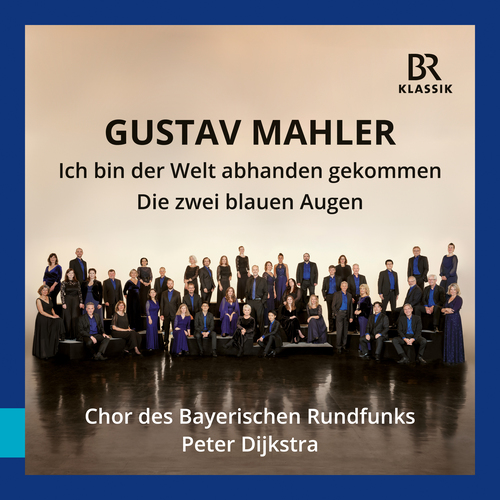
MAHLER, G.: Ich bin der Welt abhanden gekommen / Die zwei blauen Augen (arr. for choir) (Bavarian Radio Chorus, Dijkstra) (2014 Recordings)
LOVE AND LOSS AND WORLD AND DREAM According to Friedrich von Schiller Der Abend (The Evening) offers refreshment, tranquility and – at least for the god Phoebus! – an opportunity to enjoy some sweet loving. In the other texts for choral music by Strauss and Mahler, however, “Night and Dream” stand for something completely different: they promise the mortal, who suffers from conditions in the real world, utopia and consolation. If longing and pain, especially because of unrequited love here below, still become unbearable, the poets of the romantic era evoke salvation through death. We have no of an a cappella choral work of Gustav Mahler. The appearances on this release are attributable to Clytus Gottwald, an expert in the field of new music and a founder of the Stuttgart Schola Cantorum. Gottwald lamented a decline in the composition of autonomous choral music at the end of the 19th century, and has sought since the 1980’s to fill the gap by transcribing one work after another from the late romantic and impressionistic eras for a cappella chorus. Likewise moved by the story of a hopeless love, the young Gustav Mahler wrote in 1884/85 the Lieder eines fahrenden Gesellen (Songs of a Wayfarer). The final piece, Die zwei blauen Augen (The Two Blue Eyes) takes the rejected lover to a linden tree, underneath which he finally finds rest in sleep after his long wandering. While the song ends in the peaceful key of F major and suggests that “everything is good again” the instrumental postlude returns to the funeral march at the beginning with its throbbing rhythm and its heavy-hearted minor key. This turn of musical events has provoked a number of different interpretations. Does the protagonist die? Or has he learned how to endure the co-existence of “love and loss and world and dream”? The Ich in Friedrich Ruckert’s Ich bin der Welt abhanden gekommen (I Have Been Misplaced by the World) decisively takes his leave from the hurly burly of the world. Mahler’s musical setting, written in 1901, comes across as withdrawn right from the initial gently hinted motifs. The music reacts to the total retreat of the indi-vidual from reality with the increasing resolution of strophic structures. Is the collec-tive utterance of a chorus the right medium for the communication of such radical subjectivity? Gottwald`s transcription technique, which interweaves a large number of equal-ranked choral parts, completely cancels out the contrast between solo and accompaniment. On a musical level, the late romantic era, however, reveals compa-rable tendencies, when the entire setting of an opera score both the instrumental and the vocal parts is impermeated with the same (Leit-) motivic structure, or open Mahler`s orchestral songs to symphonic treatment and absolute music.
Tracklist

Rückert, Friedrich - Lyricist
Gottwald, Clytus - Arranger
Dijkstra, Peter (Conductor)
|
 |
1 | Rückert-Lieder: No. 5. Ich bin der Welt abhanden gekommen (arr. C. Gottwald for choir) | 07:15 |
Dijkstra, Peter (Conductor)
Mahler, Gustav - Lyricist
Gottwald, Clytus - Arranger
Dijkstra, Peter (Conductor)
|
|
2 | Lieder eines fahrenden Gesellen (Songs of a Wayfarer): No. 4. Die zwei blauen Augen (arr. C. Gottwald for choir) | 05:08 |
Dijkstra, Peter (Conductor)
Loading...