
 Translate
































 | Loading... |
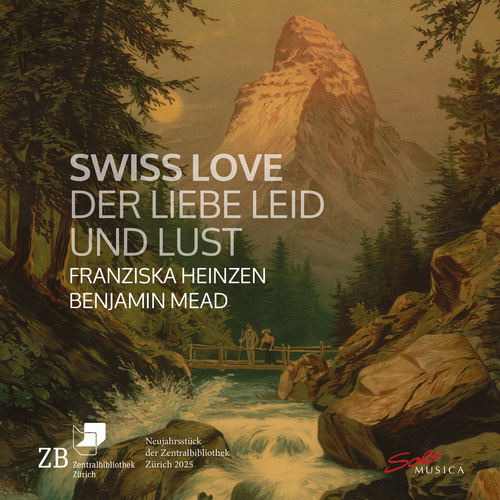
Vocal Recital (Soprano): Heinzen, Franziska - ESCHMANN, J.C. / KEMPTER, L. / RÖTHLISBERGER, Y. (Swiss Love - Der Liebe Leid und Lust)
From Switzerland into the world...” Lieder composition in Switzerland: German art songs, folk songs and dialect songs
“What is the German’s fatherland? Is it the land of the Swiss? is it Tirol?” asked Ernst Moritz Arndt, lyricist of the Wars of Liberation against Napoleon, in a verse of his patriotic song of 1813 bearing that name; he answered his own question: “The land and people pleased me well. But no! no! no! His fatherland must greater be.” Switzerland as part of a Greater Germany? The four native languages of the Alpine lands – a problem for Arndt’s view, given that it rested on Johann Gottfried Herder’s idea of the nation as a community united by its language – is not addressed. Is that because the poet saw Switzerland as an artificial creation?
The long 19th century was a time of antagonism, uncertainty and contradictions for a Switzerland on the threshold of becoming a modern state, particularly after the federal constitution of 1848 had made it into a republican island in the heart of Europe. At the time of the Napoleonic Wars it was a place of refuge for such conscientious objectors as Joachim Raff’s father Joseph, in the Metternich era for upstart poets like Georg Herwegh or Ferdinand Freiligrath and after the events of 1848/49 for fleeing revolutionaries like Richard Wagner. At the same time it remained a classic example of authenticity, which since the time of Jean-Jacques Rousseau had been elevated into a freedom-loving utopia, celebrated in box-office hits like the sentimentally bourgeois opera Die Schweizerfamilie by Austrian composer Joseph Weigl or Gioachino Rossini’s Guillaume Tell – although many travellers through Switzerland, such as Fanny Mendelssohn, were shocked by the abject poverty of rural districts.
The cultural life of German-speaking Switzerland has been shaped on the one hand by the language they share with other German-speaking lands and their orientation to the established mechanisms of that society, on the other hand by differing emphasis on national, social and personal characteristics. Mid-nineteenth-century Swiss cities and towns still offered few opportunities for professional training and employment of a new generation of artists. The Swiss music scene was thus shaped by émigré musicians. Composers who had grown up in Switzerland like Franz Xaver Schnyder von Wartensee or Joachim Raff pursued their careers abroad; others went to Germany for a musical education. For the rest, leading figures in musical life came from the German states. Songs by composers active in Switzerland reflect the circumstances of their time. Even before Franz Schubert, the art song (the Lied) took many different forms, varying from simple folk-like sets of verses to virtuoso opera arias in embryo. Lieder have always been a feature of domestic music-making and are sung for pleasure by music-lovers; in the form of the choral song, the Lied exercised an important function in social interaction while also making a major contribution to a sense of national identity, and it formed an integral part of concert programmes in various genres and settings or in the emerging format of the Lieder recital. The four composers represented on this recording with a cycle or songbook all received at least some of their education in the “great canton” of Germany, orienting themselves on the German art song and hoping for good sales in German markets.
Tracklist

Traditional - Lyricist
Britten, Benjamin - Arranger
Mead, Benjamin (piano)
|
 |
1 | 'S isch äben e Mönsch uf Ärde (arr. B. Britten for voice and piano) | 04:35 |
Mead, Benjamin (piano)
Geibel, Emanuel von - Lyricist
Mead, Benjamin (piano)
|
|
2 | No. 1. Das Mädchen | 03:14 |
Mead, Benjamin (piano)
|
|
3 | No. 2. Der Mond | 03:18 |
Mead, Benjamin (piano)
|
|
4 | No. 3. Die Lichtelfen | 01:22 |
Mead, Benjamin (piano)
|
|
5 | No. 4. Der Knabe | 01:36 |
Mead, Benjamin (piano)
|
|
6 | No. 5. Die Nachtigall am Fenster | 02:35 |
Mead, Benjamin (piano)
Traditional - Lyricist
Frances-Hoad, Cheryl - Arranger
Mead, Benjamin (piano)
|
|
7 | Schönster Abestärn (arr. C. Frances-Hoad for voice and piano) | 03:13 |
Mead, Benjamin (piano)
Geibel, Emanuel von - Lyricist
Eichendorff, Joseph von - Lyricist
Müller, Wilhelm - Lyricist
Mead, Benjamin (piano)
|
|
8 | No. 2. Es schienen so golden die Sterne | 03:21 |
Mead, Benjamin (piano)
|
|
9 | No. 3. Auf dem Meere | 03:16 |
Mead, Benjamin (piano)
|
|
10 | No. 4. Denn du bist fern | 03:56 |
Mead, Benjamin (piano)
|
|
11 | No. 5. Nächtlich macht der Herr die Rund' | 02:46 |
Mead, Benjamin (piano)
Zullinger, Hans - Lyricist
Zehnder, Flurina - Arranger
Stucki, Heidi - Arranger
Mead, Benjamin (piano)
|
|
12 | Du fragsch mi, wär i bi (arr. H. Stucki and F. Zehnder for voice and piano) | 02:44 |
Mead, Benjamin (piano)
Bayern, Mathilde von - Lyricist
Lenau, Nikolaus - Lyricist
Dehmel, Richard - Lyricist
Mead, Benjamin (piano)
|
|
13 | No. 1. Helle Nacht | 02:28 |
Mead, Benjamin (piano)
|
|
14 | No. 2. Verzweiflung | 01:54 |
Mead, Benjamin (piano)
|
|
15 | No. 3. Ich liebe Dich | 02:03 |
Mead, Benjamin (piano)
|
|
16 | No. 4. Mein Geleit | 02:10 |
Mead, Benjamin (piano)
|
|
17 | No. 5. Aus banger Brust | 03:10 |
Mead, Benjamin (piano)
|
|
18 | No. 6. Aufblick | 02:27 |
Mead, Benjamin (piano)
|
|
19 | No. 7. Sehnsucht nach Vergessen | 02:48 |
Mead, Benjamin (piano)
Henne, Josef Anton - Lyricist
Mead, Benjamin (piano)
|
|
20 | Lueget, vo Bärgen und Tal | 02:21 |
Mead, Benjamin (piano)
Heine, Heinrich - Lyricist
Eichendorff, Joseph von - Lyricist
Kugler, Franz Theodor - Lyricist
Fallersleben, Hoffman von - Lyricist
Mead, Benjamin (piano)
|
|
21 | No. 1. Abendlied | 03:03 |
Mead, Benjamin (piano)
|
|
22 | No. 2. Nacht liegt auf den fremden Wegen | 04:04 |
Mead, Benjamin (piano)
|
|
23 | No. 3. Warme verschwieg'ne Nacht | 02:24 |
Mead, Benjamin (piano)
|
|
24 | No. 4. Mondnacht | 03:11 |
Mead, Benjamin (piano)
Beul, Artur - Lyricist
Brunner, Raban - Arranger
Mead, Benjamin (piano)
|
|
25 | Am Himmel Stoht Es Sternli (arr. R. Brunner for voice and piano) | 03:23 |
Mead, Benjamin (piano)
Loading...