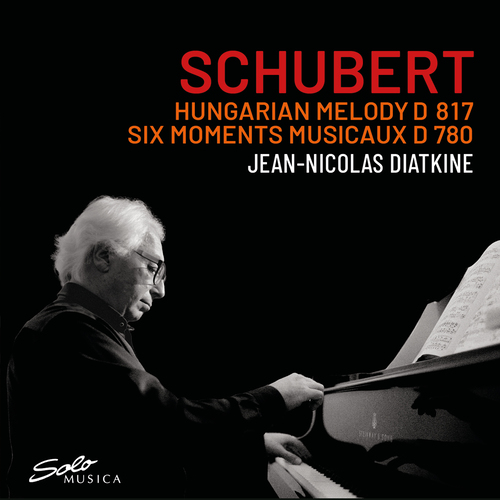
Listening to Schubert’s music is an invitation to enter an enchanting imaginary world, whose fragrance is so powerful that both listener and performer cannot help but surrender to the dream they feel blossoming within them, spellbound to the point of momentarily losing all sense of reality. Paradoxically, Schubert thus demands great mastery from the performer and a very precise knowledge of the smallest details of the score. In the course of my research, I found confirmation throughout the pages that this power of suggestion was a natural and involuntary effect of the composer’s personality. His friend, the singer Vogl, wrote: “There are two ways of composing: one, as in Schubert’s case, comes into the world in a state of clairvoyance or somnambulism, without the intervention of the composer’s free will, but only as he must, following the force majeure of his inspiration. The other way is made up of free will, reflection, effort and science. ” (B. Massin, Franz Schubert, p. 460). The Six Moments Musicaux D.780 probably composed between 1823 and 1824 and published in 1828, are divided into two books, each containing three pieces.

 Translate