
 Translate

































 | Loading... |
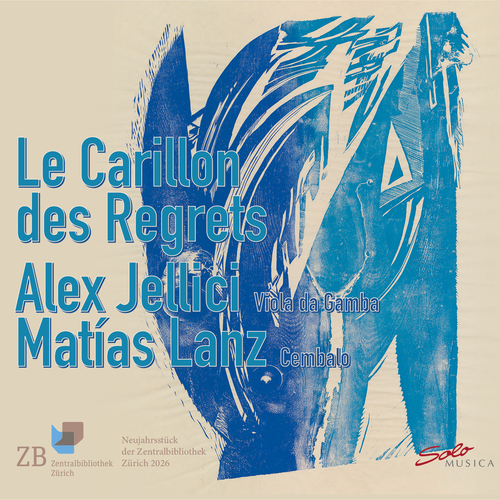
Viola da gamba and Harpsichord Recital: Jellici, Alex / Lanz, Matías - COUPERIN, F. / FORQUERAY, A. / FRISCHKNECHT, H.E. (Le Carillon des Regrets)
NEW YEAR ISSUES FROM THE ZURICH CENTRAL LIBRARY
There is a Zurich tradition going back to the 17th century that on the second day of January, Bächtelistag or Berchtoldstag, New Year publications would be circulated. Societies and institutions gave out printed matter, illustrations or sheet music to the young people of Zurich in return for a modest sum. The money thus raised was intended for the heating of public rooms and was therefore known as “Stubenhitze”. Founded in 1629, the City Library established this New Year tradition in 1645 by publishing an engraving by Hans Conrad Meyer with a poem by Johann Wilhelm Simmler, the first time such a New Year issue had been offered by a Zurich corporation. The Central Library of Zurich, formed in 1914 by the amalgamation of the municipal and cantonal libraries, initially continued that custom. Regular issues ended in 1925 and were completely abandoned in 1939. The old tradition was revived in new guise in 2005 with a CD of piano music by Winterthur composer Johann Carl Eschmann, whose papers and manuscripts are held in the Zurich Central Library. From songs for tenor voice by Zwingli to music of the twenty-first century, an extensive repertoire of instrumental and vocal music for the widest possible range of voices and ensembles has been recorded and released on CD, some of it for the first time.
Le Carillon des Regrets
The history of music is full of curious compositions outside the established canons that are known only to selected connoisseurs. There is a particular preference in this respect for musical programme pieces from the Baroque era, that is to say before the establishment of programme music as a genre in the 19th century. That includes the numerous, often amusing ‘animal pieces’ like the Sonata representativa by Heinrich Ignaz Franz Biber or the Cuckoo’s Capriccios and Concertos by such eminent composers as George Frideric Handel. This practice may also extend however to sacred themes such as the Biblical Histories of Johann Kuhnau or Biber’s Rosary Sonatas. Less frequently, pieces of music may have a culinary background and even more rarely, a medical one. It is a piece in the latter category that is the subject of this programme. As it is so bizarrely unique, it forms the central element and guiding light of a complete story.
Tracklist

Lanz, Matías (harpsichord)
|
 |
1 | Pièces de viole: Suite No. 4 in G Minor: VI. Le Carillon de Passy | 03:02 |
Lanz, Matías (harpsichord)
Lanz, Matías (harpsichord)
|
|
2 | Die kluge Schlange: Spionage und Bau (arr. for viola da gamba and harpsichord) | 04:01 |
Lanz, Matías (harpsichord)
Haensler, Stephanie - Arranger
Lanz, Matías (harpsichord)
|
|
3 | Pièces de théorbe et de luth mises en partition dessus et basse: La Mascarade (arr. S. Haensler for viola da gamba and harpsichord) | 02:07 |
Lanz, Matías (harpsichord)
Lanz, Matías (harpsichord)
|
|
4 | Pieces de viole, Book 5: Suite in E Minor: XVII. Le tableau de l'operation de la taille | 02:50 |
Lanz, Matías (harpsichord)
|
|
5 | Entwicklung | 05:05 |
Lanz, Matías (harpsichord)
|
|
6 | Violin Sonata in B Major, Op. 3, No. 5: Largo (arr. for viola da gamba and harpsichord) | 03:49 |
Lanz, Matías (harpsichord)
Forqueray, Jean-Baptiste - Arranger
|
|
7 | Pièces de viole: Suite No. 4 in G Minor: VI. Le Carillon de Passy (arr. J.-B. Forqueray for harpsichord) | 03:16 |
|
|
8 | Ground | 04:14 |
Lanz, Matías (harpsichord)
|
|
9 | Pièces de clavecin, Book 1: 3rd Ordre in C Major-Minor: Les regrets (arr. for viola da gamba and harpsichord) | 03:19 |
Lanz, Matías (harpsichord)
Lanz, Matías (harpsichord)
|
|
10 | Pièces de violes avec la basse chifrée: Suite No. 2 in A Major: III. Pompe funèbre (arr. for viola da gamba and harpsichord) | 06:21 |
Lanz, Matías (harpsichord)
Lanz, Matías (harpsichord)
|
|
11 | Pieces de clavecin, Book 4: 26th Ordre in F-Sharp Minor: I. La Convalescente (The Convalescent) (arr. for viola da gamba and harpsichord) | 04:14 |
Lanz, Matías (harpsichord)
Lanz, Matías (harpsichord)
|
|
12 | I. Largo | 02:49 |
Lanz, Matías (harpsichord)
|
|
13 | II. Allegro | 01:56 |
Lanz, Matías (harpsichord)
|
|
14 | III. Soave | 02:50 |
Lanz, Matías (harpsichord)
|
|
15 | IV. Allegro | 03:04 |
Lanz, Matías (harpsichord)
Loading...