
 Translate
































 | Loading... |
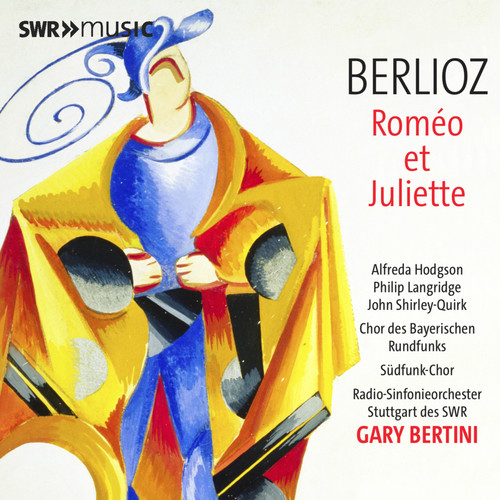
BERLIOZ, H.: Roméo et Juliette (Hodgson, Langridge, Shirley-Quirk, Bavarian Radio Chorus, Stuttgart Südfunkchor, Stuttgart Radio Symphony, Bertini)
When 23-year-old Hector Berlioz saw Shakespeare’s “Romeo and Juliet” on stage for the first time in 1827, he was deeply moved by the experience, probably not least because of the Irish actress Harriet Smithson, who played Juliet. She became Berlioz’s wife in 1833, and another six years later he completed his chorus-symphony “Roméo et Juliette”, Op. 17. “Roméo et Juliette” is by no means intended as an attempt to transpose Shakespeare’s drama as faithfully as possible; not a single verse of Shakespeare’s text was included in the libretto, which was written by the poet Émile Deschamps based on Berlioz’s drafts. When the Prologue refers to Shakespeare as the only person who knew the highest secret of poetry, it is clear that the listener is deliberately placed in Berlioz’s perspective, whose imagination is ignited by Shakespeare’s genius. As in the case of the “Harold” symphony based on Byron, Berlioz adapts the original very freely. In both cases, he develops entire movements from episodes that are of only minor importance in the poem and adds scenes that do not appear there at all.
The present live recording from 1982 showcases Gary Bertini at the peak of his career, conducting the Stuttgart Radio Symphony Orchestra of the SWR. An exquisite cast of singers – Alfreda Hodgson (mezzo-soprano), Philip Langridge (tenor) and John Shirley-Quirk (baritone) – as well as internationally renowned choirs like the Chor des Bayerischen Rundfunks and the SWR Vokalensemble (known until 1998 as Südfunk-Chor) accompany him in the performance of one of the most complex symphonic works of the Romantic era.
Tracklist

Deschamps, Émile - Lyricist
Bertini, Gary (Conductor)
Hodgson, Alfreda (mezzo-soprano)
Bavarian Radio Chorus (Choir)
Stuttgart Südfunkchor (Choir)
Langridge, Philip (tenor)
Shirley-Quirk, John (baritone)
|
 |
1 | Part I: Introduction: Combats - Tumulte - Intervention du Prince | 04:37 |
Bertini, Gary (Conductor)
|
|
2 | Part I: Choral recitative: D'anciennes haines endormies (Mezzo-soprano, Tenor, Chorus) | 05:43 |
Langridge, Philip (tenor)
Bavarian Radio Chorus (Choir)
Stuttgart Südfunkchor (Choir)
Stuttgart Radio Symphony Orchestra (Orchestra)
Bertini, Gary (Conductor)
|
|
3 | Part I: Strophes: Premiers transports que nul n'oublie (Mezzo-soprano, Chorus) | 06:21 |
Bavarian Radio Chorus (Choir)
Stuttgart Südfunkchor (Choir)
Stuttgart Radio Symphony Orchestra (Orchestra)
Bertini, Gary (Conductor)
|
|
4 | Part I: Recitative: Bientôt de Roméo la pâle rêverie (Tenor, Chorus) | 00:23 |
Bavarian Radio Chorus (Choir)
Stuttgart Südfunkchor (Choir)
Stuttgart Radio Symphony Orchestra (Orchestra)
Bertini, Gary (Conductor)
|
|
5 | Part I: Scherzetto: Mab la messagère (Tenor, Chorus) | 03:03 |
Bavarian Radio Chorus (Choir)
Stuttgart Südfunkchor (Choir)
Stuttgart Radio Symphony Orchestra (Orchestra)
Bertini, Gary (Conductor)
|
|
6 | Part II: Roméo Seul - Tristesse - Bruit lointain de Concert et de Bal - Grand Fête Chez Capulet | 07:32 |
Bertini, Gary (Conductor)
|
|
7 | Part II: Fête | 05:40 |
Bertini, Gary (Conductor)
|
|
8 | Part II: Scène d'amour: Ohé! Capulets, bonsoir! (Chorus) | 03:20 |
Stuttgart Südfunkchor (Choir)
Stuttgart Radio Symphony Orchestra (Orchestra)
Bertini, Gary (Conductor)
|
|
9 | Part II: Scène d'amour | 16:33 |
Bertini, Gary (Conductor)
|
|
10 | Part II: Scherzo: La Reine Mab ou la Fée des Songes | 08:04 |
Bertini, Gary (Conductor)
|
|
1 | Part III: Convoi funèbre de Juliette: Marche fuguée: Jetez des fleurs pour la vierge expirée! (Chorus) | 10:27 |
Stuttgart Südfunkchor (Choir)
Stuttgart Radio Symphony Orchestra (Orchestra)
Bertini, Gary (Conductor)
|
|
2 | Part III: Roméo au tombeau des Capulets | 01:39 |
Bertini, Gary (Conductor)
|
|
3 | Part III: Invocation - Réveil de Juliette - Joie délirante, désespoir, dernières angoisses et mort de deux amants | 06:58 |
Bertini, Gary (Conductor)
|
|
4 | Part III: Finale: La foule accourt au Cimetière - Rixe des Capulets et des Montagus: Quoi! Roméo de retour! (Chorus) | 01:30 |
Stuttgart Südfunkchor (Choir)
Stuttgart Radio Symphony Orchestra (Orchestra)
Bertini, Gary (Conductor)
|
|
5 | Part III: Finale: Recitative: Je vais dévoiler le mystère (Le Père Laurence, Chorus) | 02:49 |
Bavarian Radio Chorus (Choir)
Stuttgart Südfunkchor (Choir)
Stuttgart Radio Symphony Orchestra (Orchestra)
Bertini, Gary (Conductor)
|
|
6 | Part III: Finale: Aria: Pauvres enfants que je pleure (Le Père Laurence) | 05:09 |
Stuttgart Radio Symphony Orchestra (Orchestra)
Bertini, Gary (Conductor)
|
|
7 | Part III: Finale: Mais notre sang rougit leur glaive (Le Père Laurence, Chorus) | 04:35 |
Bavarian Radio Chorus (Choir)
Stuttgart Südfunkchor (Choir)
Stuttgart Radio Symphony Orchestra (Orchestra)
Bertini, Gary (Conductor)
|
|
8 | Part III: Finale: Serment: Jurez donc par l'auguste symbole (Le Père Laurence, Chorus) | 05:29 |
Bavarian Radio Chorus (Choir)
Stuttgart Südfunkchor (Choir)
Stuttgart Radio Symphony Orchestra (Orchestra)
Bertini, Gary (Conductor)
Loading...