
 Translate

































 | Loading... |
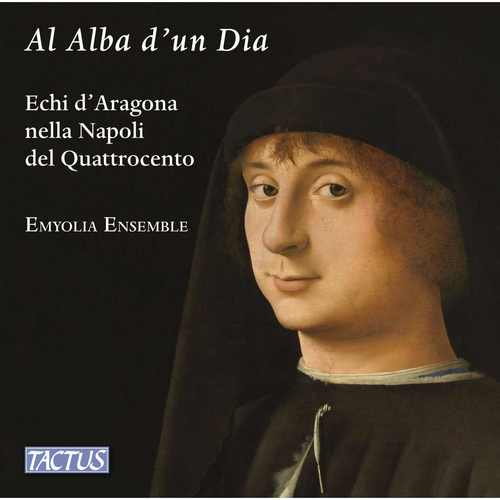
AL ALBA D'UN DIA (Emyolia Ensemble)
During the 15th century, the Aragonese dynasty reshaped the cultural geography of the Mediterranean, shifting its center of gravity from Valencia to Naples. With Alfonso the Magnanimous, starting in 1435, the Neapolitan capital was transformed into one of the most vibrant crossroads of Renaissance Europe, a meeting point between Franco-Burgundian polyphony, Italian lyric poetry, and Iberian vocal repertoires.
This sonic heritage outlines a musical landscape rich in nuance and articulation, which permeated different spheres of social life: from the official sphere of representation to collective religious practices, and even to forms of public and festive expression. The music resounded in ceremonial halls, cloisters, and squares, adapting to multiple functions–celebratory, spiritual, playful–and reflecting the complexity of a culture that made music a distinctive sign of identity and prestige. It is the voice–now intimate, now solemn, now joyful–of a layered and dynamic musical civilization, which made Naples one of the sonic capitals of Renaissance Europe.
The Emyolia Ensemble’s choice to perform polyphonic and contrapuntal pieces using three lutes and a dulcimer has the dual purpose of making the musical texture more homogeneous while, at the same time, highlighting–through the only percussion instrument used–the cantus, the voice that conveyed the author’s message to their audience.
Tracklist

|
 |
1 | Al alba venid, buen amigo [Biblioteca de Palacio Real, MS II-1335, Madrid, ca. 1498-1520] | 03:28 |
|
|
2 | Dindirindin [Biblioteca de Palacio Real, MS II-1335, Madrid, ca. 1498-1520] | 01:54 |
|
|
3 | Tres morillas m'enamoran [Biblioteca de Palacio Real, MS II-1335, Madrid, ca. 1498-1520] | 02:10 |
|
|
4 | Si habra en este baldres? | 04:59 |
|
|
5 | L'amor donna ch'io te porto [Biblioteca Capitular y Colombina, MS 7-I-28, Seville, ca. 1940] | 02:18 |
|
|
6 | Como no lo andare yo [Biblioteca de Palacio Real, MS II-1335, Madrid, ca. 1498-1520] | 02:31 |
|
|
7 | Nunca fue pena mayor | 03:05 |
|
|
8 | Falla con Misuras [Venice, 1556] | 01:48 |
|
|
9 | Rodrigo Martinez [Biblioteca de Palacio Real, MS II-1335, Madrid, ca. 1498-1520] | 02:52 |
|
|
10 | Oy comamos y bevemos | 01:47 |
|
|
11 | Canto della Sibilla [Biblioteca de Palacio Real, MS II-1335, Madrid, ca. 1498-1520] | 02:12 |
|
|
12 | Verbum caro factum est [Civico Bibliografico Musicale Q16, Bologna, 15th century] | 02:38 |
|
|
13 | Levanta Pascual, levanta | 02:18 |
|
|
14 | Cómo puedo yo vivir [Civico Bibliografico Musicale Q16, Bologna, 15th century] | 02:04 |
|
|
15 | Ay luna que reluces [Biblioteca de Palacio Real, MS II-1335, Madrid, ca. 1498-1520] | 02:16 |
Loading...