 Translate




























 | Loading... |
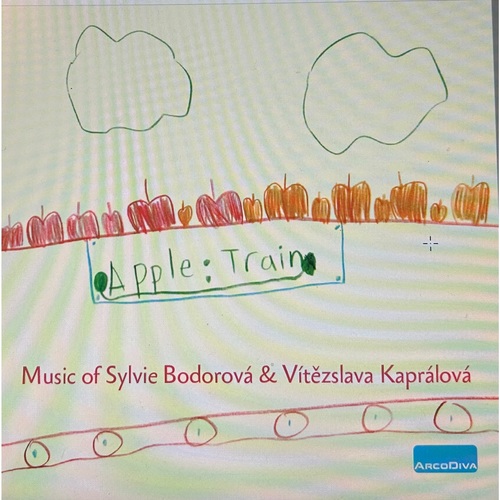
BODOROVÁ, S.: Apple Train / KAPRÁLOVÁ, V.: Potkali se včera lidé dva (Jelínková, Gráf, Haasová, Polák, Cheek, Škampa Quartet)
This recording includes works by two leading Czech composers, both of them women. Vítězslava Kaprálová (1915–1940) lived in the first half of the twentieth century, and the career of Sylvie Bodorová (b. 1954) has spanned the final decades of the twentieth century up through the most recent years of the twenty-first. Both composers have excelled in all musical genres, except that Kaprálová’s short life precluded her from exploring the world of opera, her final planned project.
Sylvie Bodorová’s song cycle Apple Train was commissioned by American soprano Laurie Lashbrook and American pianist Timothy Cheek in 2008 and is dedicated to them and Czech dancer Bohuslava Jelínková. The trio premiered the work in Sydney, Australia in 2010, with the addition of child dancer Timothy Joseph Cheek. The choice of Moravian poet Jan Skácel was suggested by Zdenka Brodská, Lecturer in Czech Language and Literature at the University of Michigan, USA. Bodorová chose seven poems by Skácel that, except for the second song, mention water in some way.
The first song, “Rain,” is a playful depiction of a day filled with delicate rain, and filled with delight as the singer excitedly repeats “it’s raining!” (prší) many times. The triangle joins with the singer and pianist to depict the water–while in this song the triangle is a joyful part of the rain, later it will he heard to take on the role of reflecting the spiritual, life-giving force of water since the beginning of creation. It rains on the city, on the asphalt, on the sidewalk, on the larks and sparrows. The song ends as the performers joyfully describe the dancing raindrops (kapky).
The second song, “An old prayer–old!”, is similar to the English Serenity Prayer, spoken to ask God to grant the strength to bear what cannot be changed, the courage to change what can be changed, and the wisdom to know the difference. Bodorová ends the prayer with a plea for the strength to bear everything. This is the only song that does not mention water, but it parallels and foreshadows the seriousness of the sixth song and the prayer of the seventh.
The third song, “I want to hear it”, has a distinctive Moravian atmosphere, contemplating the mystery of life but in a joyful, hopeful way. “At the bottom of every song, even the most sad ones, at the bottom of every glass, something quietly tinkles.” Song has a spiritual source, and the glass surely contains Moravian wine, a giver of life, like water itself. The mysterious tinkling comes in the high register of the piano, joined for a moment by the triangle. The singer ends saying that she must hear the tinkling or her heart would be afraid. The pianist then plays motives of anxiety heard earlier in the piano in the second song, followed by reassuring, quiet tinkling.
The fourth song, “Falling asleep by counting sheep”, forms the center of the song cycle. It is a lullaby, lovingly sung by a mother to her child as together they count sheep that are crossing the water over a footbridge. The song ends with “Let’s keep counting in the morning, and now sleep and say YES, YES, YES.” Bodorová later wrote a version of this song for voice and guitar, separate from the cycle. She often revisits works in this way, not writing mere transcriptions, but new pieces in their own right.
The fifth song, “Round world”, is filled with joy over all that is round in the world, including the world itself, as the day ends and children return home to their mothers–potatoes, little rainclouds, a ball, the sun, the round world!
Skácel’s title for the sixth song, “The sad girl” (Smuténka) is the poet’s own word, and while it means “sad girl,” it also hints at the word studánka, a natural spring welling from the ground that feeds a waterhole. A source of the purest water, a studánka in the Czech lands for centuries was considered sacred, and sometimes had the status of a shrine. It was not only a source of vital drinking water, but could heal sickness. An annual ceremony on May 31 involved a prayer and the cleaning of the studánka. Bodorová’s setting is dramatic and mysterious as the singer ominously describes the approaching winter in a field that is dark, rough, and bare. The sad girl then laments “In the dark is so often sorrow!” Bodorová captures beautifully Skácel’s poem, filled with symbolism, as the girl represents something far more than an individual, very possibly a source of pure water, a sad studánka.
The cycle reaches a climax with the final song, “Prayer for water”. The song is marked “Nobile,” and has the form ABA'B'. The triangle joins the slow introduction, in which the singer laments, in a style similar to folk song, that there are fewer places where her dear ancestor often used to go for water. The piano’s wandering bass then gives way to cascading notes, interspersed with quick three-note figures from the first song–a torrent of water, over which the singer passionately cries voda má, “my water!”–my water remembers, and is beautiful, with long, tousled hair. The singer rises higher, pleading with us to protect the water, “the ancient mirror of the stars.” The two sections then repeat, but in different ways, leading to an even more impassioned plea, with the voice rising even higher to the final climax.
With this recording, the final gap in the discography of works by Vítězslava Kaprálová (1915–1940) is virtually closed. Most of the pieces here are world premiere recordings. It has been a joy to complete the recording of songs that began with the Supraphon release of almost all of the composer’s songs with soprano Dana Burešová and myself in 2003. Rerecorded are January/Leden, performed here with a tenor for the first time; and Letter/Dopis, which is finally recorded with Kaprálová’s original intention of a baritone. The great melodrama To Karel Čapek and Kaprálová’s two earliest songs from 1931 deserve more performances and recordings, and so are presented here, as well.
January is a haunting work by the eighteen-year-old composer. Kaprálová’s unusual instrumentation beautifully captures poet Vítězslav Nezval’s melancholy, fear, and the surrealistic imagery of an icy winter, vases, glittering candles, and a cathedral with its organ. Performances have been steadily increasing ever since its premiere in 2003.
Kaprálová composed her first Songs in 1931 at the age of sixteen. The author of the texts is unknown, but since the composer was a gifted poet, it is very possible that the texts are by Kaprálová herself. Originally planned as a set of three songs, Kaprálová only set the first and last of three poems:
Two people met yesterday
Two people met yesterday
to give each other their own hearts.
The cruel city looked at them,
it saw, it saw how they hold their hands.
The sadness of the days in love soon blossomed
into a painful wound and mute distrust.
One day you will ask
One day you will ask
why I don’t ask you about your love,
why I don’t ask: “Do you love me?”
But then in silence you will feel
the severity of my fate and heart.
That you are to me the light, air, and earth,
like branches grown together with twigs in the thickets,
so in silence I am yours.
Translations by Timothy Cheek
Kaprálová wrote the chorus Little Star in 1936, and completed another chorus, Quail, in 1937, to form her Two Choruses for Women’s Voices a cappella op. 17. The texts are in Moravian dialect (from Haná, close to Brno, Kaprálová’s home town), and are from the 1928 second edition of a collection of poems by Ondřej Přikryl (1862–1936). Přikryl captured perfectly the essence of Moravian folk poetry; Kaprálová, too, creates the atmosphere of Moravian folk song within a complex chromatic style of composition. In fact, the composer complained that the pitches were too difficult, and some early performances were with piano instead of being sung a cappella. A delightful, enchanting miniature, Little Star evokes the magic of youthful love, the aroma of flowers and elderberry, and the sparkle and shine of the fallen star:
Little Star
I don’t know how many of you are in the sky,
but I do know that one of you is missing,
a little star–
it fell today into the elderberry,
when I gave my sweetheart a posy.
And that we stood right there at the moment
and it looked at you from down below,
suddenly it flew like your blessing
into my eye.
There was no more than a tiny bit of it left,
and like fireflies it shines there
and now it walks everywhere with me,
it leads my sweetheart’s heart only to me,
it leads it only to me.
Translation by Timothy Cheek and Karla Hartl
Kaprálová opens her chorus Quail with the common Czech “translation” of a quail’s call, pět peněz (five money/coins), using the exact rhythm of the call. Quails figure in quite a few Czech folk songs, and Kaprálová captures beautifully the charm of Přikryl’s folk-inspired poetry:
Quail
“Five coins, five coins!
You are penniless
and that’s why you won’t get married,
you know it, don’t you,”
the quail laughed at me from the clover field.
And I snapped back at it at once:
“You know nothing–nothing.
I could have as many handsome lads as
up to a thousand, a thousand!
But that would be a bad choice
that would be a damned bad choice,
as none can kiss, oh, as well as I.”
Translation by Karla Hartl
The melodrama To Karel Čapek is a great contribution to the Czech tradition of melodrama that includes works by Fibich, Smetana, Foerster, Martinů, and many others. Kaprálová’s melodrama was written in February 1939 for a memorial event in Paris organized as a tribute to the great Czech writer and humanitarian Karel Čapek (1890–1938), who had died on Christmas Day, 1938. It was premiered with Kaprálová as pianist, her cousin Věra Uhlířová as violinist, and probably Michel Léon Hirsh as reciter, using his French translation of the poem To Karel Čapek by Vítězslav Nezval. Nezval’s poem begins “The final candle on the Christmas tree burns today for you,” with the flickering of the candle and the anxiety of the reciter depicted in the tremolo of the piano’s introduction. Several times appears the line “At this fateful time after the cataclysm,” most likely referring to the Munich Agreement signed just three months before Čapek’s death. Hitler was to occupy all of Czechoslovakia one month after the melodrama’s premiere. Toward the end of Kaprálová’s work, there is some hope for the nation that Čapek fought so hard to defend, but the hope soon turns again to sorrow “beneath the final little candle on the Christmas tree.”
The Song of the Workers of the Lord was discovered in the Kaprálová Estate in 1999, written in a copyist’s hand, and marked in someone else’s handwriting “V. Kaprálová, Paris, 1939.” The author of the text is unknown. The music is not typical of the composer’s style, but it is not dissimilar to Kaprálová’s Anthem of the Volunteer Nurses of the Czechoslovak Red Cross from 1938:
Song of the Workers of the Lord
A day of new humanity has shone,
the spirit awakened from a dream seeks its destination,
You rouse the last guard, You call together Your small children,
You would through work revive the world, our Father.
Sad is the native land, cliffs and sod–
although surrounded by the world, it is a lone thorn;
the good fatherly plow, God bless with prosperity,
that it would again be filled with ears of grain, our Czech meadow!
Translation by Timothy Cheek
Kaprálová’s masterful song In the Czech Land was written in 1939 to a poem by Jan Čarek (1898–1966). In the song, a mother asks her son three questions, and his answer is always “In the Czech land”. “Where were you born, my son?,” “Where do you live, my son?” (“In the most beautiful land in the world. . .”), and “Where will you die, my son?”
Kaprálová’s last song Letter is her only song written specifically for baritone. It is dedicated to the Czech baritone Otakar Kraus (1909–1980) and was premiered by him and the composer at the École normale de musique in Paris on May 4, 1940, soon before Kaprálová’s death, probably of typhoid fever, on June 16. Kraus went on to become a prominent operatic baritone, premiering roles by Britten (Tarquinius), Stravinsky (Nick Shadow), and others. Kaprálová composed Letter to a poem by Petr Křička (1884–1949) on April 28, 1940, only five days after she married writer Jiří Mucha (1915–1991), son of famed artist Alphonse Mucha. The poem takes the form of a letter written by a man to the woman who has rejected him, beginning with “You said ‘no.’ So be it. . .” The man blames no one, coming to terms with fate, and the song ends resolutely “The Lord God is a great artist, His paths unfathomable. . .”
Sylvie Bodorová’s Silymabum for string quartet was written in 2020 and commissioned by Classical Movements’ Eric Daniel Helms New Music Program. Its premiere, postponed because of the Covid-19 pandemic, was on July 6, 2022 in Suk Hall, Rudolfinum, Prague as part of the Prague Summer Nights Music Festival. The title of the three-movement work is a play on the words Silybum marianum, milk thistle, which contains an antioxidant, and has been used for millenia in the treatment of liver and gallbladder problems, mushroom poisoning, and more recently diabetes, with some investigating its use against Covid. Bodorová’s Silymabum is a tribute to nature’s mysteries and surprises.
Timothy Cheek
CANTICUM OSTRAVA
The choir Canticum Ostrava originated in 2001 with a wide range of activities in the field of choir art, orchestral activities and experimental contemporary projects. Since 2015, Canticum Ostrava, under the leadership of Yuri Galatenko, has appeared at international festivals and competitions in Greece and Italy, and continues to participate in major musical projects, such as the IMF Leoš Janáček, Ostrava Days of New Music, and NODO. The choir regularly participates in international choral competitions and festivals.
TIMOTHY CHEEK
Timothy Cheek has performed recitals as a collaborative pianist throughout eighteen countries on four continents, as well as on television and on worldwide radio broadcasts, with such artists as Eva Blahová, Adam Plachetka, George Shirley, Therese Cullen, Leonardo De Lisi, Larry Hensel, Robert Spring, Lauren Wagner, and others. Following an internship at the Prague National Theatre under conductor Bohumil Gregor in 1995, he has coached, performed, and taught masterclasses on Czech vocal repertoire with hundreds of singers at summer festivals, music schools, conferences, and opera houses internationally. Cheek is a champion of the works of Vítězslava Kaprálová–his CD of Kaprálová songs with soprano Dana Burešová for Supraphon was nominated for the best recording of 2003 by the Czech journal Harmonie, was featured on BBC Radio’s Composer of the Week in 2015, was heard on the Golden Globe-winning American TV series Mozart in the Jungle in 2017, and continues to be broadcast worldwide. In 2015, he organized the Kaprálová Festival at the University of Michigan, in which almost all of the composer’s works were performed to celebrate Kaprálová’s 100th birthday. Cheek has also edited many of Kaprálová’s works for Amos Editio and Czech Radio. He appears in the 2025 documentary on Kaprálová by Czech film director Petr Záruba. His books Singing in Czech, with a foreword by Sir Charles Mackerras; a series on Janáček’s operas; and books on Smetana’s The Bartered Bride and Dvořák’s Rusalka are recognized internationally as authoritative resources for singing in Czech. Dr. Cheek is Professor of Music at the University of Michigan.
JOZEF GRÁF
Tenor Jozef Gráf studied at the Žilina conservatory (Mgr. Alojz Kubiček) and at the Academy of Performing Arts in Bratislava (Prof. Eva Blahová and Prof. Jozef Špaček). He has performed with Musica Aeterna, Symphony Orchestra Karlovy Vary, Chamber Orchestra of Čadca, Chamber Orchestra of Trnava, Capella Istropolitana, Orchestra of North Bohemian Theater-Ústí nad labem, Mixed Choir Žilina, Choir of Slovak teachers, Choir of Bratislava, Lúčnica Choir, and the Choir of the Slovak Philharmonic. He works with Slovak Sinfonietta Žilina since 1997. He is a laureate of the International vocal competition of A. Dvořáka in Karlovy Vary 2001 and the International vocal competition M. Scheider-Trnavský 2010, where he won third prize and two special awards for vocal interpretation. Since 2011, he performs regularly at the National Theatre Brno, National Theatre Košice, State opera in Banská Bystrica and the Moravian Theatre Olomouc. He has appeared with the Slovak Philharmonic since 2015. He is a frequent guest at international festivals (such as Musica Sacra Nitra, Hudba pod diamantovou klenbou Kremnica, Cyrilometodské dni Terchová, Festival Divergencie Skalica, Festival Piešťany, Festival Bilbao Ars sacrum, Opera festival Praha, Voce magna Žilina, Košická hudobná jar, Tomášková a Nováková hudební Skuteč, Trebbia Praha, Opera fest na hrade Bratislava, Bratislava music festival, Festival sakrálneho umenia Košice). He has sung on concert stages in the Czech Republic, Austria, Spain, and Sweden.
ZDENĚK HARVÁNEK
Zdeněk Harvánek graduated from the Prague conservatory. He has attended masterclasses
such as the Helmuth Rilling Bach Academy and the ECOV Masterclasses in Belgium (masters Marlena Malas, Tom Krause, Mikael Eliasen). Already in his first engagement in the Pilsen opera he studied many bass roles–Figaro (Mozart), Don Basilio (Rossini), Gremin, Fiesco (Simon Boccangera), and others. He was a National Theatre Opera soloist from 1986. He broadened his repertoire there by especially roles from the Czech operatic repertoire and Mozart’s operas – Papageno, Guglielmo, Publio (La clemenza di Tito), and Masetto. Between 1996 and 2008 he was also the Administrative Art Director of the National Theatre Opera’s deputy. He also toured with the National Theatre ensemble to Japan, Luxemburg, Finland and Germany. In his plentiful concert activities he concentrated on the interpretation of songs (Mozart, Beethoven, Schumann, Musorgski, Shostakovitch, Dvořák, Eben), oratorios, and cantatas. He has performed on radio, television, and appears in several recordings (Dvořák’s Dimitrij, Armida, Stabat Mater, Janáček’s Katya Kabanová, and others). Since 2008 he has been the Head of the Theatre and Music Department of the DILIA agency and publishing house in Prague.
BARBORA HAASOVÁ
Flutist Barbora Haasová graduated from the Pilsen Conservatory with Jana Ryšková and the Faculty of Arts of Ostrava University in the flute class of Jan Ostrý and Anna Stavělová. During her university studies, she spent a year at the Strasbourg Academy with Professor Sandrine François. There she won an audition for the annual Academy of the Strasbourg Philharmonic. During her studies, she actively participated in many master classes–with Philippe Bernold, Karl-Heinz Schütz, Mateje Zupan, Anaïs Benoit and others. She has repeatedly won auditions for the PKF–Prague Philharmonia Orchestra Academy, where she spent four years. Since January 2017 she has been a member of the Czech State Opera Orchestra.
ALENA HRON
Conductor Alena Hron was appointed to lead the South Czech Philharmonic (Jihočeská filharmonie) from the 2024/25 season, making history as the first woman to hold the position of a Chief Conductor in the Czech Republic. She is the winner of the 2024–26 Taki Alsop Conducting Fellowship, which offers intensive mentorship and coaching from Marin Alsop and the opportunity to conduct some of world’s leading orchestras. This includes a guest appearance with the Chicago Symphony Orchestra at the Ravinia Festival in summer 2024. She has worked with most of the major orchestras in the Czech Republic, including the Prague Symphony Orchestra, Prague Radio Symphony, Janáček Philharmonic and Prague Philharmonia. Hron also led the Janáček Philharmonic in performances in Berlin and Paris and recorded the complete orchestral works by Vítězslava Kaprálová with them. Other orchestras she has worked with include the Southwest German Philharmonic of Constance, the Göttingen Symphony, the Basel Collegium Musicum and the Košice Philharmonic. Hron is an avid choral conductor and is one of the co-founders of a contemporary music chamber choir Punkt, which has won several prestigious awards under her leadership. Prior to her studies at the Zurich University of the Arts, she attended the Prague Conservatory, the Academy of Performing Arts in Prague and the Norwegian Academy of Music in Oslo, and has been mentored by Jakub Hrůša and Vasily Petrenko.
OLGA JELÍNKOVÁ
Czech coloratura soprano Olga Jelínková studied at the Prague Conservatory and at the Prague Academy of Performing Arts. In 2011 she won 1st prize in the Antonín Dvořák International Singing Competition in Karlovy Vary. A member of the Leipzig Opera, she also performs regularly at the Prague National Theatre, and has appeared throughout Germany, Poland, South Korea, and the United States. Her many roles include Violetta, Gilda, Cleopatra, Donna Anna, and the title role in Bohuslav Martinů’s Julietta, for which she was nominated for the prestigious Czech Thalia Award in 2024.
ADAM PLACHETKA
Adam Plachetka was educated at the conservatory in his home town of Prague. Following his debut at the Prague National Theatre in 2005, Adam has since returned as Don Giovanni, Figaro (Le nozze di Figaro, Il barbiere di Siviglia), Nardo (La finta giradiniera), Argante (Rinaldo), Guglielmo (Così fan tutte), Přemysl (Libuše), Vladislav (Dalibor), and many more. He appears regularly at the Metropolitan Opera, New York, at the Wiener Staatsoper and at the Salzburger Festspiele. Plachetka’s other engagements include appearances at the Royal Opera House, London, Festpielhaus Baden-Baden, Glyndebourne Festival, Carnegie Hall, New York, Deutsche Oper and Deutsche Staatsoper, Berlin, Teatro alla Scala, Milan, Lyric Opera of Chicago, Opéra de Paris and at Houston Grand Opera. In concert he has appeared at the Musikverein in Vienna and in Graz, the Wigmore Hall in London, the Usher Hall in Edinburgh, the Herkulessaal in Munich, the Konzerthaus in Vienna and in Stockholm, at the Hollywood Bowl in Los Angeles and at the Municipal House and the Rudolfinum in Prague. He has collaborated with the Chicago Symphony Orchestra, Radio-Symphonieorchester Wien, L’Orchestre philharmonique de Radio France, Symphonieorchester des Bayerischen Rundfunks, Symphony Orchestra of the Czech Radio, Scottish Chamber Orchestra, Czech Philharmonic, Wiener Symphoniker, the Royal Stockholm Philharmonic Orchestra and with the Budapest Festival Orchestra. Adam has performed under the baton of such conductors as Marco Armiliato, Daniel Barenboim, Mariss Jansons, Fabio Luisi, Riccardo Muti, Andris Nelsons, Yannick Nézet-Séguin, Christian Thielemann and Franz Welser-Möst.
ŠKAMPA STRING QUARTET
The Škampa String Quartet is among the very finest of an outstanding group of current Czech string quartets that has represented their country in major concert halls around the world for twenty-five years.Through their mentors, the legendary Smetana Quartet, they trace their roots to the earliest quartets–such as the Bohemian Quartet–in a land described in the 18th century as the Conservatoire of Europe and that remains, to this day, the very cradle of European chamber music. Prizes at international competitions, awards from the Royal Philharmonic Society and others–and an appointment as the first-ever Resident Artists at Wigmore Hall–marked the solidity of their early years and provided recognition which led to invitations to perform at major festivals worldwide including Prague Spring, Schwetzingen, Edinburgh, Schleswig-Holstein and Melbourne. The Škampa Quartet has been an award-winning recording artist for Supraphon for most of the quartet’s career. They are now also among the elite artists whose performances have been selected for release on the Wigmore Hall Live label. The group is made up of the outstanding violinists Petra Brabcová and Adéla Štajnochrová, violist Martin Stupka, and cellist Lukáš Polák.
Tracklist

Skácel, Jan - Lyricist
Cheek, Timothy (piano)
|
 |
1 | No. 1. Déšť (Rain) | 02:52 |
Cheek, Timothy (piano)
|
|
2 | No. 2. Modlitba stará-stará | 03:12 |
Cheek, Timothy (piano)
|
|
3 | No. 3. Chci tě slyšet (I Want to Hear It) | 02:57 |
Cheek, Timothy (piano)
|
|
4 | No. 4. Uspávanka s počítáním ovcí (Falling Asleep by Counting Sheep) | 03:06 |
Cheek, Timothy (piano)
|
|
5 | No. 5. Kulatý svět (Round World) | 02:25 |
Cheek, Timothy (piano)
|
|
6 | No. 6. Smuténka (The Sad Girl) | 04:04 |
Cheek, Timothy (piano)
|
|
7 | No. 7. Modlitba za vodu (Prayer for Water) | 05:21 |
Cheek, Timothy (piano)
Nezval, Vítězslav - Lyricist
Haasová, Barbora (flute)
Brabcová, Petra (violin)
Stajnochrova, Adela (violin)
Polák, Lukáš (cello)
Cheek, Timothy (piano)
|
|
8 | Leden (January) | 04:31 |
Haasová, Barbora (flute)
Brabcová, Petra (violin)
Stajnochrova, Adela (violin)
Polák, Lukáš (cello)
Cheek, Timothy (piano)
Kaprálová, Vítězslava - Lyricist
Cheek, Timothy (piano)
|
|
9 | Potkali se včera lidé dva (Two people met yesterday) | 01:50 |
Cheek, Timothy (piano)
Cheek, Timothy (piano)
|
|
10 | Až jednoho dne se budeš ptát (One day you will ask) | 01:46 |
Cheek, Timothy (piano)
Prikryl, Ondrej - Lyricist
Hron, Alena (Conductor)
|
|
11 | No. 1. Vězdička (Little Star) | 01:32 |
Hron, Alena (Conductor)
|
|
12 | No. 2. Potpoliš | 01:32 |
Hron, Alena (Conductor)
Nezval, Vítězslav - Author
Stajnochrova, Adela (violin)
Cheek, Timothy (piano)
|
|
13 | Karlu Čapkovi (To Karel Čapek) | 04:10 |
Stajnochrova, Adela (violin)
Cheek, Timothy (piano)
Cheek, Timothy (piano)
|
|
14 | Píseň dělníků Páně (Song of the Workers of the Lord) | 02:20 |
Cheek, Timothy (piano)
Čarek, Jan - Lyricist
Cheek, Timothy (piano)
|
|
15 | V zemi české (In the Czech Land) | 03:09 |
Cheek, Timothy (piano)
Křička, Petr - Lyricist
Cheek, Timothy (piano)
|
|
16 | Dopis (Letter) | 02:26 |
Cheek, Timothy (piano)
|
|
17 | I. Dynamico | 02:40 |
|
|
18 | II. Nostalgico | 02:35 |
|
|
19 | III. Frenetico | 02:28 |
Loading...