
What’s Inside the Box
What’s Inside the Box
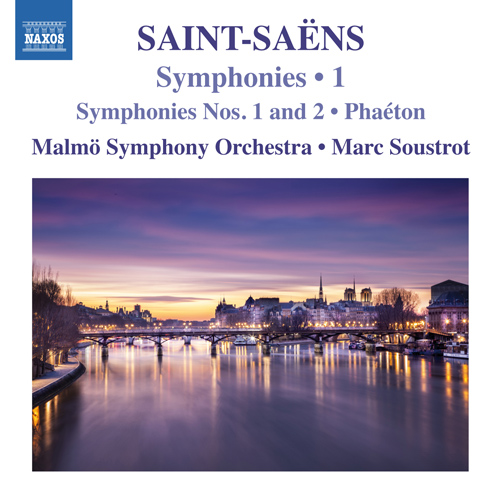
Precocious as a child, Camille Saint-Saëns was once known as the French Mendelssohn. The remarkably assured First Symphony, completed at the age of 17, was praised by Berlioz and Gounod at its first performance. The elegantly crafted Second Symphony defies convention not least by basing the first movement on a fugue, while the symphonic poem Phaéton skilfully brings this Greek mythological drama to life with stampeding horses, thunderbolts and a moving apotheosis.
Symphony No. 1 in E flat major, Op. 2: I. Adagio – Allegro
– The Guardian ★★★★





Inspired by Liszt, to whose memory the work is dedicated, Camille Saint-Saëns’ Symphony No. 3 is ground-breaking in its inclusion of organ and piano. For the composer this represented ‘the progress made in modern instrumentation’ and the result is a work both spectacular and grandiose. By contrast the Symphony in A, his first completed symphony, is a youthful piece, fully revealing his admiration for Mozart, whilst Le rouet d’Omphale, dating from the 1870s, is an impressively atmospheric tone poem.
Symphony in A major: IV. Allegro molto – Presto
– Pizzicato ★★★★★

Saint-Saëns’ Symphony in F major ‘Urbs Roma’ was his prizewinning entry to a competition organised by the Bordeaux Société Ste Cécile, but the work remained unpublished in the composer’s lifetime. This early work is notable for a masterly final movement which, unusually, comprises a theme and variations. The symphonic poem La Jeunesse d’Hercule is a portrayal of the conflict between pleasure and duty, while the Danse macabre is amongst his most popular orchestral works.
Symphony in F major, ‘Urbs Roma’: II. Molto vivace – Più presto – Prestissimo
– BBC Music Magazine ★★★★