Requiem • Passion • Resurrection
MUSIC FOR EASTER
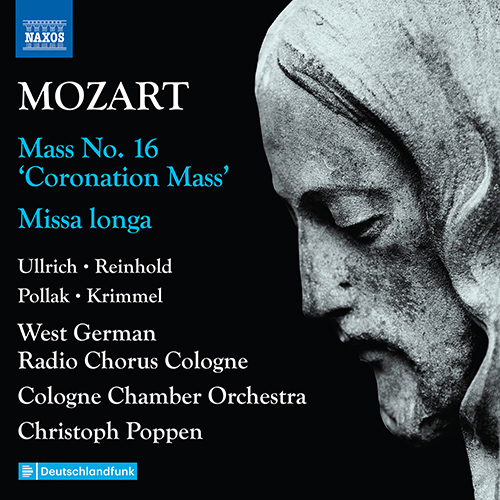
8.574270
 Watch trailer
Wolfgang Amadeus MOZART (1756–1791)
Complete Masses, Vol. 1
The occasion for the composition of Mozart’s Missa longa is still a matter of speculation, but the Mass remains an exceptional work with its elaborate choral writing, extended orchestration and dramatic changes. The symphonic qualities of the Coronation Mass reveal influences from Mozart’s travels in Paris and Mannheim, as well as a move towards a more operatic style – the memorable soprano solo of the Agnus Dei clearly anticipates the aria ‘Dove sono’ from Le nozze di Figaro. The richness and variety of this work ensures that it has deservedly remained one of Mozart’s most frequently performed Masses.
‘Poppen has chosen a group of unfamiliar but talented soloists. Tenor Angelo Pollak makes his first appearance in these pages, and the other three have been greeted warmly in their first few recordings. Carolina Ullrich is lovely in the Agnus Dei of the ‘Coronation Mass’, a movement that the finest Mozart sopranos have put on disc across the decades … The recorded sound is well balanced.’
– American Record Guide





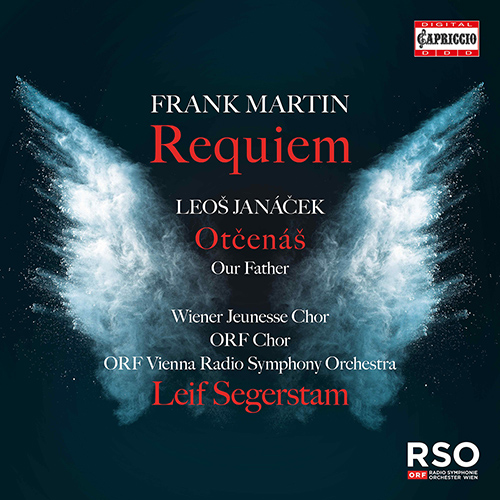
C5454
Frank MARTIN (1890–1974)
Requiem
Leoš JANÁČEK (1854–1928)
Otčenáš
Two gems from the ORF Archive (Austria Broadcasting Corporation): It took Frank Martin a long time to respond to a deep-seated inner calling to write his Requiem: ‘What I have tried to express here is the clear will to accept death; to make peace with it.’ Martin composed his Requiem in 1971-72, utilising a full palette of orchestral sound and exploring every opportunity for vocal interplay. Leoš Janáček’s setting of Otčenáš (The Lord’s Prayer) is not a conventionally religious work. The Czech composer was more interested in its social aspects than any theological musings. Conductor Leif Segerstam, chief conductor of the ORF Vienna Radio Symphony Orchestra from 1975 to 1983, loved to surprise his public with non-mainstream repertoire. These two live recordings he made have now been restored, re-mastered and released for the first time.
‘It is an important release that Capriccio presents herewith, and Leif Segerstam has prepared his Vienna ensemble very well, bringing it to an intensely expressive performance.’
– Pizzicato ★★★★★
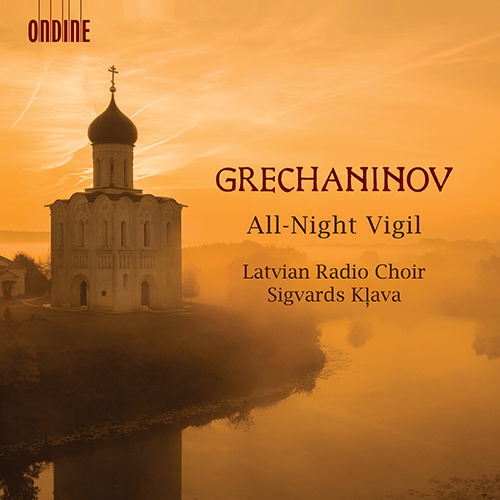
ODE1397-2
Alexander GRECHANINOV (1864–1956)
All-Night Vigil
Known as author of several symphonies and over 200 opus-numbered works, Grechaninov’s choral music has an important position among his oeuvre. His All-Night Vigil, written in the 1910s during the golden era of Russian liturgic music before the October revolution, belongs to its highlights. Unlike the Vigils by Rachmaninov and Tchaikovsky, Grechaninov’s work was written primarily for concert use. It is a bright, optimistic work full of light. Grechaninov used old traditional Slavic chants as the basis of this work and selected the uplifting, solemnly glorious chants to emphasize the character of joy, exultation and jubilance.
‘Conductor Sigvards Kļava manages the dynamic range exceptionally well, so the choir moves smoothly from proclaiming impressive outbursts to negotiating quiet passages with great delicacy… Intonation is first-rate, especially in the leaps of fourths and fifths which take the listener by surprise.’
– MusicWeb International