
 Translate































In addition to its own wide-reaching monthly new releases, Naxos also distributes several leading labels in many countries around the world. Here is a choice selection of recent releases from some of these distributed labels.

Founded in 1978 as an independent Italian record company based in Genoa, Dynamic subsequently assembled an impressive catalogue of over 1,000 titles, many of them devoted to operas and works for violin from the 18th and 19th centuries. A significant portion of the catalogue comprises works that fall outside the traditional repertoire, with many of them featured in world première recordings.
![VERDI, G.: Macbeth [Opera] (1865 French version) (Teatro Regio di Parma, 2024)](https://cdn.naxos.com/sharedfiles/images/cds/hires/DYN-38063.jpg "VERDI, G.: Macbeth [Opera] (1865 French version) (Teatro Regio di Parma, 2024)")
WORLD PREMIERE ON VIDEO OF THE FRENCH VERSION
Macbeth is one of Shakespeare’s greatest tragedies, telling the story of a power couple galvanised by witchcraft and superstition, and obsessed by a craving to conquer the throne by force, even by murder. This French version of Verdi’s opera takes us into a sphere of decorum and decency that hides monsters capable of the worst atrocities, portrayed in some of the composer’s most blood-curdling and intense passages of music. A genuine rarity on stage, this 2024 production of the French version was acclaimed for its powerful vocal performances and fine acting.
![SCARLATTI, A.: Il trionfo dell’onore (Various Soloists, Orchestra del Teatro La Fenice di Venezia, Enrico Onofri) [DVD]](https://cdn.naxos.com/sharedfiles/images/cds/hires/DYN-38077.jpg "SCARLATTI, A.: Il trionfo dell’onore (Various Soloists, Orchestra del Teatro La Fenice di Venezia, Enrico Onofri) [DVD]")
![SCARLATTI, A.: Il trionfo dell’onore (Various Soloists, Orchestra del Teatro La Fenice di Venezia, Enrico Onofri) [Blu-ray]](https://cdn.naxos.com/sharedfiles/images/cds/hires/DYN-58077.jpg "SCARLATTI, A.: Il trionfo dell’onore (Various Soloists, Orchestra del Teatro La Fenice di Venezia, Enrico Onofri) [Blu-ray]")
Paul Büttner was born in Dresden in 1870 and studied violin and oboe at the city’s conservatory, from whence he gradually established himself as an outstanding musician. But he remained virtually unknown as a composer until 1915, when the celebrated conductor Arthur Nikisch premiered his Symphony No. 3, following which Büttner became acknowledged as one of the greatest contemporary symphonists after Brahms and Bruckner. His Symphony No. 4 from 1917 continued this success and was performed on numerous occasions by several orchestras. In 1933 his music was marked as ‘degenerate’ by the totalitarian regime, which deleted him completely from the musical culture available to the public.
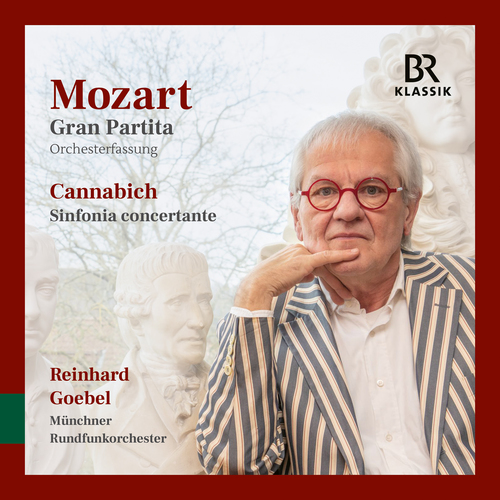
Wolfgang Amadeus Mozart composed the Gran Partita, K. 361, one of his most magnificent works, for the former Mannheim orchestra, which had relocated to Munich when the elector was forced to move there for dynastic reasons. This rarely heard work features an unusual instrumentation of twelve wind instruments and a double bass. When it was due for publication in 1800, the Munich composer Gleissner presented the music publisher with a masterful arrangement for a standard orchestra. Reinhard Goebel has repeatedly championed this outstanding arrangement, which was published under the title of “Sinfonia concertante” – and has now done so once again with the Münchner Rundfunkorchester. He writes: “How barren and empty a world without arrangements would be! Nothing speaks against arrangements, yet the reasons in favour of them can be manifold and complex.”
The famous Mannheim orchestra was trained and drilled with almost military discipline by the composer and conductor Christian Cannabich, and the young Mozart was fascinated by leader and orchestra alike. “It is pleasant to imagine,” writes Goebel, “that Mozart may have played the ‘Sinfonia Concertante’ together with or against Cannabich.” This concert piece for two violins and orchestra, “in terms of both violin playing and composition, represents a culmination that could not be surpassed, let alone developed further by the veteran forces of the Mannheim school.”
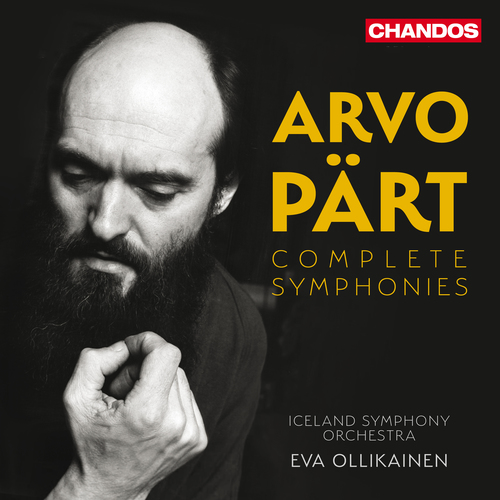
The four symphonies of Arvo Pärt were composed over a span of forty-five years, and bear little or no relationship with one another – four individual pieces that represent his output at separate parts of his creative journey. The First Symphony was composed in 1963, shortly after Pärt had graduated from the Tallinn Conservatory. Its two-movement structure looks to the baroque – Canons and a Prelude and Fugue – but the harmonic language is extremely advanced, giving off a distinct whiff of twelve-tone serialism. The Second Symphony, from 1966, in three movements, again employs a combination of serialism and textures hinting at Penderecki and the Polish school. Also in three movements, the Third Symphony (1971) reflects the time Pärt spent in the late 1960s studying chant and mediaeval music. Symphony No. 4 ‘Los Angeles’ came much later (in 2007 – 08) and now the style is directly inspired by sacred music. Pärt took as his models two great litanies of the Orthodox Church: the Canon of Repentance, and the Canon to the Holy Guardian Angel. Unusually scored for strings, harp, timpani, and percussion, this final work is also cast in three movements. With her elegant, expressive body language, natural stage presence, and infectious musicality, Eva Ollikainen is one of the leading conductors of our time. This former student of Leif Segerstam and Jorma Panula has been Chief Conductor and Artistic Director of the Iceland Symphony Orchestra since 2020.
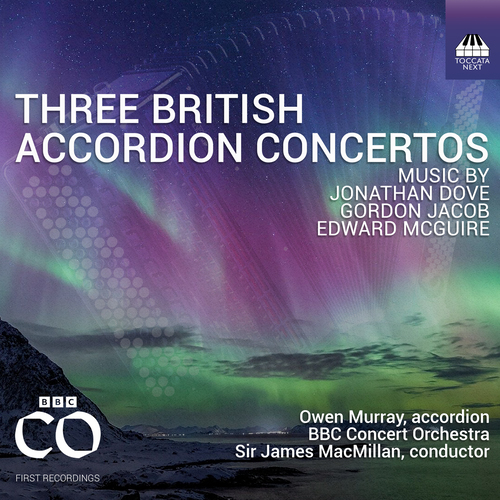
The development of an original classical repertoire for the accordion began with Mogens Ellegaard in his native Denmark and his student, the Scot Owen Murray, in the UK. In 1976 Ellegaard gave the first broadcast performance of Gordon Jacob’s pastoral, elegant concerto, which treats the accordion almost as a chamber organ. A generation and more later, two concertos written for Owen Murray open out the possibilities of the accordion much more adventurously, exploiting its extraordinary range of colour, its striking range of expression and its mercurial ability to weave through orchestral textures.
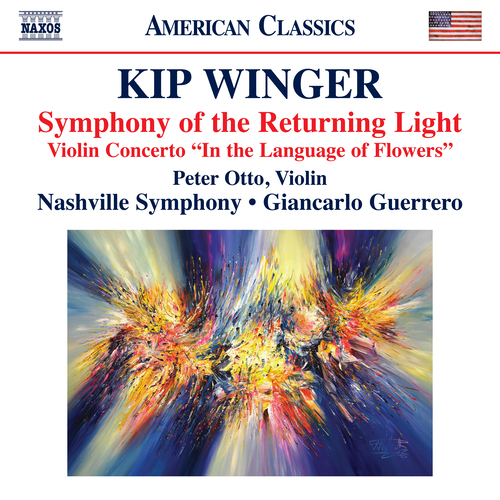
Kip Winger is a genre-bridging composer with a long and successful career in rock music. His celebrated ballet score Conversations with Nijinsky led conductor Giancarlo Guerrero to commission the two works on this album. Weaving four floriographical meanings into the musical arc, In the Language of Flowers is a violin concerto that celebrates a love story “no words could adequately express.” Symphony of the Returning Light sits in the tradition of autobiographical fantasies stretching back to Berlioz. The symphony incorporates the use of Morse code rhythms, and is centred around the theme of atonement.
![SHOSTAKOVICH, D.: Symphonies Nos. 2 and 5 (City of Birmingham Symphony Chorus, BBC Philharmonic, Storgårds) [SACD]](https://cdn.naxos.com/sharedfiles/images/cds/hires/CHSA5378.jpg "SHOSTAKOVICH, D.: Symphonies Nos. 2 and 5 (City of Birmingham Symphony Chorus, BBC Philharmonic, Storgårds) [SACD]")
![DONIZETTI, G.: L’Elisir d’amore [Opera] (Highlights)](https://cdn.naxos.com/sharedfiles/images/cds/hires/VOX-NX-2848.jpg "DONIZETTI, G.: L’Elisir d’amore [Opera] (Highlights)")
DIGITAL EXCLUSIVE
![RAFF, J.: Dame Kobold [Opera]](https://cdn.naxos.com/sharedfiles/images/cds/hires/8.660619-20.jpg "RAFF, J.: Dame Kobold [Opera]")
Joachim Raff moved in circles that included Franz Liszt and Robert Schumann, and he ultimately became one of the best-known German composers of his day. Of Raff’s six stage works Dame Kobold (‘The Phantom Lady’) was the first of a series of comic operas that anticipated later trends, moving away from Wagnerian pathos and looking back to the levity of Rossini. Admired for its utterly gorgeous musical setting, the opera is notable for a disarmingly simple yet fast-paced plot, bewitching solos and elegantly flowing melodies, and a deftly responsive marriage of language and music.
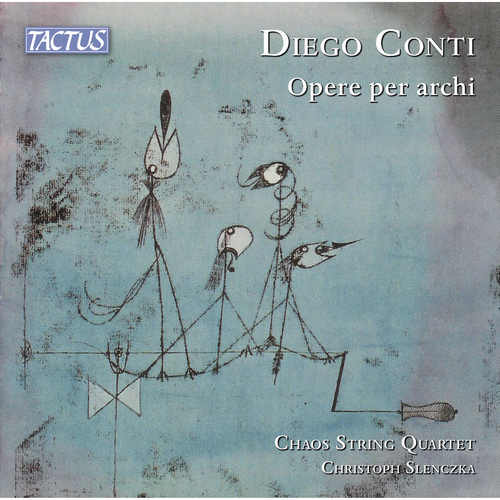
Diego Conti’s recent composition for string quartet/quintet can be placed in the aesthetic context which can be roughly defined, given any inevitable historical and conceptual adjustments, as post-modern. There is a multitude of approaches to sound, according to various different and diverging strategies (ranging from the prolongation of serial combinatorial rows on material and stylistic morphology in Ligeti to modulation/pluri– linguistic modelling in Berio, from the synthesis of minimal iteration and tonal orders in figures such as John Adams or Louis Andriessen to the clearance of practices and languages of other creative-musical areas, seventies’ art music has gradually abandoned the teleological, progressive tendency of its historical path. The language of composition has ceased to recognise the essential reference point in its most advanced frontier and has become a complex macro-area at its core, widely accessible, and able to be explored in all its domains even as far as the confines of the avantgarde frontier thanks, above all, to an interplay involving many possible directions, crossings and even multiple settlements. The recording is the result of the collaboration between the composer and the Chaos String Quartet, which was formed within the student environment of the Mozarteum in Salzburg, one of the most prestigious international musical institutions.
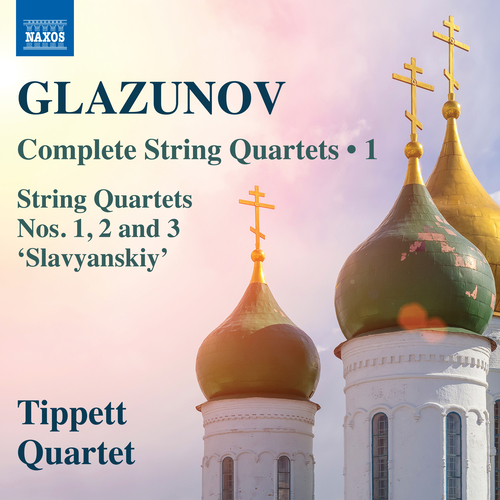
Alexander Glazunov’s seven string quartets extend over the entirety of his composing career and are equal in significance to his symphonies. Fused with nationalist sentiment and Classical discipline the First String Quartet secured the Glinka Prize for the teenage composer in 1884. The advances in expressive range and formal integration in the Second Quartet include a rapturous slow movement considered a highlight of his earlier output, while the Third Quartet has become known as ‘The Slavonic’ for its evocative folk-music character.
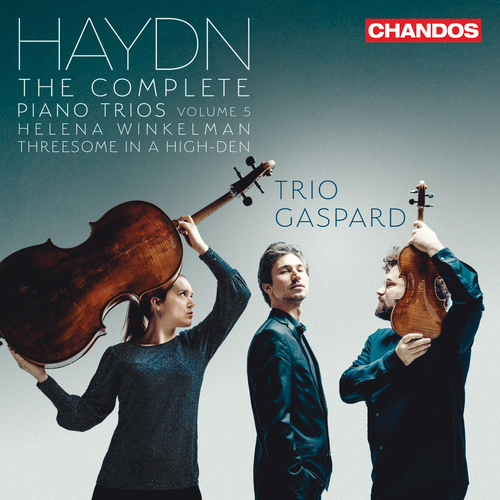
One of the most sought-after young chamber ensembles of its type, Trio Gaspard is praised for its unique and fresh approach to the score, one recent recording prompting The Times to conclude: ‘Kaleidoscopic textures and sprightly wit, wonderfully conveyed by Trio Gaspard… delightful listening’. It was founded in 2010, its members hailing from Germany, Greece, and the UK. They studied at the European Chamber Music Academy, in Vienna. Haydn’s music has been of central importance to their programming over the past fifteen years, and it is rare for them to perform a concert without one of his works. Trio Gaspard writes: ‘Over this series of recordings, we present Haydn’s rich output for piano trio neither chronologically nor in the groups in which the works were first published. Instead, just like the preceding discs, Volume 5 is conceived as a programme of contrasting trios that can be heard in a single sitting. We also continue the series of contemporary works which we have commissioned to accompany our Haydn project and are delighted to present the world première recording of Helena Winkelman’s Threesome in a High-den.’
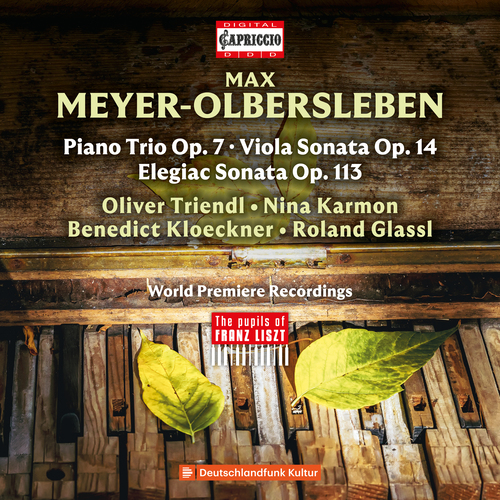
Max Meyer-Olbersleben, born in 1850 in Olbersleben, Thuringia, studied at the Weimar Orchestral School under Franz Liszt, and later at the Royal Music School in Munich under Gabriel Josef Rheinberger and Peter Cornelius. He settled in Würzburg as a professor of counterpoint and composition and served as director of the Royal Conservatory of Music until his retirement in 1920. During his lifetime, 114 works were published, primarily smaller forms such as choral works, songs, and piano pieces. Through his studies in Weimar and Munich, Meyer-Olbersleben was familiar with both the traditionalist and the new German musical language of that era, and thus the chamber music gems recorded here for the first time bear witness to profound Romantic sensibility and the spirit of a new musical awakening.
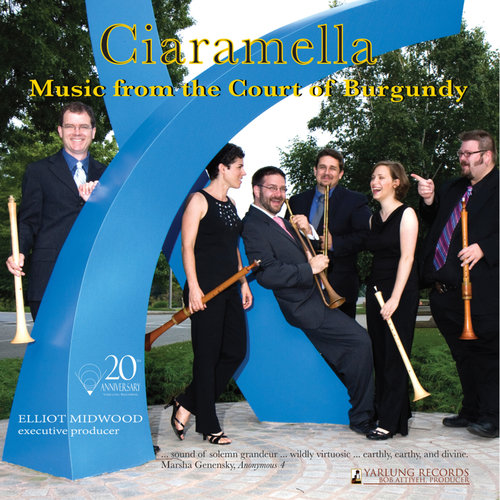
Ciaramella captures the virtuosic essence of… Johannes Ciconia, Guillaume Dufay, Johannes Pullois, and Alexander Agricola. Never heard of them? Don’t worry: after listening to this recording, you won’t forget them, and will find yourself awake at night, tapping your feet and dreaming about the dukes and ladies of Burgundy and their Renaissance court. Ciaramella recreates improvisations in historical style, bringing the practice of fifteenth-century jazz back to life.
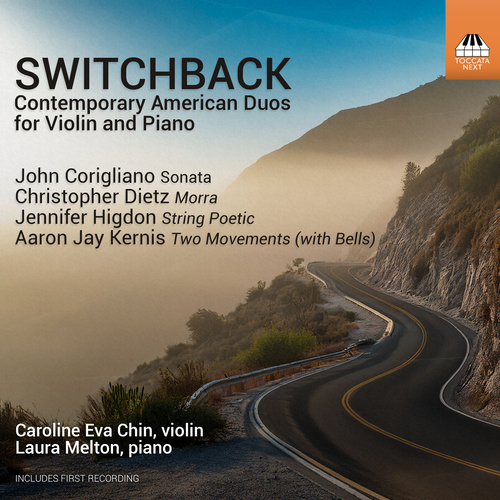
Modern American music has long been characterised by kaleidoscopic variety, reflecting the vigour and optimism of American culture more generally. John Corigliano’s early Violin Sonata is a work of the mid-twentieth century. But his own assessment of the piece – ‘Its eclecticism, its rhythmic energy, and its bright character give the Sonata a very American quality’ – could be applied with equal merit to the three 21st-century scores that accompany it here, all four switching easily between gentle introspection and buoyant exuberance.
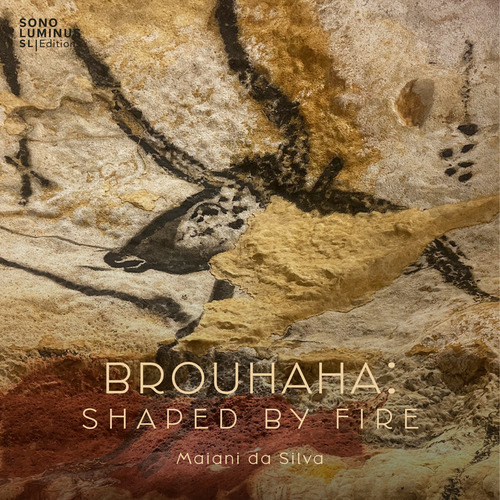
Brouhaha: Shaped by Fire is a recording and performance project, combining music with anthropology to highlight our connections to our nature and origins. From noisy social gatherings around fires 800,000 years ago to virtual meetings over Zoom today, we humans have created and solved an amazing array of problems. Even as we shape the world in unprecedented ways, we remain an integral part of nature, intertwined with its rhythms and cycles. Project founder and violinist Maiani da Silva has commissioned six stylistically eclectic composers to write for solo violin based on what intrigues them about our human nature and our place in the ecosystem. In addition, Maiani and the composers have collaborated with world-renowned scientists to gain insights on their chosen theme. What results is an imaginative collection of works that both transcends stylistic labels and embraces intellectual inquiry, while highlighting an important duality: “our ability to work with or against our environment, [which] has been with us from the beginning” (Ian Gottlieb, composer of Shaped by Fire). The drive to express and understand are both deeply human. Brouhaha combines two cultural pillars–art and science–to further ask: What separates and also connects us to the delicate web of nature, our environment, other species, and one another?
DIGITAL EXCLUSIVE
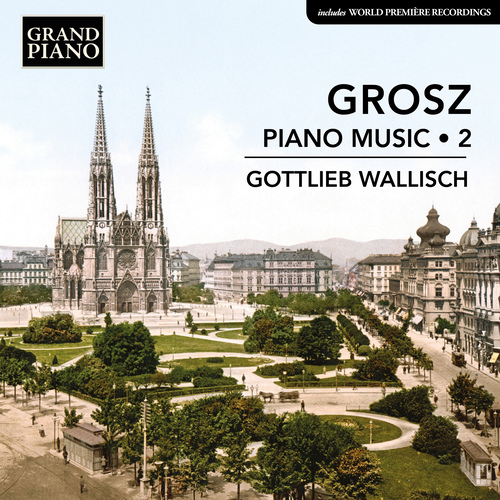
Viennese composer, conductor and pianist Wilhelm Grosz was a musician of remarkable versatility and wide-ranging influences. He attracted critical praise as a composer from an early age with the technically formidable Symphonic Variations on an Original Theme, acclaimed as ‘a dramatic tone painting expanding to symphonic grandeur – on only one instrument’. The Kleine Sonate is marked by great depth and clarity of expression, while the waltz transcriptions tapped into a craze for Johann Strauss II in 1930s London. The highly original Three Pieces was rediscovered just before this recording was made.
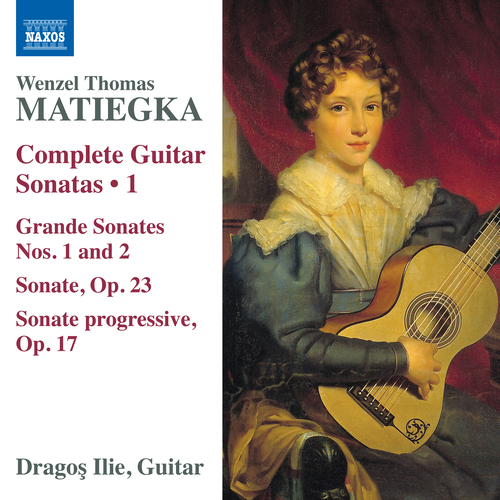
A native of Bohemia, Wenzel Thomas Matiegka was a contemporary of Beethoven and a celebrated guitarist. His reputation was established after settling in Vienna where he became accepted in musical circles that included Schubert. Matiegka’s works reflect the influence of Mozart and Haydn, while exploring the virtuoso possibilities of the guitar by blending lyrical serenity with refreshing good humour and exhilarating technique.
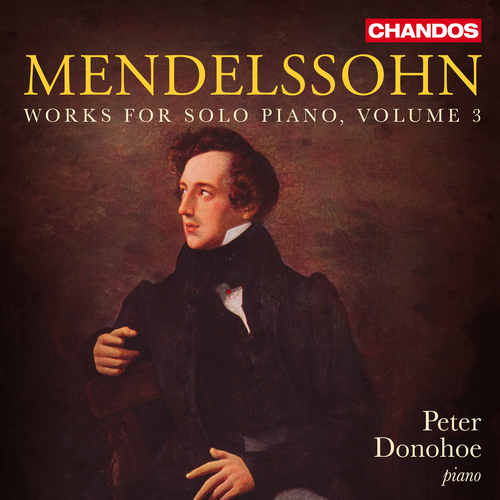
All the works recorded here were composed between 1825 and 1835, when Mendelssohn was aged between sixteen and twenty-six. He spent much of this decade travelling, from Berlin to Paris via Weimar, then London and Scotland before work in Düsseldorf eventually led to his appointment as municipal musical director and conductor of the Gewandhaus Orchestra in Leipzig. The Piano Sonata in E major and that in B flat major, and indeed the Phantasie (subtitled Sonate écossaise), owe some debt to Beethoven, but are also influenced by Weber, Hummel, and Moscheles (to whom the Phantasie was dedicated). The two shorter works (Scherzo à capriccio and Capriccio) perhaps show a more relaxed side of the composer, free from the constraints of sonata form. Liszt’s virtuosic re-working of themes from A Midsummer Night’s Dream completes the programme. Born in Manchester in 1953, Peter Donohoe studied at Chetham’s School of Music for seven years, graduated in music from the University of Leeds, and went on to study at the Royal Northern College of Music with Derek Wyndham, and then in Paris with Olivier Messiaen and Yvonne Loriod. He is acclaimed as one of the foremost pianists of our time, for his musicianship, stylistic versatility, and commanding technique.

Violetta Khachikyan’s third solo album is dedicated to rarely performed keyboard works from the Renaissance, early Baroque and Classical periods that take on new timbres and vitality when performed on a modern grand piano. The works by Marianne von Martinez, Élisabeth Jacquet de La Guerre and Yekaterina Alexeyevna Vorontsova are of particular interest, while Ravel’s Le Tombeau de Couperin melds retrospection with innovation in the use of old dances and forms that are infused with new harmonies and complemented by the technical possibilities of a modern instrument.
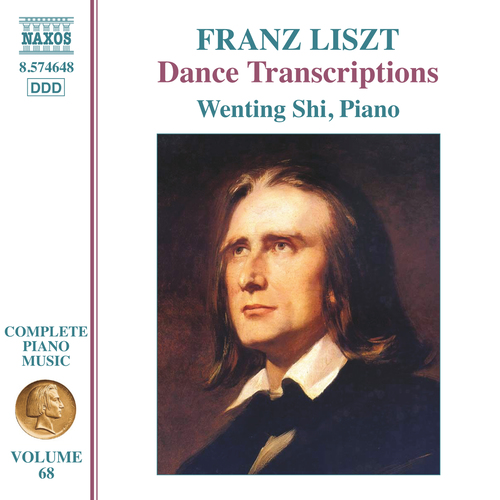
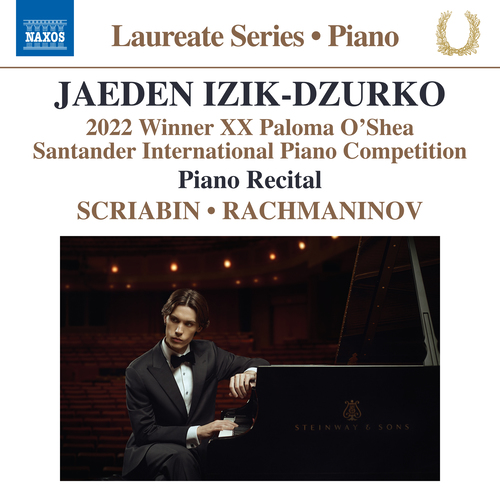
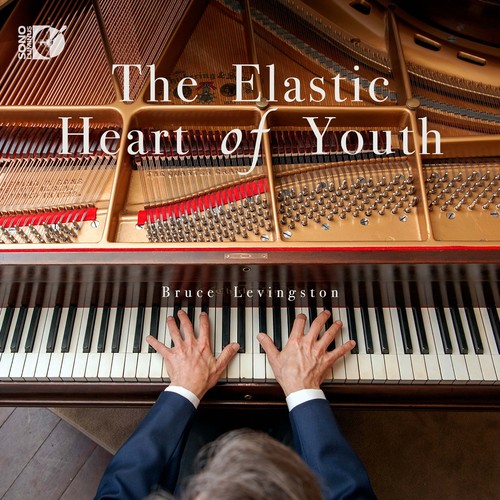
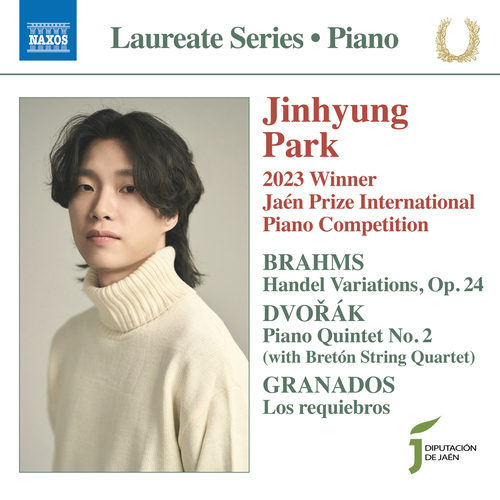
DIGITAL EXCLUSIVE
The Song of the Fates, Op. 89, was composed in 1882 and is a work for choir and orchestra by the German composer Johannes Brahms (1833–1897). It sets to music a section from Johann Wolfgang von Goethe’s drama “Iphigenia in Tauris”, which refers to the Fates, Roman goddesses of destiny.
DIGITAL EXCLUSIVE
Featuring the Danish vocal consort ÆTLA, this EP presents Månen (The Moon) by composer Adrianna Kubica-Cypek. Drawing on the evocative poetry of Barbara Agertoft, the work moves from the vulnerability of the lone voice to the strength of the collective. Through sacred allusions and the experimentalism of the Polish tradition, Kubica-Cypek creates a comfort blanket of sound – a meditation on the moon’s shared light and our belonging to one another.
For many years, composer Raymond Lustig has been intrigued and inspired by Dr. Semmelweis. He first conceived of a stage work around the doctor’s story in 2007. At the time, he was a graduate student in music, but he had spent several years doing biomedical research. After many iterations, the fully staged production of SEMMELWEIS came to fruition in 2018, when Lustig joined forces with writer Matthew Doherty and Hungarian director Martin Boross, and the world premiere performances were presented by Budapest Operetta Theatre and Bartók Plusz Opera Festival.
The song cycle recorded here derives from that production. “Our goal was to make a true studio album, rather than a capture of the stage work,” Lustig says. “I knew I wanted to work with Charlotte Mundy, whose voice has always been the ideal for me for this work. We then decided that, rather than try to build a choir of matching female voices, we would instead use only Charlotte’s voice, multiplied over itself, spread out in the stereo field, one unified voice totally surrounding and overwhelming. These female voices often represent a chorus of ghosts of the mothers he could not save (or ‘mother ghosts,’ as we call them), who haunt Dr. Semmelweis. Engineer and co-producer Maximilien Hein and I, as well as engineer Drew Schlingman, recorded with the musicians in my studio at Respirano on Hudson and at The Hit Factory in New York. The theatrical experience and private listening are very different. We knew we needed to rebuild the music from the ground up, reconsidering every detail, refining and elaborating, revising and revising, to get to the true emotional heart of the story as an auditory experience.”
The entire action of SEMMELWEIS may be seen as a reflection – a fever dream or death dream – of Ignaz Semmelweis’ inner psyche at his life’s end. Dr. Semmelweis re-experiences events from throughout his life, perhaps out of sequence, distorted, or unreliable, as if through a lens of a mind in turmoil.
![ROSSI, F.: La Caduta de gl’angeli [Oratorio] • CARESANA, C.: Recitativo per la Solennità del S.to Natale](https://cdn.naxos.com/sharedfiles/images/cds/hires/TC620002.jpg "ROSSI, F.: La Caduta de gl’angeli [Oratorio] • CARESANA, C.: Recitativo per la Solennità del S.to Natale")
The Cappella musicale di Santa Maria in Campitelli, conducted by Maestro Vincenzo Di Betta, who has already been responsible for significant recording revivals such as Orazio Benevoli’s Missa in angustia pestilentiæ (TC600201), Bonaventura Rubino’s Messa de’ Morti (TC601803), and Francesco Giovannini’s Messa à Quattro (TC700703), is now engaged in this new and notably interesting musical production. This rediscovery focuses on two sacred oratorios from the seventeenth century by two authors active in the Neapolitan orbit: Francesco Nicolò de Rossi, a priest of Apulian origin, and Cristoforo Caresana, of Venetian origin and formerly the organist of St. Mark’s Basilica. The two works – performed with the ensemble’s customary expertise – are interspersed with an instrumental battle piece by Andrea Falconieri, composed in the spirit of that Baroque theatricality which is the main ingredient of these works and of the sacred musical masterpieces of the seventeenth century.
DIGITAL EXCLUSIVE
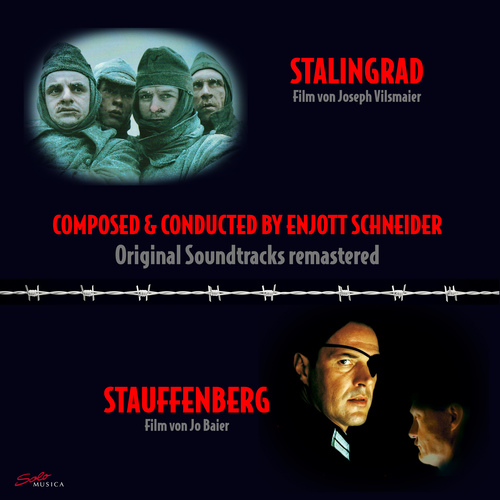
DIGITAL EXCLUSIVE
This digital release from Solo Musica brings together two powerful soundtracks composed and conducted by Enjott Schneider: STALINGRAD (film by Joseph Vilsmaier, 1992) and STAUFFENBERG (film by Jo Baier, 2004). Both are set in the historical context of the Second World War and define themselves as anti-war films: STALINGRAD deals with the downfall of the 6th Army on the Russian Eastern Front, where the attempted conquest of the city of Stalingrad ends in chaos and unspeakable suffering. All that remains of the initial optimism and ideology-driven aggression is retreat, homesickness, pain and horrific death. STAUFFENBERG, subtitled ‘Aufstand des Gewissens’ (Revolt of Conscience), is about the assassination attempt by Claus Schenk Graf von Stauffenberg, who tried to kill dictator Adolf Hitler with a bomb he detonated himself on 20 July 1944. The coup, planned with friends, failed because Hitler survived the assassination attempt. The rebellious heroes are shot by firing squad. The soundscape of STALINGRAD was elaborately orchestrated with a large orchestra in Gustav Mahler’s instrumentation, expanded with sampled ‘steel and metal sounds’ and, together with the crowd scenes, forms a huge epic arc. In comparison, STAUFFENBERG is a personal and at times chamber music-like soundtrack, often capturing the multi-layered psychology of the protagonists in quieter tones.
Both soundtracks were edited from the original soundtrack material in new proportions and remixed. The Dolby Atmos® remixes are elaborate and new, creating iconic soundscapes in a previously unattainable spatial dimension. Sound engineer David Merkl comments:
“The special added value of the Stalingrad remix lies in the fact that, for the first time, the soundtrack can be experienced in its pure form, detached from the image, in that evocative spatial magic that was previously reserved exclusively for the Dolby Digital format in the cinema. What used to be confined to the cinema auditorium now unfolds freely in space: a deeply cinematic listening experience that allows the emotional and dramatic power of the music to be experienced directly.”
DIGITAL EXCLUSIVE
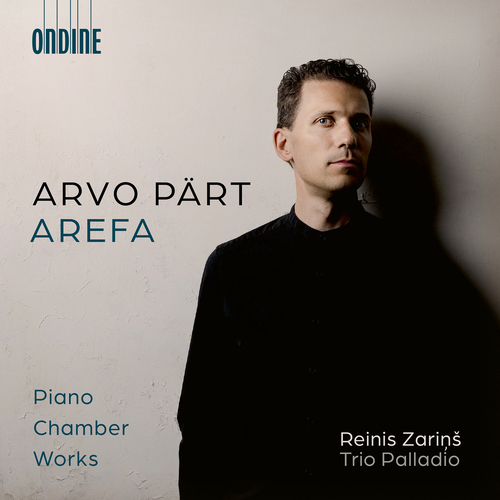
This album by pianist Reinis Zariņš and the Trio Palladio is a special personal tribute to composer Arvo Pärt (b. 1935), one of the most influential composers of our time. This album includes Pärt’s timeless piano works together with a selection of his chamber works, including the famous Für Alina, Fratres and Spiegel im Spiegel alongside his early works. The programme also includes two special dedications by two Latvian composers, Georgs Pelēcis and Andrejs Selickis, who both as composers have been greatly influenced by Arvo Pärt’s example and ideas. These two works, written in 2025 for Arvo Pärt’s 90th birthday, receive their first recordings.
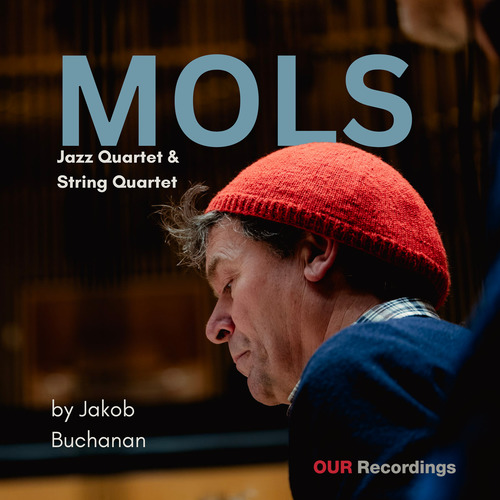
On his new double vinyl album, Jakob Buchanan masterfully blends the ultra-local folk music and the unique character of the landscape, with some of the world’s leading names in modern jazz, and one of Denmark’s many great string quartets Artos Quartet.
A few years ago, jazz composer and trumpeter Jakob Buchanan moved to Mols. Here, he sits and plays in an old circus wagon on Thorup Mark, gazing over the rolling hills and becoming absorbed in an old booklet of folk tunes by the local legend, fiddler Peter Madsen (1865–1900). One autumn day, he tries out the old dance tunes on his trumpet while looking out across the landscape. The tunes turn into hymns, and it feels as if an old soul is reborn floating across the warm, hilly land, a landscape that writes its own silent music on the horizon every day.
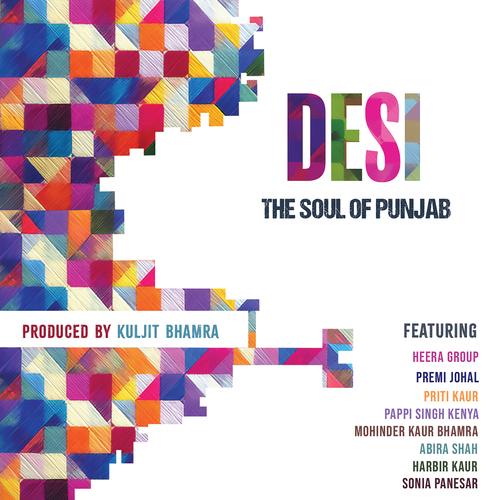
Bringing together voices from across the UK Punjabi community, award-winning composer and tabla player Kuljit Bhamra MBE unites leading British vocalists including Heera Group, Premi Johal, Abira Shah and Mohinder Kaur Bhamra with renowned lyricists such as Preet Nihal and Pappi Sing Kenya. Inspired by the timeless lok geet traditions and the golden era of 1980s British Bhangra, Kuljit blends classic folk instruments with fresh contemporary production to celebrate the enduring spirit of Punjabi culture.
Evening Light opens the first chapter of the Raga Cycle, an eight-album series conceived by celebrated composer/pianist Michael Harrison, and featuring collaborations with a range of musicians from around the world. Each album corresponds to a different three-hour segment of the day and night, following the Indian raga time cycle.
This first installment, co-composed with vocalist Ina Filip (originally from Brazil and based in Québec), blends Indian classical ragas with lyrical and minimalist piano, multi-layered vocals, and electroacoustic textures. The album also features composer Elliot Cole on synthesizer, French composer Benoit Rolland on electro-acoustics, and Bangladeshi tabla virtuoso Mir Naqibul Islam.
Evening Light centers on the ragas Yaman and Bhupali, inhabiting the atmosphere of early evening — traditionally associated with expansiveness, luminosity, and quiet intensity. At its core is a finely shaped exchange between Harrison’s just intonation piano — the result of four decades of experience bridging Indian and Western classical traditions — and Filip’s voice.
Harrison’s just intonation tuning system means the intervals are pure and uncompromised, creating a more beautiful resonance than traditional equal-tempered pianos, and more faithfully matching the tuning of traditional Indian ragas. Filip’s vocal writing is grounded in the discipline of Dhrupad, yet expansive in scope, shaping layered architectures in an intricate interplay with the piano. Together their work melds the musical worlds of North India with those of Europe and America.
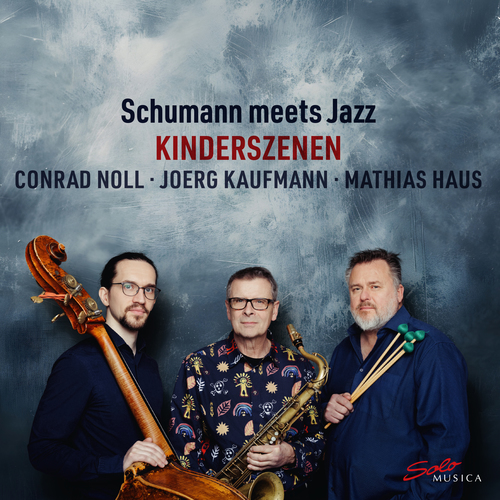
Robert Schumann has accompanied saxophonist Joerg Kaufmann since his childhood. As a young piano student, he was shaped by pieces from Album for the Young; later, he was particularly captivated by the Piano Concerto in A minor. During his jazz studies and his work as a music teacher, Kinderszenen remained a central point of reference. In these poetic miniatures, he discovered an expressive power that closely resonates with jazz: deep emotionality, personal experience, moods, and narrative moments. While European classical music realizes these aspects through carefully composed structures, jazz approaches them primarily through improvisation. The song-like forms, clear melodies, and distinctive harmonies of Kinderszenen provide ideal material for this exploration.
For this project, the artist deliberately chose an instrumentation without piano in order to gain the greatest possible sonic freedom while preserving the essence of the originals. Together with Mathias Haus (vibraphone) and Conrad Noll (double bass, cello), he created interpretations that sensitively translate Schumann’s romantic sound world into the language of jazz.
![ASHTON, F.: STRAVINSKY, I.: Scènes de ballet • CHOPIN, F.: A Month in the Country • RACHMANINOV, S.: Rhapsody [Ballets] (Royal Ballet, 2022)](https://cdn.naxos.com/sharedfiles/images/cds/hires/OA1396D.jpg "ASHTON, F.: STRAVINSKY, I.: Scènes de ballet • CHOPIN, F.: A Month in the Country • RACHMANINOV, S.: Rhapsody [Ballets] (Royal Ballet, 2022)")
This collection celebrates the masterful artistry of The Royal Ballet’s Founder Choreographer, Frederick Ashton, with three defining works. A pioneer of 20th-century dance, Ashton brought elegance, innovation and emotional depth to the stage, shaping the identity of British ballet for generations.
Scènes de ballet distils classical technique into a striking study of form and symmetry. Ashton gracefully reimagines Turgenev’s play A Month in the Country as a one-act ballet where all the drama unfolds in the family’s living room upon the arrival of a dashing young tutor. Rhapsody, created for Mikhail Baryshnikov and Lesley Collier, blends virtuosic movement with lyrical beauty, set to Rachmaninoff’s sweeping score. Together, these works offer a vivid portrait of Ashton’s genius.
![HALÉVY, F.: La Juive [Opera] (Frankfurt Opera, 2024)](https://cdn.naxos.com/sharedfiles/images/cds/hires/2.110781.jpg "HALÉVY, F.: La Juive [Opera] (Frankfurt Opera, 2024)")
Fromental Halévy’s five-act grand opera La Juive (‘The Jewess’) is one of the most popular operas of the 19th century, captivating audiences ever since its debut at the Opéra de Paris in 1835. Set in the 15th century and full of pageantry, the subject is the forbidden love between a Christian man and a Jewish woman, and the tragedy that ensues. Oper Frankfurt’s contemporary staging won great acclaim, with Ambur Braid being lauded for her ‘luminous soprano’ as the heroine Rachel, and ‘vocal phenomenon’ John Osborn heralded in the role of her father Éléazar as ‘immensely moving’.
Make sure to subscribe to Naxos newsletters for other great offers.