 Translate



























In addition to its own wide-reaching monthly new releases, Naxos also distributes several leading labels in many countries around the world. Here is a choice selection of recent releases from some of these distributed labels.

TACTUS was established in March 1986 by Serafino Rossi. Right from the start, the label focused on highlighting Italian Renaissance and Baroque composers, who set trends and influenced musical styles worldwide and for later generations. Initially, TACTUS centered on historically informed interpretations and the revival of ancient musical traditions. Since then, their work has grown to cover not only early music but also modern compositions, always aiming to shed new light on Italy’s vast, often unexplored, musical history. Throughout the years, TACTUS’s catalogue has steadily expanded, adding numerous works that further enrich and diversify the tapestry of Italy’s musical legacy.TACTUS will be celebrating its 40th anniversary next year in 2026.
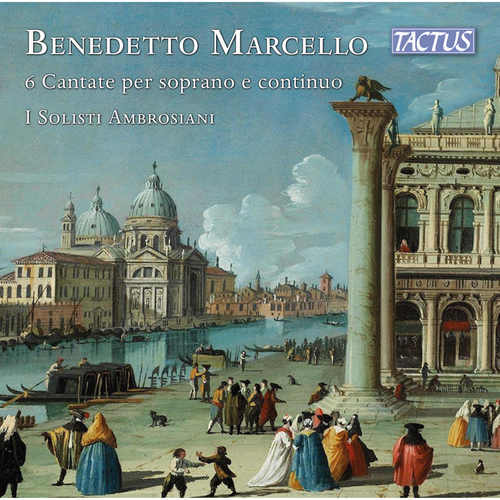
Preserved in three different libraries – the Marciana in Venice, the Library of the Naples Conservatory, and the State and University Library in Hamburg – the six cantatas that make up this world-premiere recording were composed by Benedetto Marcello in the early 18th century. These are his youthful works, interesting for the originality of their writing, and helps us understand why the composer was so highly regarded during his lifetime – even called the “prince of music” – and also by posterity, as he managed to blend his personal sensibility with lessons drawn from tradition and the influences of a life rich in cultural encounters.
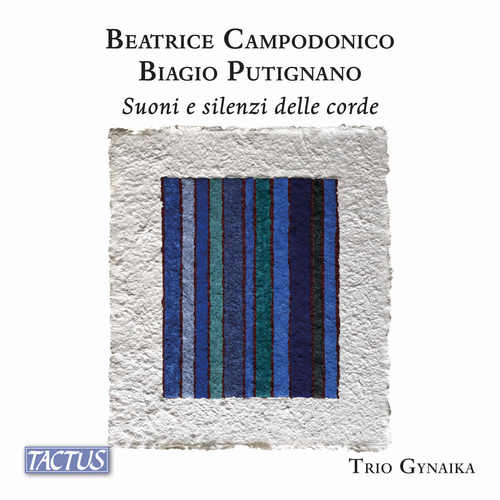
Chamber music, throughout its long history, has showcased an extraordinary variety of instrumental combinations. Strings, woodwinds, percussion, and keyboard instruments have been paired in nearly limitless ways. Even when focusing solely on music composed for three instruments, traditional instrumentation offers hundreds of possible groupings. Yet, a trio comprising guitar, piano, and harp has never been conceived or realised in any context or era – until now.
This recording introduces listeners to a truly unique instrumental configuration. Thanks to the innovative vision of Trio Gynaika, the emergence of a new and highly original chamber ensemble is celebrated. Historically, numerous works feature the guitar, harp, or piano individually, but rarely – if ever – are two or all three used together. In this groundbreaking production, Dania Carissimi (guitar), Domenica Bellantone (harp), and Chiara Di Muzio (piano) perform original works by acclaimed composers Biagio Putignano and Beatrice Campodonico.
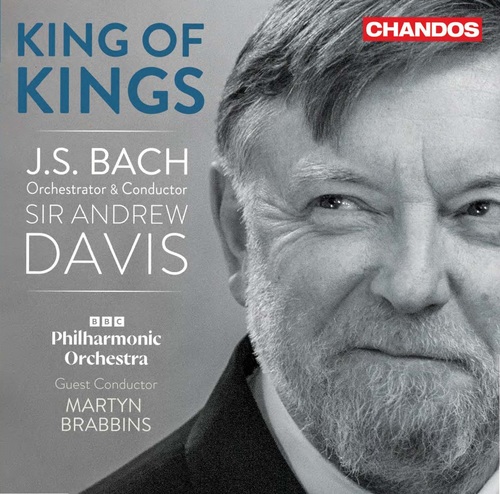
Sir Andrew Davis was a talented keyboard player as a child and teenager, and after study with Peter Hurford, at St Albans, he spent four years at the University of Cambridge as organ scholar at King’s College, under Sir David Willcocks. It was this period of his life that sparked his love for and appreciation of the organ works of J.S. Bach, which remained a lifelong passion. Sir Andrew made all the transcriptions on this album for the BBC Philharmonic, and four of them were recorded in November 2023. Sadly, Sir Andrew died before the final recording sessions for the album could take place (September 2024): we are immensely grateful that he completed the arrangements, and very thankful to Martyn Brabbins for completing the recording with the sense of style, love, and affection that Sir Andrew would have admired.
Although Polish composer Zygmunt Noskowski (1846–1909) is less well known for his works than those by his teacher (Stanisław Moniuszko) and his students (Karol Szymanowski and Mieczysław Karłowicz), he was nonetheless the primary exponent of modern symphonic music in Poland for most of the 19th century; he also introduced the idea of the symphonic poem to colleagues who would follow in his footsteps. This programme of his Third Symphony and the symphonic poem The Steppe, Op. 66 blends sweeping Romanticism with Polish folk spirit. The symphony is a journey through the seasons, while The Steppe evokes Poland’s vast landscapes with colourful hints of Borodin’s In the Steppes of Central Asia. Conductor Antoni Wit breathes new life into these forgotten gems to produce a highly engaging orchestral programme.
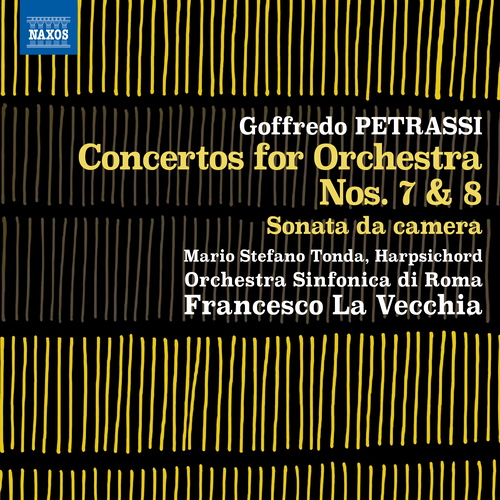
In the early 1960s Goffredo Petrassi’s idiom was almost indistinguishable from that of the Italian avant-garde. Completed in 1964, the Seventh Concerto evolves with mounting tension and a sense of underlying menace. The Eighth Concerto from 1972 was commissioned and premiered by the Chicago Symphony Orchestra. It is a substantial piece of outright virtuosity, with dissonance, trenchant dialogues and a fraught atmosphere. The much earlier Sonata da camera for harpsichord and ten instruments finds Petrassi poised between neo-Classicism and a more modernist direction. This is the third and final volume of Petrassi’s complete Concertos for Orchestra on Naxos (Nos. 1–3 are on 8.573702; Nos. 4–6 are on 8.573703).
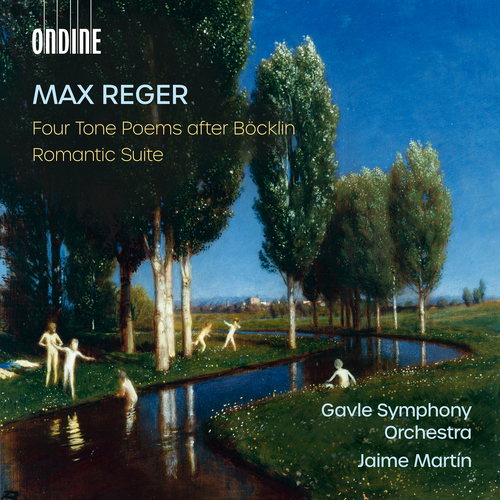
This new album by Gävle Symphony Orchestra and conductor Jaime Martín includes perhaps two of the finest orchestral works by Max Reger (1873–1916), which he wrote towards the end of his life – the Four Tone Poems after Böcklin and the Romantic Suite, both sensuous and poetic works suggesting a loose connection with Debussy.
Reger’s 150th anniversary of birth was celebrated in 2023. Yet, much of Reger’s music appears on concert programmes only very occasionally. During his own lifetime Reger was highly admired: Paul Hindemith described Reger as ‘the last giant of music,’ and when Schoenberg founded his Society for Private Musical Performances in 1918, Max Reger, along with Debussy and Bartók, was one of the most frequently performed composers. Admiring Reger as an important innovator, Schoenberg promoted his music because ‘he still remains unfamiliar’ and ‘I consider him a genius’. Reger’s Four Tone Poems after Böcklin and the Romantic Suite support Schoenberg’s viewpoint.
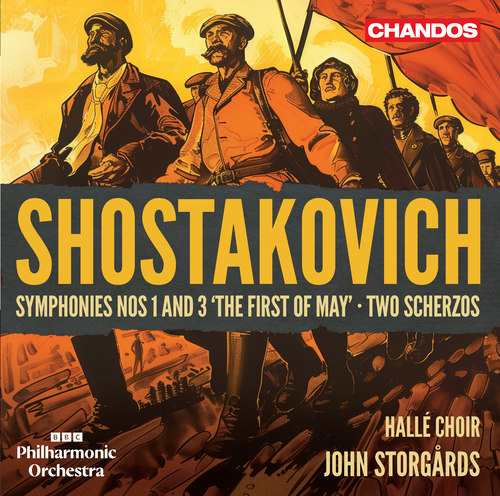
For this, the fifth instalment of his Shostakovich symphony cycle, John Storgårds turns to some of the earliest of the composer’s orchestral output, works which Shostakovich largely wrote during his student years. The orchestral scherzo was a favourite task set by composition tutors of the time: the relatively simple form still demands that the student produce contrasting material for the outer and central sections, and manage the transitions effectively. Unsurprisingly, the form looms large in the early works of Shostakovich, as well as Stravinsky, Bartók, and many others. The two examples recorded here show the young composer’s ability and style, although not yet perhaps a distinct compositional voice. They do both share links with the later First Symphony, however, which was composed as a graduation test in composition from the Petrograd Conservatoire. Shostakovich spent two years working on it, but the Symphony he eventually produced was an instant success, marking him out as a Boy Wonder among Soviet composers. Written four years later, the Third Symphony evidences not only the rapid development of Shostakovich as a composer, but the equally rapid change in the world he inhabited. He passed the newly required examination in Marxist ideology in December 1926, and managed to extend his registration as a postgraduate student at Leningrad Conservatoire until early 1930. He submitted the symphony with the explanation that it ‘expresses the festive spirit of peaceful construction’. At this early stage of the first of Stalin’s Five-Year Plans, he already demonstrated his realisation that political spin would be crucial to his creative survival.
* Only available for download and streaming
![BOITO, A.: Nerone [Opera]](https://cdn.naxos.com/sharedfiles/images/cds/hires/8.660582-83.jpg "BOITO, A.: Nerone [Opera]")
Arrigo Boito is remembered today for his only completed opera Mefistofele. The score for Nerone was left unfinished at the composer’s death – a performing version was completed by the composers Vincenzo Tommasini and Antonio Smareglia, along with Arturo Toscanini who conducted the world premiere at Teatro alla Scala in 1924. The narrative focuses on Emperor Nero during a time of conflict between beliefs in Imperial Roman gods and Christianity, and ends with tragic dramas amidst the Great Fire of Rome. With influences that include Wagner and Sibelius, Boito’s rarely performed Nerone uses a truly exciting harmonic palette delivered through a masterly handling of huge orchestral forces.
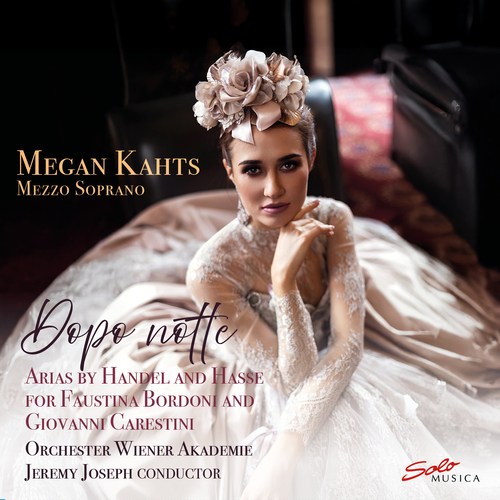
There is no doubt that the 18th century was dominated by the vocal achievements of renowned singers, both male and female – sopranos such as Bordoni and Cuzzoni, and castrati like Farinelli and Carestini. These performers were the superstars of their era, serving as the alter egos of the composers with whom they shared an almost symbiotic relationship. Beyond their extraordinary technical virtuosity – Baroque arias remain among the most challenging in the operatic repertoire – these nearly legendary figures captivated audiences with their exquisite tone and seamless legato. They often reigned supreme on European opera stages: audiences idolised them, their fees sometimes bankrupted opera houses, and their vocal artistry was so remarkable that, even centuries later, their names are spoken with reverence and admiration. The great vocal virtuosos of the Baroque period endure through the music composed for their voices.
Hasse was a pioneer of pre-classicism, blending Neapolitan vocal style with orchestral richness, a synthesis that clearly reflects his German heritage. Another towering figure in German opera seria was George Frideric Handel, who spent most of his life in London and became a naturalised Englishman. Like Hasse, Handel worked at the Hamburg Opera, where, at the age of nineteen, he composed his first opera, Almira (1705). This recording was made with one of the world’s leading Baroque orchestras, the Wiener Akademie Orchester, conducted by Jeremy Joseph.
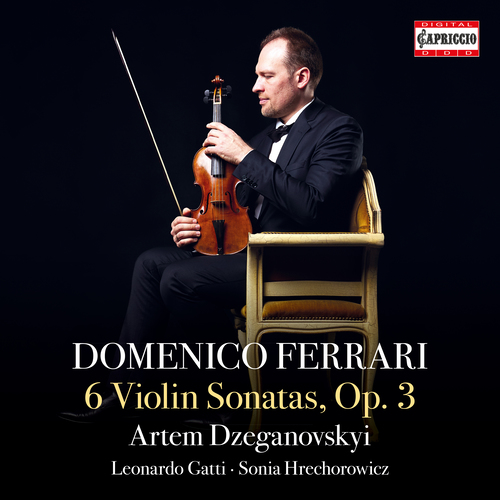
The name of Domenico Ferrari (1722–1780) was well known throughout Europe in the second half of the 18th century. He was considered both one of the finest violin virtuosos and a sublime composer. One of Tartini’s most accomplished Italian pupils, Ferrari quickly gained initial fame at the imperial court in Vienna and later at the Württemberg court in Stuttgart. After his successful debut at the Concert Spirituel in Paris in 1754, he was granted a ten-year royal privilege to publish his works in France, where he remained until the end of his life, never to return to his native Piacenza. During his stay in Paris, Ferrari published six sets of sonatas for violin with continuo. His Op. 3, featured on this album, dates from 1760 and consists of six sonatas. These works showcase a blend of late Baroque and Classical characteristics.
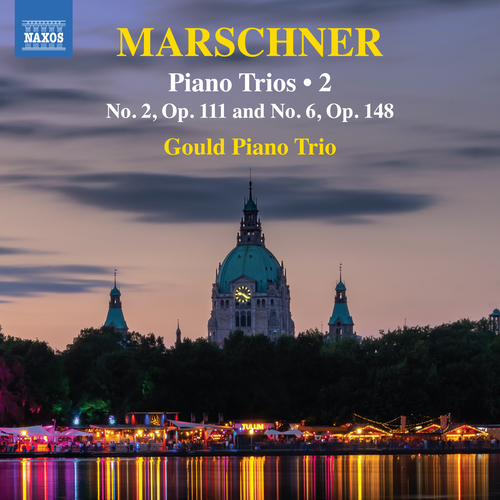
Heinrich Marschner was the leading German operatic composer between Weber and the rise of Wagner, but he also wrote prolifically for chamber forces. His Piano Trios No. 2 and No. 6 share similar qualities: both are in a minor key, they are rich in agitated melodies, and are full of inventive interplay between the three instruments. In contrast to the earlier light-hearted Trio No. 1 (available on 8.574612), No. 2 is a darker, more tension-filled work, albeit with Mendelssohnian grace. No. 6 also embodies elements of mid-19th-century Romanticism conveyed in music that ranges from the turbulent to the spectral.
* Only available for download and streaming
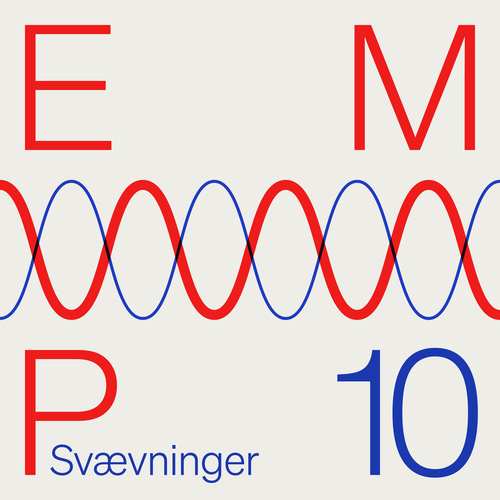
Pade’s final electronic composition
EMP 10 presents Else Marie Pade’s experiments with the sonic phenomenon known as beatings. Here you can listen for the first time to the contents of two undated material tapes both titled Svævninger, which also served as the foundation for the collaborative work of the same name which Pade created together with Jacob Kirkegaard in 2012. The work represents Pade’s final electronic composition and stands as an example of the inspiration she passed on to a younger generations.
* Only available for download and streaming
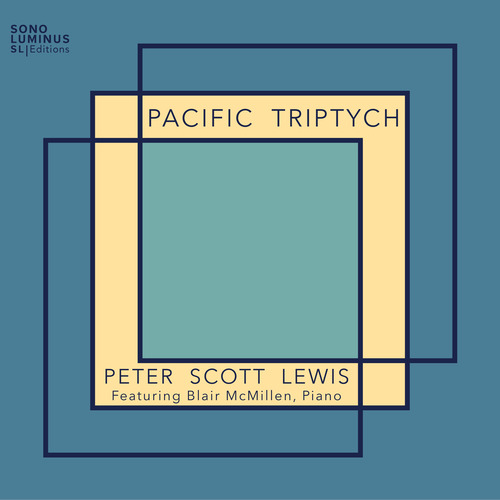
Pacific Triptych for piano was completed in August of 2019. It is based on an earlier unperformed version for full orchestra completed in 2006. So, the piano version recorded here acts as a premiere. As implied by the title, it’s a three-movement score based on contrasting sections that reflect the majesty of the Pacific Coast, especially the drama of the ocean and the endless sky above. Seven Nuggets was completed on April 25, 2023. It was inspired by a group of uncut, yet brilliant gemstones. Each “nugget” or movement ends with a low bass note. Those same notes are then played in sequence – at mid-range – at the end of the seventh nugget before being resolved into a sixth chord in the final nine bars. An American Travelogue (Book 1) was completed on May 3, 2023. This four-movement piano suite was inspired by various American locations in the western, southwestern, and Gulf Coast of the United States. (Book 2 continues this exploration in locations in the rest of the country.)
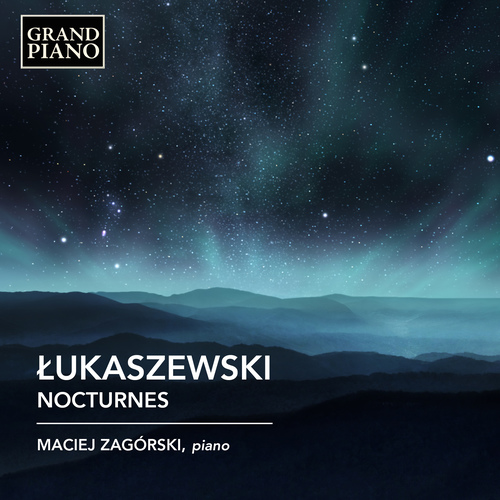
Award-winning Polish composer, Paweł Łukaszewski, is one of today’s most distinctive creators of contemporary sacred music. The Nocturnes for piano, based on some of his own sacred pieces, are inspired by the cosmos, with each nocturne named after a newly discovered bright star in constellations including Vela, Scorpius and the Southern Cross. Łukaszewski takes the listener on a journey through the beauty of the night sky with these intimate and atmospheric sound paintings.
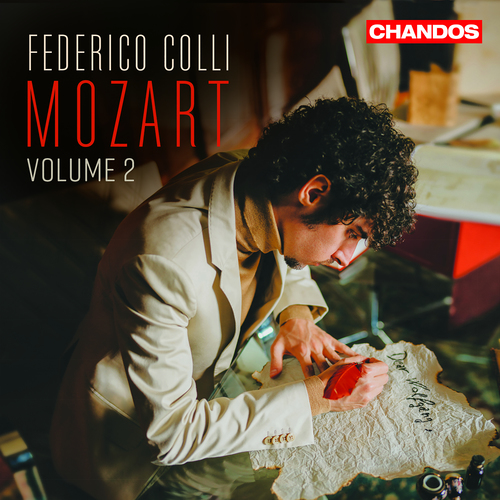
International sensation Federico Colli continues his personal exploration of the music of Mozart with this second volume of works for solo piano. Colli opens his programme with the Adagio in B minor, K. 540, from 1788, toward the end of Mozart’s short life. The only piece on the album not to involve variation form, this Adagio instead adopts sonata form, and is an extremely rare case in Mozart’s output of its chosen key. The two sets of variations that follow (from the seventeen sets that Mozart composed) use a similar approach in their method of constructing variations on the theme – Twinkle, Twinkle, Little Star in the first instance, and Gluck’s smash hit Les Hommes pieusement (or Unser dummer Pöbel meint) in the second. Colli concludes his programme with the rather extraordinary Sonata in A major, K. 311. Instead of the expected sonata form, the first movement is a theme with (six) variations. Following the second movement (a minuet and trio), Mozart finishes with a rondo – arguably one of his most famous pieces, the Alla turca.
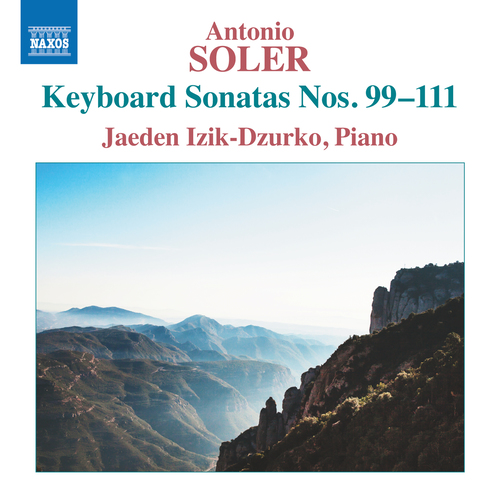
Antonio Soler enjoyed high prestige at Spain’s royal palace, the Escorial, where his contributions to keyboard technique, harmonic innovation and his Spanish musical identity served to bridge the stylistic gap between the late Baroque and early Classicism. Soler’s innovations have often been overlooked but the intricate modulations and rhythmic vitality found in his sonatas offer compelling evidence of their importance. Sonatas Nos. 99–111 offer a wealth of entrancing features, which include sophisticated ornamentation, a synthesis of contrapuntal and Iberian folkloric traditions, and humorous cadences.
![LOEWE, C.: Hiob (Job) [Oratorio]](https://cdn.naxos.com/sharedfiles/images/cds/hires/OC1719.jpg "LOEWE, C.: Hiob (Job) [Oratorio]")
Loewe composed Hiob as his twelfth oratorio in 1848. To understand the context and background of the work and Loewe’s oratorio style in general, it is important to be aware of the environment in which he wrote: Mendelssohn had died a year earlier, and his benchmark oratorios Paulus (1836) and Elias (1846/47) were already available, and Loewe is likely to have been familiar with them. Telschow wrote a condensed summary of the 42-chapter Book of Job from the textbooks and psalms of the Old Testament for the oratorio.
The rediscovery and reconstruction of the Book of Job in Bad Dürkheim in 2001 was the prerequisite for the present recording.
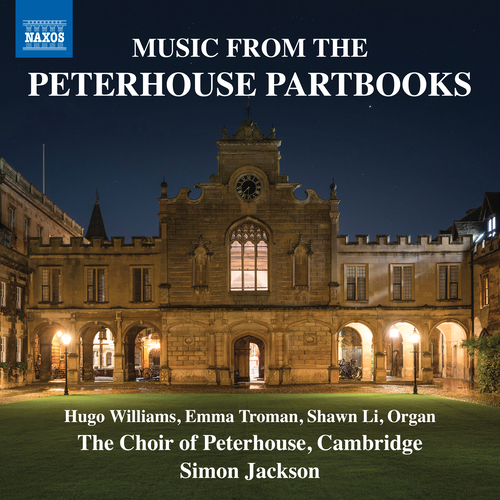
With their dramatic history, the Peterhouse Partbooks are among the most significant collections of English sacred music manuscripts from the 16th and early 17th centuries. Including several world premiere recordings, this programme presents a survey of the rich variety in the Peterhouse manuscripts, from the Venetian splendour of Croce’s eight-part anthem Omnes gentes plaudite, to the penitential intimacy of Tallis’s O God be merciful unto us.
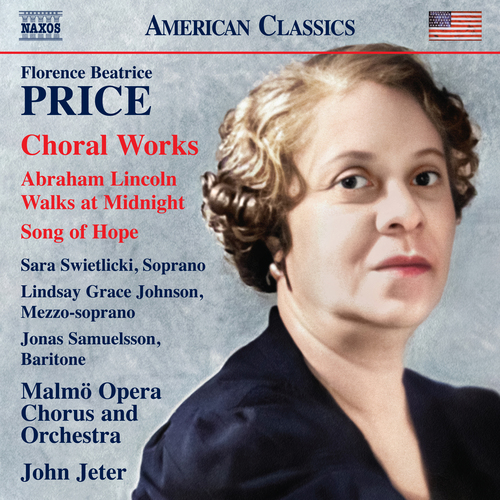
With their dramatic history, the Peterhouse Partbooks are among the most significant collections of English sacred music manuscripts from the 16th and early 17th centuries. Including several world premiere recordings, this programme presents a survey of the rich variety in the Peterhouse manuscripts, from the Venetian splendour of Croce’s eight-part anthem Omnes gentes plaudite, to the penitential intimacy of Tallis’s O God be merciful unto us.
Jørgen Plaetner was one of the pioneers of electronic music in Denmark in the 1960s and 1970s, but he struggled with prejudices and criticism from his contemporaries. After his death, his electronic works have aroused a dawning interest. This release offers a unique insight into his musical thinking with a large collection of electronic works as well as a selection of acoustic compositions.
* Only available for download and streaming
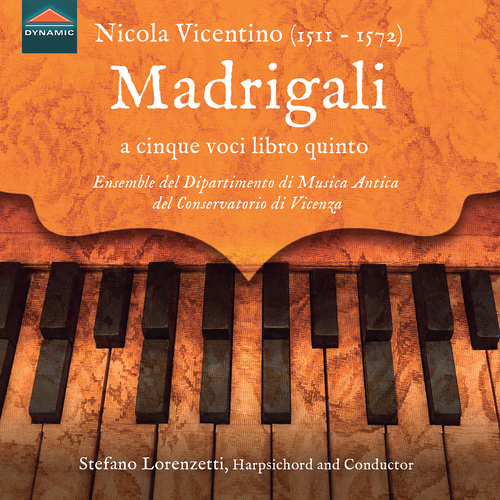
Nicola Vicentino was renowned in his day as a music theorist and inventor of the microtonal archicembalo keyboard instrument, but it is the striking harmonic sophistication of the madrigals that keep his name alive today. These world premiere recordings of madrigals from the Fifth Book of 1572 are interspersed with instrumental pieces that explore comparable chromatic universes, including Giovanni Maria Trabaci’s remarkable Toccata e recercar cromatico, and the first instrumental canzona ever published: Canzon la Bella.
![DONIZETTI, G.: Roberto Devereux [Opera] (Fondazione Teatro Donizetti, 2024)](https://cdn.naxos.com/sharedfiles/images/cds/hires/DYN-38076.jpg "DONIZETTI, G.: Roberto Devereux [Opera] (Fondazione Teatro Donizetti, 2024)")
Roberto Devereux is the fourth and finest of Donizetti’s works dedicated to the Tudor period of English history, and is considered by many to be the ultimate masterpiece amongst his Italian operas. The tragic narrative is a tale of intrigue and vengeance in the court of the elderly and weary Queen Elisabeth I, with Donizetti’s powerful score expressing all of the intense drama and sorrowful emotion demanded by the opera’s finely etched characters. This star-studded Donizetti Opera Festival production received wide critical acclaim.
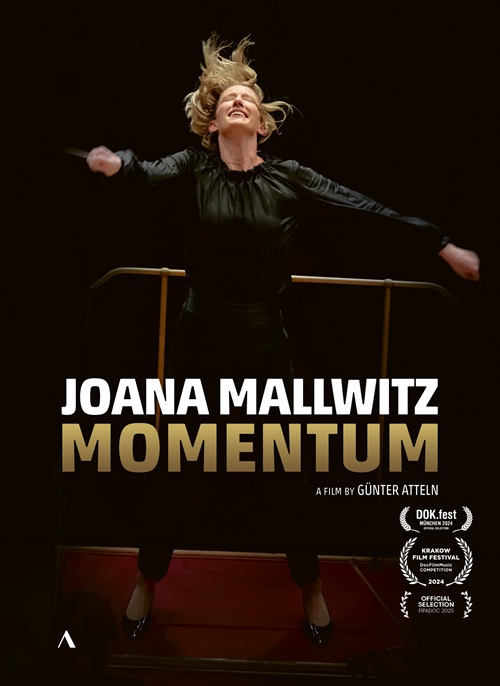
A film by Günter Atteln
The film follows conductor Joana Mallwitz over two years as she rises to the top of the Konzerthausorchester Berlin, one of Germany’s leading classical orchestras, in August 2023. We experience her as a hardworking perfectionist, a mediator of music, and an energetic orchestra leader. Despite all her success, the enormous pressure of the conducting profession is palpable, which, like a musical crescendo, steadily increases until her inaugural concert in Berlin.
![OFFENBACH, J.: Les Contes d’Hoffmann [Opera] (Salzburg Festival, 2024)](https://cdn.naxos.com/sharedfiles/images/cds/hires/811808.jpg "OFFENBACH, J.: Les Contes d’Hoffmann [Opera] (Salzburg Festival, 2024)")
Offenbach goes Hollywood: Mariame Clément’s production of Les Contes d’Hoffmann transforms its titular character into a storyteller of a different kind. The different acts, which are based on short stories by E.T.A. Hoffmann, take the audience on a journey through the world of cinema, from a 70s sci-fi flick over a costume drama to a feverish experimental sequence. The three love interests Olympia, Antonia and Giulietta are portrayed by American soprano Kathryn Lewek, who “impresses with brilliantly assertive coloratura, melting cantilenas and pulsating drama” (Drehpunktkultur). At the centre of this tragic tale of unrequited love is Hoffmann himself, stepping into the role of a script writer and film director in this production. The incredibly charismatic Benjamin Bernheim “splendidly cele brates the invasive tragedy of his character. Sound, expression and presence could not be better combined” (Der Standard). Kate Lindsey, who portrays the muse disguised as Hoffmann’s friend Niklausse is a joy to watch and listen to as she “absorbs Clément’s energy of ideas and gilds her vocal tour de force with scenic exuberance” (Der Standard). An opera evening that spans the emotional spectrum from hilarious comedy to deeply felt heartbreak.
![SULLIVAN, A.: The Gondoliers [Operetta] (Scottish Opera, 2021)](https://cdn.naxos.com/sharedfiles/images/cds/hires/OA1393D.jpg "SULLIVAN, A.: The Gondoliers [Operetta] (Scottish Opera, 2021)")
The Gondoliers, the twelfth of fourteen operas from Gilbert & Sullivan, has been an audience favourite since its 1889 premiere. The tunes are infectious, the romantic and family conflicts heartfelt, and the satire of rank and station constantly entertaining and relevant. This Scottish Opera co-production with the D’Oyly Carte Opera Company and State Opera South Australia is created by some of the world’s foremost G&S enthusiasts and experts.
Make sure to subscribe to Naxos newsletters for other great offers.