
 Translate






























In addition to its own wide-reaching monthly new releases, Naxos also distributes several leading labels in many countries around the world. Here is a choice selection of recent releases from some of these distributed labels.

Gramola was founded in Vienna in 1924 as an Austrian offshoot of the Czech/British record producer of the same name, and has been active since then in all areas concerning classical music. In recent years, the focus has shifted to CD production, and with about 30 productions a year Gramola has been Austria’s classical music producer with the highest production rate for some time. Initially, Gramola placed an emphasis on great composers of Viennese Classicism, such as Haydn, Mozart, Beethoven and Schubert, but now production activities stress on promoting young Austrian musicians and not least the co-operation with ‘Exilarte’, devoted to the music of murdered or exiled composers.
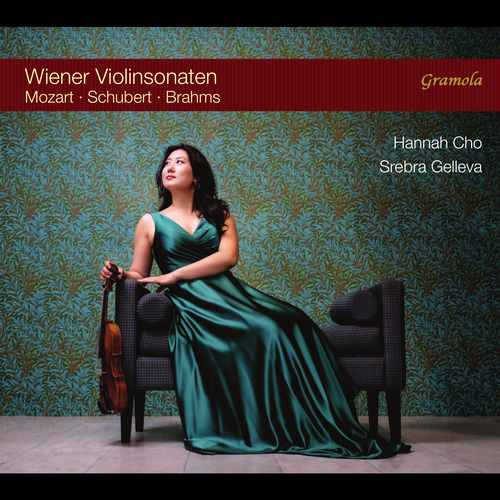
The debut album of violinist Hannah Cho, a native Korean and member of the Vienna Philharmonic, is shaped by the idea of paying tribute to her adopted home of Vienna through sonatas by Mozart, Schubert, and Brahms–composers who are closely associated with this city. Although their lifespans (born in 1756 in Salzburg, in 1797 in Vienna-Himmelpfortgrund, and in 1833 in Hamburg, respectively) by a thin margin don’t overlap, they can be described as bearers of a relay baton, their connection found in the tradition of Viennese Classicism. Together with pianist Srebra Gelleva, Hannah Cho presents Sonata No. 21 in E minor, K. 304/300c by W. A. Mozart, Sonata in A major, Op. posth. 162, D 574 by Franz Schubert, and Sonata No. 3 in D minor, Op. 108 by Johannes Brahms. This selection offers a cross-section of the historical development of the violin sonata genre, which experiences an early flourishing with Mozart, was almost naturally incorporated into Schubert’s oeuvre, and finds a peak of maturity in the Romantic era with Brahms.
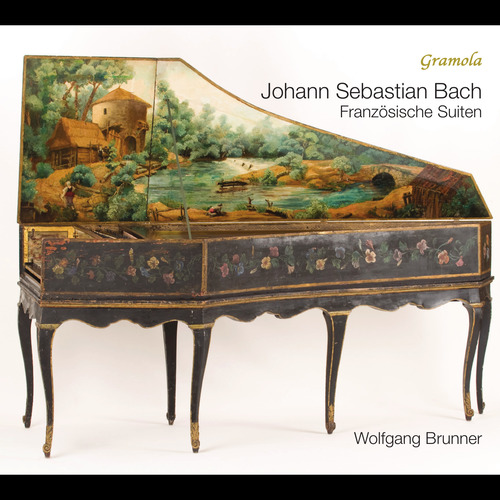
The soundboard is painted with flowers, fruits, and animals and decorated with a typical light-blue ornamental border. Around the soundboard, the walls are adorned with block-printed wallpaper. The lid contains a landscape painting, which was added later, an idyllic stream landscape with four staffage figures: The observer watches a boy gazing intently into the water, a young woman carrying provisions or something similar home, and a couple, who are also only visible from behind. A bridge and a mill enliven the rural scene.” If the corresponding technical terms “soundboard,” “ornamental border,” or “lid” were missing, the reader would hardly associate this vivid, florid description with a keyboard instrument. In such a manner, the renowned harpsichordist and expert in historical performance practice and basso continuo, Wolfgang Brunner, describes the instrument dated 1628 by Andreas Ruckers, from the Flemish harpsichord-making dynasty of the Ruckers family, which is heard on this recording featuring the six French Suites by J. S. Bach.
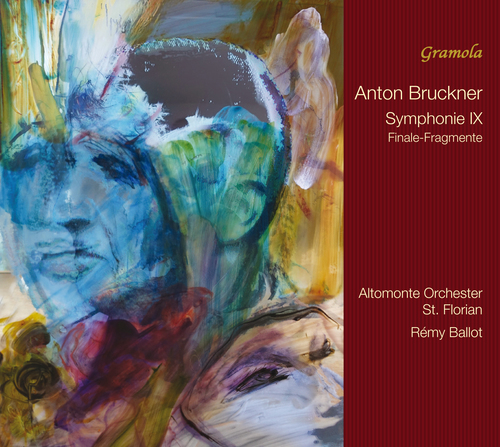
As the highlight of the Bruckner Year 2024, Anton Bruckner’s Symphony No. 9 was performed by the Altomonte Orchestra St. Florian under Rémy Ballot on the occasion of the Brucknertage St. Florian. The special feature of this evening was the presentation of the recovered sketches from the Finale, which were played in their rough draft form and without special arrangement. Work on the Finale was already far advanced at the time of Bruckner’s death on October 11, 1886; among the fragments are, among other things, the beginning of the movement, the first, second and third main themes, parts of a development section, and the aforementioned three themes in the recapitulation—partly as a short score sketch, partly as completely orchestrated passages. Performing these fragments allows one only to imagine what monument Anton Bruckner would have erected once again with the Finale of his Ninth Symphony. This memorable evening can now be experienced by the music world.
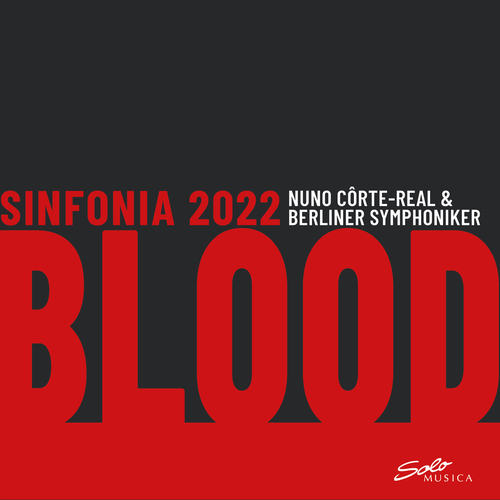
This recording presents two major orchestral works by Nuno Côrte-Real, a composer whose music occupies a unique space between imagination and reflection. Rejecting both rigid formalism and explicit programme music, Côrte-Real creates sound worlds that invite listeners into an active experience of discovery, where meaning emerges through listening itself.
At the centre of the album stands Sinfonia 2022, Op. 70, a powerful meditation on war, uncertainty and the fragility of civilisation. Inspired by the invasion of Ukraine, the symphony unfolds as an emotional and philosophical journey, moving from darkness and conflict to a final state of suspended contemplation. Through vivid orchestral colours, grotesque marches, moments of profound stillness and references to Fernando Pessoa’s final words, the work explores the tension between destruction and hope, violence and human resilience.
Complementing the symphony is Banksters Suite, Op. 75, an independent orchestral work derived from the composer’s opera Banksters. Drawing on themes of financial power, corruption and redemption, the suite transforms the opera’s dramatic material into a compelling narrative without words. Across six contrasting movements, listeners encounter confrontation, ambition, deception, collapse and, ultimately, the possibility of transformation.
Though rooted in different subject matter, both works confront the presence of evil in contemporary society. War and financial corruption emerge as interconnected expressions of power and responsibility, inviting reflection on the ethical challenges of our time. Yet Côrte-Real’s music never yields to despair. Instead, it transforms conflict into artistic expression, offering a space where beauty, thought and human awareness can coexist.
This recording reveals a composer for whom music is more than sound: it is an act of resistance, a search for clarity, and an invitation to listen more deeply to ourselves and the world around us.
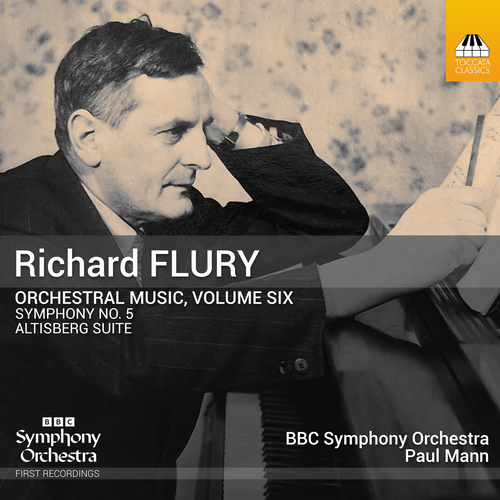
The Swiss composer Richard Flury (1896–1967) completed the last of his five symphonies in 1956, when its unashamedly melodic, tonal style – with elements absorbed from Bruckner, Richard Strauss, Joseph Marx and other such late Romantics – made it a conscious rebellion against the modernist trends of the time. Flury, moreover, was an instinctive nature-painter, and the Swiss landscape that meant so much to him can be sensed almost as readily in supposedly abstract works such as this symphony as in those – often quasi-symphonic, like the suite also heard here – that play explicit homage to the woods and valleys in which he grew up.
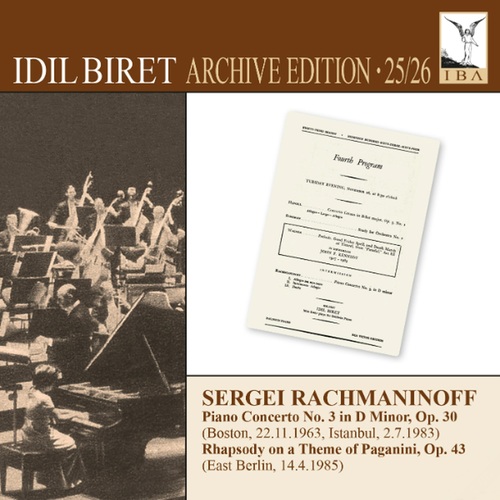
Highlighting the artistry of Idil Biret, this archive edition assembles landmark recordings of her interpretations of Sergei Rachmaninov’s major works for piano and orchestra. At its core is the Piano Concerto No. 3, performed at her 1963 debut with the Boston Symphony Orchestra under Erich Leinsdorf, a concert marked by the sudden news of President John F. Kennedy’s assassination and remembered for its profound emotional intensity. Complementing this are later recordings from Istanbul (1983) and East Berlin (1985), including the Rhapsody on a Theme of Paganini. Renowned for having performed and recorded the complete Rachmaninov concertos, Biret demonstrates remarkable command, tonal richness, and interpretative depth throughout these performances.
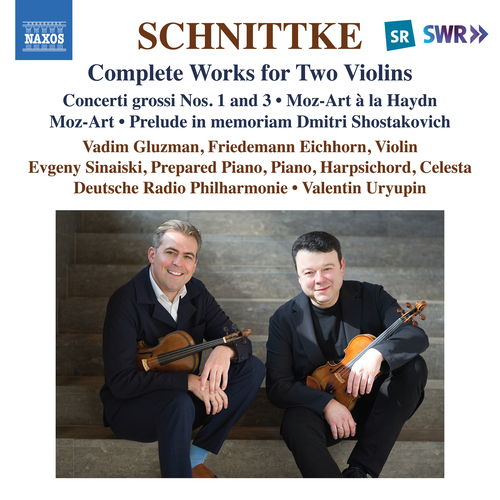
Alfred Schnittke’s oeuvre carries an unmistakable personal signature that integrates widely differing stylistic worlds. The profoundly compelling works heard in this programme display an extraordinary level of expression and colours. From the haunting sonorities of the prepared piano in his First Concerto Grosso to the playful theatricality of Moz-Art (after the fragment K. 416d) this album brings together all of Schnittke’s works for two violins, both with and without orchestra.
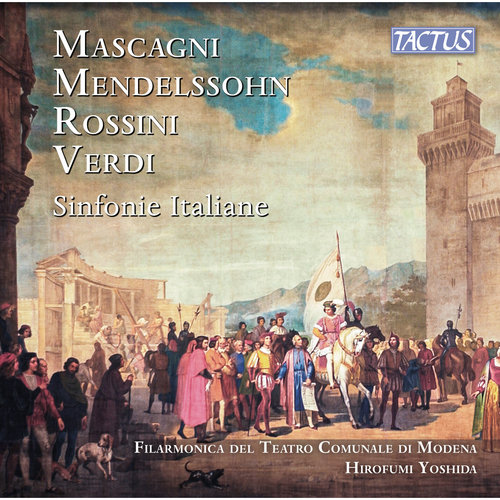
It was an ideal Grand Tour that the Orchestra Filarmonica del Teatro Comunale di Modena, conducted by Maestro Hirofumi Yoshida, offered to the Japanese audience during its tour, which included the International Expo and the Izumi Hall in Osaka, as well as the enchanting island of Amami.
The orchestra presented a program dedicated to the 19th century, full of thrilling Romanticism and sovereign passions, and above all to that Italy where roses and lemons blossomed, as well as musical masterpieces.
From Mendelssohn’s Italian Symphony to the Intermezzo from Cavalleria Rusticana by Pietro Mascagni, passing through overtures by Rossini and Verdi, this CD offers us timeless masterpieces of the Italian symphonic repertoire.
![HALÉVY, F.: La Juive [Opera]](https://cdn.naxos.com/sharedfiles/images/cds/hires/8.660611-13.jpg "HALÉVY, F.: La Juive [Opera]")
Fromental Halévy’s five-act grand opera La Juive charts the forbidden love between a Christian man and a Jewish woman, and the tragedy that ensues. The work’s pageantry, opulence and thrilling music made it one of the most enduringly successful operas of the 19th century with more than 500 performances in Paris alone. This acclaimed contemporary staging from Oper Frankfurt features Ambur Braid as the heroine Rachel, and John Osborn as her father Éléazar.
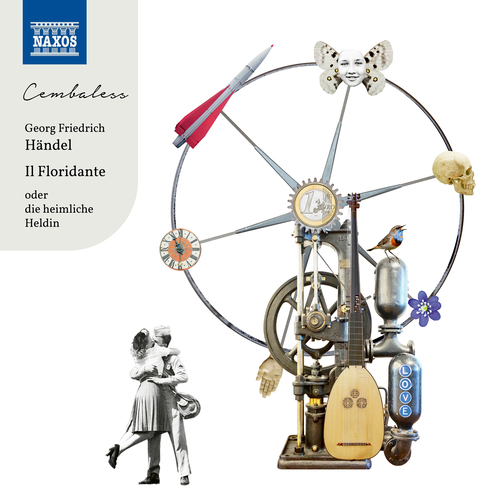
An opera reimagined – with courage, wit, and poetic resonance. In this bold and intimate interpretation of Händel’s Il Floridante, Cembaless and Poetry Slam artist Florian Wintels merge baroque virtuosity with the language of today. The result: a vibrant and emotionally charged experience that explores timeless themes of love, power, injustice, and resistance.
Extended version of this album with German narration is available for streaming and download on Naxos 9.70416.
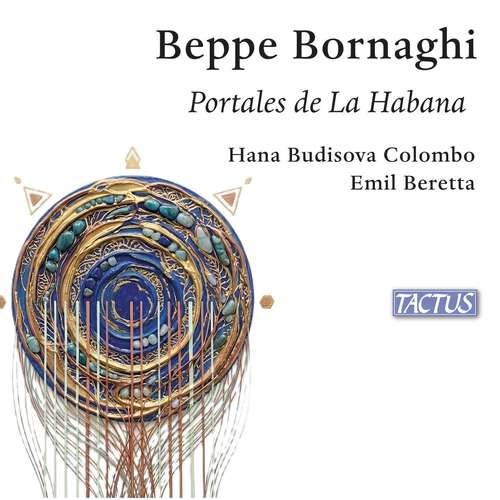
This recording features three pieces for flute and piano by Beppe Bornaghi, a pianist, composer, AFAM lecturer, educator in the field of music technology, and author of publications dedicated to music teaching and production.
His work consistently brings together artistic, performative, and pedagogical dimensions. His writing reveals a personal and recognizable style: one that blends melodic clarity, chamber music refinement, and narrative tension without slipping into either pure descriptivism or academicism.
The performer of the pieces is Hana Budisova Colombo, a Czech-Italian flautist trained at the Conservatory of Brno and the Faculty of Music of the Academy of Performing Arts in Prague. Her interpretation highlights the character of the three pieces with sensitivity and elegance, capturing their lyrical breadth, quality of phrasing, and timbral richness.
At the piano, Emil Beretta makes a decisive contribution to the overall performance, thanks to his precise touch, clear sonic presence, and solid chamber music balance. The dialogue with the flute thus unfolds into an intense and well-balanced expressive texture.
Antes que caiga la noche, El Alma de la ciudad and Dos duendes en el balcón form a musical journey inspired by Havana, a city of light, memory, melancholy, and vitality. Singable melodies and Latin rhythms intertwine in an evocative and communicative style, transforming environmental and cultural impressions into an elegant and suggestive musical discourse.
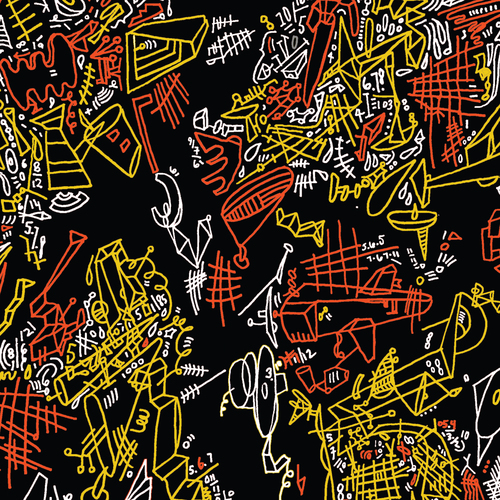
Performed on specially constructed and tuned percussion instruments, industrial metals, wood and gongs, Michael Gordon’s Field of Vision reveals a complex spectrum of overtones and resonances. The large number of percussionists, and the vast performance field, invoke a sweeping perspective that suggests the architectural movement of sound.
Produced by Doug Perkins and performed by the University of Michigan Percussion Ensemble, the piece is meant to induce, in Gordon’s words, a quasi-meditative, almost ecstatic state — for performer and audience alike. “It’s where attention sharpens and dissolves, and thoughts focus and drift,” he explains. “In the end, I think the music emerges as an exploration of space itself. Who can tune space? The answer becomes collective: the performers, the instruments, the listeners.”
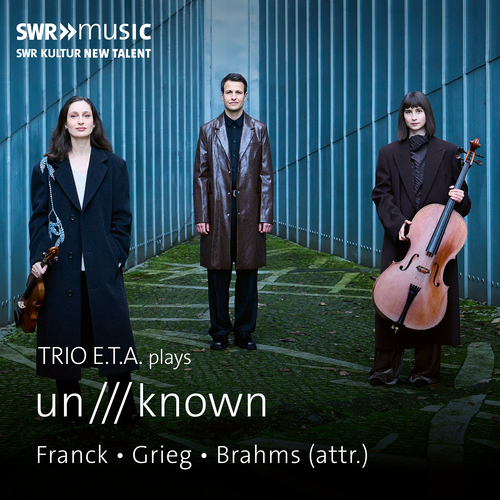
Three works, three worlds, yet united by a shared pursuit: the search for that moment when music transcends itself. Cesar Franck’s youthful Trio in F sharp minor bursts with creative energy, filled with melodies of immediate emotional force and a sense of freedom that opens the space wide. Edvard Grieg’s single movement for piano trio unfolds as a circle of light and motion: tentative, glowing, shimmering, a serious game that constantly reinvents itself. And the enigmatic A major Trio, long attributed to Brahms, speaks in a warm, expansive voice that feels familiar yet stems from an unknown hand. Together, these works form a panorama of chamber music: bold and youthful, poetic and searching, deeply rooted and full of open questions.
For the E.T.A. Trio, the works become a reflection of the ensemble’s own musical identity: three musicians who meet in alertness, curiosity and a shared devotion to sound, always seeking the moment when their voices merge into a living, breathing dialogue.
SWR Kultur New Talent is a support programme dedicated to outstanding young classical musicians. Over the course of three years, exceptional artistic personalities are promoted through concerts, studio productions and extensive media presence. Following Janina Ruh, Robert Neumann and Lionel Martin, the E.T.A. Trio now presents its recording within this series.
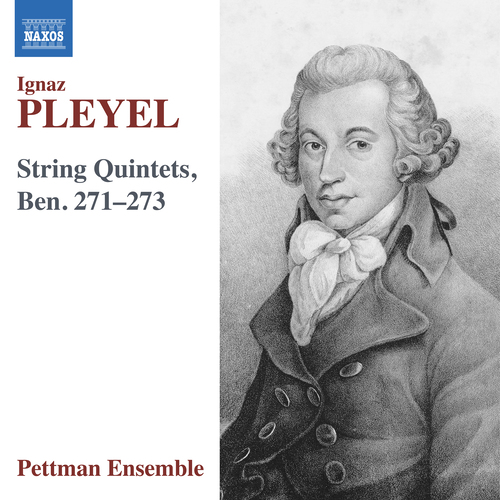
The name Pleyel is chiefly remembered today as a piano manufacturer, but the company’s founding figure Ignaz Pleyel, a former pupil of Haydn, was one of the most acclaimed composers of the late 18th century. The success of Pleyel’s finely wrought twelve String Quintets, the three of which heard on this album inspired Mozart to compose his own quintets in C major and G minor, lies in their well-paced balance between crackling energy and lyrical expansiveness. These highly accomplished works are sprightly, good humoured and filled with such an intrinsic lightness and grace that they are guaranteed to delight as much now as they did centuries ago.

The Holy Liftoff (2024) is the 11th installation of Claire Chase’s 24-year Density 2036 project, an initiative to create a bold new repertory for the flute by the 100th anniversary of Edgard Varèse’s seminal 1936 flute solo, Density 21.5. Density 2036 has been called “one of the great musical undertakings of our time” by The New York Times, and “a quarter-century journey that has little precedent” by The New Yorker.
Terry Riley began composing The Holy Liftoff in 2022 as an open score sketchbook brimming with colorful drawings that were intended to be played by Chase with any number of collaborating musicians. Over the following two years, the sketches evolved into a multidimensional work that now combines extensive through-composed material as well as graphic notation, evocative artwork, and Riley’s signature open-form scoring that can be freely interpreted by the performers in variable durations and ensemble formations. Samuel Clay Birmaher’s 60-minute realisation of the work, which he composed in close collaboration with Riley and the performers, is scored for multiple flutes and string quartet.
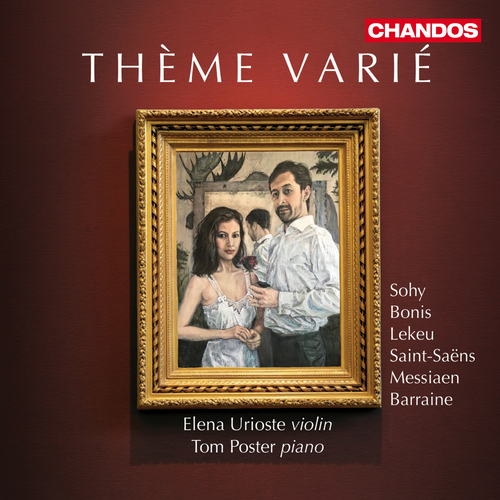
Conceived as a treasure-trove of lesser-known French and Belgian repertoire, the works on this album span a forty-year period, from 1892 to 1932. A number of unifying threads run through the programme, perhaps the most significant of which is the influence of a composer whose music is not heard here at all: César Franck. Franck taught and championed Guillaume Lekeu and Mel Bonis; and Bonis in turn taught Charlotte Sohy, whose principal composition teacher was Vincent d’Indy, one of Franck’s most devoted acolytes. The artists decided against including Franck’s Violin Sonata in favour of the work by his fellow Belgian Lekeu, much more rarely recorded, and hardly ever heard in the concert hall. A number of shorter works surround this sonata to form a uniquely rewarding programme, starting with Charlotte Sohy’s Thème varié. Three works by Mel Bonis complement the duo’s recording of her Violin Sonata on their previous album (CHAN 20275), whilst the two Élégies by Saint-Saëns have also been unfairly neglected. Fascinatingly, the second Élégie and Messiaen’s Thème et variations are separated by just a dozen years, although they inhabit sound-worlds seemingly decades apart. Elsa Barraine was Messiaen’s contemporary and lifelong friend. Her haunting Nocturne seemed to provide a fitting conclusion to this programme.
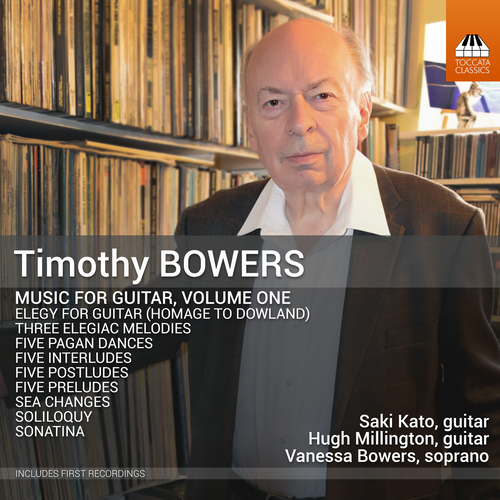
The guitar is traditionally the preserve of the Spanish. But Timothy Bowers, born near London in 1954, has found a rather more English side to the instrument: understated emotion expressed in an accessible language, unforced elegance, crisp and clean textures and a degree of reserve; extending its frame of reference, much of this music has the unhurried delicacy of a Japanese water-colour and the hint of folksong that comes with the instrument itself. This album, the first dedicated to Bowers’ guitar music, has the stamp of authenticity: it is performed by musicians with whom he has worked closely, and the recording was supervised by the composer himself.
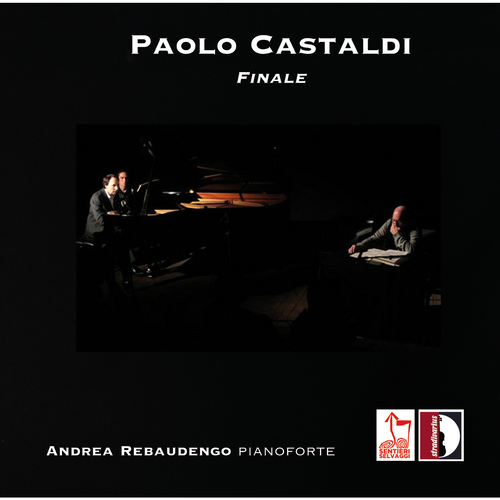
Andrea Rebaudengo, a pianist with an intense concert career and a particular predilection for music written over the last hundred years, presents a new recording of Finale by Paolo Castaldi (1930–2021), an Italian composer and essayist with a highly personal artistic path, ranked among the greatest contemporary Italian composers.
Produced in collaboration with the Sentieri Selvaggi cultural association, the album offers a live recording of the performance of Finale on December 1, 2008, in the presence of the composer, 35 years after the publication of the score, composed between 1971 and 1973.
A monumental score lasting approximately 45 minutes and in four movements, the work marked a break with the spirit of the years in which it was published, revealing a new poetics on which the composer would later build much of his creative journey.
The album thus offers a re-listen to an important body of twentieth-century piano composition. to rediscover a composer of fundamental importance for the musical languages of the second half of the twentieth century, then an isolated voice and today finally recognized.”
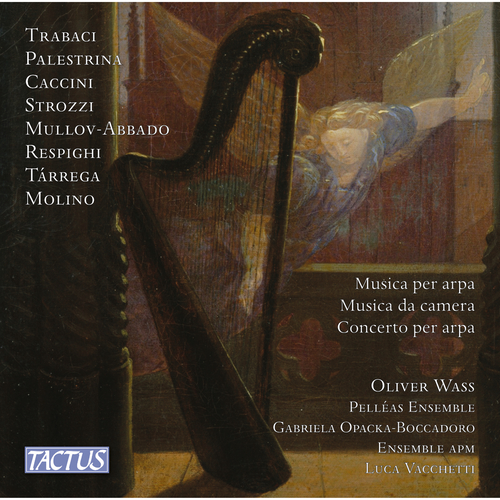
The idea behind this recording by the acclaimed harpist Oliver Wass (first prize winner at the “Suoni d’Arpa” International Competition and now professor at the Royal College of Music in London) is to juxtapose music by Misha Mullov-Abbado with works by (mostly) Italian composers from four earlier centuries. The artist’s ambition was to record the music he commissioned to Misha Mullov-Abbado and pair it with music for modern harp and Italian triple harp. The album is in fact performed on an Italian triple harp for the early repertoire, and on a modern pedal harp for the classical and modern repertoire. The performance also includes a chamber music section featuring Henry Roberts on flute, Luba Tunnicliffe on viola – both members, along with Wass, of the Pelléas Ensemble – and Gabriela Opacka-Boccadoro on violin. The CD also features a highly fascinating world premiere recording (and performance) of the Concerto for Harp and Orchestra by Luigi Molino, recorded live at the opening concert of the “Suoni d’Arpa” Festival in Saluzzo (Cuneo) on August 24, 2024. Oliver Wass here is accompanied by the Ensemble APM orchestra, conducted by Luca Vacchetti.
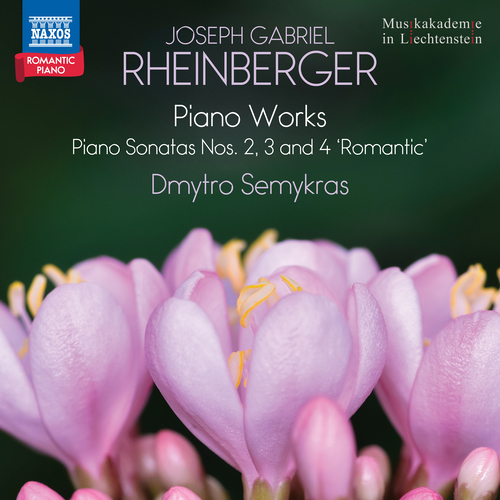
Joseph Gabriel Rheinberger’s musical legacy can be found in his reputation as a renowned organist and professor as well as in his extraordinary facility and productivity as a composer in all forms, including a considerable amount of solo piano music. From the high-spirited Second Sonata to his final Fourth Sonata with its defiant opening and hymn-like Romance, Rheinberger’s piano sonatas are polished, beautifully balanced and tasteful, drawing on established Classical-Romantic traditions while being especially effective in producing flowing and memorable melodies.
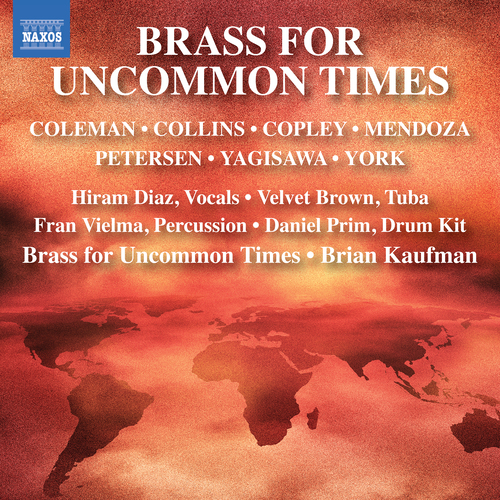
Composed between 2004 and 2022 the seven works on this album reflect the concerns and crises of our time. These include the pandemic, racial unrest, global conflict, reflections on the realities of war, the pervasive use of gun violence, pollution and social strife. The music oscillates between struggle and celebration and gives powerful glimpses of redemptive hope in our shared experiences, one that values civic identity and collective expression and offers a fanfare for those who shape our future for the better.
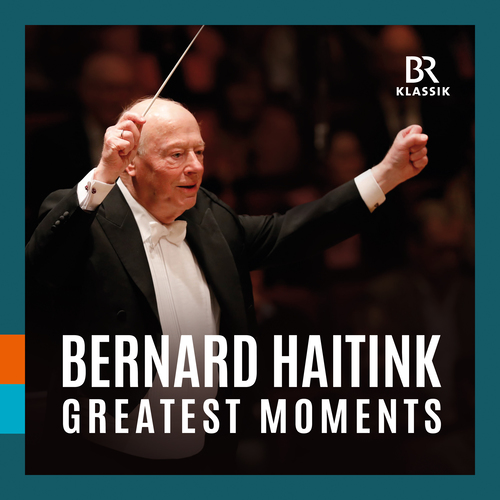
The career of the Dutch conductor Bernard Haitink, who died in 2021 at the age of 92, began at the Netherlands Radio Philharmonic Orchestra, where he became Principal Conductor in 1957. It was one year earlier, at the age of just 27, that he first conducted the orchestra with whom he would later have a long and highly successful collaboration: the Royal Concertgebouw Orchestra of Amsterdam. From 1961 to 1988, Bernard Haitink was the famous orchestra’s Musical Director and Principal Conductor, a position he initially shared with Eugen Jochum. Other positions held by him included Music Director and Principal Conductor of the London Philharmonic Orchestra (1967–1979), the Glyndebourne Festival Opera (1978–1988), the Royal Opera House Covent Garden (1988–2002), the Staatskapelle Dresden (2002–2004), and the Chicago Symphony Orchestra (2006–2010). In addition, he was “Conductor Emeritus” of the Boston Symphony Orchestra, “Patron” of the Netherlands Radio Philharmonic Orchestra, “Conductor Laureate” of the Royal Concertgebouw Orchestra and also an honorary member of the Berlin and Vienna Philharmonic Orchestras and of the Chamber Orchestra of Europe.
Bernard Haitink enjoyed a regular and cordial working relationship with the Symphonieorchester and Chor des Bayerischen Rundfunks ever since his first performance with them in 1958, and this resulted in numerous highly acclaimed record releases. The complete recording of Wagner’s Der Ring des Nibelungen, made between 1988 and 1991, ranks as a milestone to this day. Many other high-profile recordings have been combined inside the 11-CD box set, “Bernard Haitink Portrait Vol. 1”, released by BR-KLASSIK in 2019 to mark the 90th birthday of its esteemed guest conductor. The edition contains Symphonies Nos. 3, 4 and 9 by Mahler, Nos. 5 and 6 by Bruckner, Beethoven’s Missa solemnis and Haydn’s Creation and The Seasons. The live recording of Mahler’s Ninth Symphony was awarded the ECHO Klassik 2013 and the Toblacher Komponierhäuschen prize; Beethoven’s Missa solemnis won the Diapason d’or 2015; and Mahler’s Third Symphony won the BBC Music Magazine Award 2018 (Recording of the Year / Orchestral Winner). In February 2024, Bernard Haitink, the BRSO and the Bavarian Radio Chorus were awarded a Choc Classica for their recording of Anton Bruckner’s Eighth Symphony and Te Deum. Bernard Haitink received numerous honours and awards for his decades of work in music. He bore the title “Knight of the British Empire” and was a “Companion of Honour” of the United Kingdom. In 1991, the Erasmus award – the highest cultural award of the Netherlands – was conferred on him, and in 2007 the magazine Musical America named him “Musician of the Year”. He was a holder of the Order of the House of Orange-Nassau and of the Order of the Netherlands Lion (Commander). In 2015, Bernard Haitink received the Gramophone Lifetime Achievement Award. In September 2019, after a conducting career spanning 65 years, Bernard Haitink took his leave of the concert stage.
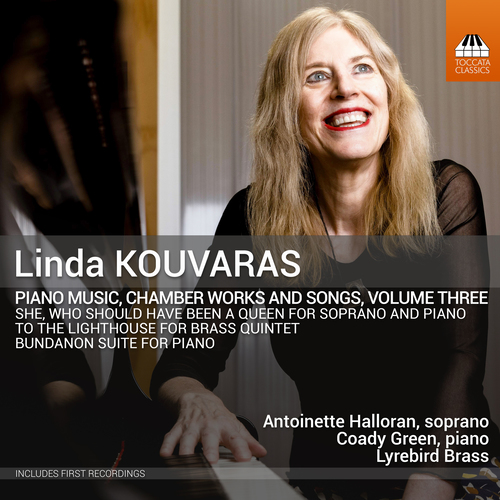
The Australian Linda Kouvaras (b. 1960) – pianist and musicologist as well as composer – adopts an explicitly feminist viewpoint in her work. She describes She, Who Should Have Been a Queen as a song-cycle, but in fact the text, by Antoinette Halloran, presents a series of dramatic scenas that radically re-assess the fates of a series of female characters from famous operas, the edgy humour and familiar musical language only slightly softening the implied social commentary. To the Lighthouse for brass quintet has, improbably, both a feminist subtext and the engaging buoyancy of a Baroque canzona. As with many other Australian composers, Kouvaras’ piano music has a strong sense of space and place, and her expansive Bundanon Suite uses virtuosic piano-writing to present a series of sketches of the landscapes around the Shoalhaven River in New South Wales, with lyrical, elegiac melodic lines that soar over freewheeling piano textures.
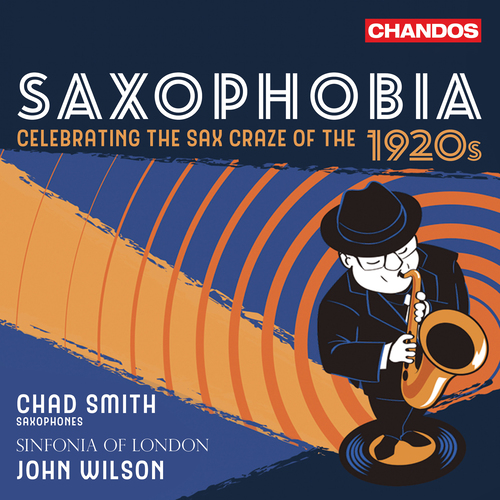
Famously invented by Adolphe Sax in the 1840s, the saxophone quickly became an established part of French and British military bands, but remained a novelty instrument elsewhere until it gained a foothold in vaudeville and ragtime bands in 1920s America. From there, it became an essential part of dance bands, and a prominent solo instrument in jazz. A great deal of this early development can be attributed to one musician – Rudy Wiedoeft. Born into a musical family, Rudy became a virtuoso clarinettist at an early age, before becoming obsessed with the saxophone in 1914. Coinciding with the start of the dance craze, he was convinced he could make a better living as saxophonist than as an orchestral clarinettist and spent the following years forming and running bands for nightclubs and cabaret, and writing and recording his own virtuosic pieces for saxophone. Concentrating on recording over performing, he became a household name, but the emergence of the jazz era and its new star musicians eventually overshadowed his work, and his achievements and influence slipped into obscurity. Multi-instrumentalist, educator, and virtuoso saxophonist, Chad Smith instigated this album both as a tribute to and in order to shine a light on this largely forgotten innovator. A veteran of Broadway since 2002, Smith has made an astonishing career which spans live and studio work at the highest level, featuring in a diverse range of soundtracks from Star Wars to The Simpsons. He has appeared as a soloist with most of America’s premier symphony orchestras, and has collaborated with innumerable artists such as Tony Bennett, Aretha Franklin, Ray Charles, and Lady Gaga.
![DONIZETTI, G.: Maria Stuarda [Opera] (Teatro Real, 2024)](https://cdn.naxos.com/sharedfiles/images/cds/hires/2.110782.jpg "DONIZETTI, G.: Maria Stuarda [Opera] (Teatro Real, 2024)")
Gaetano Donizetti’s tragic opera Maria Stuarda depicts the merciless rivalry between Elizabeth I and Mary, Queen of Scots, who is seen as a martyr facing up to the illegitimate Queen of England. The opera was a victim of censorship at its premiere and was beset by problems during rehearsals but is now seen as one of Donizetti’s great operatic masterpieces. From the flamboyantly lyrical royal confrontations to the poignant final execution scene, this widely acclaimed production by David McVicar features monumental sets and sumptuous Elizabethan costumes bringing the majesty and stark brutality of Elizabeth I’s reign vividly to life.
![SULLIVAN, A.: Trial by Jury • HESSION, T.: A Matter of Misconduct! [Operettas] (Scottish Opera, 2025)](https://cdn.naxos.com/sharedfiles/images/cds/hires/OA1398D.jpg "SULLIVAN, A.: Trial by Jury • HESSION, T.: A Matter of Misconduct! [Operettas] (Scottish Opera, 2025)")
A dazzling double-bill of classic G&S comedy and a new satirical operetta from Scottish Opera
Trial by Jury, first performed in 1875, is the first major hit from the partnership of W.S. Gilbert and Arthur Sullivan. Set around a classic case of broken vows — the defendant having literally left the claimant at the altar — the trial bubbles over with emotion, humour, and downright chaos, leaving the jury divided. How will they decide between the charming yet swindling defendant and the utterly captivating claimant?
In A Matter of Misconduct!, Emma Jenkins and Toby Hession present a daring new operetta set in the press room at Number 9 Downing Street. When a scandal threatens to break about the front runner in a bloody leadership campaign, a lawyer is needed to prevent information from reaching the press. Sylvia Lawless from the firm Lawless, Lawless, Lawless and Crook must find the loopholes in this modern take on unsavoury behaviour.
![WAGNER, R.: Meistersinger von Nürnberg (Die) [Opera] (Bayreuth Festival, 2025)](https://cdn.naxos.com/sharedfiles/images/cds/hires/773808.jpg "WAGNER, R.: Meistersinger von Nürnberg (Die) [Opera] (Bayreuth Festival, 2025)")
Wagner defined Die Meistersinger von Nürnberg as the most complete work that he had ever created. The Bayreuth Festival 2025 presents the comedy in a new production staged by Matthias Davids, whose playful irreverence stands between tradition and renewal. Under the exceptional baton of Daniele Gatti, who debuted in Bayreuth in 2008 with Parsifal, the cast showcases its brilliancy and finesse. Georg Zeppenfeld, at the core of the performance, interprets Hans Sachs with excellent vocal skills and particular sensibility. Equally remarkable performances are given by Michael Spyres and Christina Nilsson, respectively Waltherand Eva, and Michael Nagy as a finely drawn Beckmesser. The result is a compelling piece of music theatre: ‘A comedy of manners where themes of art, tradition and human love arise naturally’ (Seen and Heard International). Michael Spyres ‘has everything a Stolzing needs: he is effortlessly present, sounds light yet embodied in the upper register, a German knight with italianità.’ (BR-KLASSIK)
![DONIZETTI, G.: Maria Stuarda [Opera] (Salzburg Festival, 2025) (NTSC)](https://cdn.naxos.com/sharedfiles/images/cds/hires/773008.jpg "DONIZETTI, G.: Maria Stuarda [Opera] (Salzburg Festival, 2025) (NTSC)")
![DONIZETTI, G.: Maria Stuarda [Opera] (Salzburg Festival, 2025) (Blu-ray, HD)](https://cdn.naxos.com/sharedfiles/images/cds/hires/773104.jpg "DONIZETTI, G.: Maria Stuarda [Opera] (Salzburg Festival, 2025) (Blu-ray, HD)")
![VIVALDI, A. / OVID: Hotel Metamorphosis [Pasticcio by B. Kosky and O.A. Schmitt] (Salzburg Festival, 2025) (NTSC)](https://cdn.naxos.com/sharedfiles/images/cds/hires/772808.jpg "VIVALDI, A. / OVID: Hotel Metamorphosis [Pasticcio by B. Kosky and O.A. Schmitt] (Salzburg Festival, 2025) (NTSC)")
![VIVALDI, A. / OVID: Hotel Metamorphosis [Pasticcio by B. Kosky and O.A. Schmitt] (Salzburg Festival, 2025) (Blu-ray, HD)](https://cdn.naxos.com/sharedfiles/images/cds/hires/772904.jpg "VIVALDI, A. / OVID: Hotel Metamorphosis [Pasticcio by B. Kosky and O.A. Schmitt] (Salzburg Festival, 2025) (Blu-ray, HD)")
Make sure to subscribe to Naxos newsletters for other great offers.