 Translate




























This month’s highlights include Shostakovich’s rare gems The Shot and The Human Comedy, featuring the reconstructed March of the Anarchists conducted by Mark Fitz-Gerald; Warren Lee performing in the third volume of the Romantic Piano series featuring Gounod’s elegant miniatures; Dariia Lytvishko’s vibrant recital of Toccatas and Méditations of French organ works; the concluding volume of the Haydn Piano Trios series with Stefan Tarara, Eun-Sun Hong and Josu De Solaun; a bold revival of Weill and Lerner’s Love Life; Tapiola Sinfonietta’s final instalment of Ries’ complete symphonies; violinist Christian Tetzlaff and the BBC Philharmonic under John Storgårds performing works by Elgar and Adès; and more.

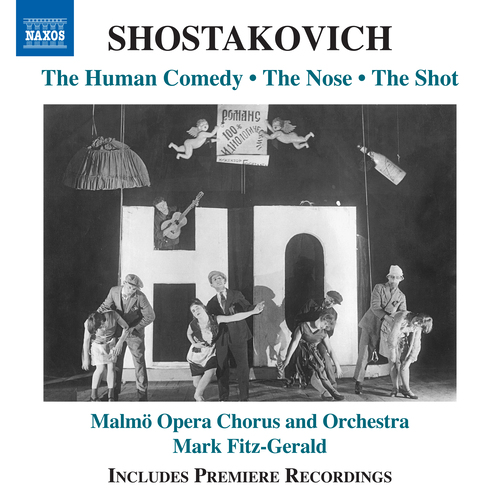

The enduring popularity of Shostakovich’s music means that anything new from the composer’s legacy immediately puts enthusiasts on alert. This album brings together Mark Fitz-Gerald’s reconstructions of previously unheard music from two of Shostakovich's significant works for the theatre, The Shot and The Human Comedy; additionally, there are rarely heard cuts from his first serious opera, The Nose. Completing the programme is the choral and orchestral March of the Anarchists, which was transcribed by ear from the cinematic soundtrack especially for this recording as the original score has not survived. The album not only encapsulates how varied Shostakovich’s uniquely individual style was, but delivers a magnificent addition to our appreciation of his earlier, fun-loving days as a composer for theatre in the dark days of Soviet Stalinism.

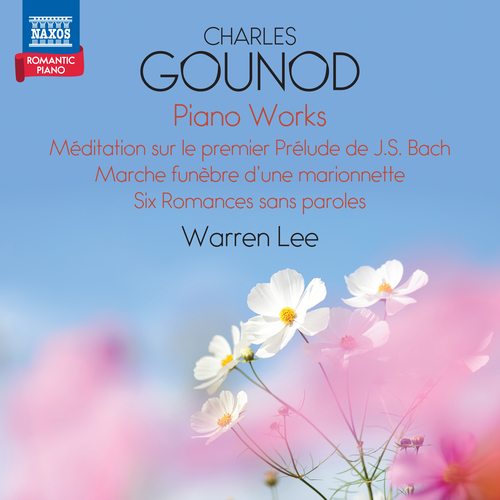
Winner of the Prix de Rome in 1839, Charles-François Gounod developed an innate desire for musical directness. His characteristic balance of sonic beauty and proportion during his time in Italy took Palestrina and Bach for his compositional foundation. Gounod’s talents for melody and mood painting are demonstrated in the Romances sans paroles, while his sense of wit can be heard in the famous Marche funèbre d’une marionnette, the familiarity of which is probably topped only by that of the Méditation sur le premier Prélude de J.S. Bach, now better known as Ave Maria. The award-winning soloist on this recording is Steinway Artist Warren Lee, who already has several Naxos recordings to his credit. His performances on Vol. 50 in our Complete Liszt Piano Edition were acknowledged for their ‘excellent articulation, impeccable control and great musicality.’ (Ritmo)
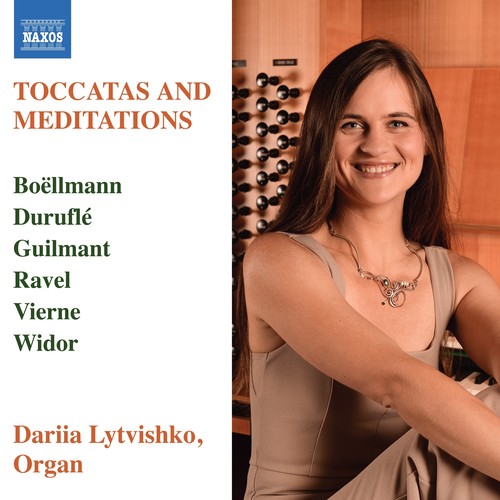
France’s illustrious organ tradition is celebrated on this album of Toccatas and Méditations. Charles-Marie Widor was the founding father of the French Organ School, and his Toccata from Symphony No. 5 is a cornerstone of the organ repertoire. The Méditation by his contemporary Louis Vierne is among the highlights of Romantic organ works, while Duruflé, Boëllmann and Guilmant are also represented, as is a beautiful Ravel arrangement. They’re played on the magnificent Grenzing organ at Bauernkirche Iserlohn by Dariia Lytvishko, a Ukrainian-born virtuoso and one of the most gifted organists of her generation. Making her Naxos debut with this release, Dariia has performed at noted locations throughout Europe, the US and Canada, including recitals at Westminster Abbey and St Paul’s Cathedral in London, the Temple protestant de l’Oratoire du Louvre in Paris, and the Pantheon in Rome.
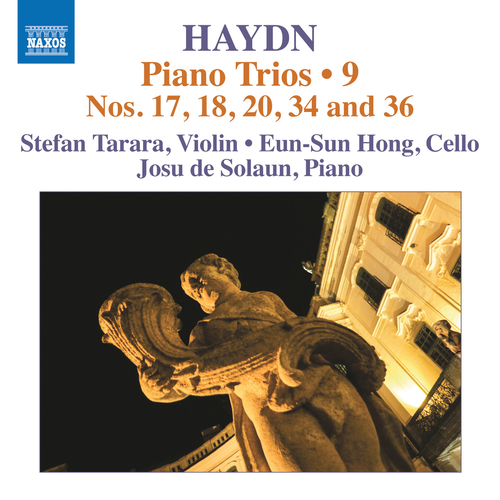
This is the ninth and final volume of our Complete Haydn Piano Trios edition, for which three First-Prize winners of the prestigious Enescu Competition (Bucharest, 2014) have reunited to bring a blend of historical insight and Romantic sensibility. The result is a fresh perspective on Haydn with its thought-provoking fusion of aesthetics delivered impeccably by pianist Josu De Solaun, cellist Eun-Sun Hong and violinist Stefan Tarara. Although Haydn intended his piano trios for domestic use, he was typically inventive in subverting expected norms, bringing striking changes of mood, the use of unusual keys, and rich ornamentation to the supposedly placid world of the trio.

![WEILL, K.: Love Life [Vaudeville]](https://cdn.naxos.com/sharedfiles/images/cds/hires/C5550.jpg "WEILL, K.: Love Life [Vaudeville]")
As a concept musical, Love Life really was a trailblazer, inspiring musical theatre favourites of the 1960s, 70s and beyond, from Cabaret and Chicago (originally subtitled ‘A Musical Vaudeville’) to Sondheim’s Company (told through a series of vignettes). It's ‘one of Weill’s best scores’ (conductor James Holmes), a masterpiece of assembling different musical styles, ‘a compendium of American musical idioms, cunningly chosen so that they suit the dramatic material.’ Kurt Weill and Alan Jay Lerner teamed up in 1947, both riding high on recent successes (Street Scene for Weill, Brigadoon for Lerner) and looking for new projects. When Love Life premiered on Broadway in 1948, Weill called it 'an entirely new form of theatre.’ Stephen Sondheim even denoted it ‘a useful influence on my own work.’
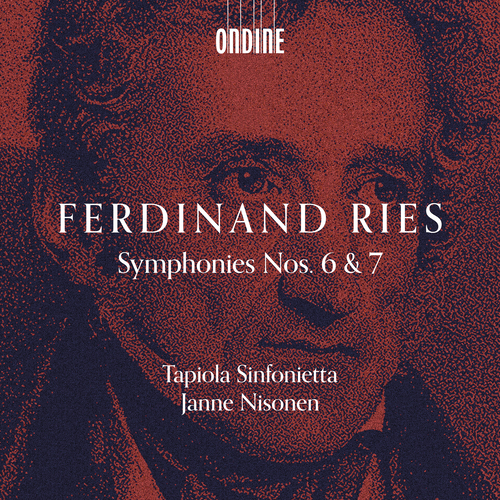
This final volume of the Tapiola Sinfonietta’s widely acclaimed edition of Ferdinand Ries’ complete symphonies includes the Sixth and Seventh, which were in fact the last of the eight symphonies he wrote; chronologically, the Eighth predated them. Like most of his symphonies, Ries’ Symphony No. 6 was premiered in London. It owed its popular success to Ries’ gift of writing attractive, memorable themes, and thrilling, powerful passages to rival even those of Beethoven in their display of furious, concentrated energy, the whole masterfully orchestrated. Ries’ final completed symphony, No. 7, was written for a society in Vienna more than a decade after Symphony No. 6 and exhibits a number of stylistic changes from Ries’ earlier works, not least in his treatment of the orchestra.
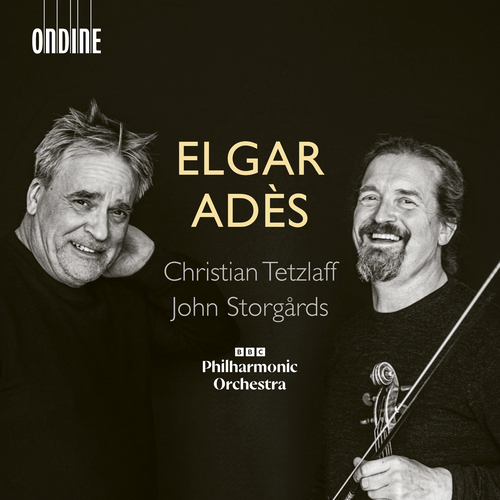
Christian Tetzlaff, one of the world’s most distinguished violinists, presents two major British violin concertos that premiered respectively in 1910 and 2005. In Elgar’s concerto Tetzlaff follows the style of early recordings of the work, which employ substantially quicker tempos than most modern interpretations. Adès’ violin concerto, subtitled ‘Concentric Paths’, is already a modern classic and will no doubt prove to be one of the most important concertos written during this century. With its highly demanding solo part it embodies all the elements of a true concerto, whilst also allowing the soloist to sing with his instrument. Conductor John Storgårds and the BBC Philharmonic provide impeccable support.