 Translate























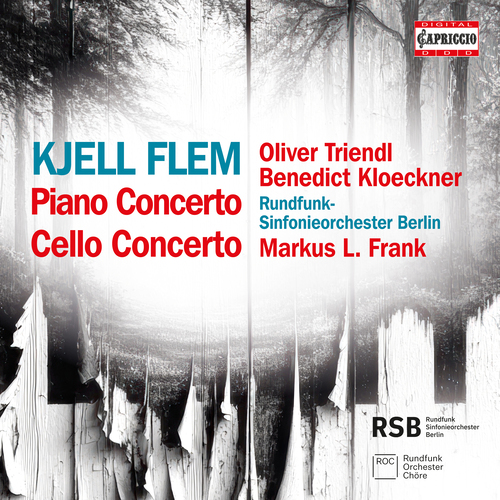

Kjell FLEM (b. 1943)
Piano Concerto
Cello Concerto
Oliver Triendl • Benedict KloecknerRundfunk-Sinfonieorchester Berlin
Markus L. Frank
Born in Ålesund in 1943, Kjell Flem studied with Einar Englund and Einojuhani Rautavaara, going on to distinguish himself as a much celebrated composer of Scandinavian contemporary music. His compositions are generally non-radical and atmospherically engaging, creating an ambience that is deeply rooted in the natural landscape of his homeland. His output is not extensive; rather, he allows himself long creative periods because, in his own words, truly magical moments of inspiration are rare.
I. Moderato
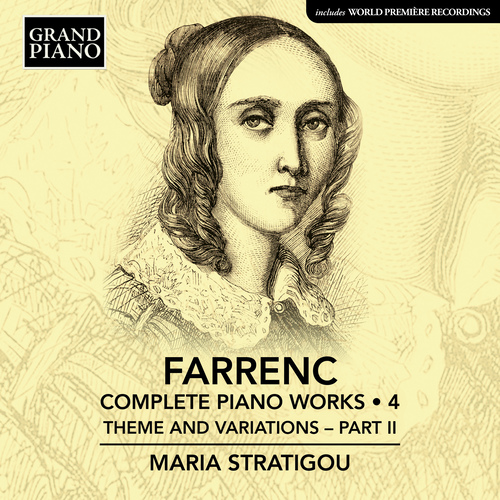
Louise Farrenc was one of the most respected pianists, composers and pedagogues on the Parisian musical scene of her day. She was also admired by Robert Schumann for her compositions, amongst which are the theme and variation sets, regarded as some of the most significant pieces she composed for piano. Farrenc was inspired by the famous bel canto operas of Bellini and Donizetti and composed variations on famous airs and dances that would have resounded throughout the fashionable salons of 19th-century Paris. Pianist Maria Stratigou continues her acclaimed survey of Farrenc’s complete works for piano.
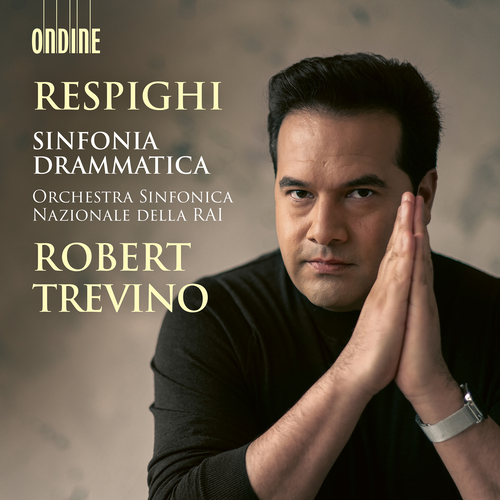

Ottorino RESPIGHI (1879–1936)
Sinfonia Drammatica
Orchestra Sinfonica Nazionale della RAIRobert Treviño
Lasting over an hour, Respighi’s Sinfonia Drammatica was the last major work he produced before embarking on his celebrated Roman Trilogy. Composed over the period 1913–15, it was his longest and most ambitious orchestral work to date. It’s performed here by the Orchestra Sinfonica Nazionale della Rai under their principal guest conductor, Robert Treviño, who considers the symphony to be Respighi’s magnum opus. Its impressive score features many of the elements which later made Respighi one of the great voices in 20th-century orchestral music. Shot through with echoes of Richard Strauss, Rimsky-Korsakov and others, the work could have no better advocate than Treviño: ‘I’m most proud of this recording. It is my most sincere hope that it will inspire others to help bring this masterpiece into the recognised pantheon of the truly great works of art, and give Respighi the admiration he rightly deserves.’
III. Allegro impetuoso – Tempo de marcia triste

Josef Gabriel RHEINBERGER (1839–1901)
Missa in Es
Nana FORTE (b. 1981)
Libera Me
Frank MARTIN (1890–1974)
Messe für Doppelchor
SWR Vokalensemble
Yuval Weinberg
Composed in 1878, Rheinberger’s Cantus Missae reconciles the conflicting artistic currents of his time, and this perfect equilibrium has rendered it timeless. The Mass captivates with its melodic, at times almost Lied-like character; yet on closer listening the music reveals a striking modernity for its era. Nana Forte’s Libera Me was written almost 150 years later as a spiritual drama in which the composer draws on the traditional techniques of writing for double-choir, letting them interlock contrapuntally or overlap in contrasting layers. Frank Martin kept the manuscript of his Mass for Double Choir in a drawer for nearly 40 years, regarding it as something solely between himself and God. It’s unmistakably a work of the 20th century, yet one hears echoes of Gregorian chant and senses the composer consciously placing himself within the centuries-old tradition of double-choir composition and the symbolic world of Mass settings. The result is one of the most highly regarded settings of the 20th century.
Benedictus