 Translate





























This month’s highlights range from a deeply expressive piano recital of Rachmaninov’s early and lyrical works, with Morceaux de Fantaisie containing the iconic Prélude in C sharp minor, superbly performed by Boris Giltburg; Smetana’s charming and rarely recorded opera The Two Widows, presented by the Prague Radio Symphony Orchestra and Prague National Theatre forces under the experienced direction of Robert Jindra; two evocative Piano Quintets by Castelnuovo-Tedesco, inspired by Tuscany and brought to life by Quartetto Adorno with pianist Alessandro Marangoni; the final instalment of The History of the Russian Piano Trio, exploring the Soviet avant-garde with Roslavets and Shostakovich performed by the acclaimed Brahms Trio; a gripping live Vienna State Opera recording of Hindemith’s Cardillac conducted by Cornelius Meister; HK Gruber’s genre-defying orchestral works led by the composer himself; and a three-album anniversary edition celebrating the music of Pēteris Vasks; and more.
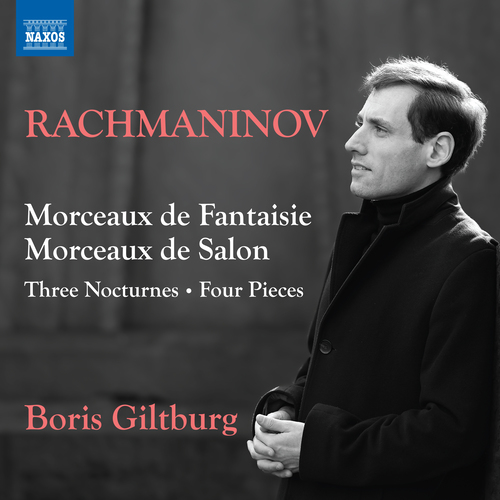
Composed at the age of 19, Rachmaninov’s earliest published cycle of piano pieces, the Morceaux de Fantaisie contains the Prélude in C sharp minor, a piece destined to become his signature work. The expressive Morceaux de Salon show Tchaikovsky’s influence and some of the grief felt by Rachmaninov after his mentor’s death. Taken with the melodically rich Nocturnes and the Four Pieces, this collection shows both the young composer finding his voice and the timeless Rachmaninov we recognise today. And what better soloist to present this programme than Boris Giltburg, who already has stunning Rachmaninov recordings on the Naxos label to his credit. His album of the Études-tableaux, Op. 39 and the Moments musicaux (8.573469) received wide critical approval, becoming a Gramophone Recording of the Month that hailed the album as ‘a convergence of heart and mind, served by immaculate technique.’
![SMETANA, B.: Dvĕ vdovy (The Two Widows) [Opera]](https://cdn.naxos.com/sharedfiles/images/cds/hires/8.660609-10.jpg "SMETANA, B.: Dvĕ vdovy (The Two Widows) [Opera]")
Overshadowed by his more extrovert opera The Bartered Bride, Smetana’s The Two Widows is barely represented in audio catalogues, so we’re confident that our new release will widen appreciation for this charming, innovative opera. It set an early precedent for stage works that aimed to derive narrative flow from the natural cadence of speech, rather than being punctuated by grand arias and set pieces. Although it’s far less well-known internationally than other operas of its period, The Two Widows has never entirely left the repertoire of Czech opera houses. Consequently, this production is in experienced hands, with musical director Robert Jindra having conducted highly successful productions at the National Theatre in Prague since 2001. Similarly, the cast is headed by distinguished soprano Kateřina Kněžíková (Anežka), a resident artist at Prague National Opera, who appears both internationally and at all the Czech and Slovakian opera houses, alongside renowned Slovak soprano Adriana Kučerová (Karolína) who has performed regularly on the world’s leading stages.
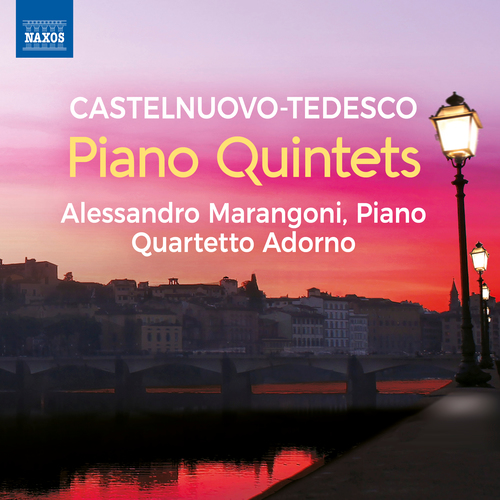
Castelnuovo-Tedesco considered his Piano Quintet No. 1, that dates from 1932, to be the best of all his chamber works from that period, while the beautiful Piano Quintet No. 2, composed in 1951, draws on the composer’s memories of a serene and rustic Tuscany. This programme is performed by Quartetto Adorno, founded in 2015 and subsequently the winner of three prizes at the 2017 International String Quartet Competition ‘XI Premio Paolo Borciani’, the first Italian quartet to do so in the competition’s history. Pianist Alessandro Marangoni figures significantly in the Naxos catalogue, not least for his recordings of Castelnuovo-Tedesco’s other works: for cello and piano (8.573881) ‘ … an extraordinary evocative ability.’ (Archi magazine); and his piano concertos (8.572823) ‘ … delivered with great panache.’ (Classical CD Choice) Quartetto Adorno released its Naxos recording of Castelnuovo-Tedesco's complete string quartets (8.574580) in 2024. We anticipate a repeat of the plaudits received by that album for this present release: ‘This is the chamber music discovery of the year … serious but eminently approachable, quasi-programmatic, charming, melodic, colourful.’ (Classicstoday.com)
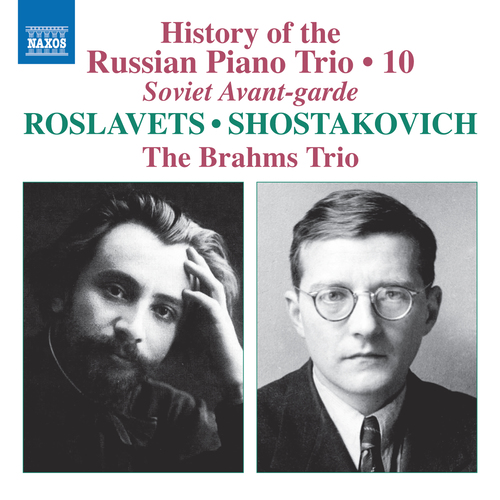
This is the final release in our series The History of the Russian Piano Trio, and what an exhilarating journey it has been, with consistently glowing reviews for outstanding performances by the Moscow-based Brahms Trio. In 2022, the trio was nominated for Opus Klassik Awards in the categories of Best Chamber Music Recording, Ensemble of the Year and Outstanding Contribution to the Expansion of the Repertoire. Previously they were nominated for an International Classical Music Award and had recordings named as the best albums of 2021 by Gramophone and American Record Guide. Now to this final programme of works from the Soviet avant-garde era, during which music for piano trio was exceptionally popular. The programme comprises music by Nikolay Roslavets, one of the great musical innovators of the 20th century, and by Shostakovich, whose Piano Trio No. 2 is one of the most performed and revered of all his chamber works.

![HINDEMITH, P.: Cardillac [Opera]](https://cdn.naxos.com/sharedfiles/images/naxos-images/2026/feb/C5530.jpg "HINDEMITH, P.: Cardillac [Opera]")
Paris is gripped by fear, with murders leaving a bloody trail across the city. Enter the world of E.T.A. Hoffmann’s novella Das Fräulein von Scuderi, published in 1819 and often cited as one of the earliest German crime stories. Although the story is set in the Paris of Louis XIV, the narrative has a deeply romantic quality, coupling a fascination for genius with dark passions and terrible crimes. Hindemith’s 1926 opera Cardillac sets this story to music that, for all its modernity, consciously takes up historical forms, bringing them into play in a neo-Baroque manner. This release captures the Vienna State Opera’s highly acclaimed, star-studded performance in a gripping, live recording. The title role is taken by the noted Polish bass-baritone Tomasz Konieczny; the conductor is Cornelius Meister.
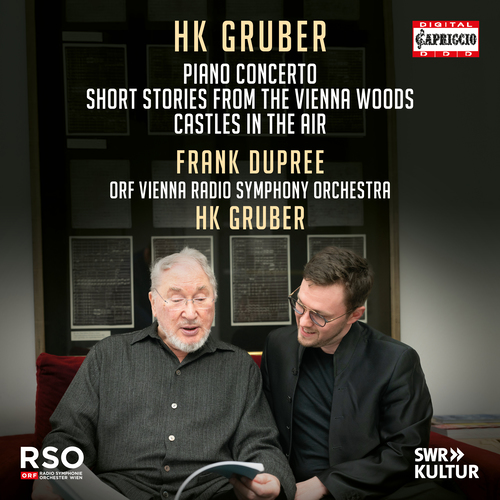
Composer, chansonnier and music educator HK Gruber writes genre-spanning works that deliver vibrant journeys through the diversity of music history. His unmistakable style unfailingly amazes, moves and evokes laughter in his audiences. This programme of his works, conducted by the composer himself, opens with the Concerto for Piano and Orchestra, which premiered in 2017 and has been described as ‘an intricate and provocative score … There is almost always some jaunty, rhythmic riff bustling in the orchestra.’ (The New York Times) The soloist is Frank Dupree, winner of the International Classical Music Award and the Opus Klassik, and one of the most versatile pianists of the new generation. He wraps up the programme with Castles in the Air, a piano cycle in 4 movements. The programme’s centrepiece is music drawn from Gruber’s 2014 opera Tales from the Vienna Woods, in which the symphonic scenes again showcase his eclectic mix of styles and signature irony.
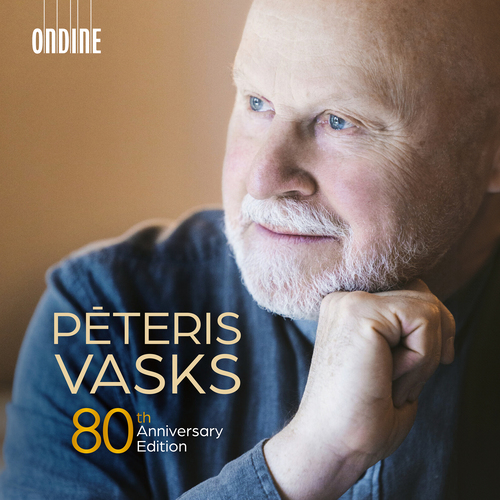
This special three-album collection celebrates Latvian composer Pēteris Vasks’ 80th anniversary in 2026 and comprises his first three award-winning albums on the Ondine label. His debut release featured his Second Symphony and Violin Concerto ‘Distant Light’. It was a major international breakthrough for the composer, earning two Cannes Classical Awards in 2004, including ‘Album of the Year’. His second orchestral album was released in 2006 and programmed his Third Symphony and the First Cello Concerto. Completing the set is an album that includes Vasks’ major choral masterpiece, Missa, performed by the award-winning Latvian Radio Choir and Sinfonietta Riga conducted by Sigvards Kļava, one of the great exponents of Vasks’ music for many years.