Click here to download the Libretto
- Giuseppe Verdi. Tragedia lirica in a prologue and two acts. 1845.
- Libretto by Salvadore Cammarano, after Voltaire’s Alzire ou Les Américains (Alzire or The Americans).
- First performance at the Teatro S Carlo, Naples, on 12th August 1845.
CHARACTERS
| Alvaro, father of Gusmano, Governor of Peru | bass |
| Gusmano, son of Alvaro & his successor as Governor | baritone |
| Ovando, a Spanish duke | tenor |
| Zamoro, a Peruvian tribal leader | tenor |
| Ataliba, a Peruvian tribal leader | bass |
| Alzira, his daughter | soprano |
| Zuma, her maid | mezzo-soprano |
| Otumbo, an American warrior | tenor |
Set in 16th-century Peru, the opera Alzira opens with a prologue in which Alvaro, a prisoner of the Peruvians, is released at the command of their returning leader Zamoro, himself cruelly treated before as a prisoner of Gusmano. The latter succeeds his father as Governor of Peru and proclaims peace with his former prisoner Ataliba, whose daughter Alzira he claims in marriage. She, however, remains in love with Zamoro, in spite of her father’s pleas. The lovers are found together and Gusmano orders Zamoro’s execution, but at the approach of the opposing army, releases him, in return for his father’s earlier release. In the second act the Incas are defeated by the Spaniards and Zamoro, again a prisoner, is again condemned to death, to be released if Alzira will marry Gusmano, a bargain to which she agrees. Otumbo claims to have engineered Zamoro’s release, but when the latter reappears among his men he is furious to learn of Alzira’s coming marriage. At the wedding in the Governor’s palace, Zamoro, disguised as a Spanish soldier, bursts in and stabs Gusmano to death. Dying, the latter is magnanimous, forgiving Zamoro and blessing his union with Alzira.
Important as the first collaboration between Verdi and the librettist Cammarano, Alzira was not in other respects particularly successful and has not held its place in operatic repertoire. Later collaborations with Cammarano were La battaglia di Legnano (The Battle of Legnano) in 1849, Luisa Miller for Naples later the same year and, in 1853, Il trovatore (The Troubadour).
![VERDI, G.: Aida [Opera] (Dragoni, Johannsson, Dever, Ireland National Symphony, Saccani)](https://cdn.naxos.com/sharedfiles/images/cds/hires/8.660033-34.jpg "VERDI, G.: Aida [Opera] (Dragoni, Johannsson, Dever, Ireland National Symphony, Saccani)")
![VERDI, G.: Alzira [Opera] (Highlights) (Cotrubas, Araiza, Bruson, Bavarian Radio Chorus, Munich Radio Orchestra, Gardelli)](https://cdn.naxos.com/sharedfiles/images/cds/hires/c057832h.jpg "VERDI, G.: Alzira [Opera] (Highlights) (Cotrubas, Araiza, Bruson, Bavarian Radio Chorus, Munich Radio Orchestra, Gardelli)")
![VERDI, G.: Attila [Opera] (Teatro Comunale di Bologna, 2016) (NTSC)](https://cdn.naxos.com/sharedfiles/images/cds/hires/748708.jpg "VERDI, G.: Attila [Opera] (Teatro Comunale di Bologna, 2016) (NTSC)")
![VERDI, G.: Ballo in maschera (Un) [Opera] (Pavarotti, Cappuccilli, G. Lechner, Schemtschuk, Nádor, Vienna State Opera Chorus and Orchestra, Abbado)](https://cdn.naxos.com/sharedfiles/images/cds/hires/c907162i.jpg "VERDI, G.: Ballo in maschera (Un) [Opera] (Pavarotti, Cappuccilli, G. Lechner, Schemtschuk, Nádor, Vienna State Opera Chorus and Orchestra, Abbado)")
![VERDI, G.: Ballo in maschera (Un) [Opera] (Royal Opera House, 1975) (NTSC)](https://cdn.naxos.com/sharedfiles/images/cds/hires/oa1236d.jpg "VERDI, G.: Ballo in maschera (Un) [Opera] (Royal Opera House, 1975) (NTSC)")
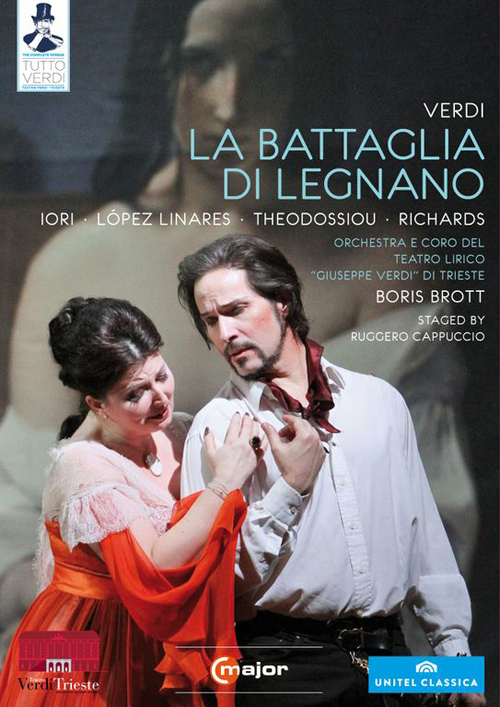
![VERDI, G.: Battaglia di Legnano (La) [Opera] (Previtali) (1951)](https://cdn.naxos.com/sharedfiles/images/cds/hires/9.80882-83.jpg "VERDI, G.: Battaglia di Legnano (La) [Opera] (Previtali) (1951)")
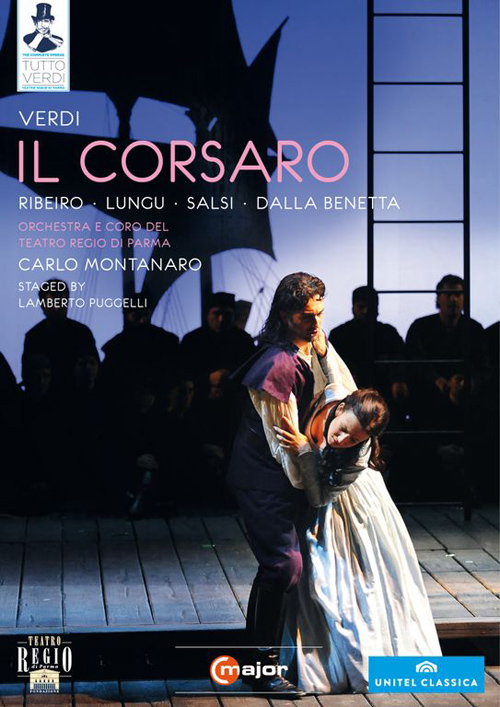
![VERDI, G.: Corsaro (Il) [Opera] (Michailov, Bruson, Damato, Sburlati, Parma Teatro Regio Chorus and Orchestra, Palumbo)](https://cdn.naxos.com/sharedfiles/images/cds/hires/cds468.jpg "VERDI, G.: Corsaro (Il) [Opera] (Michailov, Bruson, Damato, Sburlati, Parma Teatro Regio Chorus and Orchestra, Palumbo)")
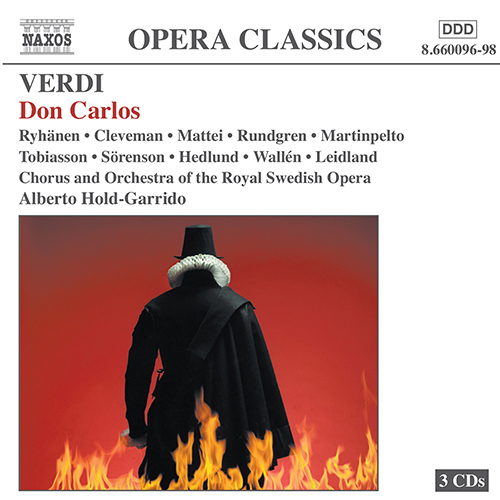
![VERDI, G.: Don Carlo [Opera] (Teatro Regio di Parma, 2016) (NTSC)](https://cdn.naxos.com/sharedfiles/images/cds/hires/dyn-37776.jpg "VERDI, G.: Don Carlo [Opera] (Teatro Regio di Parma, 2016) (NTSC)")
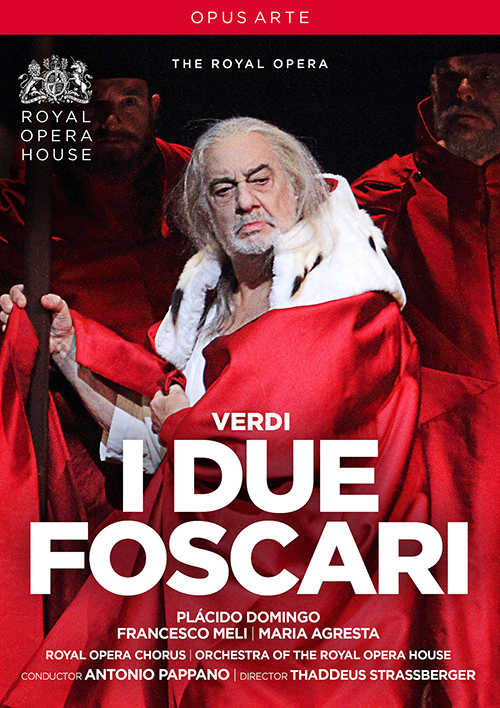
![VERDI, G.: Due Foscari (I) [Opera] (Coro del Teatro Regio di Parma, Filarmonica Arturo Toscanini, Orchestra Giovanile della Via Emilia, Arrivabeni)](https://cdn.naxos.com/sharedfiles/images/cds/hires/cds7865.02.jpg "VERDI, G.: Due Foscari (I) [Opera] (Coro del Teatro Regio di Parma, Filarmonica Arturo Toscanini, Orchestra Giovanile della Via Emilia, Arrivabeni)")
![VERDI, G.: Falstaff [Opera] (Trimarchi, Servile, Faulkner, Hungarian State Opera Chorus and Orchestra, Humburg)](https://cdn.naxos.com/sharedfiles/images/cds/hires/8.660050-51.jpg "VERDI, G.: Falstaff [Opera] (Trimarchi, Servile, Faulkner, Hungarian State Opera Chorus and Orchestra, Humburg)")
![VERDI, G.: Falstaff [Opera] (Teatro Real, 2019) (NTSC)](https://cdn.naxos.com/sharedfiles/images/cds/hires/bac177.jpg "VERDI, G.: Falstaff [Opera] (Teatro Real, 2019) (NTSC)")
![VERDI: Forza del Destino (La) [Opera] (Branchini, Zulian, Felice, Rovigo Teatro Sociale Chorus, Orchestra Regionale Filarmonia Veneta, Karitynos)](https://cdn.naxos.com/sharedfiles/images/cds/hires/cds512.jpg "VERDI: Forza del Destino (La) [Opera] (Branchini, Zulian, Felice, Rovigo Teatro Sociale Chorus, Orchestra Regionale Filarmonia Veneta, Karitynos)")
![VERDI, G.: Un giorno di regno [Opera] (Kiria, Roma Sinfonietta, Bonolis)](https://cdn.naxos.com/sharedfiles/images/cds/hires/tc812290.jpg "VERDI, G.: Un giorno di regno [Opera] (Kiria, Roma Sinfonietta, Bonolis)")
![VERDI, G.: Giovanna d'Arco [Opera] (Pratt, Borras, Julian Kim, Bari Teatro Petruzzelli Chorus, Orchestra Internazionale d'Italia, Frizza)](https://cdn.naxos.com/sharedfiles/images/cds/hires/cds7676.jpg "VERDI, G.: Giovanna d'Arco [Opera] (Pratt, Borras, Julian Kim, Bari Teatro Petruzzelli Chorus, Orchestra Internazionale d'Italia, Frizza)")
![VERDI, G.: Lombardi alla prima crociata (I) [Opera] (Teatro Regio Torino, 2018) (NTSC)](https://cdn.naxos.com/sharedfiles/images/cds/hires/dyn-37826.jpg "VERDI, G.: Lombardi alla prima crociata (I) [Opera] (Teatro Regio Torino, 2018) (NTSC)")
![VERDI, G.: Macbeth [Opera] (Teatro Massimo, 2017) (NTSC)](https://cdn.naxos.com/sharedfiles/images/cds/hires/2.110578.jpg "VERDI, G.: Macbeth [Opera] (Teatro Massimo, 2017) (NTSC)")
![VERDI, G.: Nabucco [Opera] (Enkhbat, Magrì, Pertusi, Hernández, Stroppa, Coro del Teatro Regio di Parma, Filarmonica Arturo Toscanini, Ciampa)](https://cdn.naxos.com/sharedfiles/images/cds/hires/cds7867.jpg "VERDI, G.: Nabucco [Opera] (Enkhbat, Magrì, Pertusi, Hernández, Stroppa, Coro del Teatro Regio di Parma, Filarmonica Arturo Toscanini, Ciampa)")
![VERDI, G.: Nabucco [Opera] (Arena di Verona, 2017) (NTSC)](https://cdn.naxos.com/sharedfiles/images/cds/hires/bac148.jpg "VERDI, G.: Nabucco [Opera] (Arena di Verona, 2017) (NTSC)")
![VERDI, G.: Oberto [Opera] (A. Gans, Lombardi Mazzulli, Custer, Reinhardt, Intxausti, Giessen State Theatre, Hofstetter)](https://cdn.naxos.com/sharedfiles/images/cds/hires/oc959.jpg "VERDI, G.: Oberto [Opera] (A. Gans, Lombardi Mazzulli, Custer, Reinhardt, Intxausti, Giessen State Theatre, Hofstetter)")
![VERDI, G.: Otello [Opera] (R.D. Smith, Angeletti, Catana, Orfeón Donostiarra, Oviedo Filarmonía, Haider)](https://cdn.naxos.com/sharedfiles/images/cds/hires/8.660357-58.jpg "VERDI, G.: Otello [Opera] (R.D. Smith, Angeletti, Catana, Orfeón Donostiarra, Oviedo Filarmonía, Haider)")
![VERDI, G.: Rigoletto [Opera] (Tumagian, Ferrarini, Ramiro, Slovak Philharmonic Chorus, CSR Symphony Orchestra, Bratislava, Rahbari)](https://cdn.naxos.com/sharedfiles/images/cds/hires/8.660013-14.jpg "VERDI, G.: Rigoletto [Opera] (Tumagian, Ferrarini, Ramiro, Slovak Philharmonic Chorus, CSR Symphony Orchestra, Bratislava, Rahbari)")
![VERDI, G.: Simon Boccanegra [Opera] (Zürich Opera, 2020) (NTSC)](https://cdn.naxos.com/sharedfiles/images/cds/hires/acc-20510.jpg "VERDI, G.: Simon Boccanegra [Opera] (Zürich Opera, 2020) (NTSC)")
![VERDI, G.: Stiffelio [Opera] (Teatro Regio di Parma, 2017) (NTSC)](https://cdn.naxos.com/sharedfiles/images/cds/hires/2.110590.jpg "VERDI, G.: Stiffelio [Opera] (Teatro Regio di Parma, 2017) (NTSC)")
![VERDI, G.: Traviata (La) [Opera] (Krause, Ramiro, Tichy, CSR Symphony Orchestra, Bratislava, Rahbari)](https://cdn.naxos.com/sharedfiles/images/cds/hires/8.660011-12.jpg "VERDI, G.: Traviata (La) [Opera] (Krause, Ramiro, Tichy, CSR Symphony Orchestra, Bratislava, Rahbari)")
![VERDI, G.: Traviata (La) [Opera] (Royal Opera House, 2019) (NTSC)](https://cdn.naxos.com/sharedfiles/images/cds/hires/oa1292d.jpg "VERDI, G.: Traviata (La) [Opera] (Royal Opera House, 2019) (NTSC)")
![VERDI, G.: Trovatore (Il) [Opera] (Frusoni, Longhi, Tchistjakova, Budapest Festival Chorus, Hungarian State Opera Orchestra, Humburg)](https://cdn.naxos.com/sharedfiles/images/cds/hires/8.660023-24.jpg "VERDI, G.: Trovatore (Il) [Opera] (Frusoni, Longhi, Tchistjakova, Budapest Festival Chorus, Hungarian State Opera Orchestra, Humburg)")
![VERDI, G.: Trovatore (Il) [Opera] (Sferisterio Opera Festival, 2016) (NTSC)](https://cdn.naxos.com/sharedfiles/images/cds/hires/dyn-37769.jpg "VERDI, G.: Trovatore (Il) [Opera] (Sferisterio Opera Festival, 2016) (NTSC)")
![VERDI, G.: Vespri siciliani (I) (Sung in German) [Opera] (1955)](https://cdn.naxos.com/sharedfiles/images/cds/hires/c67168-70.jpg "VERDI, G.: Vespri siciliani (I) (Sung in German) [Opera] (1955)")