 Click here to download the Libretto
- Richard Strauss. Lyrische Komödie in three acts. 1929–32.
- Libretto by Hugo von Hofmannsthal.
- First performance at the Staatsoper, Dresden, on 1st July 1933.
CHARACTERS
| Arabella | soprano |
| Zdenka, her younger sister | soprano |
| Count Waldner, her father, a retired cavalry officer | bass |
| Adelaide, her mother | mezzo-soprano |
| Mandryka, a Croatian landowner | baritone |
| Matteo, a young officer | tenor |
| Count Elemer, a suitor of Arabella | tenor |
| Count Dominik, a suitor of Arabella | baritone |
| Count Lamoral, a suitor of Arabella | bass |
| The Fiakermilli, belle of the coachmen’s ball | soprano |
| Fortune-teller | soprano |
The fortunes of the Waldner family now depend on the marriage of Arabella to a rich husband. Her younger sister Zdenka is disguised as a boy, but loves one of Arabella’s suitors, the young officer Matteo. Arabella has no interest in him, nor in her three other noble suitors. She is attracted, however, by the young Mandryka, nephew of her father’s old comrade, a rich if eccentric landowner to whom Count Waldner had offered his daughter. At a ball she is now in love with Mandryka, who seeks her hand in marriage. Matteo is disconsolate, but Zdenka reassures him, giving him what she claims is a key to Arabella’s room, overheard by Mandryka, who now dances with the Fiakermilli, the pretty belle of the ball. Matteo duly visits the girl he thinks to be Arabella, in fact Zdenka, and the latter eventually reveals the truth, when Matteo and Mandryka are on the verge of fighting a duel. All ends happily.
Arabella is the last collaboration between Strauss and Hofmannsthal, who died before any revision of the second and third acts was possible. Set in Vienna in 1860, it centres in part on the characteristic coachmen’s ball of the second act, the whole opera a counterpart to Der Rosenkavalier, the obverse to the grandeur of that opera in its relatively impoverished setting. The opera evokes a world still redolent, however, of the past, the fading glories of Habsburg Vienna.
![STRAUSS, R.: Ägyptische Helena (Die) [Opera] (Rysanek, Kupper, Aldenhoff, Uhde, Holm, Bavarian State Opera Chorus and Orchestra, Keilberth)](https://cdn.naxos.com/sharedfiles/images/cds/hires/c424962i.jpg "STRAUSS, R.: Ägyptische Helena (Die) [Opera] (Rysanek, Kupper, Aldenhoff, Uhde, Holm, Bavarian State Opera Chorus and Orchestra, Keilberth)")
![STRAUSS, R.: Arabella [Opera] (Várady, Fischer-Dieskau, Donath, Berry, Bavarian State Opera Chorus and Orchestra, Sawallisch)](https://cdn.naxos.com/sharedfiles/images/cds/hires/c169882h.jpg "STRAUSS, R.: Arabella [Opera] (Várady, Fischer-Dieskau, Donath, Berry, Bavarian State Opera Chorus and Orchestra, Sawallisch)")
![STRAUSS, R.: Ariadne auf Naxos [Opera] (Glyndebourne, 2013) (NTSC)](https://cdn.naxos.com/sharedfiles/images/cds/hires/oa1135d.jpg "STRAUSS, R.: Ariadne auf Naxos [Opera] (Glyndebourne, 2013) (NTSC)")

![STRAUSS, R.: Elektra [Opera] (Varnay, Madeira, Zadek, Deutschen Oper am Rhein Chorus and Orchestra, Quennet)](https://cdn.naxos.com/sharedfiles/images/cds/hires/c661041b.jpg "STRAUSS, R.: Elektra [Opera] (Varnay, Madeira, Zadek, Deutschen Oper am Rhein Chorus and Orchestra, Quennet)")

![STRAUSS, R.: Feuersnot [Opera] (Cunitz, Barth, Cordes, Engen, Ostertag, Proebstl, Bavarian State Opera Chorus, Bavarian State Orchestra, Kempe)](https://cdn.naxos.com/sharedfiles/images/cds/hires/c423962i.jpg "STRAUSS, R.: Feuersnot [Opera] (Cunitz, Barth, Cordes, Engen, Ostertag, Proebstl, Bavarian State Opera Chorus, Bavarian State Orchestra, Kempe)")
![STRAUSS, R.: Frau ohne Schatten (Die) [Opera] (S. Gould, Nylund, Herlitzius, W. Koch, Stemme, Vienna State Opera Chorus and Orchestra, Thielemann)](https://cdn.naxos.com/sharedfiles/images/cds/hires/c991203.jpg "STRAUSS, R.: Frau ohne Schatten (Die) [Opera] (S. Gould, Nylund, Herlitzius, W. Koch, Stemme, Vienna State Opera Chorus and Orchestra, Thielemann)")
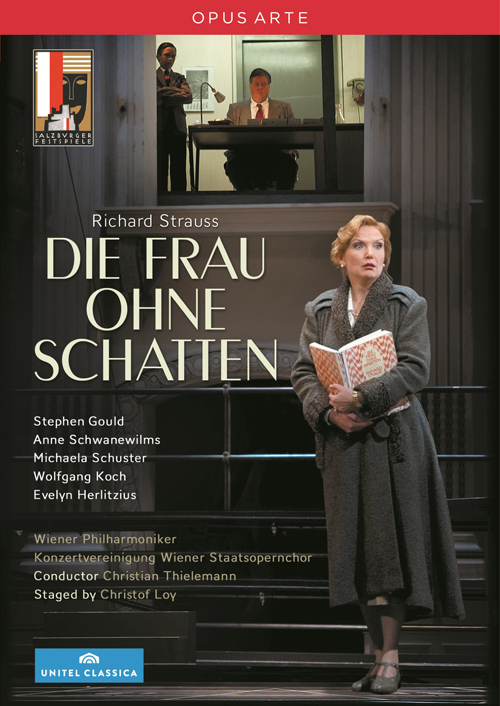
![STRAUSS, R.: Liebe der Danae (Die) [Opera] (Kupper, Felbermayer, Schöffler, Gostic, Vienna Philharmonic, Krauss) (1952)](https://cdn.naxos.com/sharedfiles/images/cds/hires/c292923d.jpg "STRAUSS, R.: Liebe der Danae (Die) [Opera] (Kupper, Felbermayer, Schöffler, Gostic, Vienna Philharmonic, Krauss) (1952)")
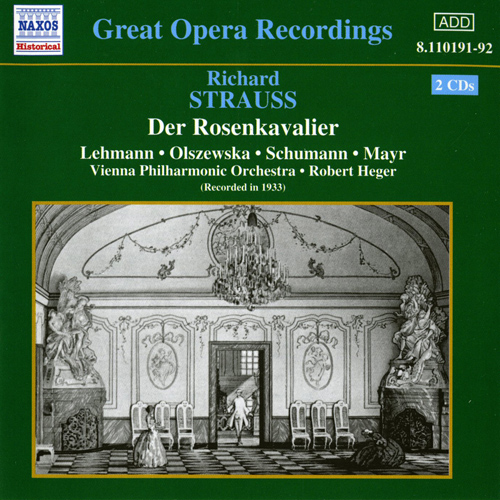

![STRAUSS, R.: Salome [Opera] (Goltz, Patzak, Krauss) (1954)](https://cdn.naxos.com/sharedfiles/images/cds/hires/8.111014-15.jpg "STRAUSS, R.: Salome [Opera] (Goltz, Patzak, Krauss) (1954)")
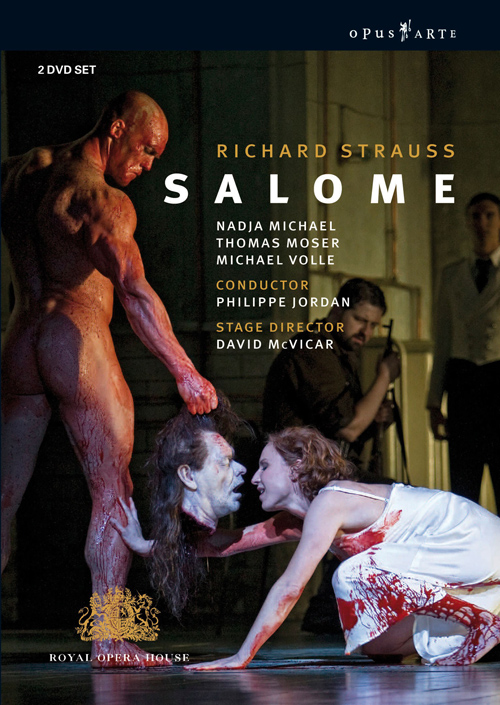
![STRAUSS, R.: Schweigsame Frau (Die) [Opera] (Grist, Mödl, McDaniel, Grobe, Böhme, Bavarian State Opera Chorus and Orchestra, Sawallisch)](https://cdn.naxos.com/sharedfiles/images/cds/hires/c516992i.jpg "STRAUSS, R.: Schweigsame Frau (Die) [Opera] (Grist, Mödl, McDaniel, Grobe, Böhme, Bavarian State Opera Chorus and Orchestra, Sawallisch)")