menu
  • Home
  • What’s in the Box
  • Artists
  • Recommended
Home What’s in the Box Artists Recommended
Grand Piano

What’s in the Box

CD 1
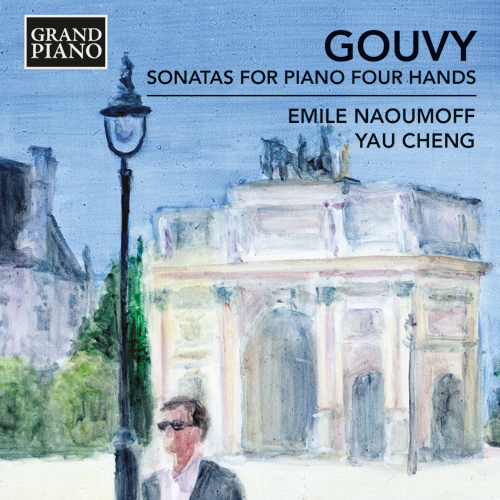
GOUVY, L.T.: Sonatas for Piano 4 Hands, Opp. 36, 49 and 51
GP676
An eminent member the French musical establishment during the 1870s and 1880s, Louis Théodore Gouvy (1819⁠–⁠1898) wrote a large amount of piano music, much of it for four hands. The three Sonatas written in the 1860s reveal his considerable technical command as well as a flowing elegance, some of it reminiscent of Schubert and Schumann.

‘[Naoumoff’s and Yau Cheng’s] ensemble and musicality allow these works to be heard in their best light. The sound is excellent…’ – American Record Guide
CD 2
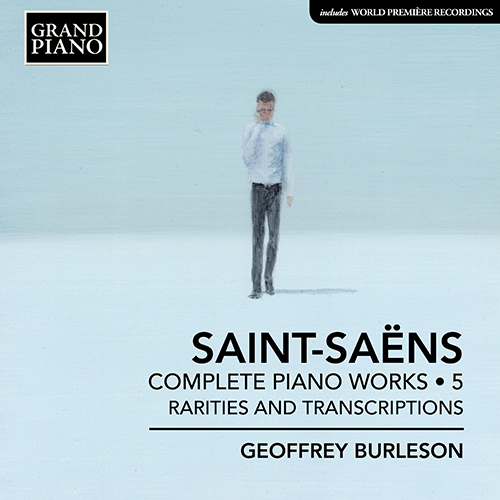
SAINT-SAËNS, C.: Piano Works (Complete), Vol. 5
GP626
The eight world premiere recordings included in this programme are played from a treasure trove of unpublished manuscripts obtained by Geoffrey Burleson from the Bibliothèque national de France, each of them filled with strong and imaginative ideas. Further virtuosic rarities by Saint-Saëns (1835⁠–⁠1921) include a solo transcription of his exotic Africa for piano and orchestra, and fantasies on works by Beethoven, Gounod, Liszt, Bizet and others.

‘Burleson proves to be a fine advocate for this music: He balances just the right amount of elegance and grace with the fieriness that this music requires. And he is a virtuoso par excellence, easily handling the numerous difficulties one finds in this music.’ – Fanfare
CD 3
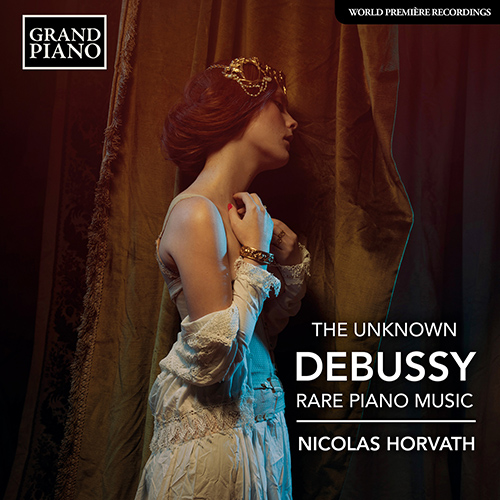
DEBUSSY, C.: Rare Piano Music (The Unknown Debussy)
GP822
Robert Orledge’s research into Debussy’s (1862⁠–⁠1918) sketches and incomplete drafts has resulted in the unearthing and reconstruction of numerous lost masterpieces, the piano versions of which are given their première recordings here. Unknown versions of famous pieces such as La Fille aux cheveux de lin and an unused movement from Le Martyre de Saint Sébastien appear alongside the ecstatic Prélude de l’Histoire de Tristan. This uniquely valuable programme also includes the life-affirming suite for No⁠-⁠ja⁠-⁠li (Le Palais du Silence) with narration.

‘A passionate journey through the work of Claude Debussy, beautifully served by Nicolas Horvath’s rigorous and sensitive interpretation.’

– Inactuelles, musiques singulières
★★★★★
CD 4
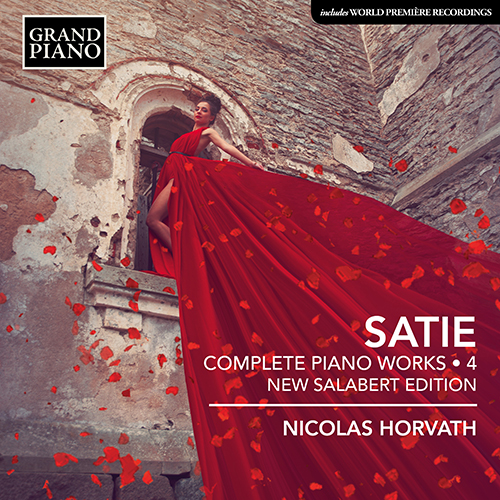
SATIE, E.: Piano Works (Complete), Vol. 4 (New Salabert Edition)
GP823
‘Everything I undertake misfires immediately. I produce dirty rubbish and that will accomplish nothing.’ So wrote Erik Satie (1866⁠–⁠1925) in 1903 during a period of transition that saw him produce the last of his Rose+Croix style music in Verset laïque & somptueux, but in making a living writing for the music halls, he also created hugely popular songs such as Je te veux. The works on this fourth volume of Satie’s complete solo piano music were written between 1897 and 1906. They include rare theatre music and tender waltzes that contrast with jaunty ragtime and pantomime dances.

‘Horvath succeeds in the right mix of laconicism, nonchalance and mischievous irony, all with gripping, compact sound and clear contours, always with a feel for the wit in the precious little details.’ – Concerti
CD 5
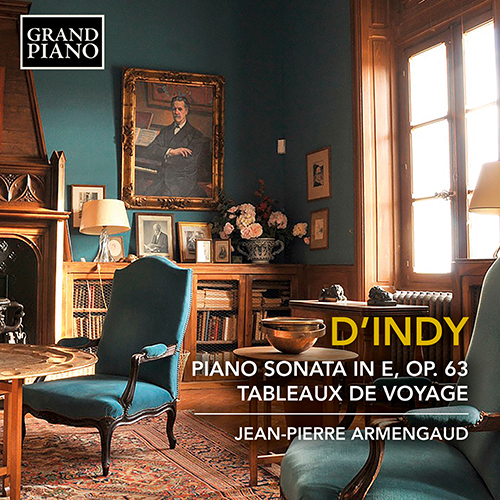
INDY, V. d': Piano Sonata / Tableaux de Voyage (excerpts)
GP756

A student of Franck, Vincent d’Indy (1851⁠–⁠1931) founded the Schola Cantorum de Paris where he taught for many years. He was also a conductor, with a busy schedule of international touring. His compositions were permeated by the influence of Wagner – he attended the premiere of the Ring cycle – but in time he also absorbed the influence of French folk music, especially from the Vivarais, his ancestral home.

Vincent d’Indy’s large-scale Piano Sonata is one of a small but masterful sequence of non-programmatic instrumental works that he wrote in the first decade of the 20th century. Notable for a novel application of variation form in its opening movement it fuses experimentation with expressive power. Poetic atmospheres and landscapes are evoked in the Tableaux de voyage, postcards of his walks in Germany.

‘Jean-Pierre Armengaud...carefully works the sound, presenting the complex forms with delicacy and lightness.’ – Classica ★★★★★

CD 6
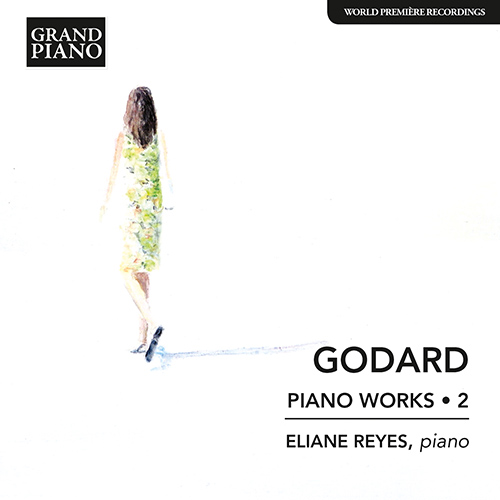
GODARD, B.: Piano Works, Vol. 2
GP684
Though he died in his mid-forties Benjamin Godard (1849⁠–⁠1895), a child prodigy who had entered the Paris Conservatoire at the age of ten, wrote prolifically in almost all genres. Stylistically he adhered to models such as Schumann and Chopin rather than aligning himself with Wagner. Spanning the breadth of Godard’s compositional career, this recording draws together a broad selection of piano works from the relatively early Trois Fragments Poétiques, Op.13, with their long-spun lyrical melodies, to later works such as the Fantaisie which demonstrates his more virtuosic side. Composed across two decades, the Nocturnes from the early 1890s are sometimes spiced with unusual harmonies and balance perfectly the differing demands of the salon and the concert hall.

‘Belgian pianist Eliane Reyes plays with superb feeling for each piece, bringing out their intrinsic qualities, especially their many lyrical moments.’


– MusicWeb International
★★★★
www.GrandPianoRecords.com | info@grandpianorecords.com|Visit us on
℗ & © 2022 HNH International Ltd