
 Translate































In addition to its own wide-reaching monthly new releases, Naxos also distributes several leading labels in many countries around the world. Here is a choice selection of recent releases from some of these distributed labels.

C Major Entertainment provides worldwide consulting services, marketing and distribution of audio & audiovisual music programmes. Performances by Herbert von Karajan, Leonard Bernstein and other legendary classical music stars as well as Anna Netrebko, Placido Domingo and Cecilia Bartoli are represented in more than 3,000 hours of music on film and TV formats. Since 2007, C Major Entertainment has cooperated with the world-famous Pop & Jazz Festival Baloise Session. Programmes featuring artists like Liza Minnelli, Iggy Pop or Alicia Keys have been successfully distributed to TV stations all over the world.
![MOZART, W.A.: Don Giovanni [Opera] (Vienna State Opera, 2021)](https://cdn.naxos.com/sharedfiles/images/cds/hires/770508.jpg "MOZART, W.A.: Don Giovanni [Opera] (Vienna State Opera, 2021)")
Barrie Kosky, one of the most exciting opera directors of our time, opened his newly staged Da Ponte cycle at the Wiener Staatsoper with a character-driven new production of Mozart’s Don Giovanni. Kyle Ketelsen in the title role and Philippe Sly as Leporello “took centre stage (…) and dared to satirise the burden of tradition” (ORF). Hanna-Elisabeth Müller is a compelling Donna Anna, Patricia Nolz gives a remarkable role debut as Zerlina, and Peter Kellner shines as Masetto. Kate Lindsey presents a fascinating character study as Donna Elvira, and Stanislas de Barbeyrac excels as Don Ottavio. Philippe Jordan conducts the Orchestra of the Wiener Staatsoper, bringing “transparency, tangibility and poetry on the basis of historical accuracy” (Der Standard) – even in the subtly played recitatives on the fortepiano. “Kosky and Jordan met congenially in the direction of the singers.” (ORF)
![GOUNOD, C.-F.: Faust [Opera] (Teatro Real, 2018)](https://cdn.naxos.com/sharedfiles/images/cds/hires/771108.jpg "GOUNOD, C.-F.: Faust [Opera] (Teatro Real, 2018)")
On the occasion of its 200th season opening, Teatro Real presents a spectacular new production of Gounod’s Faust directed by Alex Olle (La Fura dels Baus). Set in a futuristic laboratory, Goethe’s timeless themes of knowledge, desire and redemption are reimagined through the lens of artificial intelligence and human emotion. Star singers including Piotr Beczała, Marina Rebeka, and Luca Pisaroni lead the cast in this gripping drama. Under the baton of Dan Ettinger, the Orchestra and Chorus of the Teatro Real deliver a thrilling performance that, as Bachtrack wrote, “takes its cue from Goethe but doesn’t shy away from theatrical imagination.” // “Beczała’s voice was brilliant, dark and even powerful with ringing high notes as he proved with his ringing high C in Salut demeure chaste et pure.” (Operawire)
![ARENA DI VERONA – Turandot • Tosca • Love Duets [3-Blu-ray disc boxed set]](https://cdn.naxos.com/sharedfiles/images/cds/hires/771504.jpg "ARENA DI VERONA – Turandot • Tosca • Love Duets [3-Blu-ray disc boxed set]")
Highlight review:
TURANDOT: “Netrebko does not merely sing it: she interprets it. What emerges is a character much more human and ultimately truer than usual.” (La Stampa)
TOSCA: “spectacle of monumental opulence” (Online Merker). “A Tosca to relish!” (Artesnews.it) “standing ovation Tosca at the Arena di Verona” (Operalife)
LOVE DUETS: Sonya Yoncheva & Vittorio Grigolo: “A concert evening about love, lust and passion. Sonya Yoncheva has the full and vibrant timbre of a true lyrical soprano” (L’Arena) “Vittorio Grigolo is undoubtedly a charismatic artist and always attentive to the interpretation of the characters” (operclick)
![WAGNER, R.: Der Ring des Nibelungen [Operas] (Staatsoper Unter den Linden, 2022) (4-Blu-ray Disc Boxed Set)](https://cdn.naxos.com/sharedfiles/images/cds/hires/812004.jpg "WAGNER, R.: Der Ring des Nibelungen [Operas] (Staatsoper Unter den Linden, 2022) (4-Blu-ray Disc Boxed Set)")
![MOZART, W.A.: Le nozze di Figaro [Opera] (Vienna State Opera, 2023) (NTSC)](https://cdn.naxos.com/sharedfiles/images/cds/hires/769808.jpg "MOZART, W.A.: Le nozze di Figaro [Opera] (Vienna State Opera, 2023) (NTSC)")
![MOZART, W.A.: Le nozze di Figaro [Opera] (Vienna State Opera, 2023) (Blu-ray, HD)](https://cdn.naxos.com/sharedfiles/images/cds/hires/769904.jpg "MOZART, W.A.: Le nozze di Figaro [Opera] (Vienna State Opera, 2023) (Blu-ray, HD)")
![WAGNER, R.: Lohengrin [Opera] (Vienna State Opera, 2024) (NTSC)](https://cdn.naxos.com/sharedfiles/images/cds/hires/769408.jpg "WAGNER, R.: Lohengrin [Opera] (Vienna State Opera, 2024) (NTSC)")
![WAGNER, R.: Lohengrin [Opera] (Vienna State Opera, 2024) (Blu-ray, HD)](https://cdn.naxos.com/sharedfiles/images/cds/hires/769504.jpg "WAGNER, R.: Lohengrin [Opera] (Vienna State Opera, 2024) (Blu-ray, HD)")
![ROSSINI, G.: Tancredi [Opera] (Bregenz Festival, 2024) (NTSC)](https://cdn.naxos.com/sharedfiles/images/cds/hires/769208.jpg "ROSSINI, G.: Tancredi [Opera] (Bregenz Festival, 2024) (NTSC)")
![ROSSINI, G.: Tancredi [Opera] (Bregenz Festival, 2024) (Blu-ray, HD)](https://cdn.naxos.com/sharedfiles/images/cds/hires/769304.jpg "ROSSINI, G.: Tancredi [Opera] (Bregenz Festival, 2024) (Blu-ray, HD)")
![NEUMEIER, J.: The Glass Menagerie [Ballet] (Hamburg Ballet, 2024) (NTSC)](https://cdn.naxos.com/sharedfiles/images/cds/hires/769008.jpg "NEUMEIER, J.: The Glass Menagerie [Ballet] (Hamburg Ballet, 2024) (NTSC)")
![NEUMEIER, J.: The Glass Menagerie [Ballet] (Hamburg Ballet, 2024) (Blu-ray, HD)](https://cdn.naxos.com/sharedfiles/images/cds/hires/769104.jpg "NEUMEIER, J.: The Glass Menagerie [Ballet] (Hamburg Ballet, 2024) (Blu-ray, HD)")
![BRAHMS, J.: Symphonies Nos. 2 and 4 [SACD]](https://cdn.naxos.com/sharedfiles/images/cds/hires/CHSA5248.jpg "BRAHMS, J.: Symphonies Nos. 2 and 4 [SACD]")
His First Symphony famously took Brahms twenty-one years from conception to first performance – a marker of both his own highly self-critical assessment of his output, combined with the expectation of everyone around him that his symphonic output would naturally pick up where Beethoven had left off. Astonishingly, his Second Symphony was begun in June 1877 and received its first performance just six months later, by the Vienna Philharmonic and Hans Richter. Its cheerful nature and pastoral mood are also a stark contrast to the first symphony. Following a gap of some six years, Brahms returned to the form in 1883, and composed his third and then fourth symphonies in quick succession. Begun in 1884, the Fourth Symphony was premièred by Brahms and the Meiningen court orchestra in October 1885. The work is especially notable for its last movement, which takes the form of a passacaglia (an extremely rare occurrence) and is the only of Brahms’s symphonies to end in a minor key.
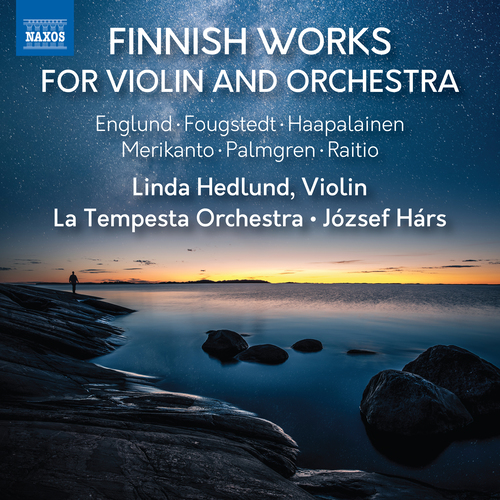
This recording explores the emotional depth, colour and inventiveness of Finnish concertante works for violin and orchestra. The pieces range across the transitional landscape of the country’s national music during the 20th century, where mysticism, modernism, folklore and experimentation co-exist. Major figures such as Selim Palmgren and Aarre Merikanto are represented, as is charming film music by Einar Englund, writing under a pseudonym. Distinctive works by Väinö Haapalainen, Väinö Raitio and Nils-Eric Fougstedt complete the programme.

This fifth volume of the orchestral works of the late-Romantic Swiss composer Richard Flury (1896–1967) brings two works deeply bound up with his native Solothurn, in the north-west of the country. His Fastnachts-Sinfonie, or ‘Carnival Symphony’, is an expansive symphonic poem predicated on local legend and folk tradition, embracing both frolic and feeling. The Third Symphony – in which one can hear traces of Bruckner and Richard Strauss – celebrates the rolling hills and endless skies of the Bucheggberg, where he loved to go walking and where, the freewheeling music would suggest, his heart found freedom.
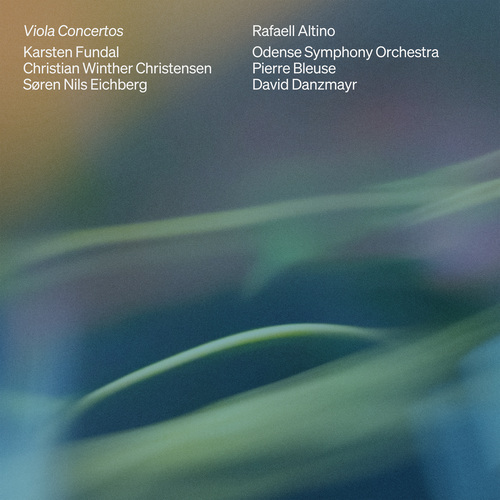
Viola Concertos presents three 21st-century Danish concertos, written for Rafaell Altino by Karsten Fundal, Christian Winther Christensen and Søren Nils Eichberg. In these works, the viola moves from intimate lyricism to dazzling virtuosity, weaving its way through both tender dialogues and dramatic exchanges with the orchestra. Altino’s masterful playing brings out each composer’s distinctive voice and reveals new facets of the viola, full of energy and warmth, shifting between neo-Romantic hero, indifferent loner and shadowy foil.
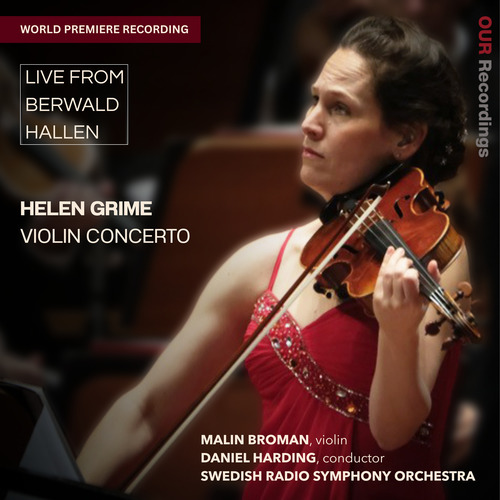
Helen Grime’s music, performed by top orchestras such as the LSO and Boston Symphony, blends artistic inspiration with vivid craftsmanship. A former Hallé Orchestra Associate Composer and Wigmore Hall Resident, she is now Professor of Composition at the Royal Academy of Music. Grime was appointed MBE in 2020 for her services to music.
Swedish violinist Malin Broman studied at the Guildhall School with David Takeno and is a prizewinner of many international violin competitions, including the Carl Nielsen Competition. She has performed with leading orchestras, and is a passionate chamber musician, founder of the Kungsbacka Piano Trio, Stockholm Syndrome Ensemble and the Chamber Music Festival, Change.
Daniel Harding is one of today’s foremost conductors, known for his versatility and artistic vision. He has led major orchestras including the Swedish Radio Symphony, Orchestre de Paris, and the Mahler Chamber Orchestra, and now serves as Music Director of Santa Cecilia in Rome. Regular guest at leading opera houses such as La Scala and the Royal Opera House, he is acclaimed for his wide-ranging repertoire. Harding is a CBE, Officier de l’Ordre des Arts et des Lettres.
Founded in 1925 and re-established under Sergiu Celibidache in 1965, the Swedish Radio Symphony Orchestra is a leading force in the music world. It performs both classical masterpieces and contemporary works, collaborating with top composers, conductors, and soloists.The orchestra has earned numerous awards, toured internationally, and built a critically acclaimed recording catalogue.

Helmut Lachenmann, who celebrated his 90th birthday last year, has composed several milestones in contemporary classical music. Sir Simon Rattle and the Bavarian Radio Symphony Orchestra have dedicated themselves to some of these exceptional works.
In his tuba concerto Harmonica, Helmut Lachenmann explores the limits of sound – with music that oscillates between eruption and silence, by means of ‘strictly constructed denial’ (Lachenmann) and by deliberately disrupting the familiar and eludes socially preformed listening expectations. Klangschatten – mein Saitenspiel deals with the “verso” of sound, its suppressed and “unwelcome” components. The spectrum here ranges from toneless or muffled sounds to differently coloured noise and clear tones. Lachenmann himself described the piece as “an offer of expressive intensity that reflects the bourgeois longing for beauty and seeks to fulfil it, that is, to overcome it.”
![SAINT-SAËNS, C.: Piano Concertos Nos. 2 and 4 [Vinyl]](https://cdn.naxos.com/sharedfiles/images/cds/hires/IBA-LP009.jpg "SAINT-SAËNS, C.: Piano Concertos Nos. 2 and 4 [Vinyl]")
Capturing Idil Biret’s first concerto recording at age 47, this historic 1988 session embodies her triumphant entry into orchestral repertoire after decades of solo work. The album highlights her profound connection to Saint-Saëns – showcasing the Concerto No. 2 in G minor’s dramatic cadenzas and the innovative structure of the Concerto No. 4 in C minor. Recorded at London’s St. Barnabas Church with legendary sound engineers Mark Brown and Tony Faulkner, the project was made possible by support from the Turkish Ministry of Culture. This release marked the beginning of Biret’s legendary Naxos partnership, ultimately distributing the recording worldwide to critical acclaim.
![RESPIGHI, O.: Maria Egiziaca [Opera]](https://cdn.naxos.com/sharedfiles/images/cds/hires/8.660591.jpg "RESPIGHI, O.: Maria Egiziaca [Opera]")
Ottorino Respighi’s Maria Egiziaca, described by the composer as a ‘mystery in three episodes’, narrates the life of Saint Mary of Egypt in a profoundly moving and deeply sensuous musical representation of Christian faith as seen through its various characters. This work, depicting Maria’s journey from prostitution to sainthood through sin, conversion and atonement, started out as a concert triptych and sits somewhere between an oratorio and an opera. The intensely dramatic and at times symphonic qualities of Maria Egiziaca are imbued with ancient Italian musical traditions, with two beautiful symphonic interludes separating the three episodes.
![VIVALDI, A.: Il Bajazet [Opera]](https://cdn.naxos.com/sharedfiles/images/cds/hires/8.660616-18.jpg "VIVALDI, A.: Il Bajazet [Opera]")
Il Bajazet was commissioned in 1735 to open Verona’s carnival season. Vivaldi chose a libretto by Agostino Piovene drawn from the well-known story of the defeated Ottoman sultan, King Bajazet, captured by Tamerlane who duly falls in love with Bajazet’s proud daughter, Asteria. Vivaldi was in his late maturity when he completed the opera, modifying his music to suit contemporary taste, and using the pasticcio form, incorporating some arias written by other, mostly Neapolitan, composers. Repurposing of this kind was wholly acceptable at the time and such works enjoyed great popularity. The conductor and Vivaldi specialist, Federico Maria Sardelli, has integrated lost arias, clarified the use of historically appropriate orchestration, and brought the opera to rich theatrical life.
Georges Onslow’s reputation as the ‘French Beethoven’ was earned in the field of chamber music. His 34 string quintets build on a form perfected by Mozart, and are enhanced through Onslow’s suggested use of a double bass instead of a second cello, as heard in this recording. The String Quintet No. 14 in F major has an attractively genial quality, with distinctive themes contrasting with warmly emotive lyricism; String Quintet No. 24 in D major shows the influence of Beethoven in its theatrically dramatic moods.
In a musical landscape dominated by standard repertoire, this album is a refreshing discovery, championing original compositions for the distinctive pairing of violin and saxophone. It showcases the performers’ dedication to uncovering bold new music, delivered through passionate and meticulous interpretations.
The recording creates a vibrant dialogue between past and present. Foundational 20th-century works by pioneers like Adolf Busch and Pierre Max Dubois are thoughtfully placed alongside contemporary compositions written specifically for the duo. The program unfolds as a rich tapestry of modern styles – from post-tonal works to serialism – creating an innovative sonic world where the violin’s singular voice intertwines with the diverse colors of the saxophone family.
Ultimately, it is the conviction and energy the performers bring to their interpretations that prove so compelling. Their fusion of technical precision with interpretive excitement is a powerful combination, breathing life and urgency into the contemporary music they so clearly cherish.
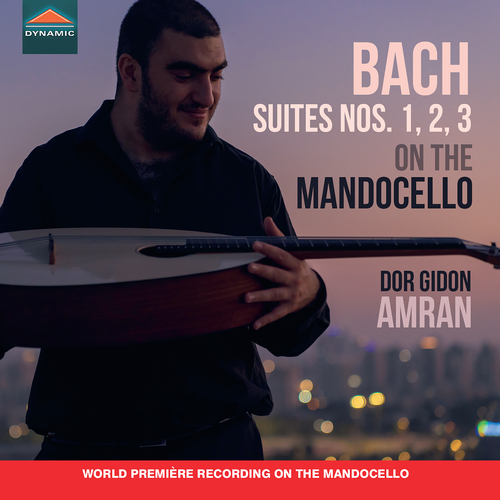
Bach’s Cello Suites are his only works for solo cello but are central to the repertoire and remain unequalled in their expressive musical depth. Dor Gidon Amran, the virtuoso mandolinist who has recorded his own unique arrangement of Paganini’s 24 Caprices on Dynamic (CDS8038), has now arranged Cello Suites Nos. 1–3 for the mandocello. This is a baritone instrument of the mandolin family, but much larger than a mandolin, whose strings are tuned exactly like those of the cello. Being played with a plectrum, the mandocello belongs to a very different sound world to the cello, offering a unique perspective on these great works.
![CHOPIN, F.: Mazurkas • Piano Sonata No. 3 • Polonaises (Idil Biret at Schwetzingen Festival 14 and 15 May 1999) [4-CD Boxed Set]](https://cdn.naxos.com/sharedfiles/images/cds/hires/8.571432-35.jpg "CHOPIN, F.: Mazurkas • Piano Sonata No. 3 • Polonaises (Idil Biret at Schwetzingen Festival 14 and 15 May 1999) [4-CD Boxed Set]")
At the 1999 Schwetzingen Festival honouring Chopin’s 150th anniversary, Idil Biret delivered one of the Festival’s most astonishing performances. Renowned for her complete Chopin recordings, Biret was asked at just six hours’ notice to replace Anatole Ugorski – and, defying all expectation, performed his exact demanding programme from memory. Flying through a storm from Brussels to Germany, she arrived minutes before the concert and captivated the audience with her brilliance and poise. Critics hailed her as a rare artist of supreme mastery and courage, with Joachim Kaiser praising her extraordinary musicianship. That weekend, the Schwetzingen Festival witnessed Biret at her transcendent best – an unforgettable celebration of Chopin and pianistic genius.
The renowned Genova & Dimitrov Piano Duo celebrates its 30th anniversary in 2025. The duo has been honoured with numerous international awards and recordings. With the recording of all of Debussy’s works in three volumes for piano duo, the Genova & Dimitrov Piano Duo is now appearing on the Oehms label. The programme includes both well-known and lesser-known works, some of which are versions of orchestral works such as the famous Trois Nocturnes. The recording was made in co-operation with WDR Broadcast.
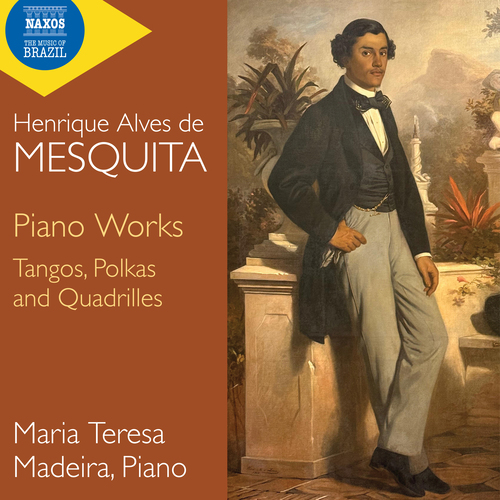
Henrique Alves de Mesquita was a prolific composer who defied Brazilian society’s systemic exclusion of Black people to achieve prominence as one of the leading figures in the local musical scene of the 19th century. He was highly regarded for his sacred music and operas, which are rarely heard today. After study years in Paris, Mesquita turned his versatility and sophistication towards fashionable music theatre styles such as polkas, tangos and waltzes, conveying emotions ranging from contagious joy to gentle melancholy. It is these lighter pieces that are now considered by many scholars to be one of the main origins of modern Brazilian popular music.

The largest part of the output of the Hamburg-born composer and writer Walter Niemann (1876–1953), a student of both Humperdinck and Reinecke, is piano music: an astonishing 1,000 or so pieces, divided into 189 opus numbers. Most of them are lyrical miniatures in a warm and approachable late-Romantic style, some evoking the music of the past – often with a touching degree of dignity and restraint, but also with an occasional flash of good humour. The range of moods here is surprisingly wide, from pieces recalling late Brahms and a barcarolle evoking Offenbach, via light-hearted character-sketches and evocative picture-postcards, to a warm-hearted and tender piano sonata.
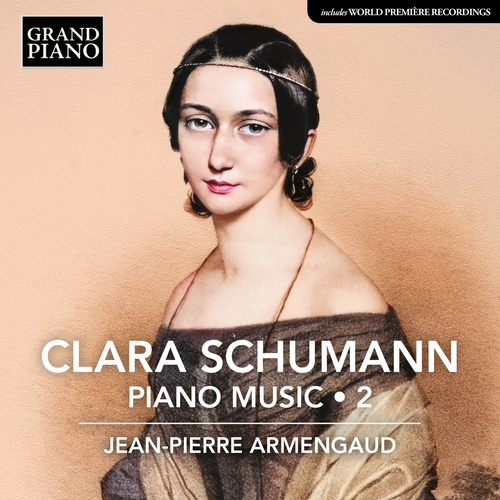
The admired Schumann authority, Jean-Pierre Armengaud, presents this second volume of Clara Schumann’s solo piano music, which focuses on the transcriptions she made of works by her husband, Robert. Clara evokes orchestral density in the overture to Robert Schumann’s only opera Genoveva, and also in the complex Bach-inspired Studies for Pedal Piano. Above all, the song transcriptions see her engaged in acts of complex creative union while also revealing the independence of her musical vision. Volume 1 in this series is on GP930.
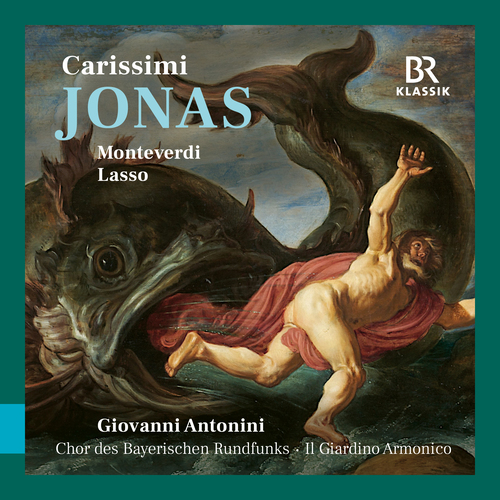
The oratorios of Giacomo Carissimi (1605–1674) are seminal works in the early history of a genre that combines sacred narrative, theatrical expression and musical virtuosity to create a new, dramatic form. Of the mostly Old Testament stories to which Carissimi’s oratorios refer, the vivid tale of Jonah stands out. During his divine mission at sea, the biblical hero is caught in a storm and swallowed by a whale. Carissimi shapes this material into a fast-paced plot with emotionally powerful solo recitatives, interspersed with a complex array of choral passages – including a striking double chorus depicting the storm.
With choral music by Claudio Monteverdi and Orlando di Lasso, this album also traces the development of dramatic vocal music in the transition from the late Renaissance motet to the more emotionally expressive interpretations of the early Baroque period. The famous Lamento d’Arianna is the only surviving piece from the lost opera Ariadne by Claudio Monteverdi (1567–1643), who reworked this lament into an equally expressive madrigal in 1610. Excerpts from the two legendary and mysterious cycles Prophetiae Sibyllarum and Lagrime di San Pietro by the Wittelsbach court composer Orlando di Lasso (1532–1594) conclude the album, allowing us to experience masterpieces of the motet style, to which the Bavarian Radio Chorus regularly devotes itself in historically informed performances.

What distinguishes Fauré’s Requiem from numerous other settings of the requiem text is its rather intimate, restrained, almost chamber-music nature, a “lullaby of death”, as it has also been called, initially more as a criticism of a work that for most of the time avoids depicting the dread of death and the Last Judgement. Fauré’s reply “But this is how I feel about death: as a happy liberation, as a striving for happiness in the hereafter rather than as a painful transition” not only perfectly describes essential characteristics of his ‘Requiem’, but also reveals it to be a very personal expression of the composer’s very own artistic nature.
Two generations after Fauré (and Fauré’s grand-disciple through his teacher Koechlin), Francis Poulenc’s (1899–1963) displayed a significantly different approach to religion. Poulenc, who like Fauré was from the southern part of France, had been shaped by his homeland in the sense of a ‘rural’, intense but joyous Catholicism. He regarded his ‘Gloria’ as a more joyful counterpart to some of his other sacred works, and it is in this spirit that the first movement begins in a festive mood with a striking, fanfare-like motif in the full orchestra. If Poulenc cited Gozzoli frescoes with monks sticking out their tongues and Benedictine monks playing football as the source of inspiration for his ‘Gloria’, then nowhere is this more immediately comprehensible than in the second movement with its rhythmically pointed ‘Laudamus te’ of the choir.
In both the opera house and concert hall, Prêtre’s interpretations were notable for their full-blooded and highly romantic character; in style, they were often different from those of French conductors of the previous generation. He was an effective conductor not only of the French repertoire but also of the music of Italy and Germany, a fact reflected by the admiration in which he was held in both countries. A highly experienced and polished recording artist, Prêtre had many years’ experience of working in the studio. His discography was large. Especially important were his recordings of the music of Poulenc.
Works for Choir and Ensemble presents three powerful world premiere live recordings of Vagn Holmboe’s late choral output. Featuring Die Erfüllung alongside Song at Sunset and Ode til sjælen, this digital-only album reveals the composer’s hidden spiritual side. The Mogens Dahl Chamber Choir, V Coloris and guests perform these works, inspired by Novalis, Whitman, and Ewald, realising the deep spiritual truths at the music’s core.
‘…the Song of Songs, the Bible’s most unabashedly erotic book, cataloging the sensory language of worship. Set to Lang’s characteristically spare music, with airy textures built from modest, repeated gestures, the words glow with a strange immediacy… The Crossing, under Donald Nally, sings throughout with precision and warmth.’ – The New York Times
![NARBUTAITĖ, O.: Centones Meae Urbi [Oratorio]](https://cdn.naxos.com/sharedfiles/images/cds/hires/ODE1455-2.jpg "NARBUTAITĖ, O.: Centones Meae Urbi [Oratorio]")
Onutė Narbutaitė’s (b. 1956) oratorio Centones Meae Urbi (1997) is a key work in Lithunian contemporary music and a work that also earned the composer the Lithuanian National Laureate. This new 2024 recording of the work – which portrays the rich history of Lithuanian’s capital city Vilnius – with Robertas Šervenikas conducting the Lithuanian National Symphony Orchestra, the Kaunas State Choir and with Lithuanian vocal soloists, Gunta Gelgotė and Nerijus Macevičius, is a major addition to Lithuanian recorded music.
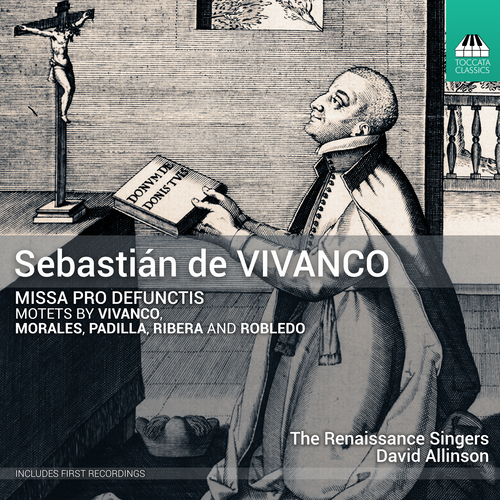
Spanish Renaissance polyphony has a reputation for florid, intricate contrapuntal textures and dark colours. Sebastián de Vivanco (c. 1551–1622), born in Ávila but active for most of his life in Salamanca, stands apart from his contemporaries: his music explores a much wider range of colours and techniques than that of, say, Victoria. In his more experimental and dramatic motets, some of which are heard here, he points the way towards the new Baroque. But in the calm sobriety of his Requiem, now reconstructed and recorded for the first time, he honours the Iberian tradition of unhurried chant-driven polyphony, all the more moving for its uncluttered clarity and exquisitely lovely chordal sequences.
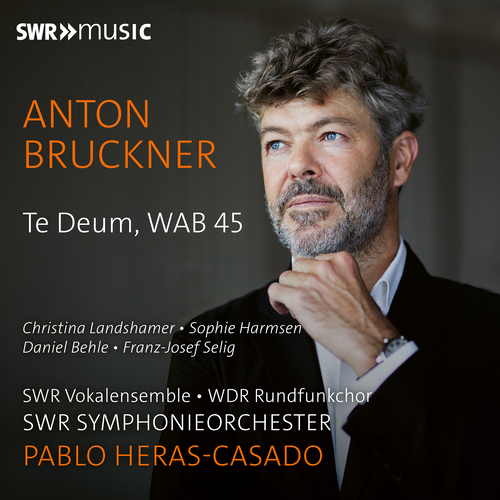
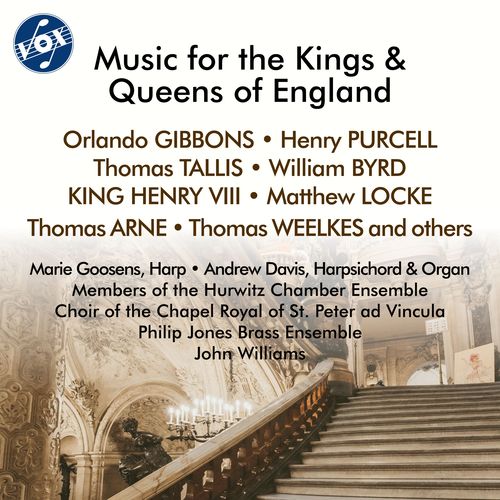
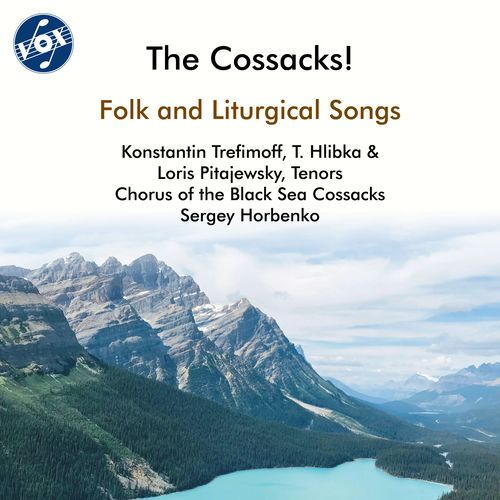
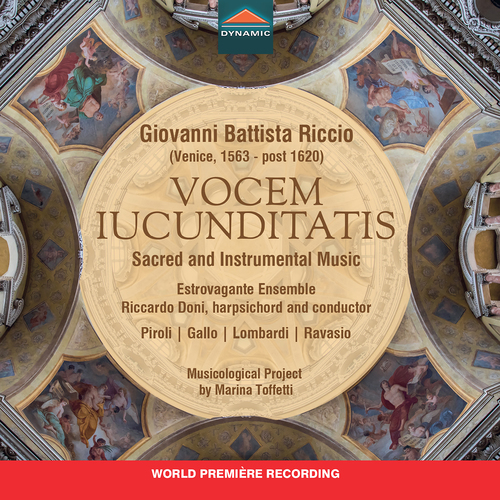
Giovanni Battista Riccio lived in Venice when the city’s music was dominated by illustrious figures such as Monteverdi and Gabrieli. Riccio won aristocratic patrons and his surviving three collections of sacred music, which also contain instrumental compositions, attest to his standing in the city and beyond. His music is flowing and full of variety, not least in the liveliness of motifs, use of binary and triple time, sound painting and employment of echo effects. His Motets setting passages from the Song of Songs, offer unusually expressive and refined depth.
This album immerses the listener in the extraordinary poetic imagination of Bent Sørensen (b. 1958) and his profound love of the piano. It begins with the intimate, hushed textures of the solo piano cycle 12 Nocturnes, a night music that drifts from sundown to sunrise, and unfolds into the Piano Concerto No. 3, ‘La sera estatica’. Touched by the fleeting magic of twilight, where new encounters and possibilities quietly awaken, this ‘ecstatic evening’ is captured here in its world premiere performance with soloist Katrine Gislinge and the Copenhagen Phil under John Storgårds.
There is a Zurich tradition going back to the 17th century that on the second day of January, Bächtelistag or Berchtoldstag, New Year publications would be circulated. Societies and institutions gave out printed matter, illustrations or sheet music to the young people of Zurich in return for a modest sum. The money thus raised was intended for the heating of public rooms and was therefore known as “Stubenhitze”. Founded in 1629, the City Library established this New Year tradition in 1645 by publishing an engraving by Hans Conrad Meyer with a poem by Johann Wilhelm Simmler, the first time such a New Year issue had been offered by a Zurich corporation. The Central Library of Zurich, formed in 1914 by the amalgamation of the municipal and cantonal libraries, initially continued that custom. Regular issues ended in 1925 and were completely abandoned in 1939. The old tradition was revived in new guise in 2005 with a CD of piano music by Winterthur composer Johann Carl Eschmann, whose papers and manuscripts are held in the Zurich Central Library. From songs for tenor voice by Zwingli to music of the 21st century, an extensive repertoire of instrumental and vocal music for the widest possible range of voices and ensembles has been recorded and released, some of it for the first time.
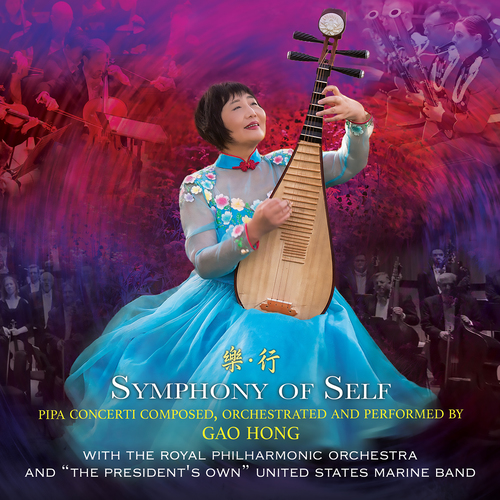
Gao Hong weaves ancient pipa traditions into full Western orchestral arrangements, as she composes, orchestrates, and performs four concertos for the instrument. Recorded at Abbey Road Studios with the Royal Philharmonic Orchestra, her works forge a striking cultural fashion, giving the Chinese lute a bold new voice in classical music. Symphony of Self also includes Celebration, performed by “The President’s Own” United States Marine Band, showcasing her remarkable versatility in writing for both orchestra and full band.
Make sure to subscribe to Naxos newsletters for other great offers.