
 Translate
































In addition to its own wide-reaching monthly new releases, Naxos also distributes several leading labels in many countries around the world. Here is a choice selection of recent releases from some of these distributed labels.

Dacapo Records is the Danish national label for classical and contemporary music, founded in 1989 and supported by the Danish Arts Foundation. With a focus on Danish composers, Dacapo Records works to support the Danish music scene and promote its composers abroad.
We strive to present releases of the highest quality. That’s why we collaborate not only with the best Danish and Nordic artists but also with top international ensembles such as the Vienna Philharmonic, the New York Philharmonic, the Lapland Chamber Orchestra, and the Kronos Quartet. As a result, Dacapo’s releases are frequently nominated for the most influential international awards.
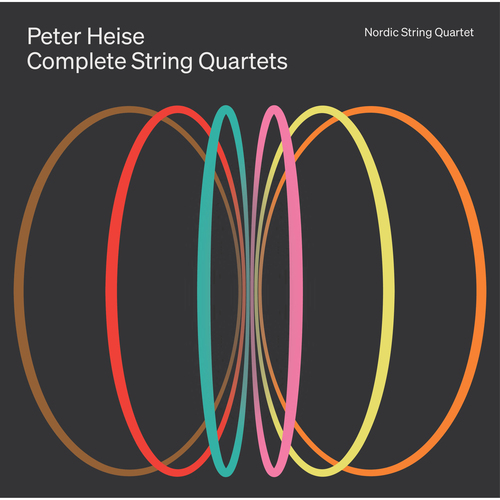
Peter Heise (1830–1879) was a peerless master of song and wrote one of the best Danish operas of the 19th century. Yet the six string quartets he composed between 1851 and 1857 remained largely forgotten until their publication as recently as 2017. The Nordic String Quartet’s acclaimed survey of Heise’s quartets began in 2023 and concludes with this complete 3-disc set featuring the world premiere recordings of Nos. 4–6. These works reveal Heise’s musical imagination in all its brilliance, performed with a spacious, lyrical sensibility attuned to the composer’s distinctive poetic touch.
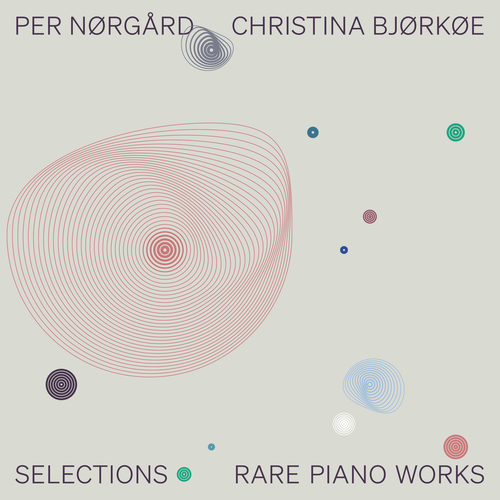
Per Nørgård (1932–2025) remains a titan of Nordic modernism, a composer whose relentless curiosity redefined the boundaries of sound. In this digital-exclusive release – a prelude to the upcoming double disc album arriving in 2027 – Christina Bjørkøe performs a series of world-premiere recordings that offer a rare glimpse into Nørgård’s private dialogue with the piano. From the structural rigor of the early Partita severa to the ethereal, fluid textures of Waterways, these works capture a master architect of ‘organic simplicity’, where complexity dissolves into pure light.
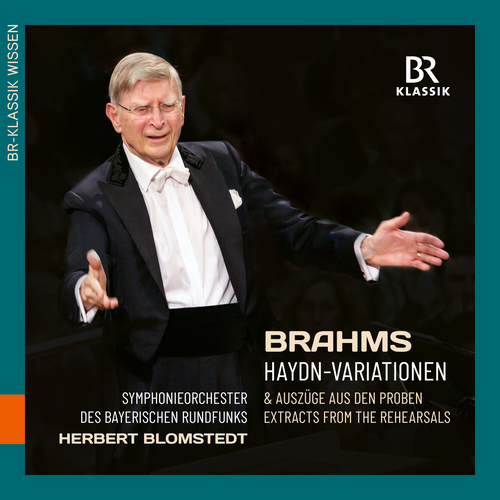
The distinguished Swedish conductor Herbert Blomstedt, long associated with the Bavarian Radio Symphony Orchestra as a regular guest, conducted Johannes Brahms’ Variations in B-flat major on a Theme by Joseph Haydn, Op. 56a, in concerts on February 13 and 14, 2014 in the Herkulessaal of the Munich Residenz. This new BR-KLASSIK album presents not only the live recording of this compelling interpretation but also a live orchestral rehearsal recording from February 10, 2014. The latter forms part of BR-KLASSIK’s acclaimed series Conductors at Rehearsal, offering a glimpse into their artistic work with the orchestra.
Brahms composed the Variations on a Theme by Haydn in Tutzing during the summer of 1873. The work was premiered on November 2, 1873 in Vienna, conducted by the composer himself. A short while later, Brahms introduced an alternative version for two pianos (Op. 56b), which premiered in 1874, also in Vienna. The Variations are based on the melody of the so-called “Chorale St. Antoni,” taken from the second movement of a Divertimento in B flat major (Hob.II:46) that was most likely mistakenly attributed to Joseph Haydn. The chorale may not even have been written by the composer of the Divertimento and could originally have been a pilgrimage song honouring St. Anthony of Padua in western Hungary (present-day Burgenland). Regardless of their origins, Brahms’ Variations (theme with nine variations and finale) stand as one of the composer’s most important and most celebrated orchestral works and remain a cornerstone of the Romantic repertoire.
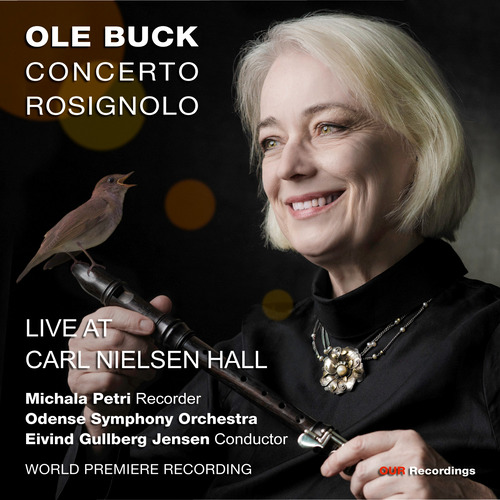
Concerto Rosignolo (2022) for recorders grew from a sonic fantasy inspired by birdsong and natural sound. After composing a long introduction without a clear plan, the composer imagined a nightingale observing the sketches, and the music evolved as a flow of birdlike motifs, colours, and impulses. Chance and instinct shaped the form, with events, such as a trumpet imitating the recorder, opening new sections. Melody appears but blends within the orchestral texture rather than dominating it. The work follows an élan vital: a life-force of contrast and movement. Birdsong, silence, and nature guide the concerto, which finally fades into silence.
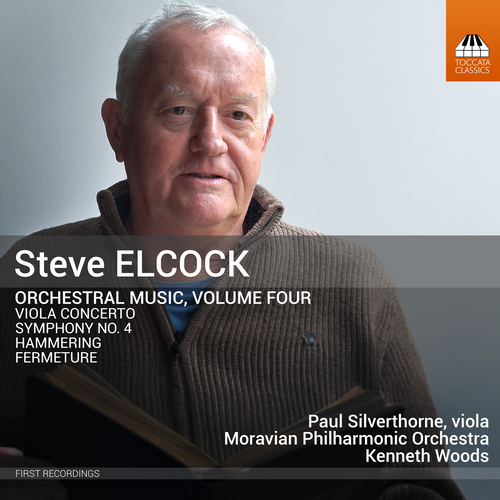
Steve Elcock – UK-born (in 1957) but long since based in France – was recently hailed by a fellow composer in the American magazine Fanfare as ‘the greatest living symphonist’. All eleven of the symphonies he has composed to date are, in various ways, concerned with the large-scale accumulation and dissipation of tension, rather in the manner of the later Nielsen symphonies – the half-hour span of his Fourth Symphony also reconciling tonality and atonality in its wild and energetic arch. Elcock is fond of bringing popular elements into his music, and a folk-like dance duly animates his Viola Concerto. These major works are book-ended here by two big-hearted orchestral showpieces that could become audience favourites.
Since John Wilson relaunched Sinfonia of London in 2018, his hand-picked orchestra has attracted the highest critical acclaim from both national and international press, performed at the BBC Proms every year since 2021 (their live début), and made their international début at the Concertgebouw, Amsterdam in 2025. Regularly touring in the UK, they have also released twenty-five albums (this is the twenty-sixth) covering a wide and varied range of repertoire, from Rachmaninoff to Rodgers & Hammerstein. Opera and ballet were the dominant musical genres in nineteenth- and early-twentieth-century France, and French orchestral music was much more poetic and narrative than the contrasting German symphonic tradition. Master-orchestrators such as Debussy and Ravel drew extraordinary colours and textures from the symphony orchestra, making their works perennial favourites with audiences around the world. Sinfonia of London performs this repertoire with absolute precision and finesse.
German composer Johanna Senfter was a student of Max Reger, who recognised her musical talent and encouraged her to pursue advanced studies in his composition class in Leipzig, which she completed with distinction in 1909. In 1910, she was awarded the Arthur Nikisch Prize for the best student composition of the year. Born into a well-to-do industrial family, she was financially independent and able to devote herself entirely to her creative work throughout her life. In addition to numerous chamber works, she left behind nine symphonies. From the youthful ‘̛Sturm und Drang’ of her first symphony (1914) to the thoughtfully moving ninth (1949), composed after two world wars, the development of her musical language can be discovered here with these world premiere recordings.
Igor Stravinsky is renowned for his legacy of glittering fairy tales in treasured favourites such as Petrushka and The Firebird. Another favourite is the ballet Pulcinella, a lovable melange of Baroque theatricality, heard here in its concert suite form. The other works in this programme are surprisingly less known: the luminous and symphonic Song of the Nightingale, and The Fairy’s Kiss based on Tchaikovsky’s music, are both derived from stories by Hans Christian Andersen. An astonishing rarity, The Faun and the Shepherdess is an ancient Greek tale that was Stravinsky’s romantically sensual gift to his young bride.
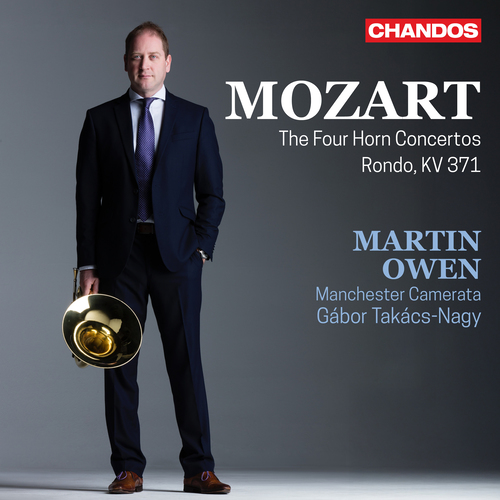
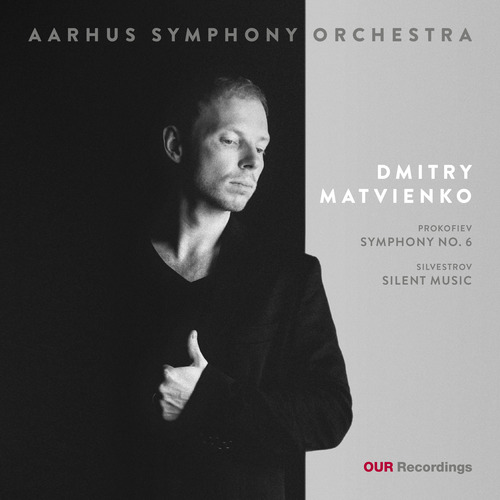
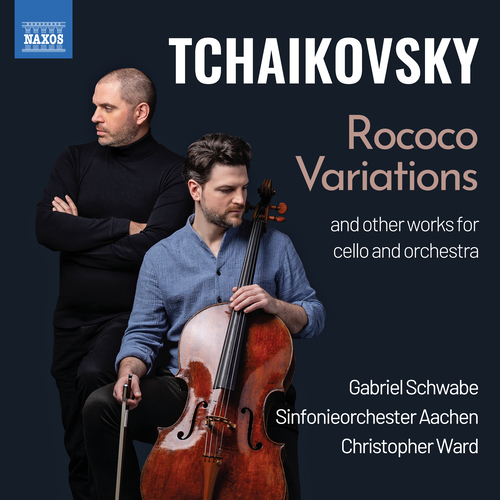
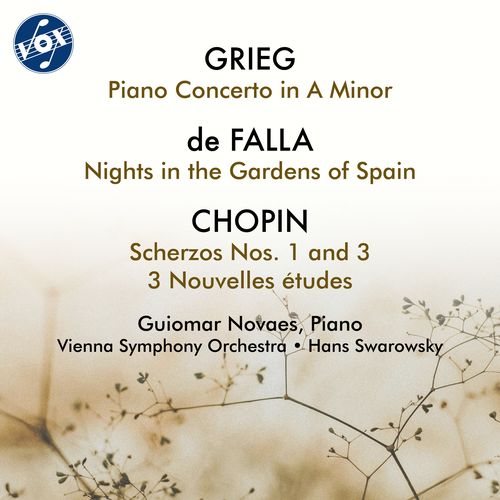
![PUCCINI, G.: Tosca [Opera]](https://cdn.naxos.com/sharedfiles/images/cds/hires/8.660607-08.jpg "PUCCINI, G.: Tosca [Opera]")
Giacomo Puccini’s much-loved opera Tosca contains some of his most famous lyrical arias. It is also a powerful and tragic theatre piece set in politically dangerous times featuring moments of courage and romantic tenderness. The expressive force of its narrative and the power of Puccini’s strikingly inventive score has made it one of the most frequently staged operas of all time. Daniele Gatti conducts this live performance from Maggio Musicale Fiorentino with a cast acclaimed for its impressive vocal and dramatic characterisation.
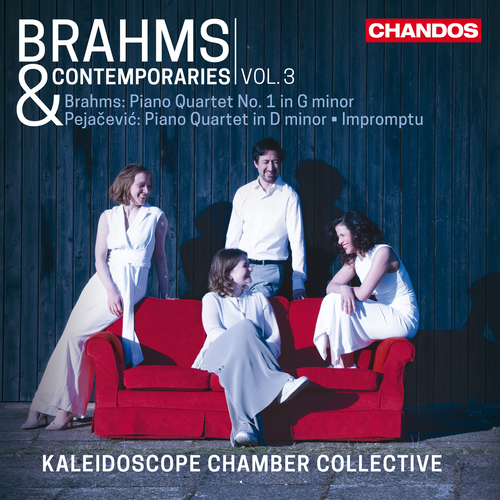
‘We can imagine some eyebrows being raised at the description of Dora Pejačević as a contemporary of Brahms; the two composers were born more than fifty years apart, and their lives only overlapped by twelve years. Yet both works by Pejačević are unmistakably from the same compositional lineage as that by Brahms; and both are works written early on in Pejačević’s remarkable (and, sadly, all-too-short) life. Both pieces belong clearly to the romantic tradition, displaying no hint of the more modernist directions which her later works would take. We were immediately intoxicated by the passionate sweep of Pejačević’s Piano Quartet, but also the tenderness of its slow movement, and felt it would make the perfect bedfellow for the First Piano Quartet of Brahms, a piece to which Tom has felt particularly close since student days. Brahms’s Piano Quartet is justly one of the best-loved of all chamber works, and few works are more exhilarating to perform: the first movement offers an abundance of glorious themes; the second takes us to a mysterious dreamworld; the third luxuriates in expansive lyricism; then the fiery virtuosity of the gypsy finale sends us headlong to the finish line. This album brings us to the end of our recorded journey through Brahms’s three piano quartets, and it has been the greatest privilege and joy to record these works, alongside three major piano quartets by composers who deserve to be far better known. However, we are pleased to say that the series does not end here: looking beyond the piano quartets, we have further albums in preparation, pairing Brahms with his brilliant and lesser-played contemporaries.’ – Kaleidoscope Chamber Collective
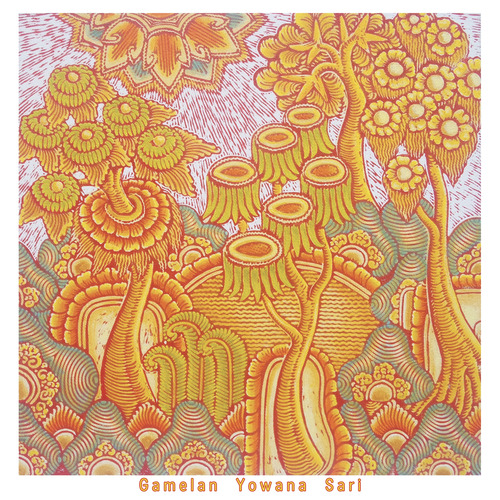
Recorded at the famed Wiswakarma Museum in Bali, Gamelan Yowana Sari’s self-titled debut is much more than just a sonic exploration of a musical tradition that is beloved worldwide. While the location provided a wealth of inspiration and deep connection for the musicians – all of whom, under the guidance of GYS founder Michael Lipsey and co-directors Fred Trumpy and Ruka Shironishi, are students, alumni, and community patrons of the Aaron Copland School of Music at CUNY Queens College – what makes this album doubly compelling is the expansive range of the music.
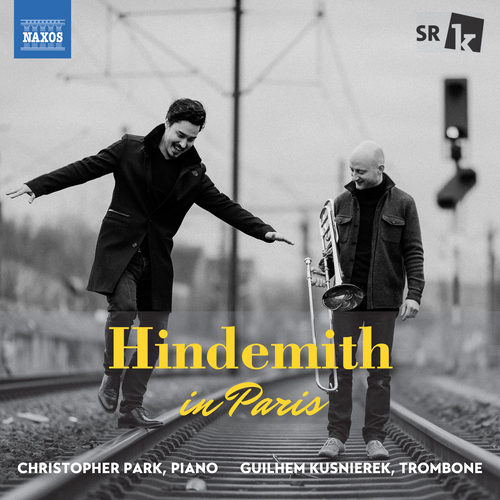
Paul Hindemith is among the most significant German composers of the 20th century. The Sonata for Trombone and Piano – one of a multitude of sonatas he composed for various instruments – is a lively tour de force, performed here with an additional Ruhig movement from a sonata left unfinished before he was forced to emigrate. Hindemith’s songs lean towards the refined simplicity of the French mélodie and are performed alongside Poulenc’s lyrical Oboe Sonata, Koechlin’s brooding Trois Pièces, and selections by Ravel and Debussy, all specially arranged to display trombonist Guilhem Kusnierek’s expert musicianship.
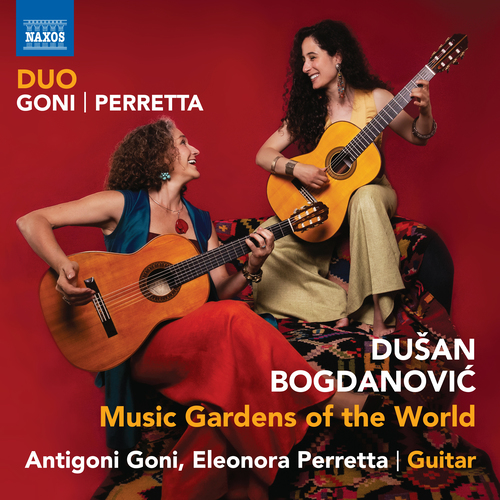
Dušan Bogdanović’s inspiration behind this project came from writing a compilation of world music pieces for his young son, but after hearing the duo of Antigoni Goni and Eleonora Perretta perform he greatly expanded the idea. The abundant spirit of these folk inspirations is exemplified by their variety – from 17th-century chanson to Irish fiddle jigs; humorous Dalmatian songs to a Sephardic romance; and from the dances of south-eastern Iran to Balinese rice-pounding music. To introduce a popular flavour, he has added arrangements of three beloved Neapolitan songs.
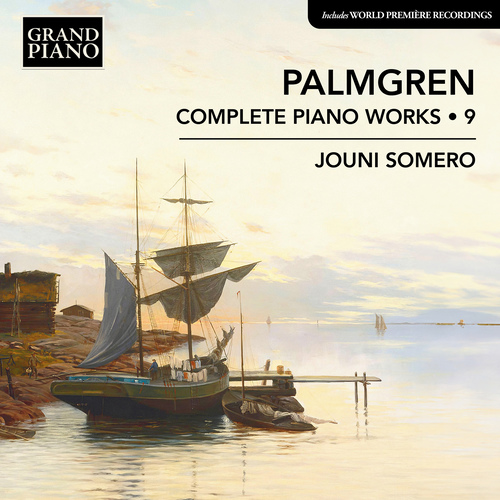
Selim Palmgren was one of the most celebrated pianist-composers in the years before the end of the First World War. His vast catalogue of piano music, much of it unknown, is showcased in this acclaimed series performed by Jouni Somero, the Finnish composer’s greatest modern exponent. This volume features the virtuosic and demanding Fantasie, Op. 6, one of Palmgren’s most compelling works, as well as examples of music irradiated by Impressionism and Nordic folklore. Miniatures including études, waltzes and pieces that exude Chopinesque charm are also featured.
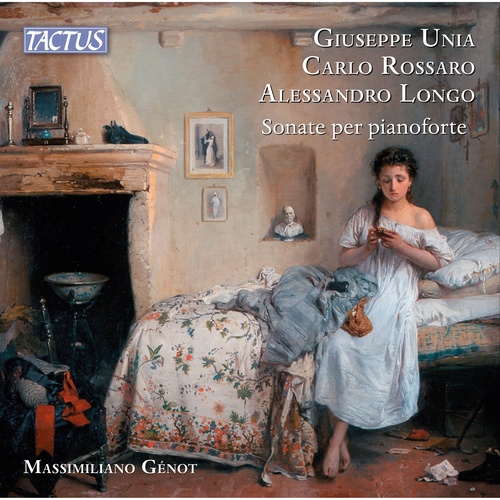
This recording, entrusted to award-winning pianist Massimiliano Génot (who previously spearheaded the rediscovery of composers Federico Bufaletti [TC860290] and Giuseppe Unia [TC812101]), focuses on the romantic piano sonata in nineteenth-century Italy. The theme is particularly interesting because 19th-century Italian piano compositions remain largely unknown today, partly due to the overwhelming preponderance of opera and theatre music of the time, which already overshadowed any other musical genre. Massimiliano Génot’s passionate interpretation does justice to these important compositions, which deserve careful consideration within the European piano landscape of the time. The compositions of Giuseppe Unia, Carlo Rossaro and Alessandro Longo represent a wide-ranging synthesis of Italian tradition and influences from beyond the Alps, in which solid compositional technique and typically Italian expressiveness blend in a manner that is both natural and masterful.
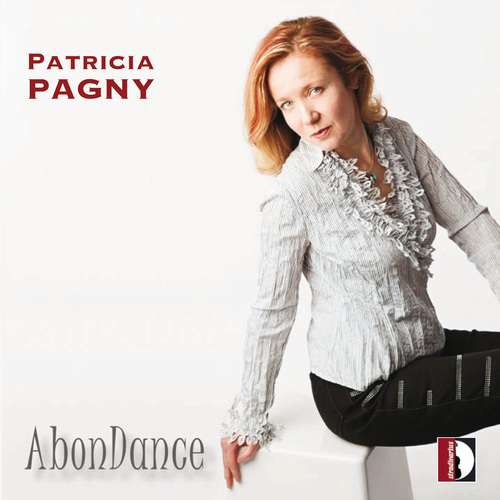

With her debut solo album TERRA, Italian-American pianist Elenora Pertz returns to the origins of her artistic work. Inspired by a creative retreat on Mount Etna in the summer of 2023, the album presents itself as a musical meditation on nature, cycles, and the sacred feminine – and as a search for a renewed connection between human beings, art, and the earth.
TERRA brings together works by Beethoven, Stravinsky, Fazıl Say, Sheila Silver, Mel Bonis, Mary Howe, Janáček, Bartók, Brahms, and others with the seismographically recorded “Boati” of Mount Etna. These natural sounds function as interludes, blurring the boundaries between concert hall and volcanic landscape. “The earth has a voice – our task as musicians is to listen,” says Pertz.
Three central motifs shape the program: the earth as primal principle, as mother, and as home. Fazıl Say’s Black Earth opens the album with archaic power. Works by composers such as Mel Bonis, Sheila Silver, and Mary Howe place the theme of femininity at the centre. The cyclical idea of transformation and return finds expression in Bach’s Mache dich, mein Herze, rein, Beethoven’s Op. 109, and Schumann’s Fantasie – works that symbolise renewal and rebirth.
Beyond the personal dimension, Pertz understands TERRA as an artistic statement in a time when humanity’s relationship with the earth must be reexamined. Mindfulness and responsibility toward the planet form the ethical resonance of the album.
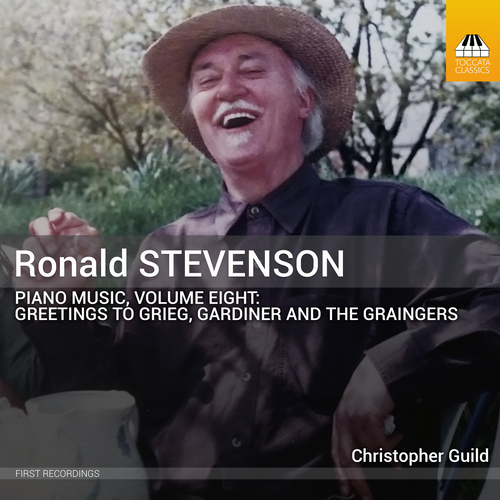
Ronald Stevenson (1928–2015) was perhaps the only virtuoso pianist-composer in the manner of Rachmaninov and Liszt to have Celtic origins, and so it is natural to find a Celtic flavour emerging in his music – his transcriptions as well as his original compositions. It also helps explain his affinity for fellow composers like Grieg and Grainger, whose creative efforts looked to the north. But Stevenson’s openness of spirit put the whole world of music within his reach, and so piano rags can here rub shoulders with works more directly concerned to express his humanist impulse.
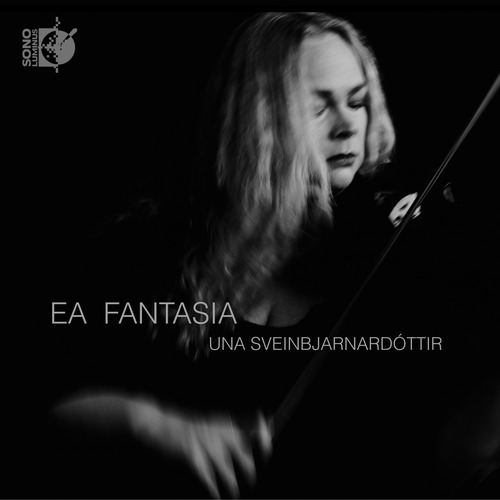
‘Ever since playing Hugleiðing (Meditation) by composer Karólína Eiríksdóttir for the first time back in 2006, this Icelandic solo violin music project has been melting in my veins. In 2013, John Speight wrote his Soliloquy at my request. Two more recent commissions are on the album, both from composers who play the violin: Fragile Stillness by Lilja María Ásmundsdóttir and Aria by María Huld Markan.
Iceland has a long tradition of violin playing and according to folklore every farmer in certain valleys up north was a fiddler. Ea Fantasia, my own composition, is inspired by the opening track Alia Fantasia by Nicola Matteis Jr. He was the London-born son of the Italian composer Nicola Matteis, who wrote Ayers and Grounds. Nicola Junior was a violinist like his father and lived in Vienna, where he composed numerous ballets for the imperial opera. His bariolage (arpeggios over four strings) remind me of the opening of Fratres by Arvo Pärt and Bach’s Chaconne—key works in the violin repertoire—both of which have been a great inspiration to me.
In Fragile Stillness, Lilja María Ásmundsdóttir experiments with textures. Or as she puts it: “The piece is inspired by a weather condition called froststillur. It is characterized by an intense calmness where there is no wind and a crisp, frozen atmosphere.
Karólína wrote Meditation in 1996 for violinist Hlíf Sigurjónsdóttir, who premiered the piece in June 1997. Meditation is in one movement, built on ideas which change and develop, and the composer describes it as “variations without a theme.
Aria by María Huld Markan was written for me in 2023. Her solo piece is written under the influence of Maria Callas and her romanticism and lontano as she sings Puccini. María is reflecting on the concept of the genius, and motifs are flowing from all the fountains contemplating the romantic violin repertoire. On his Adagio, composer Tryggvi Baldvinsson writes: “This small Adagio can be seen as a short play in which three distinct characters appear. Each has its own traits, its own personality. The encounter between these characters is bound to have a profound and lasting impact on them. As for the actual course of events, I leave that entirely to the listener’s imagination. The piece was composed for Rut Ingólfsdóttir, who premiered it in 1997.
John Speight is an English-Icelandic singer and composer I got to know through working with the Reykjavík Chamber Orchestra, playing and recording his works. He wrote Soliloquy in 2012 and it is the only piece on the album in two movements. The first movement is slow and thoughtful, while the second is crazy and furious.
Tranquility by Sveinn Lúðvík Björnsson is possibly the shortest piece I have ever played. The story of it is longer than the piece itself—and too good to omit. Sveinn Lúðvík, who is visually impaired, was renting a studio in an old banana storage in Brautarholt, Reykjavík. To enter his studio he had to walk through the studio of artist Helgi Valgeirsson. Above the door there was a painting by Helgi which inspired Sveinn Lúðvík deeply; he had the sense it was very somber in its mood—a naked woman with her back turned. Moved by the scene he wrote Tranquility. Later, when discussing the piece with Helgi and admiring the tragic impact of the naked woman in the picture, Sveinn was shocked to discover that the painting, in fact, was of bananas and oranges.
Véronique Vaka Jacques, a Canadian-Icelandic composer and trained classical cellist, grounds her work in the geology and topography of Iceland. In Ofdune (track 9), a map of North Iceland serves as groundwork, with the geographical details of a descending river abstractly translated into the work’s time progression, using the river’s path through hills and valleys as a loose blueprint. This concept of descent is echoed in the title, Ofdune, which is derived from the Old English meaning “downwards” or “off the hill”.
Jón Nordal’s Hvert örstutt spor (Each Tiny Step, track 11) is from the play Silfurtunglið by Icelandic Nobel Prize-winning author Halldór Laxness. This is a famous Icelandic song, here in my gospel music influenced arrangement for solo violin. I tried to stay true to the beautiful and simple melody and the text of the poem filled with nostalgic longing.’
– Una Sveinbjarnardóttir
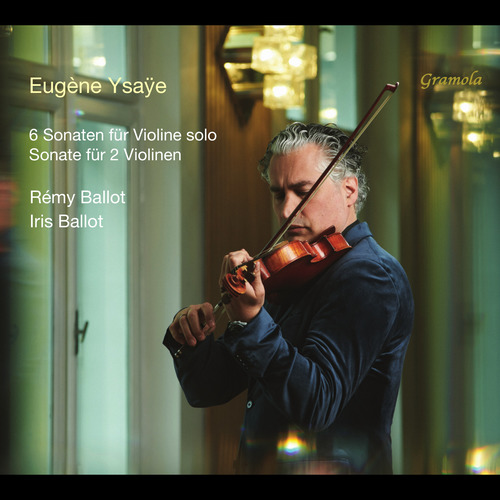
The versatile French conductor and violinist Rémy Ballot, following his recent chamber music recordings, now presents a milestone in music history for solo violin: the Six Sonatas for Solo Violin, Op. 27, by the Belgian violinist and composer Eugène Ysaÿe. Ysaÿe composed these sonatas for six outstanding violinists who were at the peak of their artistry in the 1920s. They form a kind of visionary synthesis of the achievements of Bach and Paganini and the spectrum of Romantic violin music and the French schools from Franck to Debussy. Together with his wife Iris Ballot, the second CD of the album features the Sonata for Two Violins, a work that remains widely underrated to this day, uniting within itself the full abundance of all musical currents present at the time (1915) during a period of transition.

In early summer 1929, after returning home from Germany, Ernst Krenek embarked on a twenty-day journey through the Austrian Alps, accompanied by his parents and his second wife, Berta. They covered the longer distances between the 14 stops by bus and train, from which they undertook their hikes and excursions. Their route took them from Vienna to Upper Styria, the Salzkammergut region, Carinthia, and East Tyrol, then back to Vienna via Lower Austria. On this journey, Krenek is not just a composer traveling, but also a poet, stage designer, and philosopher tracing the spirit of the times in his homeland. Just a few days after returning to Vienna, while the impressions of the trip were still fresh, he created the music and text for the song cycle almost simultaneously. Austrian tenor Alexander Kaimbacher and Anna Sushon on piano present the resulting entertaining, often humorous Reisebuch aus den österreichischen Alpen (Travel Book from the Austrian Alps).
Love – one of the central themes of the Romantic art song – unfolds in all its facets, from longing and devotion to fulfillment and loss. Like a rich sonic garden, works by Robert Schumann, Richard Strauss, Alexander Zemlinsky, and Richard Wagner bring together diverse perspectives on this profound emotion.
From Schumann’s intimate Frauenliebe und Leben, tracing a woman’s life journey, to Zemlinsky’s shimmering, often melancholic waltz songs, and Wagner’s passionate, metaphysical Wesendonck Lieder, the program spans a wide emotional range. Strauss’s flower songs add further nuances of transience, illusion, and eternal love.
Together, these songs create a multifaceted panorama – from first longing to deep devotion, and from memory to farewell – each piece a unique blossom within the greater garden of love.
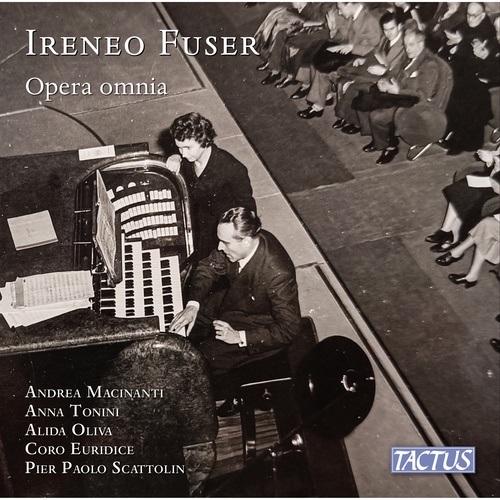
Ireneo Fuser was born in Carbonera (Treviso) on 12 November 1902. In 1925 he graduated in organ at the Liceo musicale «Benedetto Marcello» in Venice under the tuition of Oreste Ravanello and later specialised in Rome with Fernando Germani. In 1927 he graduated in piano at the Conservatory in Parma and, in 1935, in composition at the Conservatory in Florence. In 1928, he won the competition to succeed Ulisse Matthey as organist at the Sanctuary of Loreto, a position he did not hold, however. He undertook a brilliant concert career that was marked by a broad repertoire, refined recording skills, great virtuosity and musical sensitivity that made him one of the most important Italian organists of his generation. From the 1940s onwards, he gave organ recitals for Swiss radio in live or recorded Sunday programmes in Rome and Turin, which have been on the broadcast schedules for more than twenty years. At the same time, he carried out teaching activities first at the Licei musicali in Venice and Pescara and then in Bologna, where he was established in 1939 as an organ teacher at the Institute that three years later would become the Conservatorio «G. B. Martini». A firm believer in the phonic excellence of the ancient Italian organ, he shaped his activity with the noble aim of enhancing the glorious period of Italian musical art of the past; among his countless musicological works, the anthology Classici italiani dell’organo (1955) is still considered a reference work today.
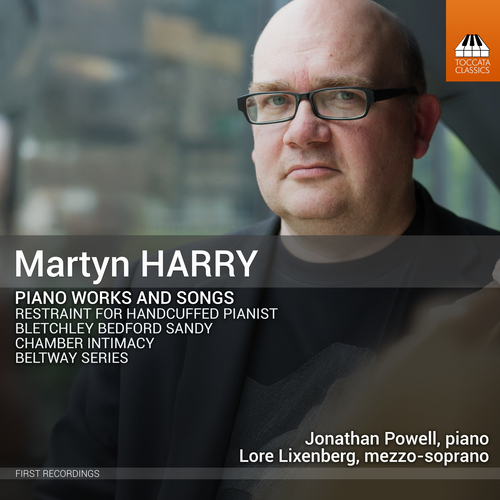
Baseball, Bach, a disused railway line and the use of music to torture prisoners might be unexpected inspirations behind the work of a composer who is an Oxford professor by day. But the piano music of Martyn Harry – born in Crawley, West Sussex, in 1964 – proves to be a wild, kaleidoscopic mix of just such unlikely influences: Satie, Sorabji, American minimalism, Prokofiev, Silvestrov and more, all intended to exercise the technique of his good friend, the fireball pianist Jonathan Powell, whose early death in December 2025 shocked the musical world. There is a gleeful, almost manic quality to much of this music that found a counterpart in the unflagging energy of Powell’s playing. A song-cycle setting six early Anna Akhmatova poems likewise taps into the tension she found in intimacy, releasing a surprising degree of passion.
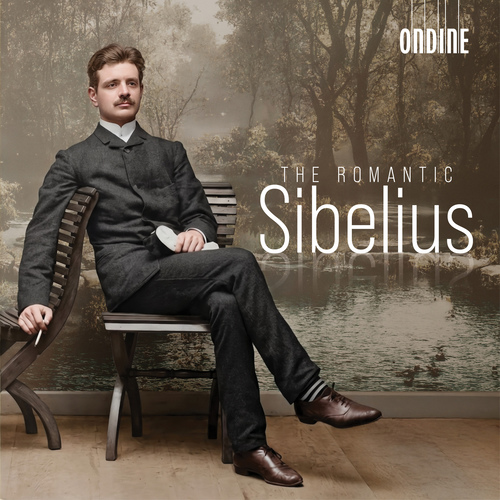
This digital compilation contains 2.5 hours of some of Jean Sibelius’ most Romantic music. At his core Sibelius always remained a true Romantic. This is particularly visible in his earliest works marked by the National Romantic movement, including his first symphonic creations, such as the Kullervo and Symphony No. 1, as well as the Violin Concerto. Although Sibelius gradually was compelled to turn into a more Classical idiom in his art, he always maintained a special affection to his early youthful works which have continuously enjoyed a particular popularity from the audiences all around the world.
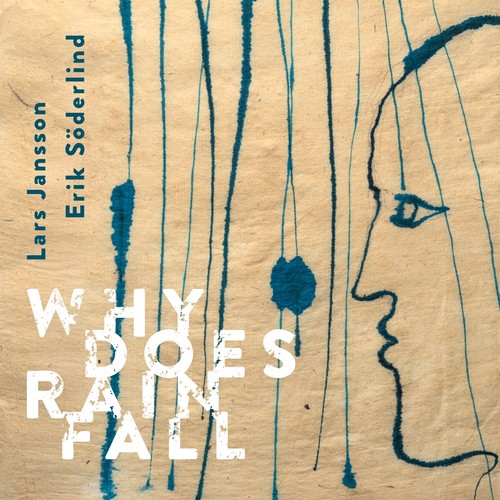
Pianist Lars Jansson and guitarist Erik Söderlind have over the years developed an intuitive interplay and a shared melodic language where various “musical moments” have now culminated in thirteen original compositions that form a cohesive whole. The full spectrum is here: from hard-swinging bebop to romance and melancholy.
Those who have followed both Lars and Erik Söderlind over the years can also note that Lars Jansson has to some extent taken over the mentor role that the legendary Kjell Öhman previously held for Erik Söderlind. At the same time, Erik Söderlind himself has in recent years become both a mentor and role model for many young jazz musicians. This also seems to have led to a more mature and contemplative tone in his previously so acclaimed guitar playing.
“Jazz Professor” Lars Jansson has long been a significant educator who moves confidently on the international jazz scene and has, among other things, a large audience in Japan. In 2022, he was awarded the Royal Swedish Academy of Music’s Grand Prize for Jazz for his contributions.
![MOZART, W.A.: Così fan tutte [Opera] (Vienna State Opera, 2024)](https://cdn.naxos.com/sharedfiles/images/cds/hires/770908.jpg "MOZART, W.A.: Così fan tutte [Opera] (Vienna State Opera, 2024)")
Barrie Kosky concludes his Da Ponte cycle at the Wiener Staatsoper with Mozart’s Così fan tutte, creating “a world sensation in the opera universe” (Klassik-Begeistert). Christopher Maltman’s Don Alfonso becomes a director rehearsing a play with two young couples – Federica Lombardi and Peter Kellner (Fiordiligi and Guglielmo), Emily D’Angelo and Filipe Manu (Dorabella and Ferrando) – and, with Kate Lindsey’s Despina, sets out to prove women’s infidelity. “The individual voices are outstanding, and the ensemble homogeneity even more so” (Frankfurter Rundschau). Philippe Jordan conducts from the fortepiano, balancing “classical beauty and vibrancy” (Kleine Zeitung).
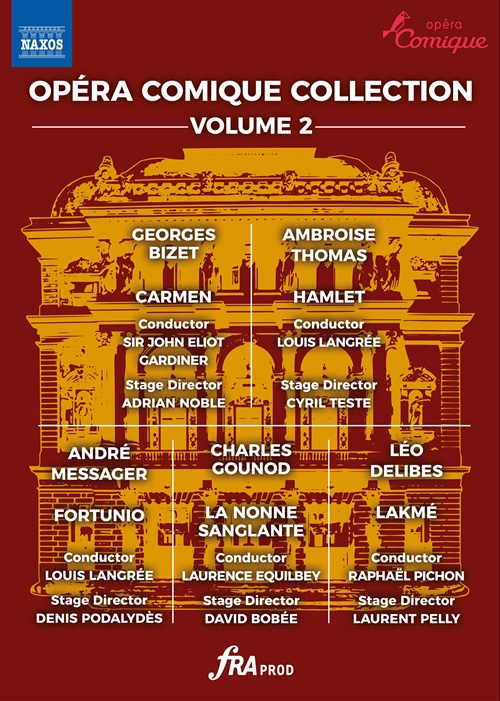
The Opéra Comique in Paris has a long tradition of giving stylish performances dating back to the 18th century. Five imaginative and critically acclaimed productions are featured in this collection of French operatic masterpieces. Bizet’s Carmen, which received its premiere at the Opéra Comique in 1875, is performed on period instruments conducted by Sir John Eliot Gardiner. Ambroise Thomas’s Hamlet features the stellar French baritone Stéphane Degout in the title role. Messager exemplifies the spirit of La Belle Époch in Fortunio; Gounod fuses Romanticism with the supernatural in La Nonne sanglante; and the outstanding French soprano Sabine Devieilhe takes the lead role in Delibes’s tragic tale of passion and loyalty, Lakmé – one of the jewels of the Opéra Comique.
![WHEELDON, C.: Ballet to Broadway – Fool’s Paradise • The Two of Us • Us • An American in Paris [Ballets] (Royal Ballet, 2025)](https://cdn.naxos.com/sharedfiles/images/cds/hires/OA1397D.jpg "WHEELDON, C.: Ballet to Broadway – Fool’s Paradise • The Two of Us • Us • An American in Paris [Ballets] (Royal Ballet, 2025)")
Sensuous contemporary ballet meets the energy of musical theatre in four distinctive short works showcasing the extraordinary versatility of The Royal Ballet’s Artistic Associate, Christopher Wheeldon.
His hugely successful career, spanning ballet to musical theatre from London to New York and beyond, has garnered international acclaim. These exceptional pieces – Fool’s Paradise, The Two of Us, Us and An American in Paris – are a feast for the senses highlighting the Tony- and Olivier-award winning choreographer’s remarkable range. This collection is a testament to Wheeldon’s diverse expression and creativity.
Make sure to subscribe to Naxos newsletters for other great offers.