
 Translate































In addition to its own wide-reaching monthly new releases, Naxos also distributes several leading labels in many countries around the world. Here is a choice selection of recent releases from some of these distributed labels.

BR-Klassik is the label of the Bavarian Radio Symphony Orchestra (Symphonieorchester des Bayerische Rundfunk), Bavarian Radio Chorus, and the Munich Radio Orchestra (Münchner Rundfunkorchester), devoted to making performances of its symphony orchestra more widely available. The orchestra’s high standards are well represented on recordings of excellent quality.
![PARAĆ, F.: Judita [Opera]](https://cdn.naxos.com/sharedfiles/images/cds/hires/900357.jpg "PARAĆ, F.: Judita [Opera]")
WORLD PREMIERE RECORDING
This two-act, seven-scene opera is about the siege of a city by brutal foreign invaders. The biblical story of Judith, who liberates her homeland of Bethulia from its Assyrian occupiers by killing Holofernes, certainly has parallels with Croatian history, particularly that of the city of Split. From the mid-15th century onwards, the country repeatedly fought against incursions by the Ottoman Empire – and Split in Dalmatia was particularly vulnerable to the attacks of the Turks, who advanced to its gates. The poet Marko Marulić (1450–1524) alludes to these events in allegorical form in his epic Judita, completed in 1501. One of the earliest poetic works in the Croatian language, it established Marulić’s reputation as the father of Croatian literature. To celebrate the 550th anniversary of the author’s birth in 2000, and in commemoration of the 1,700th anniversary of the foundation of Split, Frano Parać, a composer born in Split in 1948, chose the epic Judita as the basis for his first opera. It premiered on July 14, 2000 at the Croatian National Theatre in Split.
![MOZART, W.A.: Idomeneo, K. 366 [Opera]](https://cdn.naxos.com/sharedfiles/images/cds/hires/900215.jpg "MOZART, W.A.: Idomeneo, K. 366 [Opera]")
Idomeneo has long been one of Sir Simon Rattle’s favourite works, and with good reason. Mozart’s dramma per musica from 1781 completely revitalised the opera seria genre, which had previously been considered outmoded. It opens the series of operas from the composer’s mature period. For this commissioned work for the excellent ensemble of the Munich Residenztheater, Mozart had unlimited musical resources at his disposal. It was his most extensive and ambitious stage work to date, featuring demanding arias, differentiated role portraits, a virtuoso orchestral part and several large choral scenes that rank among the most impressive in his oeuvre.
Mozart’s first great opera gave Simon Rattle the opportunity to work intensively with the Chorus immediately after taking up his position as the new Chief Conductor of the Bavarian Radio Chorus and Symphony Orchestra in the autumn of 2023, further deepening his interest in historical performance practice in Munich. He was supported by an exceptional cast of singers, including British tenor Andrew Staples in the challenging title role, soprano Sabine Devieilhe and mezzo-soprano Magdalena Kožená as the tender lovers Ilia and Idamante, soprano Elsa Dreisig as the envious and distraught Elettra, and several other soloists and choral soloists. In this recording, Howard Arman directs the Bavarian Radio Chorus, and Simon Rattle conducts the Bavarian Radio Symphony Orchestra.
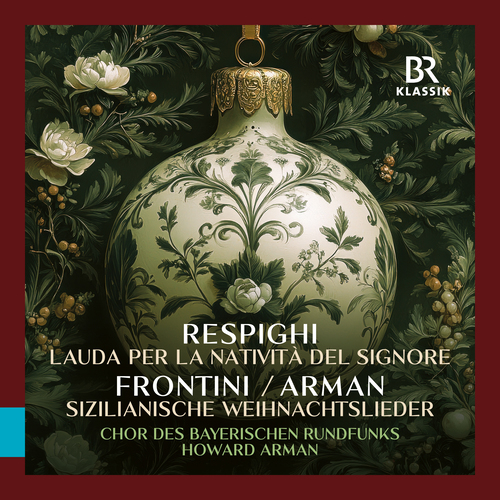
With his Lauda per la natività del Signore, Ottorino Respighi modernised the medieval nativity play of the same name by the religious lyricist Jacopone da Todi. He had already explored art forms of the past in adaptations of early music, re-creations and free works based on Gregorian chants. In this piece, he assigned the medieval verses to three soloists – the angel (soprano), the Virgin Mary (alto), and the shepherd (tenor) – as well as a chamber choir. Accompanied by selected woodwind instruments reminiscent of the music of Italian shepherds, and by four-handed piano and triangle, the miracle of Christmas is brought to life in a simple yet impressive way.
Francesco Paolo Frontini is remembered less for his compositions than for his many collections of Sicilian folk songs. From his Canti religiosi del popolo siciliano (Religious Songs of the Sicilian People, published in 1938), a collection of 22 songs for voice and piano underlaid with Sicilian dialect verses and their Italian translations, Howard Arman selected eight songs and arranged them for choir and instruments.
Like Frontini, who already included regional variants from Catania, Palermo, and other parts of the Mediterranean island, Arman also arranged different regional versions of two songs. The melody of the Italian Marian carol O sanctissima, which is one of the most popular Christmas carols in German-speaking countries with its opening verse O du fröhliche, could possibly also have originated from Sicily. The arrangement is once again by Howard Arman.
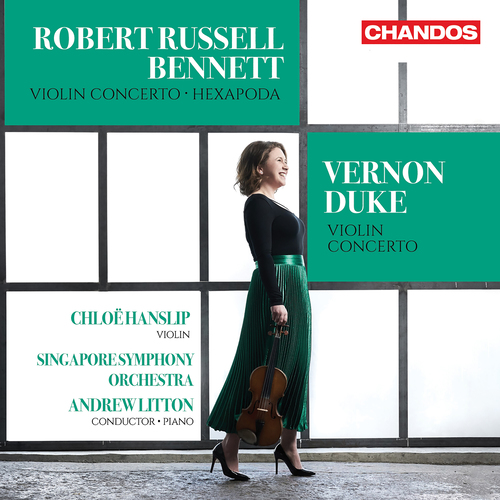
Both these violin concertos have been long-neglected for the same reason: their composers were much better-known for their achievements in musical theatre rather than for their works for the concert hall. Robert Russell Bennett studied composition in Paris with Nadia Boulanger, and his output includes seven symphonies. He also orchestrated some of the highest-profile musicals in Broadway history, including works by George Gershwin, Cole Porter, and Rodgers and Hammerstein. (Richard Rodgers modestly claimed that Bennett’s skills in instrumentation had made his music ‘sound better than it was’.) Vladimir Alexandrovich Dukelsky changed his name to Vernon Duke at the suggestion of his friend Jacob Gershovitz – better known as George Gershwin. Duke received a rigorous training in classical music at the Kyiv Conservatory, was friends with Prokofiev, and composed ballet scores for Sergei Diaghilev’s Ballets russes, in Paris, as well as three symphonies. He remains better known as the creator of hit shows, such as Cabin in the Sky, and as the composer of numerous songs that became jazz standards, including April in Paris. Chloë Hanslip, Andrew Litton, and the Singapore Symphony Orchestra play both concertos with aplomb, and Andrew Litton also performs as pianist in Bennett’s Hexapoda, for violin and piano.
DIGITAL EXCLUSIVE
This release, featuring Austrian composer Bernd Richard Deutsch’s (born 1977) monumental four-movement work ‘Okeanos’ for organ and orchestra (2014/15), marks the 10th anniversary of the world premiere at the Vienna Musikverein with Wolfgang Kogert as soloist on the new Rieger organ in the famous Golden Hall and the ORF Vienna Radio Symphony Orchestra conducted by Stefan Asbury.
In the unique acoustics of the Vienna Musikverein, the concert thrilled audiences and critics alike: ‘Everything is brought into a captivating dramaturgy, in which melodic particles and complex rhythms, virtuoso passages, roaring chords and transparent chamber music dialogues interlock logically, as in a well-oiled gear train, despite all the surprises in detail.’ (Die Presse)
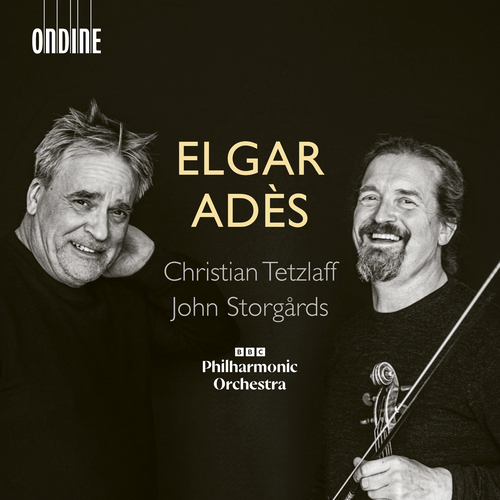
Star-violinist Christian Tetzlaff, the BBC Philharmonic Orchestra and conductor John Storgårds present two major British violin concertos written between 1910 and 2005. Elgar’s passionate violin concerto, completed in 1910, is a classical-romantic violin concerto in three movements. This huge and highly emotional work was in the wake of modernism neglected for several decades before entering into standard concerto repertoire. Here Christian Tetzlaff follows the model of the early recordings of Elgar’s concerto with substantially quicker tempos compared to most modern recordings, and having a great influence on the impact of the piece. Adès’ violin concerto ‘Concentric Paths’, is already a modern classic and no doubt one of the most important concertos written during this century. With its very demanding violin part the work has all the elements of a true concerto, allowing the soloist to sing with his instrument.
The popularity of Mozart’s Eine kleine Nachtmusik is a testament to the work’s unique elegance and refinement, maintaining its status as one of the most popular pieces in the classical canon. The transformational skills that resulted in this masterpiece have their roots in Mozart’s adolescent travels where he assimilated various musical traditions. Also featured are the three delightfully original Divertimenti, K. 136–38, which are a celebration of Mozart’s experiences in Italy and a prelude to the musical treasures to follow.
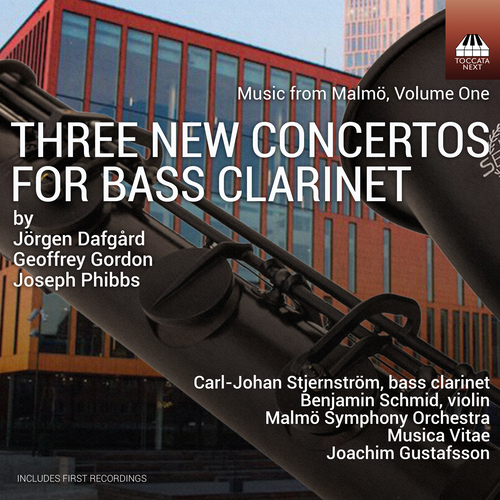
Concertos for bass clarinet are rare enough; this album brings three new ones to swell those limited ranks. It presents the fruit of a series of interlocking international co-operations, between orchestras in Sweden, the UK and USA, with American, British and Swedish composers and, at the heart of the undertaking, the bass clarinettist of the Malmö Symphony Orchestra, Carl-Johan Stjernström. All three composers exploit the huge range of colours the bass clarinet can offer, in music that ranges from the fierce and dramatic to the sunny and easy-going. The album also inaugurates a Toccata Next series providing a platform for the musicians of the Malmö Symphony Orchestra.
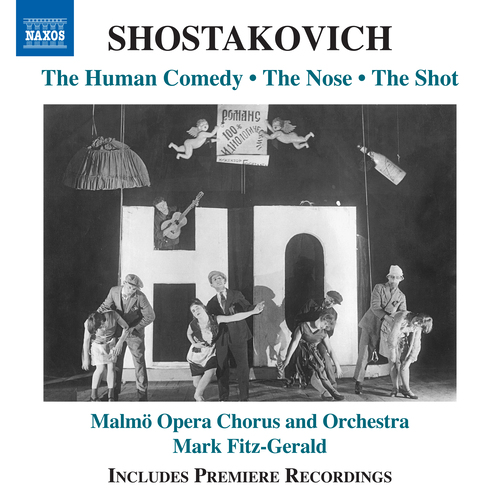
Shostakovich was known for his fun-loving attitude during his early years as a composer. The colourful incidental music for The Shot – reconstructed by Mark Fitz-Gerald from the original piano scores – vividly evokes the raucous life of experimental youth theatre in Leningrad during the late 1920s. This carefree world had changed dramatically by 1934 when Shostakovich completed his music for The Human Comedy – a work that creates a charming atmosphere of Parisian escapism. Discarded movements from his first opera The Nose form an entire orchestral suite. The programme concludes with Mark Fitz-Gerald’s reconstruction of the March of the Anarchists, transcribed by ear from the film The Vyborg Side.
![CARRARA, C.: Voci da Hebron [Opera]](https://cdn.naxos.com/sharedfiles/images/cds/hires/8.660603.jpg "CARRARA, C.: Voci da Hebron [Opera]")
Cristian Carrara is one of the most original Italian composers of his generation. The opera Voci da Hebron (‘Voices from Hebron’) is set during the Israeli-Palestinian conflict. Carrara’s expressive depiction of this scenario is one in which fear, anger and incomprehension sit side-by-side with the need for communication, at a time when dialogue is difficult and peace is, at times, a mirage. This land that is home to grief and misunderstanding is also a place in which love can survive and ultimately flourish.
Christmas is a time of music and togetherness. With warmth, intimacy, and distinct roots in Nordic folk traditions, Dybfølt reimagines beloved songs of the season – from Danish classics to Nordic treasures – where winter’s quiet reflection meets the vibrant spirit of folk music.
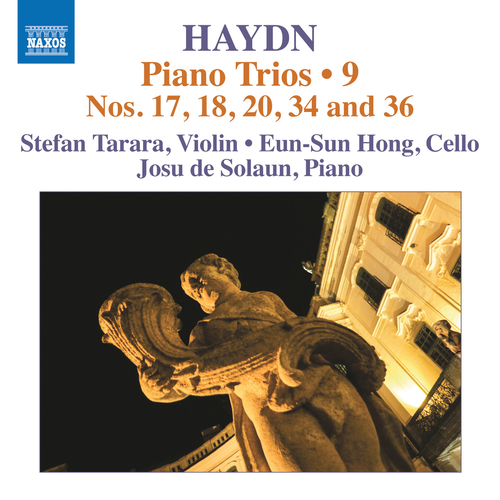
Haydn’s Piano Trios were intended for domestic use but the composer was typically inventive in subverting expected norms, bringing striking changes of mood, the use of unusual keys, and rich ornamentation to the supposedly placid world of the trio. Haydn also had a fondness for dance patterns, as his use of the polonaise in this volume shows; and he exploits the technical prowess of his pianist dedicatee, Maria Theresa née Hohenfeld, Dowager Princess Esterházy in Trio No. 20 in B flat major. The Trios are played by the three First Prize winners of the prestigious Enescu Competition (Bucharest, 2014) who bring a fusion of historical insight and Romantic sensibility that offers a fresh perspective on Haydn.
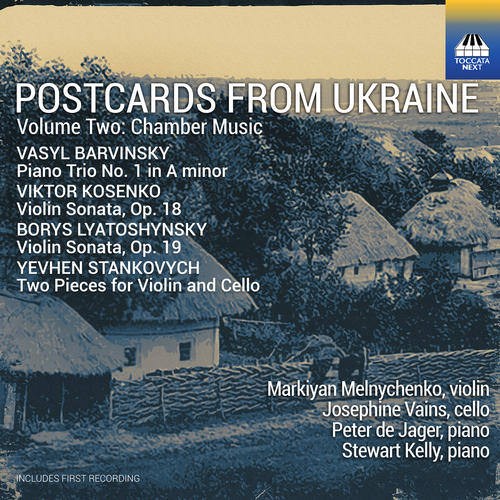
The first album of Postcards from Ukraine gave a potted history of Ukrainian music in the form of a series of miniatures for piano and violin. In this second instalment four representative chamber works demonstrate how quickly music in Ukraine developed its own identity – although all four composers here had to contend with repression by the authoritarian regime to the north. One of them, Vasyl Barvinsky, even spent ten years in the Gulag, with his manuscripts destroyed by the Soviet authorities. Upon his release, unbowed, he set about reconstructing those lost scores, though he died before he could complete the task. His glorious A minor Piano Trio gives an indication of what was nearly lost – and how much remains to be discovered.
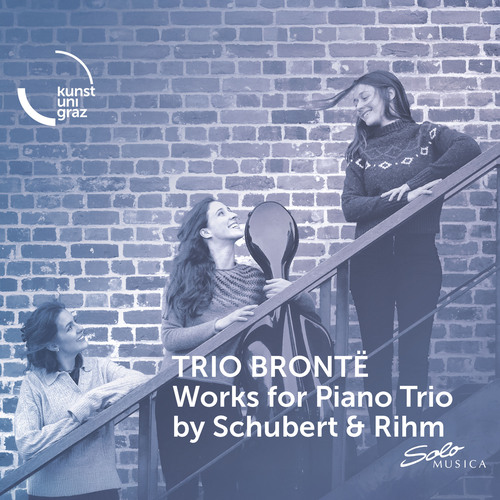
This album is the result of the 12th International Competition ‘Franz Schubert and Modern Music’ (FS&MM), which took place in February 2025 and was organised by the University of Music and Performing Arts Graz. The Trio Brontë won 1st prize in the piano trio category with the repertoire on the recording. The Trio was founded in Berlin in 2022 and consists of German-Italian violinist Chiara Sannicandro, Bulgarian pianist Lili Bogdanova, and American cellist Annie Jacobs-Perkins. After playing together for only a few months, the Trio Brontë won 1st prize at the 2023 Ilmari Hannikainen International Piano Chamber Music Competition in Finland. The trio grew up surrounded by the passionate and turbulent novels of the Brontë sisters and named themselves after them, inspired by their passion for storytelling, their intelligence and their sociability.

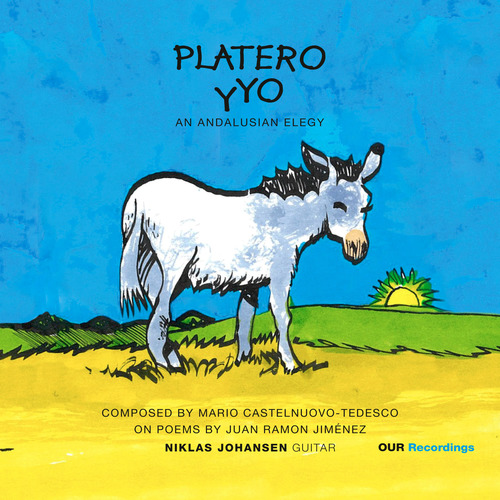
Mario Castelnuovo-Tedesco’s 36-year collaboration with the legendary guitarist Andrés Segovia resulted in 35 works featuring the guitar, including three concertos several large cycles and numerous shorter pieces. Castelnuovo-Tedesco first met Segovia at a festival in Venice in 1932 and composed a new work for the legendary guitarist almost every year afterwards. Among the towering masterpieces in guitar literature is Castelnuovo-Tedesco’s Platero y Yo (Platero and I), a cycle of consisting of 28 settings, arranged into four groups of seven-movement suites with a total playing time of one hour and 49 minutes. Originally conceived as an accompaniment for a recitation of selections from the Nobel Prize-winning Catalan poet Juan Ramon Jiménez’s collection of poetic sketches of the same name, the composer gave his permission for the work to be performed without spoken text, which is how it is performed here. You can read Jiménez’s texts in English translation while listening to the music and enjoying the wonderful illustrations for each movement by the award-winning artist Halfdan Pisket especially commissioned for this recording.
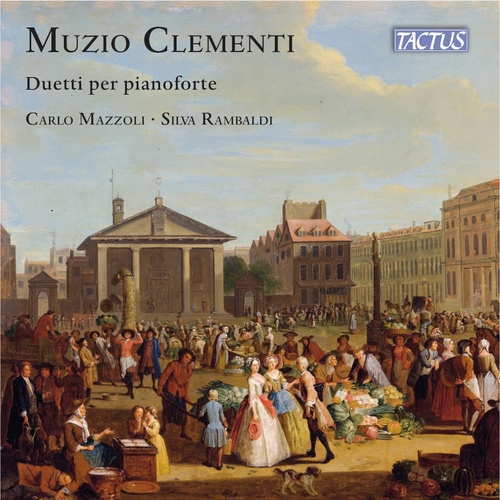
Carlo Mazzoli and Silvia Rambaldi are passionate scholars of historical instruments and early music performance practice who taught for many years at the Conservatorio ‘G.B. Martini’ in Bologna—specifically in Piano and Harpsichord—where they developed numerous teaching and concert projects. They have worked closely with Maestro Luigi Ferdinando Tagliavini, collaborating extensively in the activities of the San Colombano Museum in Bologna, which has housed his collection of historical instruments since 2010. Both appear in performances, solo and as a duo, on the DVD Il vibrar dell’aria dedicated to the Museum. Their study of Clementi’s duo works began with performances on these ancient instruments, leading to this first complete recording.
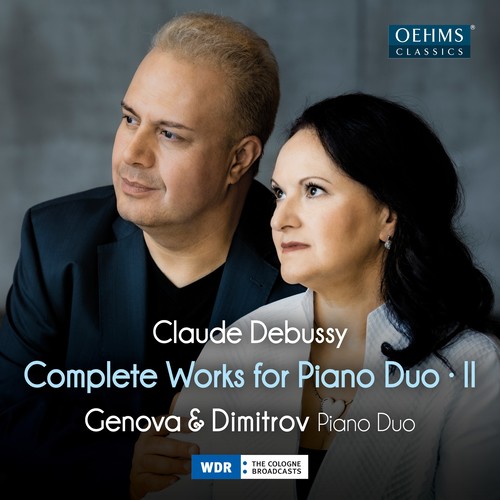
Celebrating their 30th anniversary in 2025, the renowned Genova & Dimitrov Piano Duo has been honoured with numerous international awards and acclaim for their recordings. Making their debut appearance on the OehmsClassics label, they continue with the second instalment of their 3-volume series of Debussy’s complete works for piano duo. The programme includes both familiar and lesser-known pieces, some of which are versions of orchestral works, such as the famous La Mer. The recording was made in co-operation with the WDR broadcasting company.
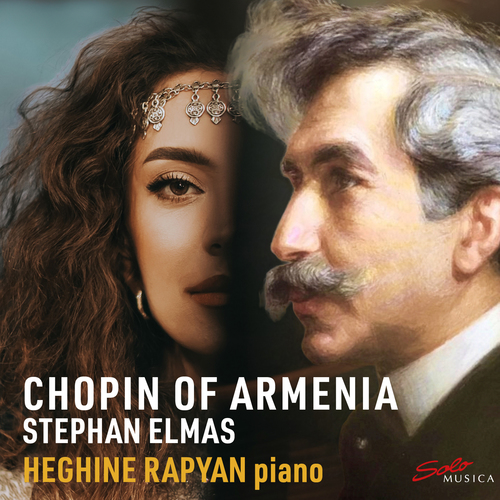
DIGITAL EXCLUSIVE
In 2023, Armenian pianist Heghine Rapyan released her debut album featuring the complete piano sonatas of Stephan Elmas—a world premiere recording. International press and critics immediately embraced this beautiful, long-overlooked music. Often called the ‘Chopin of Armenia,’ Stephan Elmas deserved this renewed attention.
With her second recording, Rapyan continues her mission with dedication: illuminating Elmas’s legacy as a true Romantic composer in Chopin’s tradition. This album showcases musical genres Frédéric Chopin treasured—mazurkas, waltzes, scherzos, preludes, nocturnes, and a polonaise. While these works echo Chopin’s poetic spirit, they pulse with Stephan Elmas’s unique voice and emotional intensity.
Several pieces receive their first performance and recording here. Working on this hidden gem of musical literature brought Rapyan immense joy—a true voyage of discovery where she experienced the excitement of revealing a forgotten voice from the Romantic era.
Syv billedsange om Teresa af Avila (‘Seven Picture Songs about Teresa of Avila’) (1980–81) is one of the last major works composed by Else Marie Pade before a long hiatus in her musical practice. The work is a religious piece centred on the Spanish nun Teresa de Cepeda (1515–1610) and is intended for ‘mimetic staging’ in a church setting.
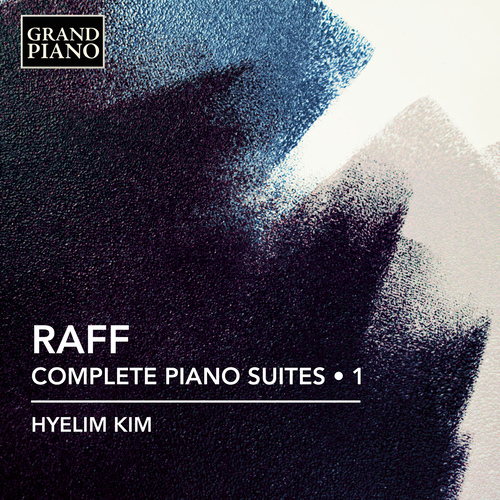
Joachim Raff was a largely self-taught composer whose style stands somewhere between the German traditionalism of Schumann and the newer school of Wagner. Raff composed seven Suites for Piano, a form he preferred to the sonata, and this provided him with greater freedom as a composer, resulting in his most substantial contribution to the piano literature. This is reflected in the Mendelssohn-like lyricism of the First Suite; contrasts between Baroque and Romantic styles in the Third Suite, a piece admired by Liszt; and more nationalist inclinations in the memorably melodic Fifth Suite.
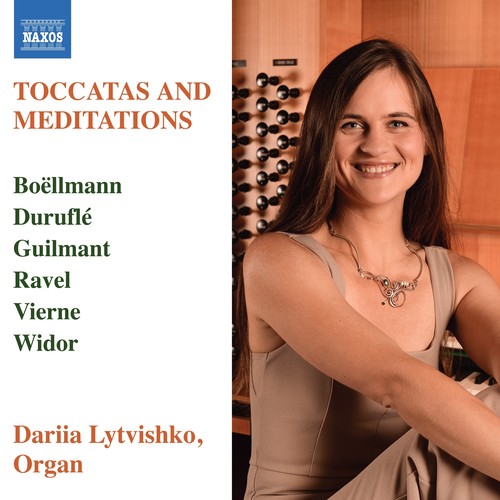
The illustrious French organ tradition is celebrated in this album of Toccatas and Méditations, including masterpieces drawn from across the repertoire. Charles-Marie Widor was the founding father of the French Organ School, and his Toccata from Symphony No. 5 is a cornerstone of the organ repertoire. The Méditation by his contemporary Louis Vierne is among the highlights of Romantic organ works. Duruflé, Boëllmann and Guilmant are also represented, as is a beautiful Ravel arrangement. They’re played on the magnificent Grenzing organ at Bauernkirche Iserlohn by Dariia Lytvishko – a Ukrainian-born virtuoso and one of the most lavishly gifted organists of her generation.
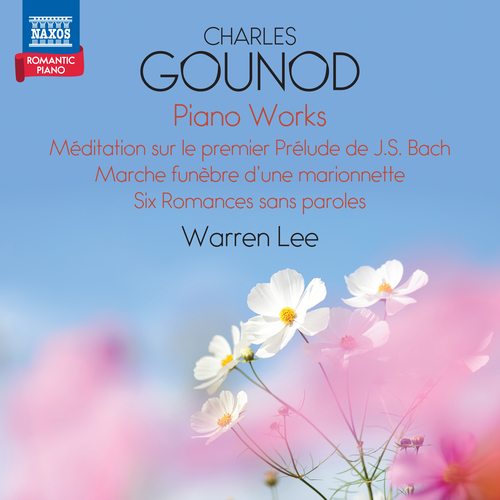
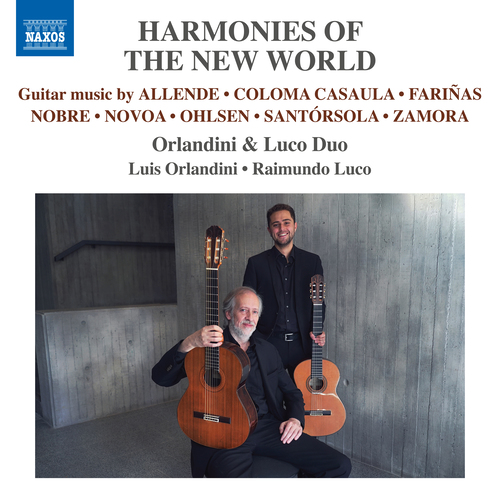

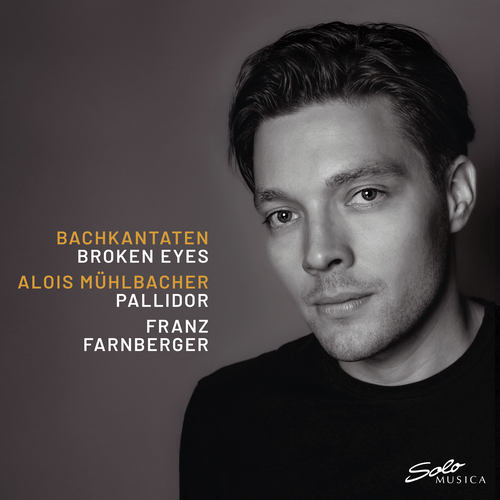
The use of boys’ voices in Bach’s sacred works extends beyond historical authenticity. Just before their voices change, well-trained boy singers possess a captivating tonal perfection—both mysterious and fragile—that carries vulnerability and the shadow of imminent farewell. This sense of approaching transition was particularly evident in Alois Mühlbacher. Even as a child, he gained international recognition as an exceptional talent. His extraordinary boy soprano voice lives on in numerous recordings—not only in Baroque music but also in art songs, where he interpreted works by Gustav Mahler and Richard Strauss with remarkable musical maturity. His transition into a new vocal realm happened so seamlessly that he retained much of his boyhood voice’s magic: the emotional depth, the fragility—now paired with newly refined technical mastery. Unlike adult professional singers, boy choristers have little time to develop routine. They often experience the great masterpieces of music history only once or twice as performers. Their interpretations radiate the freshness and uniqueness of a first encounter. At the time of this recording, 28-year-old Alois Mühlbacher had already performed more concerts than perhaps anyone his age. Yet the spontaneity, curiosity, and spirit of musical adventure from his boyhood never left him. That may well be what makes him an ideal interpreter of Johann Sebastian Bach’s music.
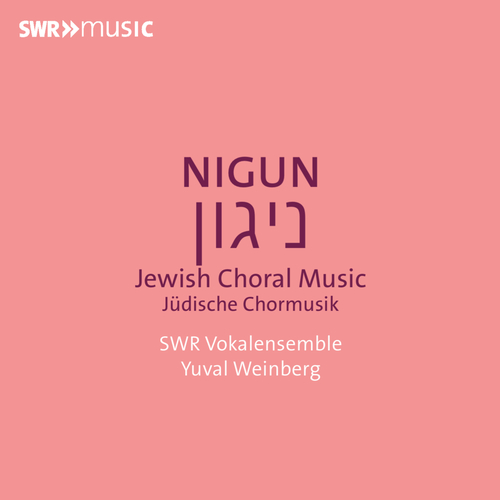
In 1955, the conductor Gary Bertini founded the Rinat Choir and thus established professional choral music in Israel. The founding of the Rinat had a significant influence on the development of the Israeli choral scene; the choir was finally named the national choir in 1972. Psalms, verses and hymns were set to music for the Rinat Choir by the country’s leading composers and transformed into extensive Hebrew motets and oratorios.
The founding generation of Israeli music consisted of outstanding professional musicians who were born in Europe around the turn of the century. Although these composers came predominantly from Germany, Eastern Europe and Russia, their sources of inspiration can by no means be reduced to the music of their respective countries of origin. On the contrary: what united many of these composers was their fascination with the traditional music of the Jews, especially of Sephardic, Persian and Yemenite origin, and with the music of the Arabs they encountered in Palestine.
The next generation of Israeli composers were not necessarily born in Israel either, but were strongly influenced musically by this country from the very beginning. In the 1960s and 70s, this generation disseminated their inspirational sources and borrowed from contemporary styles that they had become familiar with during their studies in Europe and the USA. While some representatives of this generation carried on the tradition of the founding generation, other composers introduced current developments in the musical world into the Israeli art music of their time. The pool of influences was also expanded to include American composers such as Aaron Copland, George Gershwin, John Cage and Lukas Foss.
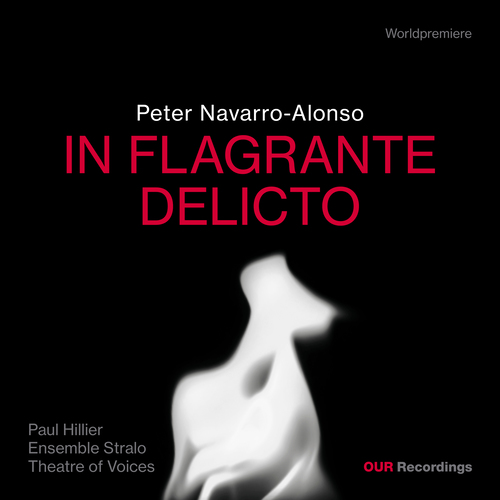
Carlo Gesualdo da Venosa (c. 1561–1613) was a Renaissance composer known for both his groundbreaking music and the infamous murder of his wife and her lover. While historical records about his personality are limited and contradictory, his music, especially his 104 madrigals, is notable for its bold harmonic experimentation, centuries ahead of its time. Composer Peter Navarro-Alonso, long fascinated by Gesualdo, created the hour-long piece In flagrante delicto in collaboration with violinist Christina Åstrand and conductor Paul Hillier. The composition explores the darkness of Gesualdo’s psyche through musical quotations and has been performed and recorded by Ensemble Stralo and Theatre of Voices.
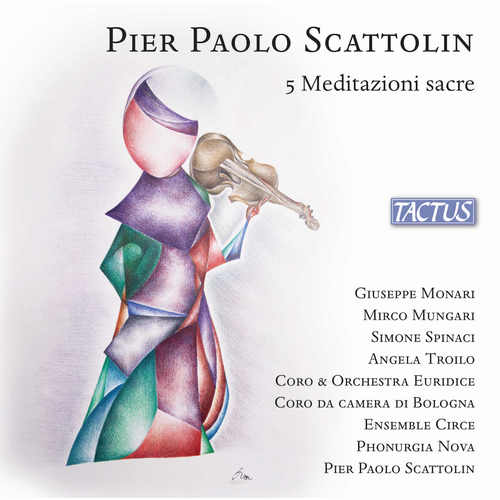
Pier Paolo Scattolin’s eclectic compositional style, developed alongside his dedicated work as a choir conductor, reaches an important milestone with this sacred and spiritual album—a departure from his 2021 release Suoni e rime sparse, which centered on secular poetic themes. Sacred subjects, both historical and original, form the foundation of these five meditations, featuring diverse instruments and ensembles enhanced by distinctive timbral elements like harmonic singing and Tibetan bells. The Euridice Choir of Bologna, in its various configurations, leads the vocal performances, joined by the Circe ensemble and exceptional soloists for whom the composer creates premieres in both recordings and concerts.
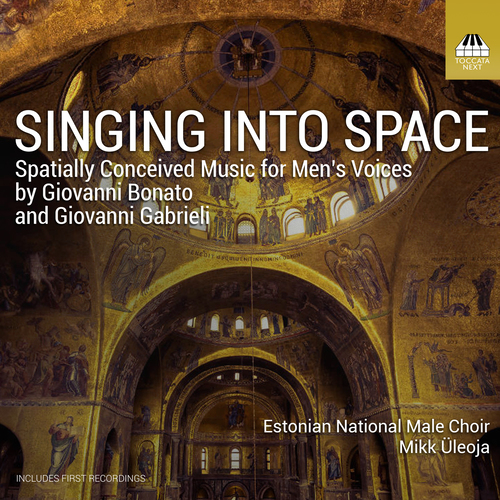
The two composers heard on this album, Giovanni Gabrieli (1553–1612) and Giovanni Bonato (born in 1961) have more in common than their first names: both hail from the Veneto in north-east Italy – there is no documentation of Gabrieli’s birth, but he was probably Venetian, and Bonato was born in nearby Schio. Their music, too, is conceived in terms of its sound in space, with Gabrieli using the cori spezzati that sang from the opposing galleries of St Mark’s Basilica in Venice, and Bonato employing cori spazzializati to build a spatial dimension into the music itself. Juxtaposed, their styles offer a striking contrast, with Gabrieli’s bold declamations set against Bonato’s shifting, timeless suspensions.
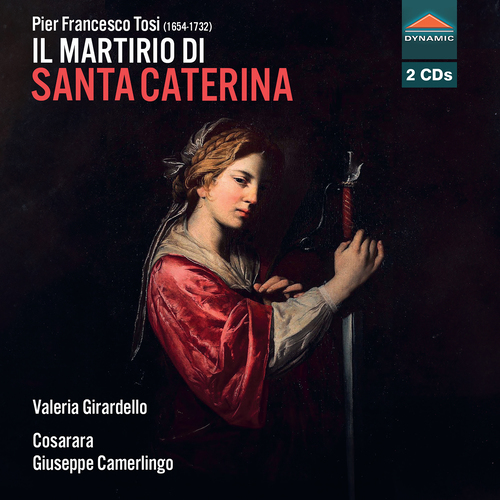
Il martirio di Santa Caterina by castrato singer, composer and writer Pier Francesco Tosi is a fine example of the rich tradition of late-Baroque oratorio. It is the embodiment of Tosi’s famous treatise on a vocal style that emphasised expressive authenticity over virtuoso display. This story of the martyrdom of Catherine of Alexandria for refusing to convert to paganism is filled with deeply poignant music that depicts her prodigious inner strength, representing the power of faith through grief, courage, compassion, and admiration for the fortitude of others.
![The Treasury of Danish Song [18-disc boxed set]](https://cdn.naxos.com/sharedfiles/images/naxos-images/2025/oct/8.501805_3d_front.png "The Treasury of Danish Song [18-disc boxed set]")
This encyclopaedic survey represents Bo Holten and Musica Ficta’s 25-year odyssey to collate and record the magnificent wealth of Danish part-songs. The project began in 1996 to much acclaim – Gramophone wrote: ‘Musica Ficta cannot put a foot wrong’ – and since then they have continued to earn admiration as one of the finest vocal ensembles in Europe. Stretching back to the glories of the Middle Ages and forwards to today’s leading Danish composers, these recordings encompass the Romantic era as well as traditional songs, motets, folk songs, Christmas hymns and carols, children’s songs and the great contributions of Carl Nielsen and Thomas Laub, to form a cornerstone collection of Danish song.
![WEILL, K.: Love Life [Vaudeville]](https://cdn.naxos.com/sharedfiles/images/cds/hires/C5550.jpg "WEILL, K.: Love Life [Vaudeville]")
As a concept musical, Love Life was a real trailblazer, inspiring musical theatre favourites of the 1960s, 70s and beyond from Cabaret and Chicago (originally subtitled ‘A Musical Vaudeville’) to Sondheim’s Company (told through a series of vignettes). It is ‘one of Weill’s best scores’ (conductor Jim Holmes), a masterpiece of putting different musical styles together, ‘a compendium of American musical idioms, cunningly chosen so that they suit the dramatic material’. Kurt Weill and Alan Jay Lerner teamed up in 1947, both riding high on recent successes (Street Scene for Weill, Brigadoon for Lerner) and looking for new projects. When Love Life premiered on Broadway in 1948, Weill called it ‘an entirely new form of theatre.’ Stephen Sondheim denoted it as ‘a useful influence on my own work.’
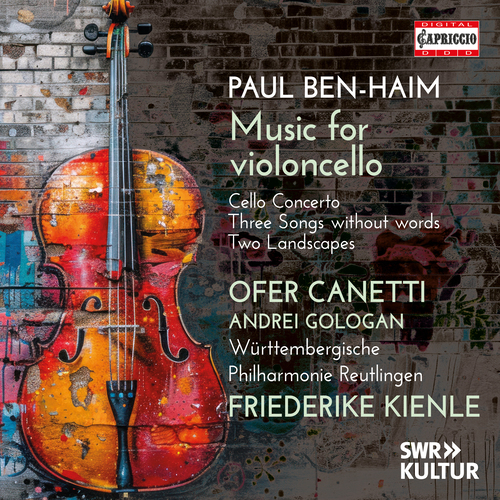
Paul Ben-Haim, one of the leading Israeli composers of his generation, was born Paul Frankenburger in Munich. He studied composition with Friedrich Klose and served as assistant conductor to both Bruno Walter and Hans Knappertsbusch. His extensive output comprises works in all the principal genres, apart from opera, and music either for or with cello features prominently throughout. After he emigrated, Ben-Haim increasingly advocated a specifically Jewish national expression; his own compositions favoured a late-Romantic vein suggestive of Ernest Bloch and were frequently informed by Middle-Eastern overtones.
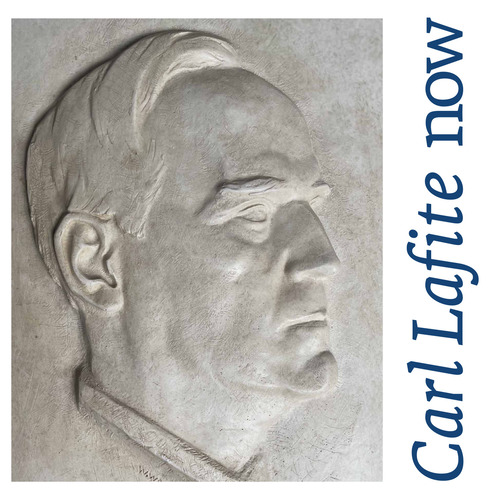
The Viennese all-rounder Carl Lafite composed in a tonally expanded language, music from the first half of the 20th century that is now part of European cultural heritage.
![SŌ PERCUSSION: 25x25 [8-disc boxed set]](https://cdn.naxos.com/sharedfiles/images/cds/hires/CA-21210.jpg "SŌ PERCUSSION: 25x25 [8-disc boxed set]")
In celebration of their 25th year together as one of the most adventurous and influential percussion ensembles in contemporary music, Sō Percussion announces the release of 25x25. In keeping with the group’s forward-looking mission, this 8-disc box set is not a retrospective; more characteristically, it’s a stand-alone listening experience, featuring more than 8 hours of entirely new and previously unreleased recordings, with each piece written for, in collaboration with, and premiered by Sō Percussion. Over the last 25 years, the members of Sō – Jason Treuting, Adam Sliwinski, Josh Quillen, and Eric Cha-Beach – have been hailed for their gripping performances and wildly creative collaborations. Cantaloupe Music (the label launched by the Bang on a Can collective, which released Sō’s first-ever album in 2004), is pleased to offer this collection to longtime fans and newcomers alike. It’s both a comprehensive portrait and a forecasting of where contemporary chamber music is heading.
‘In the end, if the musicians have brought their hearts, souls, and years of mastery, if the recording team has entered into the space with wisdom, tools, patience and good will, if the executive producer is saying, “Sure, let’s book one more session to make this the very best it can possibly be” then the opportunity exists for the listener to hear it all — the breath, the intention, the ensemble, the soloist, the fingers on the strings, the air as it comes out of the recorder, the hands on the regulators of the uilleann pipes, the tipper as it touches the head of the bodhran, the rosin on the fiddle’s bow, and feathered end of the note on a viola da gamba. It is all there.’ – Carolyn Surrick
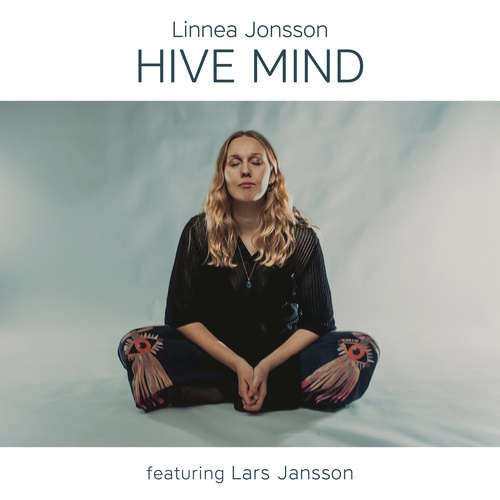
For over a century, the trumpet has carried voices that have reshaped the musical landscape. With Hive Mind, Linnea Jonsson steps into Swedish music history – not merely as a promise for the future, but as a luminous and unmistakable voice of our time.
Hive Mind is a story about reality as a perpetual cycle and our essential interdependence as human beings. Linnea Jonsson grips the listener’s arm firmly, unfolding the sonic landscapes of her acclaimed debut into a soundscape that reaches far beyond the boundaries of genre. The album captures a youthful Scandinavian melancholy yet also embracing the belief in collective consciousness and the transformative power of deep connection. ‘To me, Hive Mind isn’t just an album,’ Linnea says, ‘it’s an invitation into a musical space where the listener becomes part of something greater.’
With a compelling blend of understated strength and lyrical sensitivity, Linnea sits in the core of the collective, guiding both her fellow musicians and the listener with her warm, storytelling tone – raw yet refined. Her phrases flow, as if every note has its own breath, while she intuitively and playfully surprises and allows herself to be surprised.
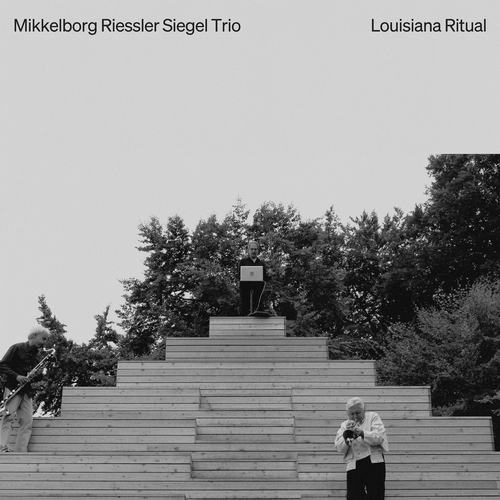
For a period of ten years, the trio Mikkelborg Riessler Siegel gathered for an annual summer ritual under open skies in the iconic sculpture park at Louisiana Museum of Modern Art. Here, a shared musical voice emerged, of electronic textures, new chamber music, and free improvisation, in a genre without a name, shaped by its surroundings and by time. This album brings together five works where the rhythms of nature, human fragility, and the presence of art merge into evocative sonic tableaus.
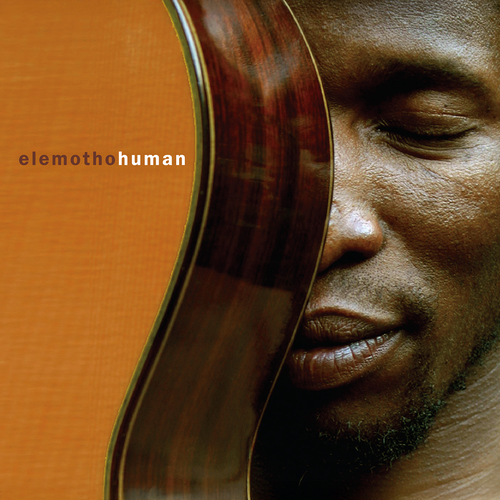
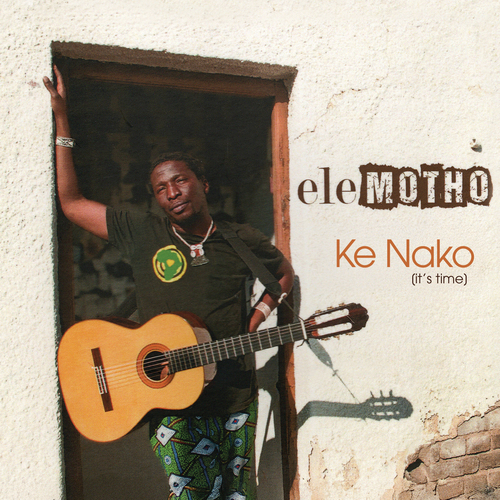
‘Appreciation goes to FNCC for their financial assistance on my second album and their commitment to the Namibian music scene. I cannot thank you enough! My nearest and dearest, you know who you are. To all friends and families who waited for this album, like they say in my mother tongue, Setwana, ‘rushing does not cook a proper dish’, so I hope your patience will be rewarded. PULA!!! And to all those whose names are not mentioned here, know that your efforts are acknowledged, and let’s hope that the path of life will lead us to a place where we can show that we are HUMAN, no higher, no lower; whether you are faster or slower, we are all V.I.P. (Very Interesting People).’ – Elemotho
![MOZART, W.A.: Le nozze di Figaro [Opera]](https://cdn.naxos.com/sharedfiles/images/cds/hires/769808.jpg "MOZART, W.A.: Le nozze di Figaro [Opera]")
Barrie Kosky, one of the most innovative opera directors of our time, creates a new interpretation of Mozart’s Le nozze di Figaro at the Vienna State Opera with a very young ensemble: Andrè Schuen and Hanna-Elisabeth Müller in the roles of Count and Countess Almaviva, Peter Kellner as Figaro, Patricia Nolz as Cherubino. Susanna’s role is interpreted by both Ying Fang (acting) and Maria Nazarova (singing), as Ying Fang could not sing due to a vocal cord illness. Philippe Jordan conducts the Orchestra of the Wiener Staatsoper and together they ‘deliver an ideal mixture of elegant lyricism and concentrated expression – each and every one’ (Wiener Zeitung) // ‘Beauty and pointedness are combined in the noblest way.’ (Der Standard) // ‘A triumph of Barrie Kosky’s directorial brilliance – hilarious yet deeply engaging and thought-provoking.’(klassik-begeistert.de)
Make sure to subscribe to Naxos newsletters for other great offers.