
 Translate
































In addition to its own wide-reaching monthly new releases, Naxos also distributes several leading labels in many countries around the world. Here is a choice selection of recent releases from some of these distributed labels.

For over two decades, Solo Musica has stood for the highest quality, personalised support and musical excellence. Founder and Managing Director Hubert Haas lives by the motto ‘Artist first’ with complete conviction. Under his leadership, Solo Musica creates musical projects characterised by meticulous planning and bespoke concepts.
For over 20 years, Solo Musica has provided an artistic home for soloists, ensembles and orchestras. Hubert Haas attaches particular importance to close, personal collaboration – from the initial idea right through to the finished production. The artists are involved throughout the entire creative process; their visions and aspirations form an essential part of every release.
Hubert Haas aims not only to support careers, but also to actively shape and sustainably foster them – always with a focus on authenticity and quality. This is also evident from this extract from the label’s impressive roster of artists: Marlis Petersen, Rafael Fingerlos, the St. Florianer Sängerknaben, the Munich Symphony Orchestra, the Casal Quartet, Reinhold Friedrich, Margarita Höhenrieder, Enjott Schneider and, most recently, CHAARTS Chamber Artists & Shira Patchornik.
The success of Hubert Haas and Solo Musica is evidenced by the awards they have received, including several ECHO Klassik and Opus Klassik prizes, and most recently the 2026 Opus Klassik for ‘Young Artist of the Year’ for Shira Patchornik, as well as numerous other accolades such as the German Record Critics’ Awards, the ‘Diapason d’Or’ and numerous ‘Supersonic Pizzicato’ awards.
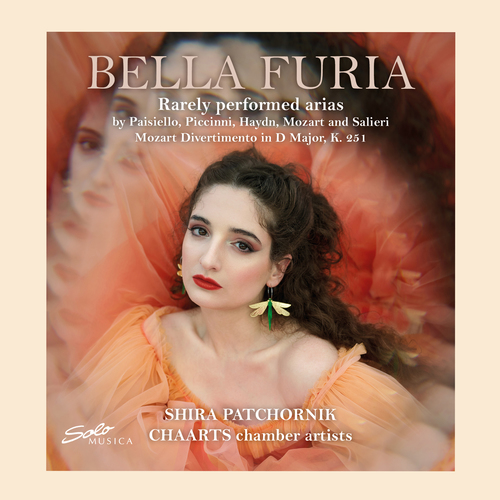
‘It is an attractive, truly enchanting program. Shira Patchornik makes excellent use of her agile, coquettish voice; she is a fine interpreter of both virtuoso and lyrical arias, with a good combination of lyricism, sparkling coloratura, power, and gentleness.’ – Pizzicato ★★★★
Opus Klassik 2026 “Young Artist of the Year” award winner soprano Shira Patchornik is a rising star on opera and concert stages. This release, which was previously available only digitally, is now being released on physical format as well.
Mozart’s aria ‘Al Desio di chi t’adora’ from Figaro is a song full of erotic tension addressed to her lover. And perhaps some are still familiar with Haydn’s ‘La vera Constanza’. The rest of this stimulating programme consists of discoveries and treasures from Italian opera of the same period but largely forgotten. But what is it about?
No opera can do without these characters: the maid, the lover, the chambermaid, the jealous wife, the daughter. Operas from around 1800 are mostly intricate tales of intrigue and love. Sometimes dramatic, sometimes humorous, these stories inspired composers to the highest form of their art. Bella Ragazze, they become witnesses to amorous adventures, they are the projection screen for powerful men, or they themselves become energetic and vengeful protagonists. Shira Patchornik is a shooting star on the big stages and brings us key moments from opera treasures with a stupendous stage presence. She embodies characters in her own unique way and does justice to even the most breakneck coloratura. As if made for it, Mozart’s rarely heard Divertimento joins the entertaining opera action: written as music for entertaining festive gatherings, it displays Mozart’s characteristic humour in almost every moment.
![PURCELL, H.: The Fairy Queen • King Arthur • Dido and Aeneas [Operas] (excerpts) (Tales of Love and Passion)](https://cdn.naxos.com/sharedfiles/images/cds/hires/SM559.jpg "PURCELL, H.: The Fairy Queen • King Arthur • Dido and Aeneas [Operas] (excerpts) (Tales of Love and Passion)")
Henry Purcell Reimagined: Baroque Songs of Fate and Freedom
In this recording, the Vox Orchestra, conductor Lorenzo Ghirlanda and soprano Marie-Sophie Pollak explore some of Henry Purcell’s most captivating songs from King Arthur, The Fairy Queen, and Dido and Aeneas. At the heart of the programme lies a theme that remains strikingly relevant today: the confrontation with the inevitable–war, love, duty, and loss.
Rather than presenting these works solely as excerpts from Baroque stage music, the performers highlight their original character as songs. Purcell’s memorable melodies emerge with remarkable directness and emotional immediacy, while instrumental interludes function like modern introductions and codas. Bold string playing, expressive continuo, and vivid contrasts of tempo create a sound world that feels both historically informed and surprisingly contemporary.
Marie-Sophie Pollak brings the diverse characters to life with exceptional expressive clarity, favouring direct communication over excessive ornamentation. The result is a fresh and compelling interpretation that reveals Purcell’s theatre music as a timeless collection of songs, bridging the distance between the seventeenth century and today’s listener.
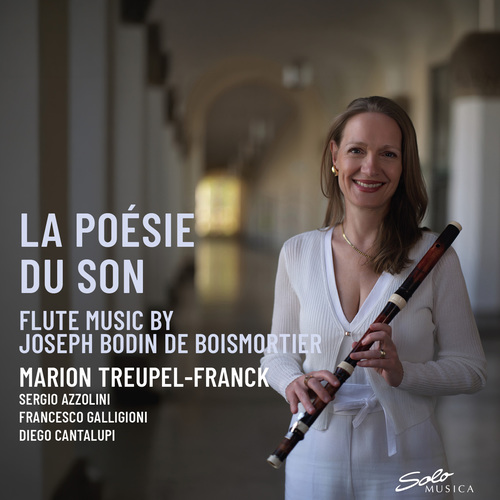
Joseph Bodin de Boismortier (1689–1755) was one of the most distinctive figures of the French Baroque. An independent composer and highly successful publisher, he created a remarkable body of work that unites the elegance of the French tradition with the virtuosity and expressive power of Italian music.
This recording presents selected sonatas from Opp. 3, 19 and 44 for transverse flute and basso continuo, tracing Boismortier’s artistic development from works rooted in the French dance-suite tradition to his later, more overtly Italianate and virtuosic style. Inspired by Corelli and Vivaldi, he forged a unique musical language characterized by melodic charm, rhythmic vitality and expressive richness.
Performed by a colourful continuo ensemble of transverse flute, baroque bassoon, baroque cello and lute, this recording reveals the stylistic diversity and enduring appeal of Boismortier’s music.
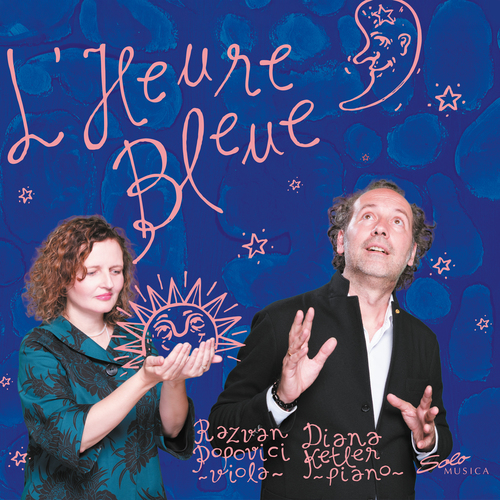
L’Heure Bleu is a tribute to the luminous sound world of La Belle Époque–an age of subtle colours, refined elegance and poetic imagination. Inspired by the mysterious “blue hour,” the album traces a musical journey between Paris and London, where music, literature and painting merge into a single artistic vision.
At its heart lies the intimate dialogue between viola and piano. The viola sings with warmth, tenderness and quiet eloquence, while the piano paints the changing colours of light–shimmering, translucent and richly atmospheric. Together they create an expressive soundscape in which every miniature unfolds like an impressionist painting, revealing ever-changing shades of emotion.
Music by Gabriel Fauré, Edward Elgar, Maurice Ravel, Frank Bridge, Ernest Chausson, Rebecca Clarke, Jules Massenet, Fritz Kreisler and Louis Vierne captures the spirit of an era fascinated by beauty, nuance and fleeting moments. Familiar masterpieces including Après un rêve, the Méditation from Thaïs and Chanson de Nuit are heard from a fresh perspective, their lyrical intimacy enhanced by the unique colours of viola and piano.
With its carefully crafted programme, L’Heure Bleu invites listeners into a world suspended between light and shadow, memory and imagination–a musical celebration of timeless lyricism and quiet, enduring beauty.
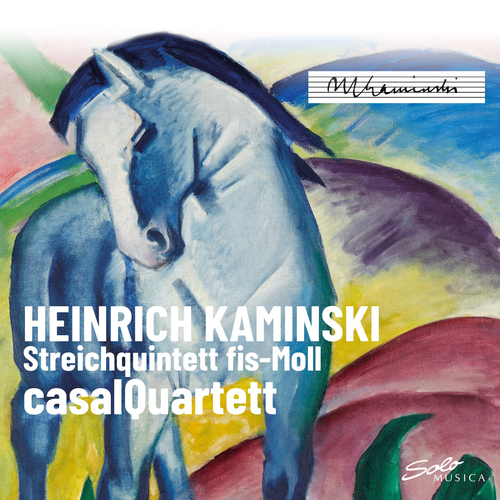
With this new recording, the casalQuartett turns its attention to one of the most remarkable yet unjustly neglected chamber music works of the twentieth century: Heinrich Kaminski’s String Quintet in F-sharp minor. Composed between 1914 and 1916, the work combines overwhelming emotional intensity with a unique polyphonic language in which all five instruments participate as equal voices. Early critics described it as the “revelation of a young genius”; today it stands out for its compelling originality, dramatic power, and extraordinary richness of expression.
Despite its central place within Kaminski’s oeuvre and its significance in German musical history, the quintet has remained largely absent from concert life for decades and was previously available only in a long out-of-print recording. This new release restores a major work to the repertoire and offers audiences the opportunity to rediscover a composer whose artistic voice ranks among the most distinctive of his generation.
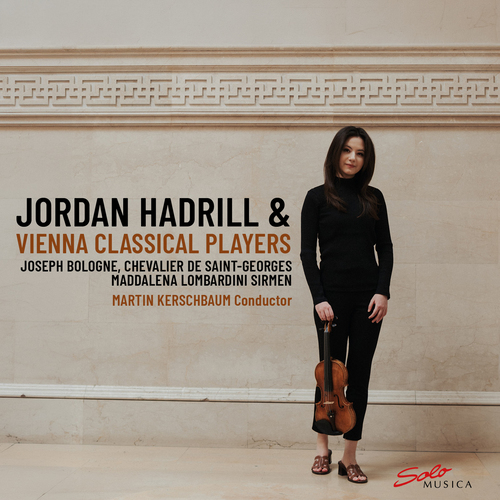
Rediscovering Forgotten Voices: Jordan Hadrill Champions Joseph Bologne
What we consider the heritage of Western classical music is not a law of nature. It is the result of historical choices – and the prejudices that shaped them. With her new recording, violinist Jordan Hadrill challenges this legacy of exclusion by bringing forgotten composers back into the spotlight.
At the heart of the release is the Violin Concerto No. 1 in G major, Op. 2/1 by Joseph Bologne, Chevalier de Saint-Georges, one of the most remarkable yet long-overlooked musical figures of the 18th century. Together with the Vienna Classical Players, Hadrill presents a work that combines virtuosity, elegance, and profound emotional depth.
Born in Guadeloupe in 1745, Joseph Bologne was the son of a French plantation owner and an enslaved African woman. Brought to Paris at an early age, he rose to fame not only as a celebrated violin virtuoso, conductor, and composer, but also as one of Europe’s greatest fencers. As founding director of the Concert de la Loge Olympique, he led the premieres of Haydn’s famous “Paris Symphonies” and moved within the inner circles of the French royal court around Marie Antoinette. Yet despite his extraordinary achievements, racial prejudice denied him a lasting place in the European musical canon.
For Jordan Hadrill, discovering Bologne’s music became a deeply personal artistic journey. Inspired by an article in The New York Times, she immersed herself in both his music and his remarkable biography. “I immediately knew: I have to play this music,” she recalls.
Composed in 1773, Bologne’s first violin concerto reveals a strikingly original musical voice. Brilliant virtuosity, expressive slow movements, and a unique blend of French refinement and harmonic boldness give the work its unmistakable character. Hadrill emphasizes not only the technical brilliance of the concerto, but also its emotional and spiritual power: “I hear a strong personality in this music – deeply spiritual and deeply resilient.”
Recorded in Vienna with the Vienna Classical Players – the city that profoundly shaped Hadrill’s own artistic path – the project becomes both a symbolic homecoming and a passionate statement for a more inclusive understanding of classical music history.

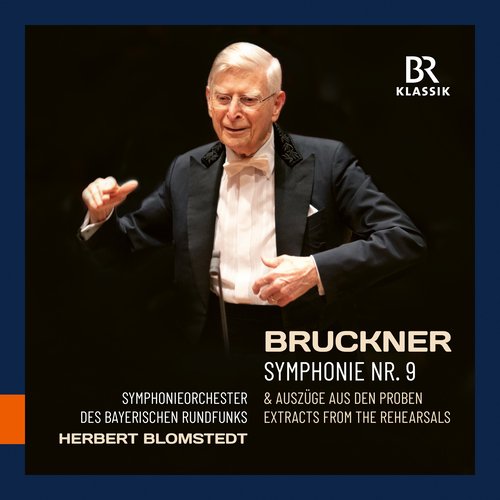
The distinguished Swedish conductor Herbert Blomstedt, long associated with the Bavarian Radio Symphony Orchestra as a regular guest, conducted Anton Bruckner’s Symphony No. 9 in d Minor, in concerts on May 7 and 7, 2009 in the in the Philharmonie im Gasteig in Munich. This new BR-KLASSIK release presents not only the live recording of this compelling interpretation but also a live orchestral rehearsal recording from May 2009. The latter forms part of BR Klassik’s acclaimed series Conductors at Rehearsal, offering a glimpse into their artistic work with the orchestra.
‘It seems that the Ninth is a limit. He who wants to go beyond it must pass away. […] Those who have written a Ninth stood too close to the hereafter.’ Arnold Schoenberg wrote those words in reference to Gustav Mahler, who had just died without ever having heard his own Ninth Symphony performed. Bruckner was apparently afraid of the fatal number as well: ‘I don’t want to start on my Ninth at all, I don’t dare.’ However, very soon after the completion of his Eighth Symphony in September 1887, Bruckner started on his first drafts. Overall, work on the Ninth then dragged on over the long period from 1887 to 1896, having to be constantly interrupted because of the composer’s deteriorating health. Bruckner finally died while working on the fourth movement – and his masterpiece dedicated to ‘the beloved God’ remained unfinished. Even without a finale, the three-movement torso that survives is, of course, extremely impressive.
The completed movements were first performed in Vienna on February 11, 1903, in an unusual personal version by the conductor Ferdinand Löwe. The actual first performance of the original score with its three movements only took place on April 2, 1932 in Munich. Ever since, Bruckner’s Ninth has been an essential part of the Late Romantic symphonic repertoire – above all in its original version.
The detailed rehearsal recordings on the album provide a deeper insight into this magnificent work. Listeners can experience first-hand how the conductor’s wishes, ideas and instructions are implemented, how his explanations and his temperament change the resulting sound, and what thoughts lie behind the interpretation of the work. Thanks to this series, which is now also available on disc, the unique artistic partnership between Herbert Blomstedt and the Bavarian Radio Symphony Orchestra can be documented. Blomstedt’s seemingly inexhaustible source of energy – music itself – is palpable in every word and every measure.
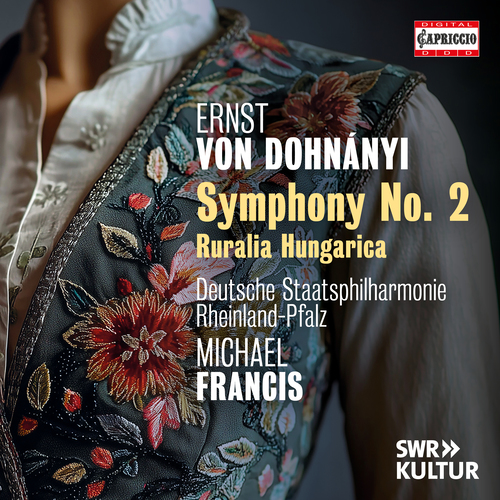
Although Ernst von Dohnányi was one of the most versatile and influential musicians of his time, his works are now seldom played. Capriccio is helping to rectify that situation with a series of recordings of his late-Romantic, sensual music, of which this eighth album features his Symphony No. 2. Composed at the time of his departure from war-torn Hungary during World War II, it’s a colossal work that lasts for around an hour and calls for an extraordinarily large orchestra. Ruralia Hungarica, written in 1923 and arranged for orchestra the following year, makes use of familiar Hungarian folk melodies, some of them more widely known through their appearance in the works of other Hungarian composers.
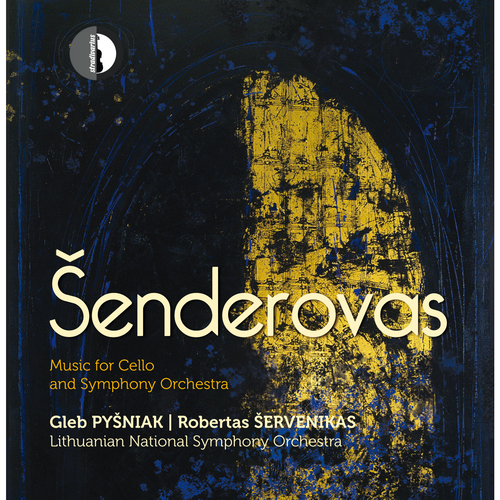
‘A single motif is enough to identify the composer,’ is how friends have described the work of the composer Anatolijus Šenderovas (1945–2019). A distinctive artist who balanced the rationality of contemporary music with an innate emotionality in his work, he left a special mark on Lithuanian musical culture in the late 20th and early 21st centuries, continuing the Litvak thread that is inseparable from Lithuania’s cultural history.
This album, marking the 80th anniversary of the composer’s birth, features three works: the Concerto in Do (2002), Concerto No. 3 for cello and symphony orchestra (2012), and The Songs of Shulamith for cello and symphony orchestra (2000). These works are performed by Gleb Pyšniak, one of the most prominent cellists in Lithuania and the Baltic States, and the Lithuanian National Symphony Orchestra conducted by Robertas Šervenikas.
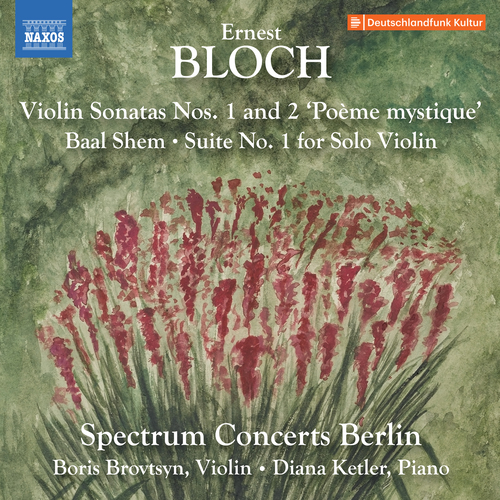
The full range of Ernest Bloch’s music for violin and piano can be heard on this album, which journeys from his fiery early works to one of his last compositions. Both violin sonatas explore personal themes. The First, in its barbarism, alludes to the First World War, while the Second, subtitled Poème mystique, was inspired by a dream and is suffused with lyrical episodes from Gregorian chant. The melancholy and ecstasy evoked in Baal Shem derive from Hebrew music, including pre-existing synagogal melodies. The economy of the neo-Baroque Suite No. 1 for Solo Violin reveals a more reserved but no less inventive side of Bloch’s violin writing.
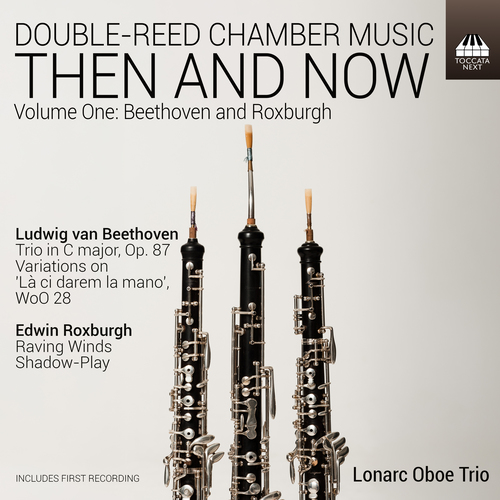
In 1719 the aristocratic Schwarzenberg family inherited the huge castle of Český Krumlov in south-western Bohemia, reviving its distinguished but dormant musical tradition with a new ensemble of two oboes, two cors anglais, two bassoons and two horns, active from 1771 onwards. These musicians soon provided the foundation for a wave of chamber music featuring double-reed woodwind instruments that flourished as the instruments improved. It reached its peak of popularity in Vienna in the last two decades of the century, but has remained largely unknown since then. This series unites past and present by combining some of the scores researched in the Český Krumlov archives (including a 1799 handwritten copy of Beethoven’s 1794 C major oboe trio, which suggests it was a Schwarzenberg commission) with works composed more recently – mainly by oboe-playing composers.
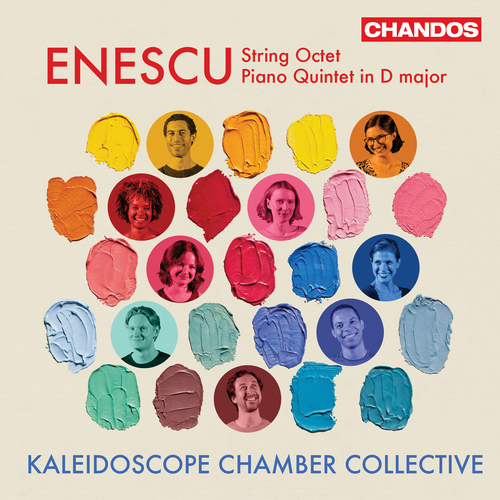
The Romanian composer George Enescu was a child prodigy and in October 1888, aged seven, become the youngest student ever admitted to the Vienna Conservatory (and the first non-Austrian), from which he graduated at the age of twelve. In addition to his career as a composer, Enescu was also an acclaimed conductor and violinist. He made his American début in 1923 conducting the Philadelphia Orchestra, and frequently conducted both the New York Philharmonic and the Orchestre symphonique de Paris. Enescu made numerous recordings as a violinist, of his own works and those of others: his 1949 recording of Bach’s Sonatas and Partitas was very highly regarded, and as a teacher (at the Mannes School of Music, in New York) his students included Yehudi Menuhin, Christian Ferras, Ivry Gitlis, Arthur Grumiaux, and Ida Haendel, among many others). Enescu composed his Octet for Strings at the age of nineteen, taking a year and a half to complete it, owing to the complexity of the string writing. The first performance was cancelled when, after five rehearsals, the impresario Édouard Colonne removed it from the programme as ‘too risky’. The performers have chosen to complete the album with the early Piano Quintet, which Enescu composed some four years before the Octet, during his time at the Paris Conservatoire. The work shows his reverence for his hero Brahms throughout, but also demonstrates his extraordinary command of form and texture at such an early age.
The Pocket Concerto by Knox is a compact concert piece built on clear formal design and tightly focused motivic writing. Its reduced instrumentation highlights the chamber‑like character of the score, allowing the musical lines to interact with precision and transparency. The short form serves to present the material in a direct, concentrated manner without extended development.
Gunter Teuffel is a German violist known for his long-standing work as principal viola in major orchestras and for his engagement with contemporary music. His career includes numerous collaborations on new works and a wide range of chamber‑music projects.
Tristan Cornut is an internationally active cellist who performs both as a soloist and within established ensembles. His repertoire spans classical and modern music, and he frequently works with composers on the creation and performance of new pieces.
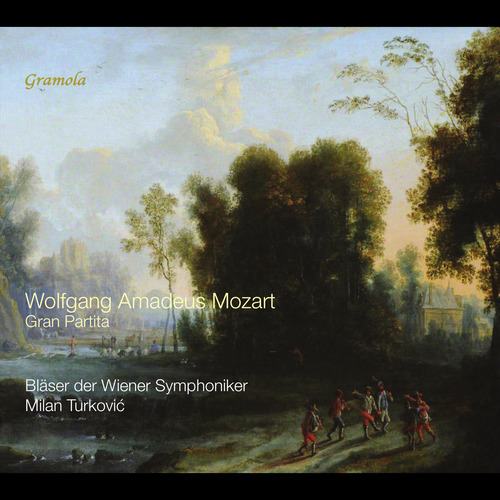
‘… a very special grand wind ensemble piece, composed by Mr. Mozart’ has been performed for this recording by wind players (and a double bass) of the orchestra of the Wiener Symphoniker under the baton of Milan Turković. The work being mentioned is Mozart’s Wind Serenade No. 10 in B-flat major, K. 361, widely known as the “Gran Partita”. Listeners are often awe-stricken by the incomparable stylistic variety, the grand musical arc spanning over seven movements and the extraordinary Mozartian melodic riches like with hardly any other work of musical history. Contributing to the impression of the work itself is the performer’s unmatched expertise with interpreting Mozart and their Viennese playing wit which is audible with every single note.
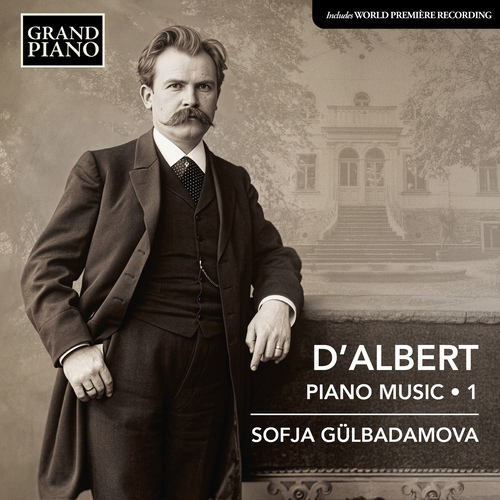
Eugen d’Albert was one of the great pianists of his age and wrote a series of exciting pieces for the instrument. The expressive, forward-looking harmonies of the Suite are as notable as the work’s Baroque style. The Four Pieces – pyrotechnically brilliant as well as pensive – show some Lisztian influence, while the Albumblatt is a genial, reflective piece. In this recital Sofja Gülbadamova performs on d’Albert’s own 1898 Steinway, recently restored and now on display at his former home, Villa Teresa in Coswig. D’Albert’s Impromptu, which Gülbadamova discovered at the Brahmshaus in Baden-Baden, is heard here in a world première recording.
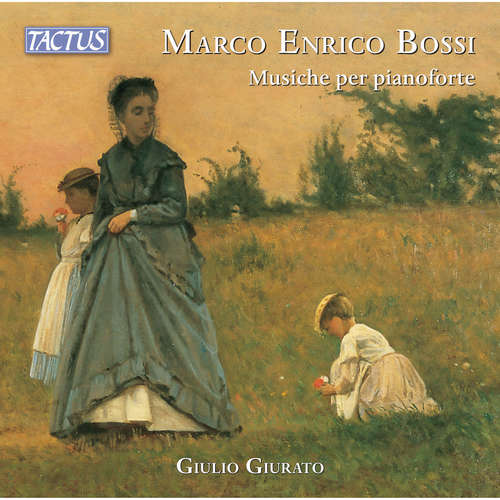
Marco Enrico Bossi piano music accompanies almost his entire creative life: from his first mazurka, composed at age 14, to the five concert pieces of Op. 137, the piano represents almost a moment of compositional relaxation compared to the organ, chamber music, and large symphonic-choral works, albeit with the inevitable challenges connected to the evolution of his style.
Giulio Giurato, pianist interpreter of the complete recording of Bossi’s instrumental chamber music (Tactus, TC862704/05/06/07 – TC860204), now dedicates himself as a soloist to this world premiere recording of the piano works by the great Italian composer. These works that are still virtually unknown today, reveal how much ground still needs to be covered in order to arrive at a complete appreciation of the composer’s mastery.
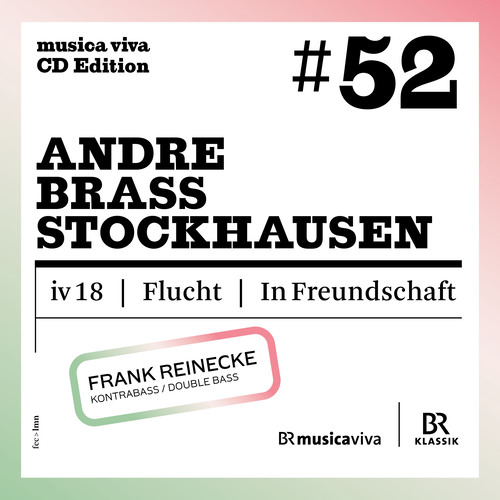
The latest musica viva release presents three contemporary works for double-bass, performed by the renowned double-bassist Frank Reinecke (born 1960), who was a member of the Bavarian Radio Symphony Orchestra from 1984 to 2024 and is in great demand at international festivals as a soloist and chamber musician. Working closely with renowned composers, Reinecke has premiered numerous works, including Flucht (“Flight/Escape”) by Nikolaus Brass (2009) and iv 18 by Mark Andre (2021), both of which can be heard here in recent recordings.
Born in Paris in 1964, the composer Mark Andre creates existential spaces of experience in his music that are characterised by subtle processes of change. At the heart of his thinking lies the question of disappearance, which relates to all musical parameters. Above all in his chamber music, which is as delicate as it is focused, the devout Protestant proves himself to be a sensitive explorer of sound. His solo work for double-bass iv 18 (“For they were afraid”), commissioned between 2018 and 2021 by musica viva of Bayerischer Rundfunk and the Berliner Festspiele / Musikfest Berlin, was premiered by Frank Reinecke at the Musikfest Berlin in 2021. This recording of the work was made between November 7 and 9, 2023 in the Herkulessaal of the Munich Residenz.
Nikolaus Brass regards the three movements he composed for solo double-bass in 2009 under the title Flucht (“Flight/Escape”) as studies or études for the instrument. The first movement highlights various “gestures of the line”, which in the third movement are narrowed down to a single gesture, that of the glissando. In the central movement, the core of the instrument is brought to the fore. The title Flucht can be interpreted musically in several dimensions. Frank Reinecke gave the work its world premiere in Hamburg in June 2013. This recording was made on June 20 and 21, 2012 at the Himmelfahrtskirche in Munich-Sendling.
Karlheinz Stockhausen (1928–2007) composed the first version of In Freundschaft (“In Friendship”) in 1977 as a birthday present for the clarinettist Suzanne Stephens, and also wrote a version of it for the flute at the same time. In 1978, he revised the work and, on that occasion, wrote versions for the oboe, trumpet, violin and viola. Further versions followed for the basset horn and almost all other orchestral instruments. A first version for cello, prepared in 1981, can also be played on the double-bass. This live recording of Frank Reinecke’s performance was made during a musica viva concert on November 6, 2020 in the Herkulessaal of the Munich Residenz.
Impeccably recorded in concert for Montclair State University’s PEAK Performances program, Grand Band’s debut album features four pieces by four different composers, with each member of the group — Erika Dohi, David Friend, Paul Kerekes, Blair McMillen, Lisa Moore and Isabelle O’Connell — adding their individual flair to a rich, dynamic performance that amplifies the bold, audacious notion of presenting six grand pianos on a single stage. As the only professional piano sextet in the US, Grand Band makes the case for building a repertoire that reframes the traditional scope of the small ensemble, championing new music that is as much about the instruments themselves as it is the sound, substance and interpretation.
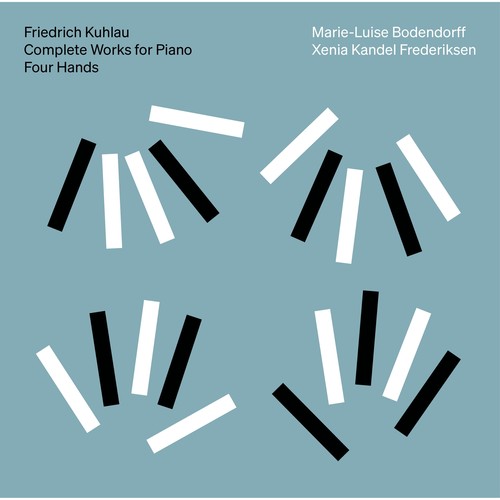
Admired by Beethoven, Friedrich Kuhlau (1786–1832) made the four-hand piano genre his own. From the buoyant early Sonata in F major, Op. 8b to the Beethovenian struggle of the late ‘Allegro pathétique’, Op. 123, this is melodically rich music, formally adventurous, and by turns convivial and dramatic. Marie-Luise Bodendorff and Xenia Kandel Frederiksen present the complete works, including several world premiere recordings, which together form a cornerstone of the Danish four-hand piano repertoire.
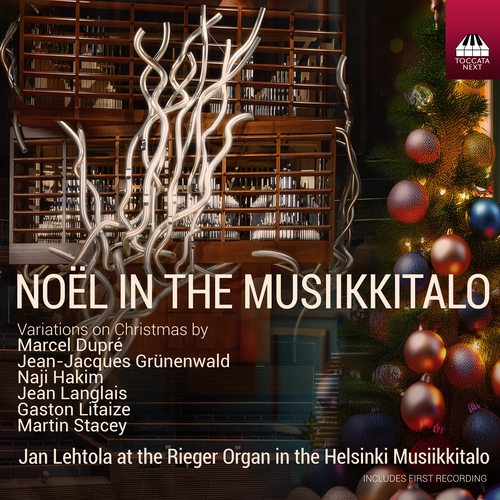
The Rieger organ recently installed in the Musiikkitalo (Music Center) in Helsinki is the largest modern concert-hall organ in the world. In its first-ever solo recording Jan Lehtola puts the instrument through its paces. His unusual programme consists of nine sets of variations on Christmas melodies by four French composers, one Franco-Lebanese and an Englishman using what is probably the only well-known Ukrainian tune. The meeting of old and new in these variations shows off the splendours of the new instrument, the virtuosic writing ranging from gossamer delicacy and sumptuous harmonies to statements of colossal power.
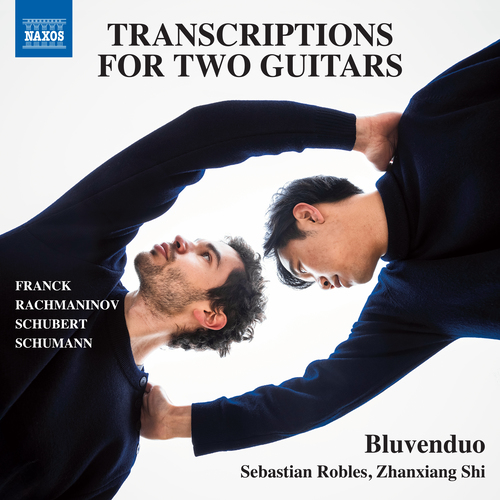
The prizewinning guitar duo Bluvenduo present a versatile selection of transcriptions for two guitars, several of which have never previously been arranged for this format. The freshness and sense of discovery in Schubert’s Sonata in A major is a product of the music’s inherent songful lyricism, perfect material for a guitar duo. So, too, is Franck’s Prélude, fugue et variation, a work of variety, elegance and light textures. The three Rachmaninov Preludes provide subtly contrasting moods, while Schumann’s Kinderszenen offers a wealth of intimacy, excitement and expressive refinement.
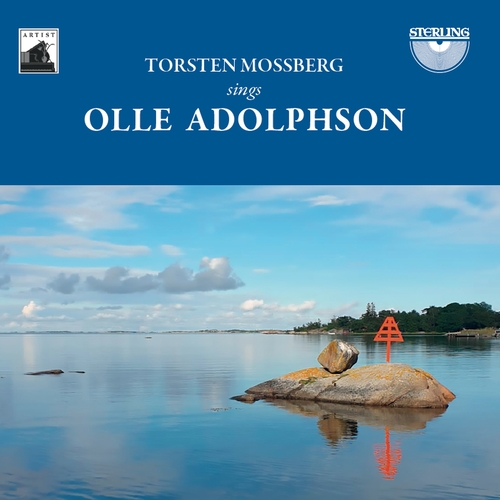
Olle Adolphson (1934–2004) is one of the most important representatives of the Swedish ballad during the second half of the 20th century. He wrote a long series of ballads that are loved by the Swedish people. Many of them have become so well-known that they can now almost be considered Swedish folk songs. Olle was inspired by and associated with great cultural figures of the time such as Evert and Sven-Bertil Taube, Lars Forssell, Beppe Wolgers, Carl Fredrik Reuterswärd, Stig Claesson, Monica Zetterlund, Monica and Carl-Axel Dominique and others.
Olle was a serious and meticulous poet who often told stories about people’s happiness and unhappiness in love. Sometimes the poems contain very sad descriptions of human vulnerability. He could also be critical of society and protest against the destruction of Stockholm, as in Gustav Lindström’s poem and the lyrics of the hit song “Trettiofyran”.
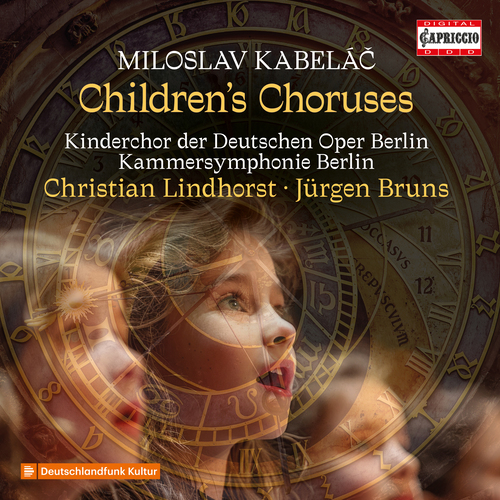
Music for children plays an important role in Miloslav Kabeláč’s artistic oeuvre. Especially in the early days after the communist coup in 1948, the composer devoted himself to this genre: “I regard composing for children as a ’touchstone’ not only for all creative abilities, but also for the human qualities of the composer. That is why I take this work as seriously and as importantly as any other”. In his music, Kabeláč creates powerful atmospheric images with a playful sensitivity for language, some of which is highly onomatopoeic. His serious engagement with children’s works is once again evident in the fact that Kabeláč repeatedly quoted motifs and melodies from children’s works in larger symphonic works.
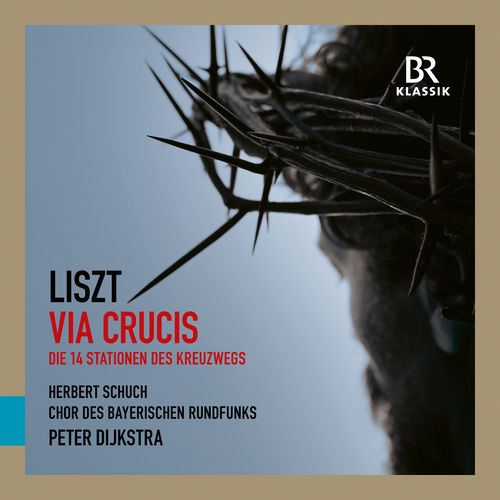
The church music Franz Liszt composed in his later years was always innovative, radical and thoroughly idiosyncratic, yet was frequently and unjustly overlooked in the repertoire. Now, the Bavarian Radio Chorus, conducted by Peter Dijkstra, has taken on the cycle VIA CRUCIS. It was never performed during Liszt’s lifetime; the composer worked on it in the autumn of 1878 as a guest of Cardinal zu Hohenlohe-Schillingsfürst at the Villa d’Este in Tivoli, not far from Rome. The new release from BR KLASSIK presents a live recording of an extraordinary concert from April 2025 at Munich’s Prinzregententheater.
Via Crucis, the Way of the Cross, usually comprising fourteen stations of the Passion of Christ – from conviction to death to deposition to burial – has over the centuries been the subject of prayer at the traditional sites in Jerusalem, on pilgrimages, in Catholic churches worldwide, at roadside shrines, in outdoor chapels, and on Calvaries. In composing his version, Franz Liszt mainly had the Good Friday procession in the Roman Colosseum in mind, “in that place whose ground is steeped in the blood of the martyrs”. He wrote his 14 Stations of the Cross for solo voices, choir and organ (originally piano), yet was much taken with the idea of carrying a harmonium into the ruins of the Colosseum for his musical devotions to be sung there too: ‘I would be happy if those sounds could be heard there that only faintly reflect the inner emotion that overcame me when, on my knees with the devout procession, I more than once repeated the Latin words.’ It remained a mere vision, however: his late work VIA CRUCIS was neither rehearsed nor published, and met with firm rejection from the purists from the ultra-conservative Cecilian movement. It was not until fifty years later, on Good Friday 1929, that the work was finally premiered in Budapest.
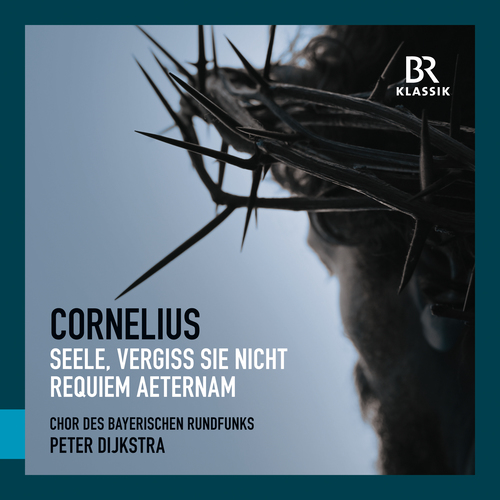
Liszt was acquainted with the young Peter Cornelius, a multi-talented composer, violinist, actor, poet, librettist and essayist from Mainz. Cornelius had received a thorough grounding in music history, from Palestrina to Bach, when he approached Liszt and the circle of the ‘New Germans’. In 1852, he wrote a setting of the Introit of the Latin Requiem Mass, ‘Requiem aeternam’, in a classically refined style for male choir. That same year, Liszt urged him to ‘devote himself to church music with the utmost resolve’ – advice that Cornelius respectfully declined. His Requiem, composed in 1863, has nothing to do with the Catholic liturgy; Cornelius set to music a poem by the dramatist Friedrich Hebbel: ‘Soul, do not forget them, soul, do not forget the dead!’ – Both of Cornelius’ choral works also feature on this album.
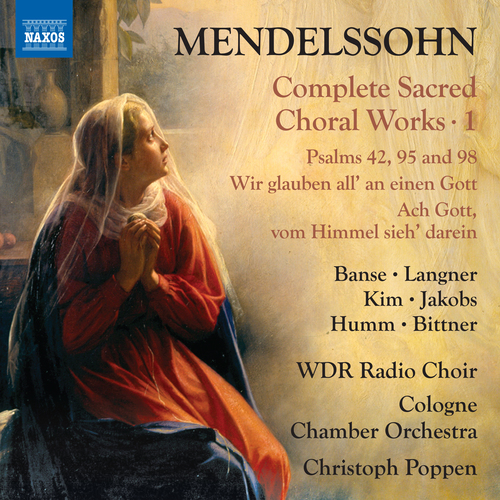
Sacred choral music played a critical role in Mendelssohn’s life. The steady stream of Psalm settings made throughout his career provided a means through which he could make heartfelt responses to the texts of his faith. This first volume in the series reveals Mendelssohn’s skill in conveying the emotions behind each text, from the festive jubilation of Psalm 98, Singet dem Herrn ein neues Lied, to an expansive setting of Psalm 42, Wie der Hirsch schreit, regarded by Robert Schumann as the highest point Mendelssohn reached as a composer for the church.
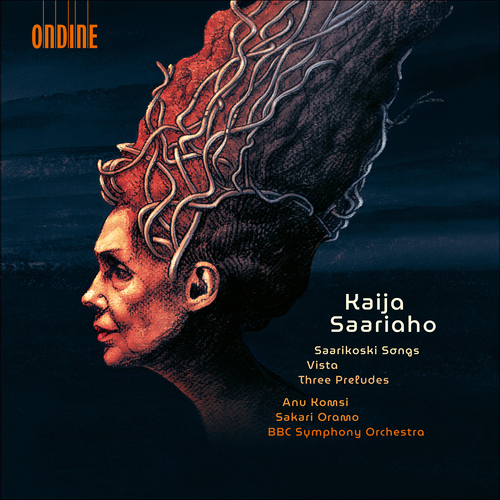
WORLD PREMIERE RECORDINGS of three works by Kaija Saariaho (1952–2023) from soprano Anu Komsi, the BBC Symphony Orchestra and conductor Sakari Oramo.
Vista (2019), an expansive orchestral landscape, was the composer’s final work for orchestra. During a drive down the scenic Interstate 5 highway to San Diego, Saariaho encountered an image that matched her exact feeling in that moment: signs indicating ‘Vista Points,’ exits to locations from where to enjoy a peaceful view on the coastline and the ocean. She devoted the following months to the creation of a work that would capture the opening of new, unexpected landscapes. Vista swarms with bittersweet visions of paths the composer never had the opportunity to explore.
The Saarikoski Songs (2021) is performed here by Anu Komsi, for whom they were originally written. In 2013, in response to Komsi’s invitation to create a short song on a text by a modern Finnish poet, Saariaho set a poem by Pentti Saarikoski (1937–1983), and over the years she expanded the project to multiple songs. The collection chosen by Saariaho displays an ecologic theme, as the poet contemplates the destruction of the forest in his neighborhood to give way to new apartment buildings. The five Saarikoski songs were originally composed for voice and piano and recorded by Anu Komsi. Just days after signing the final double bar of the orchestration in January 2021, Saariaho was diagnosed with the brain cancer that came to claim her life.
The Three Preludes (1981) is an early work for soprano and organ and the composer’s only setting of Biblical material. These three miniatures are expressionistic fragments rather than devotional hymns. The organ was the instrument that Kaija Saariaho played in her twenties and the new organ of the Helsinki Music Centre – on which Anu Komsi and Marzi Nyman recorded this work – was made possible through a generous donation from Kaija Saariaho.
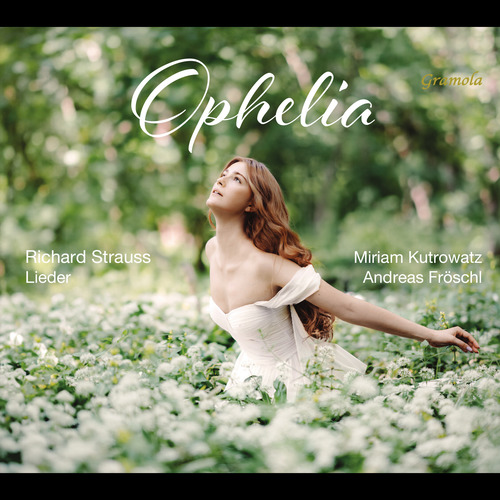
‘I wanted to put together a little bouquet, and this is what we’ve put together from 21 songs.’ In addition to “floral” songs like the one just mentioned and Mädchenblumen, Op. 22, the young Austrian soprano Miriam Kutrowatz and the Munich-born pianist, Lied accompanist and cabaret artist Andreas Fröschl draw from the vast repertoire of Richard Strauss’s numerous song compositions. Here, on the one hand, there are more youthful, carefree, and light-hearted emotions, as in Rosenband, Amor, or Säusle, liebe Myrthe; on the other hand, there are also heavy, expressionistic songs that express pain, confusion, despair, or even anger, such as the title track Three Songs of Ophelia, Op. 67. Miriam Kutrowatz who is a regular guest on Europe’s principal concert and opera venues presents these and other songs, such as Allerseelen, Ständchen, and Nichts, on her debut recording.
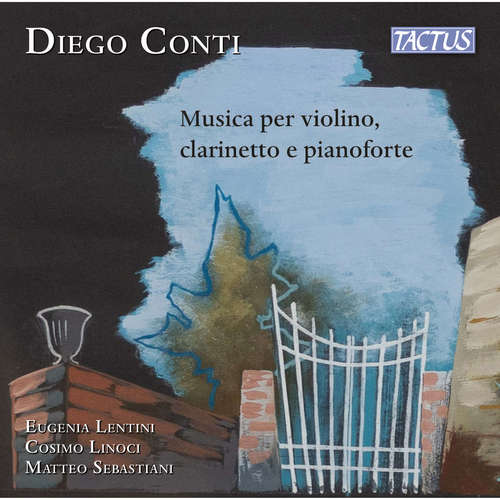
Let us discard the labels we conveniently put on contemporary music productions: Diego Conti speaks an exquisitely authentic language, his own; there is no trace of timbral mannerism, display of effects, or distractions of any other kind. And above all – surprisingly – this collection of pieces starts from people: from encounters; it feeds on sharp observations or shared memories; it proceeds towards transfiguration. Like a tailor, the composer stitches together sonic garments for imagined spiritual bodies. In this new chapter dedicated to his chamber music, the performers are Cosimo Linoci on clarinet, Eugenia Lentini on violin, and Matteo Sebastiani on piano, who alternate and regroup in the performance of four substantial pieces.
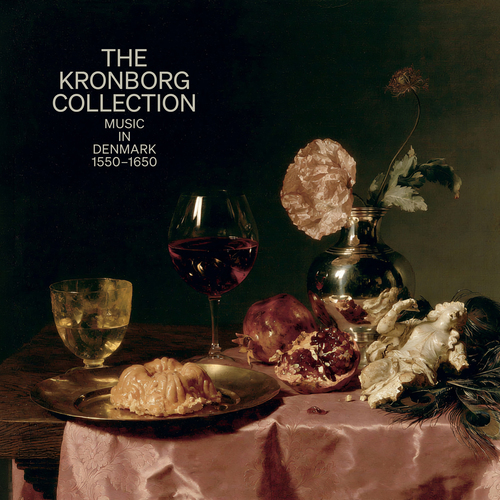
Kronborg is Denmark’s most famous castle – the ‘Elsinore’ of Shakespeare – and within its walls, sweet music. Kings Christian III, Frederik II and Christian IV harvested the bounty of Europe’s musical wealth and crowned their lavish courts with song. In this majestic 8-disc set by Bo Holten and Musica Ficta there are lute songs by Dowland, motets of Schütz and world premiere recordings of works by Palestrina, de Wert and Vecchi. These are no longer only echoes of a prosperous age, but now Denmark’s golden musical past, regained anew.
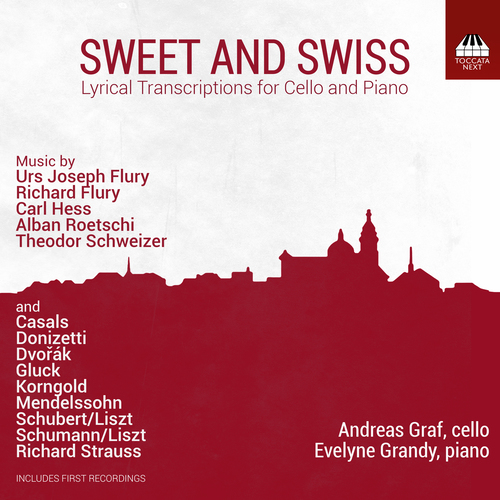
In this album two Swiss musicians – the cellist Andreas Graf and pianist Evelyne Grandy – transform what is essentially a song recital into a programme of lyrical miniatures for cello and piano. They thread their own arrangements of melodies by five fellow Swiss composers through some unfamiliar versions of well-known tunes, casting some long-standing favourites in new light and setting them alongside new delicacies.
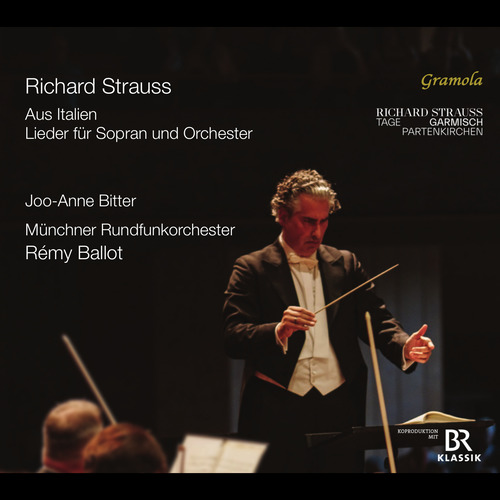
‘I never truly believed in inspiration through natural beauty; in the Roman ruins I was taught otherwise, there the ideas just come flying in.’ With these words Richard Strauss describes his work on his Symphonic Poem Aus Italien (From Italy), which besides these Roman places also depicts scenes “At the Beach at Sorrento” as well as “Neapolitan Folk Life”, setting these impressions to colourful music. In addition to this work with the Münchner Rundfunkorchester under the baton of conductor in residence of the Richard Strausstage festival in Garmisch-Partenkirchen, Rémy Ballot, selected songs for orchestra and soprano were performed by German soprano Joo-Anne Bitter, who made a name for herself internationally with her acclaimed Richard Wagner interpretations.
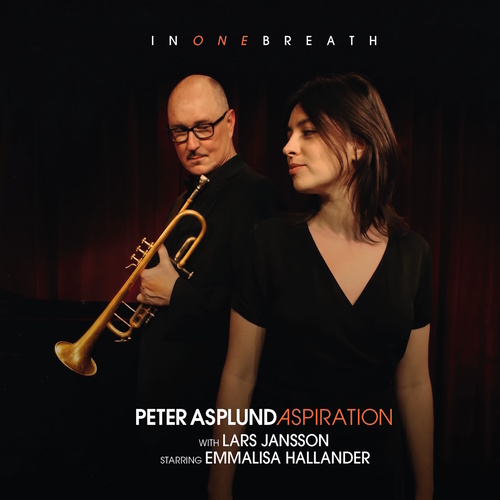
Singer Emmalisa Hallander’s voice blends seamlessly with Peter’s trumpet. Bassist Hans Andersson, drummer Johan Löfcrantz Ramsay, and pianist Lars Jansson form the dynamic, explosive, imaginative, and warmly embracing trio upon which Hallander and Asplund paint their melodies. The music is composed and arranged by Peter Asplund, with lyrics written by Dave Castle and Lotta Asplund. As is always the case with the group ASPIRATION, the expression is romantic, slightly melancholic, and a combination of Scandinavian and American jazz.
Also available on vinyl [PLP402]
![DVOŘÁK, A.: Rusalka [Opera] (Dutch National Opera, 2023)](https://cdn.naxos.com/sharedfiles/images/cds/hires/2.110783.jpg "DVOŘÁK, A.: Rusalka [Opera] (Dutch National Opera, 2023)")
With its wonderfully poetic and sensual score, Rusalka is Antonín Dvořák’s most beloved opera, filled with musical effects that evoke the beauty and magic of a world inhabited by nymphs and water sprites. Jaroslav Kvapil’s libretto is based on a famously tragic children’s fairy tale, but in this acclaimed reinvention by directors Philipp Stölzl and Philipp M. Krenn Rusalka is depicted as a young woman from the dark fringes of society. She trades her power of speech to live in Hollywood at the side of a handsome movie star but is doomed to remain an outsider and a lost soul.
Make sure to subscribe to Naxos newsletters for other great offers.