
 Translate































In addition to its own wide-reaching monthly new releases, Naxos also distributes several leading labels in many countries around the world. Here is a choice selection of recent releases from some of these distributed labels.

Ondine was founded in 1985 in Helsinki, Finland, where the company is still based and today offers an extremely eclectic catalogue of both contemporary Finnish music, as well as recordings with major Finnish and international artists. Ondine’s extensive catalogue includes more than 600 recordings (more than 300 of which are available digitally) of artists and ensembles such as conductor and pianist Christoph Eschenbach, conductors Vladimir Ashkenazy, Esa-Pekka Salonen, Jukka-Pekka Saraste, Sakari Oramo, Leif Segerstam, John Storgårds and Mikko Franck, orchestras such as The Philadelphia Orchestra, the Orchestre de Paris, the London Sinfonietta, the Bavarian Radio Symphony Orchestra, the BBC Symphony Orchestra, the Los Angeles Philharmonic, the Czech Philharmonic, the Finnish Radio Symphony Orchestra and the Helsinki Philharmonic, sopranos Karita Mattila and Soile Isokoski, pianist Olli Mustonen, violinist Pekka Kuusisto and clarinettist Kari Kriikku. The label has also had a long and fruitful association with the Finnish composer Einojuhani Rautavaara, having recorded the premieres of many of his works and garnering many awards along the way.
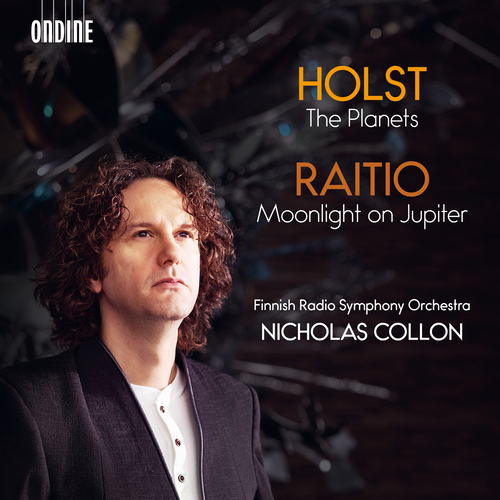
This album by the Finnish Radio Symphony Orchestra and Nicholas Collon joins together two impressive cosmic visions: Gustav Holst’s iconic orchestral masterpiece The Planets together with a gem from Finnish orchestral literature, Väinö Raitio’s (1891–1945) Moonlight on Jupiter. Raitio’s work from the 1920s is recorded for the first time in 50 years and receives its first recording on disc.
Aged forty, Holst began writing his best-known work, The Planets. This large-scale, seven-movement suite was completed it in 1916. Holst was concerned that his musical evocation of the planets should not be confused with characters from classical mythology, such as Venus. Neither is there any connection with astronomy. The basis of Holst’s inspiration was the much more controversial subject of astrology. Each movement of Holst’s ambitious suite reflects the alleged influence of a particular planet in our solar system upon human character. The Planets is written for a very large orchestra including much percussion, two harps, celesta, organ, two sets of timpani, and rarer instruments such as bass flute, bass oboe and tenor tuba. Holst’s own practical experience as an orchestral musician was invaluable to Holst in the development of his own boldly imaginative orchestration.
Väinö Raitio was one of the composers in what is known as the first wave of Modernism in Finnish music. Raitio’s idiom was very modern for his time, and this together with his premature death coloured his reputation among Finnish composers and musicologists. Raitio’s music of the 1920s is often described as having been influenced by the Colourist-Expressionist style of Alexander Scriabin and by French Impressionism. Raitio was above all an uncompromising visionary as a composer. What we know of Raitio as a person is vague, and he remains an enigmatic figure. Contemporary descriptions of him outline a shy and misanthropic recluse. He was no doubt an eccentric, at once reserved and uncompromising. The fantastic title of Moonlight on Jupiter was inspired by a compelling vision of space travel and of the multiple moons of Jupiter. It is also interesting that among all his works this was the one that he liked the best. The manuscript score bears a dedication: “This tone poem I dedicate to my cat, which came from Korso. I sent it to Jupiter in October 1922. V.R.” Raitio loved cats more than people and his dedication was a major upset to his contemporaries. In subsequent decades, Moonlight on Jupiter has come to be appreciated as perhaps the most satisfactory among all of Raitio’s 1920s orchestral works.
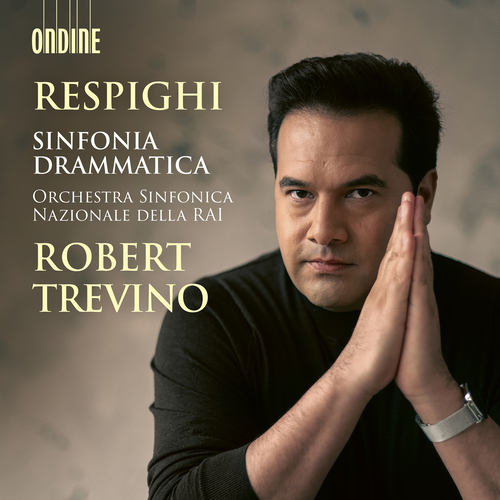
Conductor Robert Trevino’s second album release of orchestral music by Ottorino Respighi (1879–1936) together with the Orchestra Sinfonica Nazionale della RAI features Respighi’s massive orchestral masterpiece, the Sinfonia Drammatica.
Respighi’s Sinfonia Drammatica is a large, Straussian symphony with a duration of more than 60 minutes. Various commentators have pointed out similarities with César Franck’s Symphony in D minor, especially in terms of its cyclic structure, while echoes of Richard Strauss and Rimsky-Korsakov can be heard off and on throughout the piece, not only in the handling of the orchestra but also in the contours of some of the melodic lines. And while Wagner is not generally considered one of Respighi’s main sources of inspiration, the German composer’s influence can be sensed.
His last major work before the famous Roman Trilogy, conductor Robert Trevino considers this symphony as Respighi’s magnum opus. This impressive orchestral canvas already features many of the elements which later made Respighi one of the great voices in 20th century orchestral music: “I’ve recorded a fair amount with my dear partners at Ondine, and with my longtime collaborators, the musicians of the RAI, and to date, I’m most proud of this recording. It is my most sincere hope that it will inspire others to help bring this masterpiece into the recognised pantheon of the truly great works of art, and give Respighi the admiration he rightly deserves,” Robert Trevino writes in the album’s booklet notes.

Conductor Jukka-Pekka Saraste has been conducting the symphonies of Sibelius all over the world throughout his conducting career. 35 years after his first recording of the complete cycle, Saraste returns to the symphonies of Sibelius with the Helsinki Philharmonic Orchestra – the orchestra with which Sibelius conducted the premieres of his symphonies back in the day.
The symphonies of Jean Sibelius (1865–1957) have served as milestones in the conducting career of Jukka-Pekka Saraste. “Finnish conductors and orchestras have a lot of lore about how to perform Sibelius’s symphonies […] and a wealth of experience and tacit knowledge has been passed down in this way. Conductor Jussi Jalas [Sibelius’s son-in-law] provided me with inside information on tempos and on the ‘yellow notes’,” Saraste explains. The ‘yellow notes’ were instructions handed to conductors by Sibelius after rehearsals and performances. “My symphonies have a compulsive drive that makes them whole,” Sibelius once said to Jalas. This is a core concept in Saraste’s readings of Sibelius, and it involves not just tempo but the movement of motif material, from the micro level to the macro level, from germs of ideas to symphonic structures.
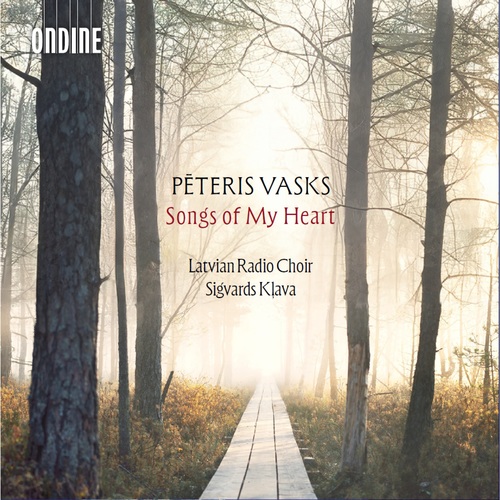
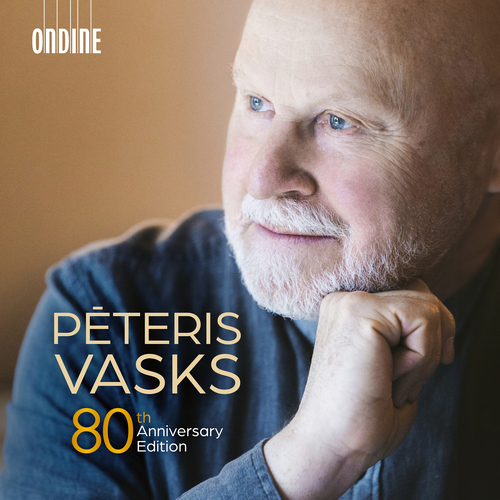
Pēteris Vasks (b. 1946) is considered among the leading Baltic composers of today and is known for his profound musical language. The award-winning Latvian Radio Choir conducted by Sigvards Kļava are dedicating their new album to Pēteris Vasks’ 80th birthday this year. The choir performs several world premiere recordings of Pēteris Vasks’ choral music, including newly written works for the choir, as well as Vasks’ earliest choral composition, dating from 1961. All of the composer’s favoured themes find fertile ground in these works: pantheistic faith, love, silence and homeland. Essentially tonal and diatonic, slow-moving, homophonic and syllabic, fluid and linear, they possess a discreet grace and a fragile luminosity.
Although Pēteris Vasks regards himself primarily as a composer of instrumental music, his choral works have enjoyed considerable success in his homeland. Sadly, until the collapse of the Soviet Union, sacred music was strictly forbidden, and any other form of vocal music was acceptable only after passing through the censors’ gauntlet. From the 1970s onwards, Vasks therefore wrote little vocal music, and virtually no sacred music, for more than two decades. Until the mid-1980s, no sacred music rooted in the Christian tradition was performed at concerts organised by the Latvian Composers’ Union. The Latvian Radio Choir was among the few ensembles willing to champion a composer considered persona non grata by the regime and undeterred by his innovative language. The programme for this recording, conceived as a tribute to Pēteris Vasks on his eightieth birthday, spans a period of more than half a century and focuses on his intimate a cappella choral works in which he employs a simple, languid and deliberately conventional musical language.
![NARBUTAITĖ, O.: Centones Meae Urbi [Oratorio] (Gelgotė, Masevičius, Kaunas State Choir, Lithuanian National Symphony, Šervenikas)](https://cdn.naxos.com/sharedfiles/images/cds/hires/ODE1455-2.jpg "NARBUTAITĖ, O.: Centones Meae Urbi [Oratorio] (Gelgotė, Masevičius, Kaunas State Choir, Lithuanian National Symphony, Šervenikas)")
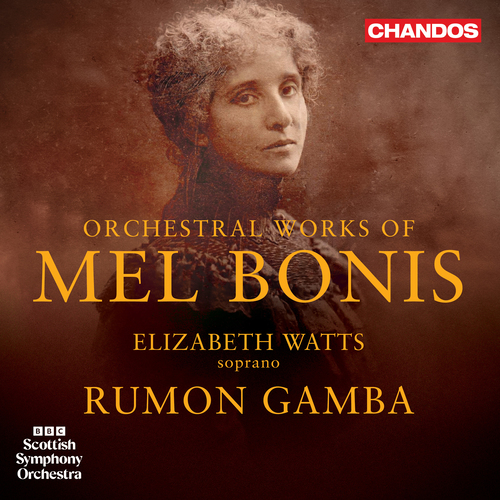
Mel (Mélanie Hélène) Bonis was born in Paris in 1858, and showed a prodigious talent for music from an early age, attending the Paris Conservatoire from the age of sixteen, studying alongside Debussy and Pierné under César Franck. Her passionate relationship with the singer Amédée-Louis Hettich was frowned upon by her parents, who pressured her to marry Édouard Domange, a twice-widowed industrialist with five children. Bonis threw herself into her role as wife and stepmother, until a reunion with Hettich in the 1890s reignited her serious interest in composition. She composed more than 300 works, including pieces for solo piano, chamber music, and over forty mélodies for voice and piano. As Bonis was too modest for self-promotion, and a victim of gender-bias, her music fell into obscurity after the First World War, and she became bedridden from arthritis. She continued to compose until her death, in 1937. Her orchestral output dates from two decades, between 1891 and 1912, and is well represented on this album.
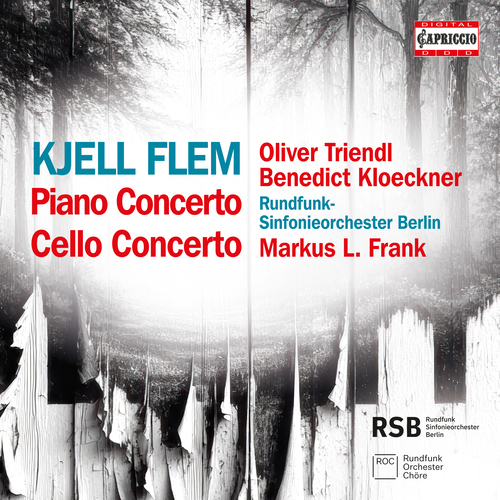
Born in Ålesund (Norway) in 1943, Kjell Flem studied with Einar Englund and Einojuhani Rautavaara, going on to distinguish himself as a much-celebrated composer of Scandinavian contemporary music. His compositions are generally non-radical and atmospherically engaging, creating an ambience that is deeply rooted in the natural landscape of his homeland. His output is not extensive; rather, he allows himself long creative periods because, in his own words, truly magical moments of inspiration are rare.
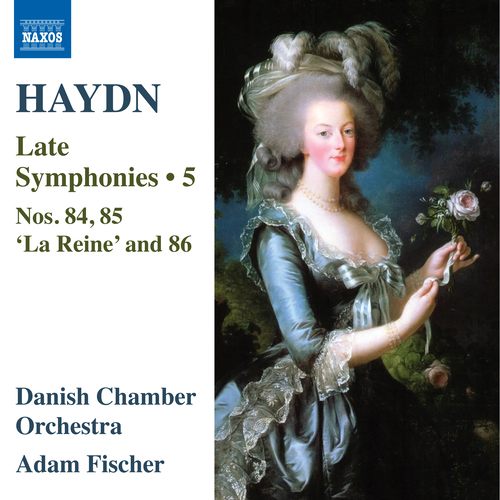
Haydn composed the three symphonies in this volume during the mid-1780s in a spirit of triumph. Though still employed by the Esterházy family, he had recently been allowed to publish his music himself and to accept outside commissions. A number of symphonies were duly commissioned by a new, large ensemble recently established in Paris. Superficially similar, they reveal Haydn’s inexhaustible creativity whether in the astonishingly colourful introduction to No. 84, the rustic interludes in the trio section of No. 85 – a favourite of Marie Antoinette, or in the greatest of the Paris symphonies, No. 86, where the transition from the slow introduction to the main section is unequalled in his music.
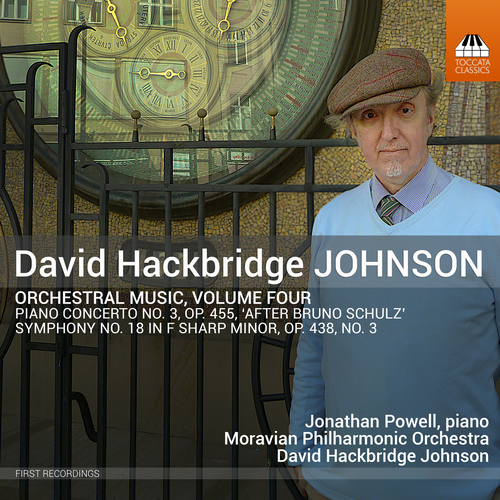
David Hackbridge Johnson, born near London in 1963, is an all-round musician – not only a prolific composer but also a conductor, violinist, singer, pianist, jazz drummer and poet. Both works in this album, recorded under the baton of the composer, have extra-musical stimuli. The Piano Concerto evokes the Kafkaesque fantasy world and tragic fate of the Polish-Jewish writer and artist Bruno Schulz, a victim of Nazi oppression – and it also marks the early death of another uniquely gifted individual, since it was written for Jonathan Powell, whose last recording it became. The Symphony, taking its lead from earlier composers like Bax, Britten and Vaughan Williams, is a response to the English landscape, as seen through the paintings of a number of artists whose work Hackbridge Johnson esteems – its colours and moods changing as kaleidoscopically as nature itself.
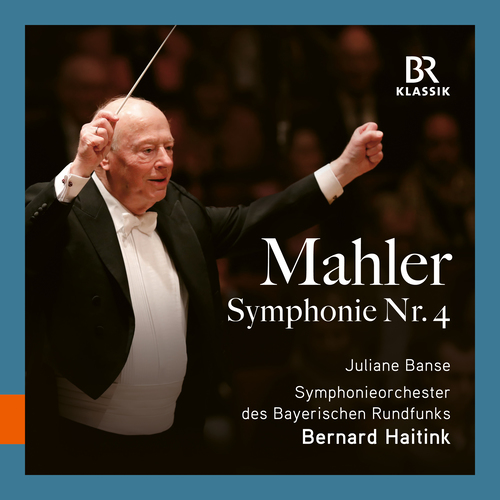
The Dutch conductor Bernard Haitink and the Bavarian Radio Symphony Orchestra enjoyed a long and intensive artistic collaboration, which came to an abrupt end with Haitink’s death in October 2021. BR-KLASSIK now presents outstanding and previously unreleased live recordings of their concerts from past years. This recording of Shostakovich’s Fifteenth Symphony documents a concert given in February 2015 in Munich’s Philharmonie im Gasteig. This recording of Gustav Mahler’s Fourth Symphony documents concerts from November 2005 also at Munich’s Philharmonie im Gasteig.
Haitink first conducted a Munich subscription concert in 1958, and from then on was a regular guest with the Bavarian Radio Symphony Orchestra – either in the Herkulessaal of the Residenz or in the Philharmonie im Gasteig. This congenial collaboration lasted for more than six decades. The orchestra musicians and singers enjoyed working with him just as much as the BR sound engineers. As an interpreter of the symphonic repertoire, and especially that of the German-Austrian Late Romantic period, Haitink was held in high esteem throughout the world. With him, the symphonies of Dmitri Shostakovich were always in the best of hands. Haitink’s driving principle was to make the sound architecture of a musical composition, with its complex interweaving, transparently audible; extreme sensitivity of sound was combined with a clearly structured interpretation of the score.
In his Fourth Symphony, Gustav Mahler brought his preoccupation with the poems from Des Knaben Wunderhorn to a preliminary climax. Texts from the collection, published between 1805 and 1808 by Clemens Brentano and Achim von Arnim, had already been incorporated into the “Wunderhorn Symphonies” Nos. 2 and 3. In Mahler’s Fourth Symphony, composed between 1899 and 1901, the final movement features the Wunderhorn poem “Das himmlische Leben” (The Heavenly Life), which the composer had already set to music in 1892. It depicts a paradise beyond the grave, seen from a child’s perspective. Mahler’s sceptical view of the world of his time forms a utopian counter-concept to this “heavenly world”.
Ole Schmidt (1928–2010) was a central figure in Danish musical life as a composer and conductor, known for combining classical form with the rhythmic and harmonic freedom of jazz. He began as a jazz musician, trained at the Royal Danish Academy of Music as a pianist and conductor and studied composition with Vagn Holmboe. He made his debut in 1955.
As a composer, he wrote works in many genres, including concertos, chamber music, ballet, opera, and film music, with a particular affinity for the string quartet, which he cultivated throughout his life. He had a close connection to musical theatre and served as ballet conductor at the Royal Danish Theatre. As a conductor, he enjoyed a significant international career and led several Danish and foreign orchestras. His recordings of Carl Nielsen’s symphonies with the London Symphony Orchestra are considered pioneering. Schmidt is remembered as an energetic and uncompromising artist who demonstrated that classical music can be contemporary and open to new influences without sacrificing artistic quality.
Two prominent Danish musicians, both professors at the Royal Danish Academy of Music, guitarist Jesper Sivebæk and accordionist Bjarke Mogensen, undertook a research project to explore some of Ole Schmidt’s lesser-known works, a true treasure for their instruments. The outstanding chamber orchestra of today’s young musicians at the Royal Danish Academy of Music is conducted by Max Artved, and joining them is also Bjarke’s partner in the Mythos Duo and concertmaster of the Danish National Symphony Orchestra, Christina Åstrand.

![GUARNIERI, C.: Pedro Malazarte [Opera] • Orchestral Songs](https://cdn.naxos.com/sharedfiles/images/cds/hires/8.660528.jpg "GUARNIERI, C.: Pedro Malazarte [Opera] • Orchestral Songs")
Camargo Guarnieri loved writing for the human voice, composing hundreds of vocal works over the course of his long and distinguished career. The works in this programme all use texts by Mário de Andrade – a hugely influential writer who was Guarnieri’s friend and long-term collaborator. The comic opera Pedro Malazarte is representative of an attractively unconventional and colourful Brazilian modernism that sets it apart from Romantic traditions. Alongside other powerful settings, A Serra do Rola-Moça is one of Guarnieri’s finest dramatic vocal works, narrating the tragic story of two young people who die on their wedding day as they and their horses plunge into a ravine.
![STRAUSS, R.: Intermezzo [Opera]](https://cdn.naxos.com/sharedfiles/images/cds/hires/8.660584-85.jpg "STRAUSS, R.: Intermezzo [Opera]")
Richard Strauss summed up his two-act opera Intermezzo as a ‘bourgeois comedy with symphonic interludes’. The soprano role of Christine with its shimmering cantilenas represents Strauss’s wife Pauline, while the successful Kapellmeister Robert Storch serves as Richard Strauss himself in a domestic drama that was avant-garde for its time but now resonates with the accessibility of today’s reality shows. This production from the Deutsche Oper Berlin was acclaimed for its lush orchestral sound and superbly characterful cast led by a formidable central performance from Maria Bengtsson.
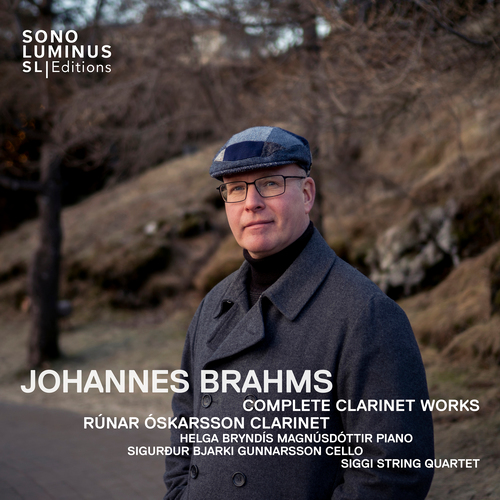
‘We clarinetists are profoundly grateful to Johannes Brahms for these four late works, composed near the end of his life. They stand as some of his most intimate and deeply felt music. We also owe thanks to the clarinetist Richard Mühlfeld, whose artistry moved Brahms so greatly that it inspired him to compose again.
Mühlfeld’s playing unlocked a new, quieter world for Brahms. Instead of writing large, dramatic works, Brahms started composing more personal and emotional music that highlighted the clarinet’s warm and gentle sound.
I was a young man when I first got to know these works, and in retrospect, I believe that my long engagement with these four compositions has shaped my approach to music-making more profoundly than any other repertoire, extending even to my interpretations of contemporary music.
There are certain compositions that simply refuse to let go. Often, after performing them, one assumes it will be the final time, yet that is seldom the reality. This has certainly been my experience with the works of Brahms. His music is a constant source of inspiration. Every time I set the music on the stand, something opens up – a new interpretative idea or a deeper understanding of the music. And then that feeling comes up that every musician recognizes: I have to play this again!
This is music that demands stillness and focus, and for me, it serves as an escape from the speed and noise of modern life. We are inviting the audience into a space where time stands still, where we are allowed to be sincere and reflective.
It is both a privilege and a responsibility to keep these compositions present through performance and recording. After our recital in 2017 where we played all four works, the idea emerged to record them together.
I hope you will find as much enjoyment in listening as we found in bringing this music to life.’
– Rúnar
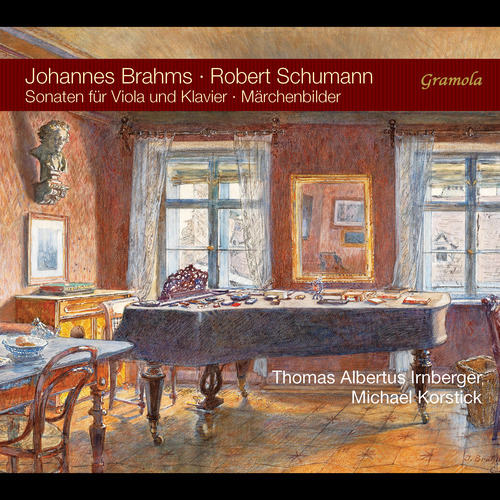
“If you happen to come to Frankfurt, especially in the first half of winter, please let me know. I would also come, either inviting Mühlfeld or bringing a viola part – for two clarinet sonatas that I would like Mrs. Schumann to hear. The unpretentious pieces would not disturb our comfort – but it would be nice!” This is what the 61-year-old Johannes Brahms wrote to his friend, the violin virtuoso Joseph Joachim, on October 14, 1894. Even this brief note indicates the composer’s early intention to have his two sonatas, Op. 120, performed alternatively by a wind instrument or the viola. Proving that these works are much more than ‘unpretentious’, Salzburg violinist and violist Thomas Albertus Irnberger, together with his long-standing piano partner Michael Korstick present a late new focus of Brahms’s. The subsequent “Märchenbilder”, Op. 113, by Robert Schumann marked another pinnacle of the viola-piano repertoire.
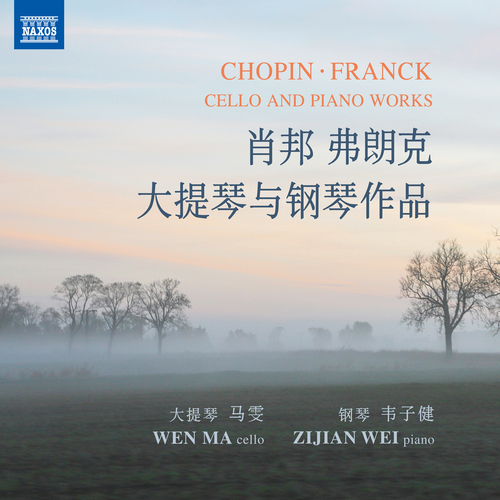
This album presents a refined dialogue between cello and piano, featuring classic works by Fryderyk Chopin and Cesar Franck. Performed by distinguished cellist Wen Ma and pianist Zijian Wei, winner of the 2024 Cleveland International Piano Competition, the album reflects the performers’ deep affinity for this classical repertoire. Throughout the recording, the dialogue between cello and piano is infused with a lingering romantic resonance.
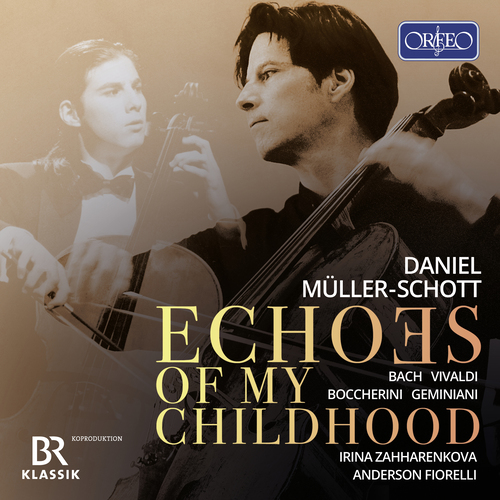
In this remarkable recording, Daniel Müller-Schott blends masterful cello artistry with a deeply personal musical journey. Together with Irina Zahharenkova and Anderson Fiorelli, they bring works by Bach, Vivaldi, Geminiani and Boccherini to life – performed on the very harpsichord his mother played, the sound of which has accompanied him since childhood.
The sonatas unfold with a captivating mix of Baroque elegance, emotional warmth and technical brilliance. Each interpretation reflects intimacy, nostalgia and the timeless power of music. This is an album that resonates: authentic, poetic, and radiant with Baroque expressiveness.
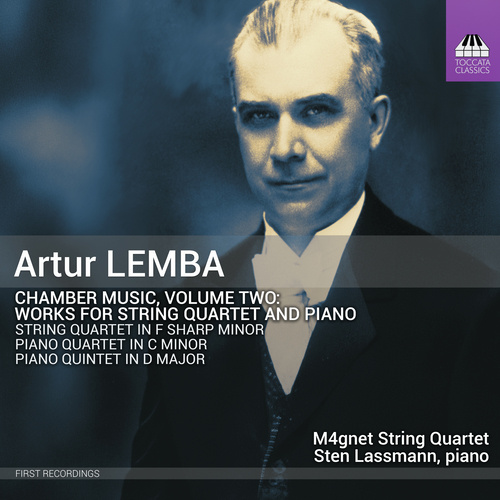
The music of Artur Lemba has been strangely neglected, even in his native Estonia – although during his lifetime (1885–1963) he was held in high regard as pianist and teacher. That oversight is all the more surprising in view of the expansive, passionate lyricism of his writing – listeners who enjoy the music of Tchaikovsky and Rachmaninov are likely to warm to Lemba’s full-blooded Romantic style. This second release in a pioneering series discovering his chamber music reveals three expansive, big-hearted works full of personality.
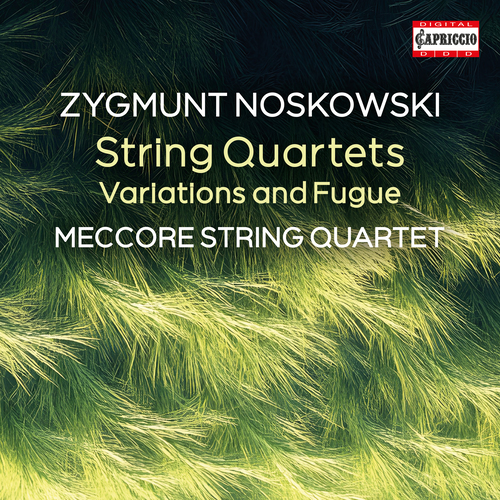
Zygmunt Noskowski, the influential Polish conductor and composer, is perhaps better remembered for his role as a teacher and mentor to later luminaries such as Karol Szymanowski and Mieczysław Karłowicz than for his own compositions; also, for his connection to Stanisław Moniuszko. Yet for much of the 19th century, he was Poland’s leading exponent of modern music and his works are central to the Polish tradition. Following the Capriccio recordings of his symphonies (C5509 and C5547) this album presents a programme of his string quartets that again embody a veritable picture book of Polish Romanticism.
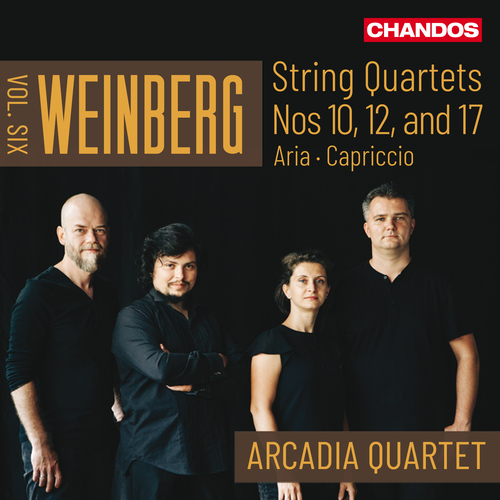
With this sixth volume, the Arcadia Quartet completes its series of recordings of Weinberg’s string quartets. The ensemble comments: ‘Although from time to time we encounter music that we have never heard before, rarely is that music something we would listen to or play again. In our times, with our technology of information, it is rather difficult to discover something meaningful and valuable that had been overlooked in the past, but when it does happen it is a really special moment. For us it happened when we first encountered the string quartets of Mieczysław Weinberg. We felt instantly captivated by the wonderful music, the deeply inspired melodies, and perfectly shaped structures. The joy of playing his music has only proved equalled by the enthusiastic response of the public every time we present these quartets in concert, so the obvious question arises: “How can it be that we never heard about Weinberg earlier?” His music is like a glow of light surrounded by the darkness of the unknown, and it quickly became a goal of ours to attempt to dilute these shadows. With every recording and every live performance of his music, we intend to shine some light on this wide-ranging, profound phenomenon, which has remained overlooked for so long.’
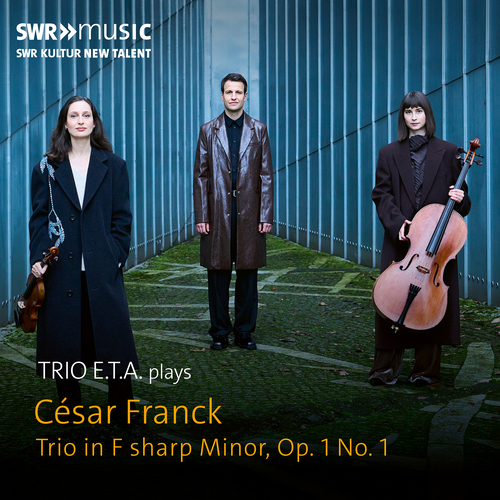
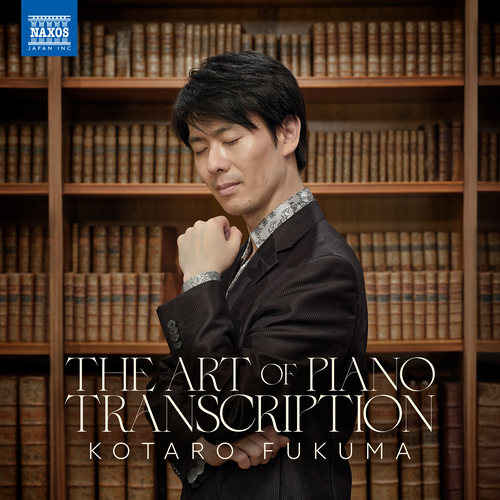
Virtuosity meets lyricism.
Fukuma explores new horizons in piano transcriptions!
Beyond his 20th anniversary, Kotaro Fukuma presents a transcription collection fusing virtuosity and lyricism. From his own Wagner arrangement to signature chansons and opera transcriptions, this “Fukuma-style” anthology is crafted for major playlists.
The digital release includes four bonus tracks–notably a J. Strauss II duo with Kaoru Jitsukawa–and is available in Dolby Atmos. This album marks Fukuma’s next strategic leap in the digital market, building on his success with global curators.
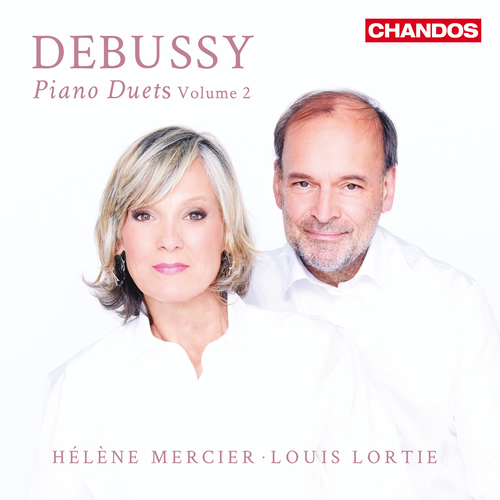
Alongside their respective solo careers, Hélène Mercier and Louis Lortie regularly meet to perform as a highly sought-after piano duo. Both born and raised in Montreal, they have formed a musical partnership that goes back to the 1980s, developing a musical intimacy present throughout their wide-ranging repertoire. Their complicity has been strengthened over decades of playing concerts and recording together. This, their nineth album for Chandos, continues their exploration of works by Debussy. The programme features transcriptions by Ravel, Dutilleux, Woollett, Durand, Roques, and the composer of some of his best-known orchestral works (Prélude à l’après-midi d’un faune, Nocturnes) and solo piano pieces (Clair de lune, La Soirée dans Grenade, La plus que lente, Rêverie). These sit alongside Lindaraja and En blanc et noir, original compositions for two pianos. Mercier and Lortie alternate the first and second player responsibilities in this mixture of works for two pianos and piano duet.
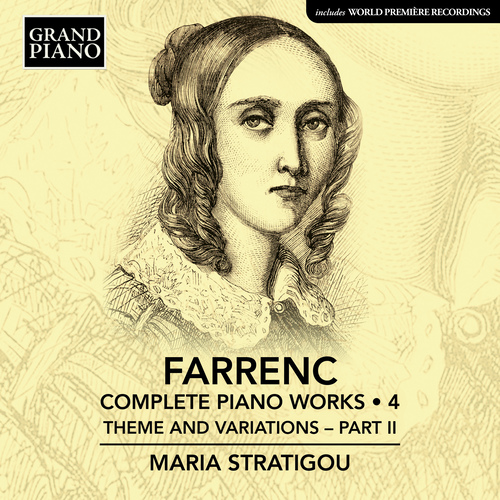
Louise Farrenc was one of the most respected pianists, composers and pedagogues in the Parisian musical scene of her day, gaining the admiration of Robert Schumann. Her Theme and Variations sets are regarded as some of the most significant pieces she composed for piano. In this volume, Farrenc takes inspiration from the famous bel canto operas of Bellini and Donizetti, as well as popular airs and dances that would have resounded throughout the fashionable salons of 19th-century Paris. Maria Stratigou continues her acclaimed survey of Farrenc’s complete works for piano.
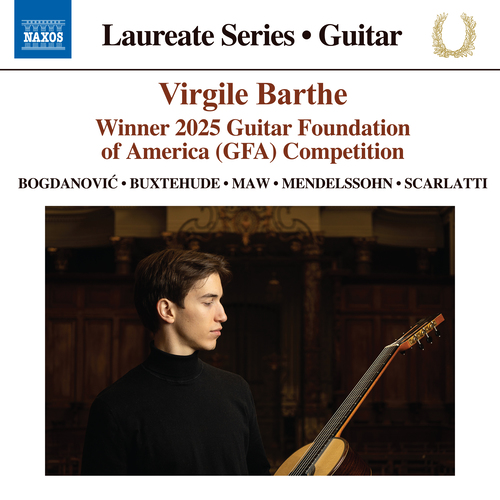
Virgile Barthe, winner of the 2025 Guitar Foundation of America Competition, presents works ranging from the Baroque to the 21st century performed with his impeccable virtuosity and artistry. This recital takes us from arrangements of Domenico Scarlatti’s deeply expressive sonatas and Buxtehude’s brilliant Suite, to the lyrical Songs without Words of Mendelssohn and the haunting Music of Memory by Nicholas Maw. The album closes with Dušan Bogdanović’s Third Sonata, a truly virtuoso piece with its quotes from Stravinsky and musical influences from the Balkans, jazz and the Renaissance.
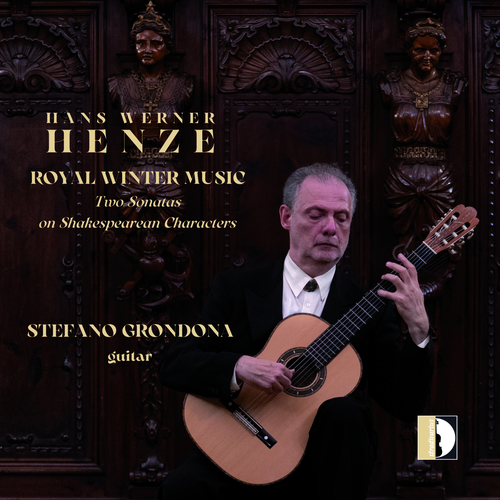
Hans Werner Henze. Royal Winter Music. Two Sonatas on Shakespearean Characters marks an important stage in Stefano Grondona’s recording career: after years of sustained engagement with it and public performances (roughly from 1982 to 1995), the musician returns to confront this pivotal work of twentieth-century guitar repertoire. At the same time, in the manner and outcomes of this traversal, the record bears witness to an oblique and little-trodden modality of approaching compositions that, like this one, embody peculiarities and contradictions of the more cultured guitar repertoire.
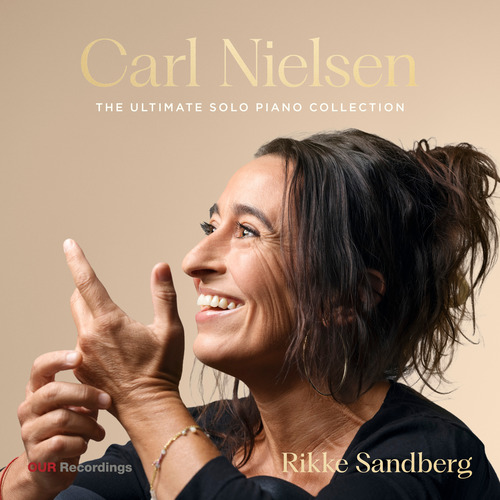
This landmark triple CD release presents for the first time the complete solo piano works of Denmark’s national composer, Carl Nielsen, performed by one of the country’s most distinguished and visionary pianists, Rikke Sandberg. She has worked with Nielsen’s music since she began playing the piano as a child, and her teachers form an unbroken lineage back to the pianists for whom Nielsen originally wrote his piano works. On this release you will find Nielsen’s original piano music as well as his own arrangements of his compositions. All of Nielsen’s solo piano music is included.
The Danish press has repeatedly celebrated her artistic integrity. Politiken writes: “She gathers torrents of notes into long, breathing arcs with sharply etched detail and colourful nuance… First and foremost she is an artist; display does not interest her.” The same paper concludes: “Few Danish pianists make as great a difference in our musical life as she does.” Jyllands-Posten praises her “richly nuanced and superbly controlled playing,” while international critics highlight interpretations where “nothing sounds overheated or overplayed… full of fire and sparkling esprit… with such restrained dynamics that one’s breath is taken away.”
At the heart of Sandberg’s artistry stands the great Romantic tradition, notably her acclaimed interpretations of Johannes Brahms, alongside a profound commitment to twentieth-century and contemporary Danish music.
Now, that lifelong dialogue between heritage and renewal culminates in Nielsen’s piano oeuvre: music of rhythmic vitality, bold architecture, folk-like simplicity and daring modernity. Spanning nearly forty years, from intimate miniatures to monumental works, this edition reveals Nielsen in his full creative breadth.
More than a recording, this is a definitive artistic statement, and the ultimate document of Carl Nielsen’s piano world.
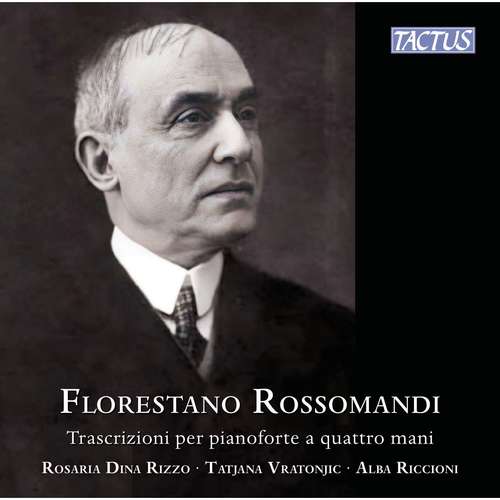
Florestano Rossomandi developed his musical education within the Neapolitan Pianistic School under Beniamino Cesi at the then Royal College of Music in Naples, after having passed the entrance examination for the boarding school – where young students could reside during their years of study – at just over ten years of age.
He thus moved to Naples where he remained until his death in 1933, and where he worked as a professor at the “San Pietro a Majella” Conservatory of Music from 1889 to 1929. He was the first to feel the need to write a proper didactic method capable of guiding piano teachers in the training of their students. Beniamino Cesi had also written a Piano Method, but it consisted solely of technical exercises, lacking the methodological and instructional guidance useful for teachers.
In this album dedicated to him, pianist Rosaria Dina Rizzo – the foremost scholar of the composer – presents an anthology based mainly on four-hand piano transcriptions, in keeping with a practice that the author considered of fundamental importance for the musical education of a pianist.
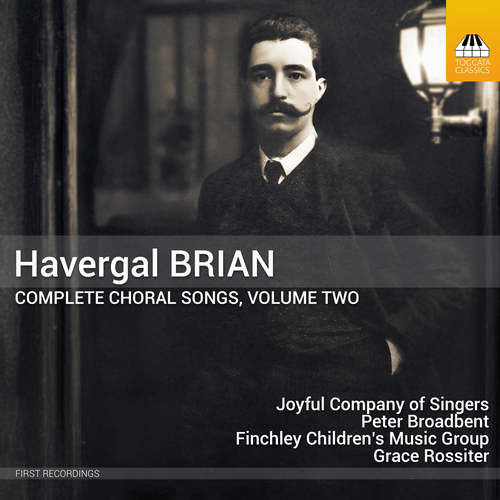
The reputation of Havergal Brian (1876–1972) as a late-blooming symphonist obscures the fact that he was an early-blooming composer of choral music for the huge market of amateur choirs thriving in Edwardian England. His choral songs range from simple unison settings for children’s or women’s voices to harmonically complex essays intended to tax the ability of groups taking part in the choral competitions once popular in regional Britain. This second selection includes four canons that Brian wrote in the early 1920s as contrapuntal studies for his mighty Gothic Symphony.
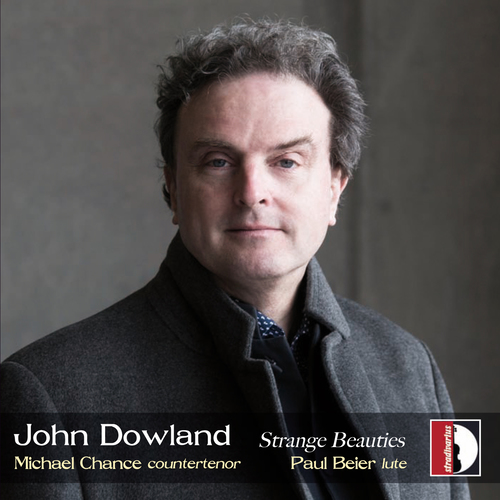
![MAYR, J.S.: Giuseppe [Oratorio]](https://cdn.naxos.com/sharedfiles/images/cds/hires/8.574710.jpg "MAYR, J.S.: Giuseppe [Oratorio]")
Giuseppe was composed by Mayr in 1829 for graduation concerts at the academy of music in Bergamo over which he presided. His inspiration was a Biblical opera that had won great popularity, Méhul’s Joseph, which had premiered in Paris in 1807, featuring prayers, hymns and unassuming arias. Mayr, however, drew on a much wider musical canvas to include grand arias, duets, a cavatina and a final chorus. He also repeatedly references popular melodies by his contemporaries Donizetti, Rossini and Bellini as befits a pasticcio oratorio.
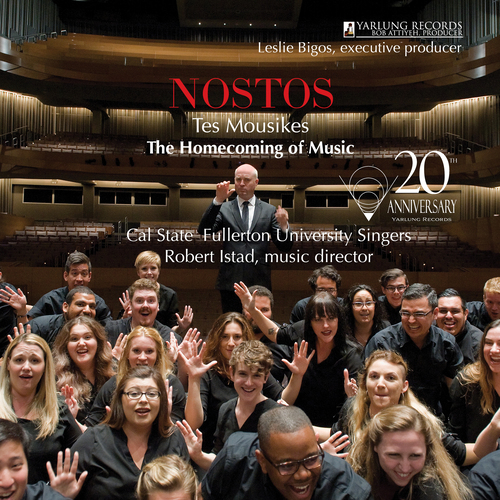
Specially remastered for Yarlung’s 20th Anniversary, using analog technology we had not yet developed at the time of the original recording in 2017. Music director Robert Istad is one of the most exciting choral conductors in the next generation of American music. Dr. Istad directs the Pacific Chorale as heard on Yarlung’s All Things Common, serves as president of the California Choral Director’s Association, and is Professor of Music and Director of Choral Studies at California State University, Fullerton. Rob has conducted the Cal State Fullerton University Singers for twenty years, and the ensemble returned ten days before our 2017 recording session from a successful tour in Russia, the Baltics and Scandinavia.
Yarlung’s 20th Anniversary gives us the perfect excuse to look back a bit and celebrate some of our earlier successes with outstanding musicians. We continue this series with Nostos, the inaugural recording made in what is now called The Soraya, an acoustic masterpiece of a concert hall in Los Angeles. Leslie Bigos served as our executive producer for the original compact disc, and we are grateful to Leslie for her continued support.
The releases of the SWR Vokalensemble and its chief conductor Yuval Weinberg are distinguished by thematic and dramaturgical coherence as well as artistic excellence. The Masses featured on this album draw on the centuries old tradition of double choir composition techniques, yet retain a timeless quality and are among the most cherished Mass settings.
Rheinberger composed his Cantus Missae in 1878, during his tenure as court chapel master to King Ludwig II. The work bears witness to his successful reconciliation of the conflicting artistic currents of his time, and it is precisely this perfect equilibrium that has rendered it timeless. The Mass captivates with its melodic, often almost Lied like character; yet, on closer listening, the music reveals a striking modernity for its era.
Nana Forte’s Libera me was written almost 150 years after Cantus Missae. It is a spiritual drama in which the composer draws on the traditional techniques of double choir writing: she lets the choirs interlock contrapuntally or overlap in contrasting layers, as in the passage “tremens factus sum ego” (“trembling has overtaken me”).
Frank Martin kept the manuscript of his Mass for Double Choir in a drawer for nearly forty years, regarding it as something solely between himself and God. In sound and musical language, the Mass is unmistakably a work of the twentieth century, yet one hears echoes of Gregorian chant and senses that the composer consciously places himself within the centuries old tradition of double choir composition and the symbolic world of Mass settings. Martin’s work is shaped by the tension between tradition and modernity, personal confession and doctrinal expectation; but rather than seeking a “golden mean,” he approaches these themes as a seeker and questioner. The result is one of the most highly regarded Mass settings of the twentieth century.
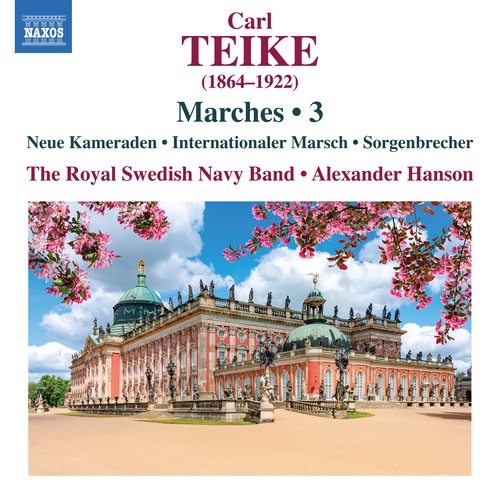
Famous for composing one of the world’s greatest marches, Alte Kameraden (available on Volume 1 in this series, 8.574317), Carl Teike wrote a body of works that have enriched the German concert march repertoire. They imbue the medium with both diversity and charisma marrying thematic invention with clarity of structure and richness of tone colours. For the 43rd anniversary of his death, a 1918 march was disinterred, and named Neue Kameraden, while Sorgenbrecher is a tribute from Teike to his contemporary, the admired composer Paul Lincke. This is the final volume in the series.
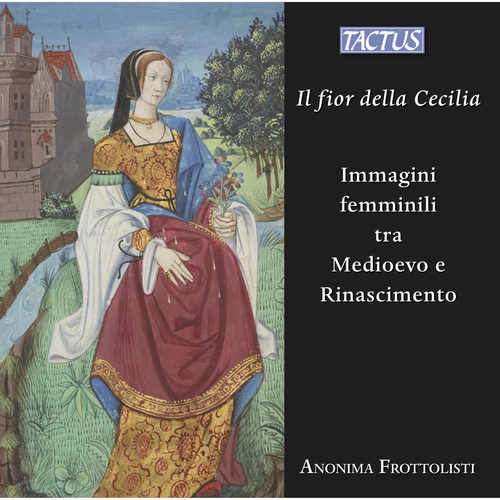
The production by the ensemble Anonima Frottolisti, which by now needs no introduction thanks to its specialization in the interpretation of medieval and Renaissance music, focuses in this work on the theme of the female figure as it has been handed down to us from the late fifteenth century. La Cecilia represents a story of life that is entirely feminine: “lament and pity, despair, the condition of women and their redemption,” jealousy, the renunciation of nobles and knights in defense of one’s love and dignity, and the “Comedy”–that is, the representation that dramatically depicts reality.
The song has very ancient roots in Western music, from the earliest monodic forms of the 15th century in France, where the protagonist is Pernette–also present in Italy in the Aosta Valley tradition at the end of the 19th century–or in the case of Jeannette, still used in children’s stories in French-speaking areas; or in the 15th-century example La belle se sied by Guillaume Dufay and the three-voice version by Josquin Desprez; or in the narrative song from the oral tradition of the “three sisters/ladies who come from Liun”; as well as in the sacred realm, influencing the composition of the Missa la Belle se sied in the Trent Codex 1377, or the Missa La Belle se sied composed by Mambriano de Orto and printed by Petrucci in 1505.
The disruptive force of this tradition–that is, the branches that radiated from it starting from the European Middle Ages–remains evident and inherent in every musical and literary domain.
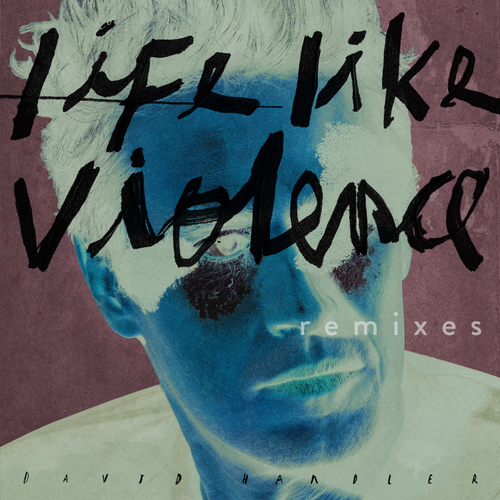
David Handler presents a different take on his debut album with the digital release of Life Like Violence: The Remixes, which gathers some of his favourite artists to reimagine, rework, maul, chop, flip, and sample the collection of original works named in May 2025 by NPR as one of the month’s best classical albums.
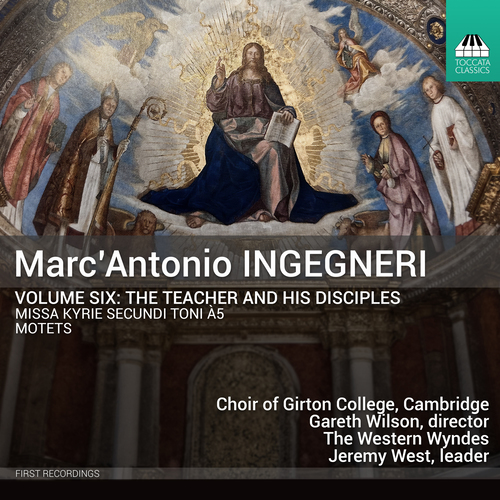
In this sixth album the Choir of Girton College, Cambridge, continues its pioneering exploration of the music of the Italian Renaissance master Marc’Antonio Ingegneri (c. 1535/36–92) with a programme exploring in music Christ’s relationship with his disciples – twelve motets, symbolising the twelve disciples, framing the five-voice Missa Kyrie Secundi Toni, all in their first recordings. These further discoveries confirm Ingegneri’s position as one of the masters of his age, writing music as expressive and moving as his better-known contemporaries Palestrina and Lassus – and just as individual.
![FAIRYTALE BALLETS – Cinderella • Coppélia • The Sleeping Beauty • Swan Lake [Ballets] (Royal Ballet, 2017–2023)](https://cdn.naxos.com/sharedfiles/images/cds/hires/OA1382BD.jpg "FAIRYTALE BALLETS – Cinderella • Coppélia • The Sleeping Beauty • Swan Lake [Ballets] (Royal Ballet, 2017–2023)")
The Royal Ballet’s perfect pairing of Marianela Nuñez and Vadim Muntagirov takes centre stage in this collection of four fairytale favourites: Cinderella, Coppélia, Sleeping Beauty and Swan Lake.
This delightful collection unites four of The Royal Ballet’s most beloved fairytale classics, led by the radiant partnership of Marianela Nuñez and Vadim Muntagirov. It spans the theatrical magic of Ashton’s Cinderella, the witty charm and precision of Coppélia, the glittering grandeur and iconic moments of The Sleeping Beauty, and the timeless romance of Swan Lake in Liam Scarlett’s atmospheric production. Rich designs, inspired choreography and Tchaikovsky’s glorious music combine to create a joyful celebration of classical ballet at its finest.
![VERDI, G.: La Forza del destino [Opera] (La Scala, 2024)](https://cdn.naxos.com/sharedfiles/images/cds/hires/772608.jpg "VERDI, G.: La Forza del destino [Opera] (La Scala, 2024)")
Among Teatro alla Scala’s most unforgettable productions, this La forza del destino is a performance of striking musical energy, with Riccardo Chailly conducting an exceptional cast of opera stars. Anna Netrebko (Leonora), confirms her absolute dominance of the Verdian repertoire, showcasing “beautiful floating high notes and enviable fiato” (OperaWire). Brian Jagde (Don Alvaro) and Ludovic Tézier (Don Carlo), give impeccable performances of great emotional depth and timbral richness. Joining forces, Stage Director Leo Muscato and Set Designer Federica Parolini deliver a reinterpretation of Verdi’s classic in a modern key. On a set that impresses for both beauty and functionality, the scenes are set across different eras, reminding us that war is always part of humans’ fate. “The undisputed star of the evening is Anna Netrebko. She elevates Donna Leonora with her distinctive, dark, velvety timbre, impeccable high notes, and acting presence.” (Orpheus Magazine)
![DONIZETTI, G.: Lucia di Lammermoor [Opera] (La Scala, 2023) (NTSC)](https://cdn.naxos.com/sharedfiles/images/cds/hires/772408.jpg "DONIZETTI, G.: Lucia di Lammermoor [Opera] (La Scala, 2023) (NTSC)")
![DONIZETTI, G.: Lucia di Lammermoor [Opera] (La Scala, 2023) (Blu-ray, HD)](https://cdn.naxos.com/sharedfiles/images/cds/hires/772504.jpg "DONIZETTI, G.: Lucia di Lammermoor [Opera] (La Scala, 2023) (Blu-ray, HD)")
Make sure to subscribe to Naxos newsletters for other great offers.