
 |
 |
 |
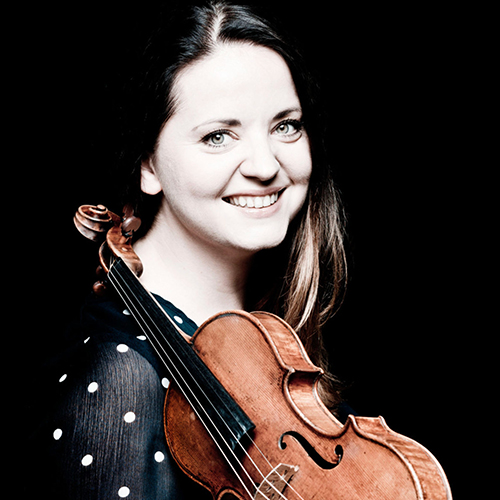
Baiba Skride’s natural approach to her music-making has endeared her to some of today’s most important conductors and orchestras worldwide. She is consistently invited for her refreshing interpretations, her sensitivity and delight in the music. The list of prestigious orchestras with whom she has worked include the Berliner Philharmoniker, Gewandhausorchester Leipzig, Münchner Philharmoniker, Royal Concertgebouw Orchestra, Symphonieorchester des Bayerischen Rundfunks, Orchestre de Paris, London Symphony Orchestra, London Philharmonic Orchestra, Royal Stockholm Philharmonic and Helsinki Philharmonic Orchestra. In North America she performs with the New York Philharmonic as well as Boston, Chicago, Baltimore, Houston and Toronto Symphony Orchestras. Further afield she works with NHK Symphony Orchestra, Shanghai Symphony Orchestra and Hong Kong Philharmonic Orchestra. Notable conductors she collaborates with include Marin Alsop, Christoph Eschenbach, Ed Gardner, Susanna Mälkki, Andris Nelsons, Andres Orozco-Estrada, Santtu-Matias Rouvali, Vasily Petrenko, Yannick Nézet-Séguin, Jukka-Pekka Saraste, Tugan Sokhiev, John Storgårds and Simone Young.
In addition to core repertoire, Baiba Skride regularly champions contemporary music and has premiered concertos by composers such as Victoria Borisova-Ollas, Sebastian Currier and Sofia Gubaidulina.
Baiba Skride is a sought-after chamber musician internationally. Her chamber music partners include Alban Gerhardt, Brett Dean, Harriet Krijgh, Daniel Müller-Schott, Sol Gabetta, Bertrand Chamayou, Xavier de Maistre and her sister Lauma Skride. A founding member of the Skride Quartet, invitations took the quartet to Vienna’s Musikverein, Concertgebouw Amsterdam, Schubertiade Hohenems, Wigmore Hall London, Louvre Paris, Tanglewood Music Festival, New York Town Hall, amongst others.
Skride was born into a musical Latvian family in Riga where she began her studies, transferring in 1995 to the Conservatory of Music and Theatre in Rostock. In 2001 she won the First Prize of the Queen Elisabeth Competition. Baiba Skride plays the Yfrah Neaman Stradivarius kindly loaned to her by the Neaman family through the Beare’s International Violin Society.
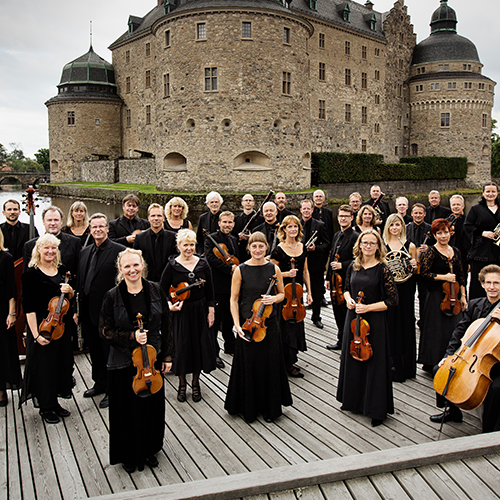
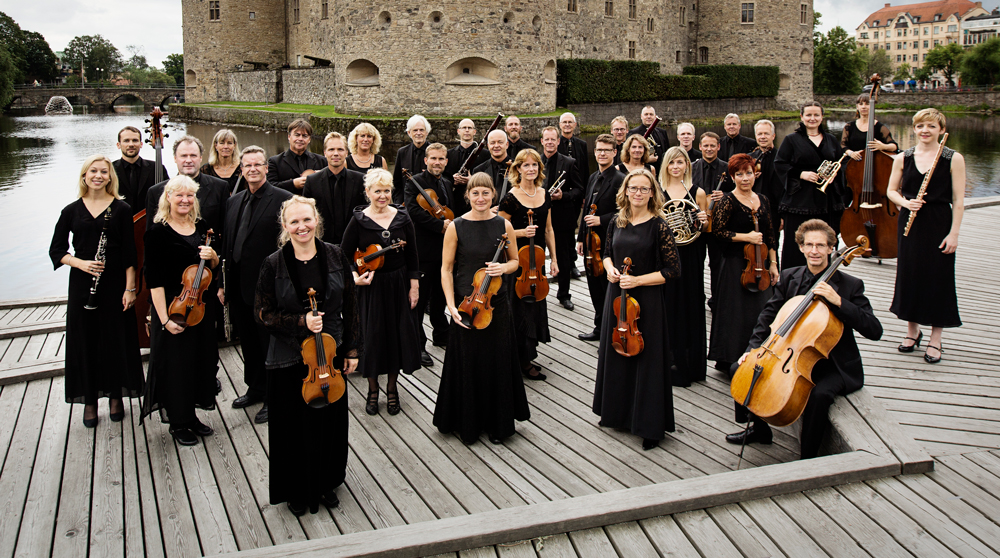
The Swedish Chamber Orchestra, a tightly-knit ensemble of 39 players, was founded in 1995 and made its USA and UK debuts in 2004 performing at the BBC Proms and Lincoln Center. The New York Times wrote of their performance: ‘It has been a longstanding complaint in the classical music world that as recordings and jet travel have shrunk the globe, an international sound has been fostered that has filtered out regional differences in timbre and interpretation ... and every now and then an orchestra comes along with a sound that is surprising and fresh.’ Martin Fröst is the orchestras chief conductor, taking over the baton from Thomas Dausgaard who held the post from 1997–2019. Since 2004 the Swedish Chamber Orchestra has toured regularly throughout Europe, made its debut in Japan and returned to the States and the Lincoln Center in 2008, 2013 and 2017. Other venues and festivals include the Salzburg Festival in 2010, the Schleswig Holstein Music Festival in 2003, 2014 and 2020, the BBC Proms in 2010 and 2018 and a Vienna Konzerthaus residency in 2019. The Swedish Chamber Orchestra continues to expand its repertoire and has recorded the complete Beethoven, Schubert, Schumann and Brahms symphony cycles. It performs regularly with conductor/composers HK Gruber and Brett Dean. The orchestras list of visiting artists includes Pierre-Laurent Aimard, Leif Ove Andsnes, Michael Collins, Isabelle Faust, Andrew Manze, Nina Stemme, Jörg Widman, Nikolaj Znaider, Thomas Zehetmair, Tabea Zimmermann and James Ehnes. With its range of repertoire and styles the ensemble has established its own unique voice as the Münchner Abendzeitung testifies: ‘Their acclaimed recordings of Schumann and Beethoven have made these three dozen musicians from Sweden into a top tip … In concert such miracles are sometimes a disappointment. Not so with the Swedish Chamber Orchestra at the Salzburg Festival.’
|
 |
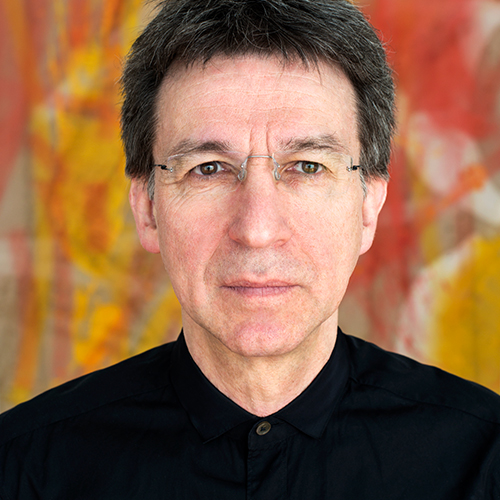
Eivind Aadland is one of Norway’s most respected conductors. He was Chief Conductor and Artistic Leader of the Trondheim Symphony Orchestra for seven seasons from 2004, during which time he conducted the complete Beethoven and Mahler symphony cycles. In 2020 Aadland takes up the position of Chief Conductor and Artistic Director of the Tasmanian Symphony Orchestra. His extensive work with Scandinavian orchestras includes regular guest engagements with the Oslo and Bergen Philharmonics, the Stavanger Symphony, the Gothenburg Symphony and the Swedish Chamber Orchestra. In addition, Aadland has conducted critically acclaimed productions of Don Giovanni, Le nozze di Figaro, Die Zauberflote and Die Fledermaus for Den Norske Opera, Oslo. Aadland has also worked extensively in the Far East and Australia. In 2010 he led the Trondheim Symphony on a seven-concert tour to China and made his debut with the KBS Symphony Orchestra in Seoul. From 2011 to 2013 he was Principal Guest Conductor of the Queensland Symphony Orchestra in Brisbane. Eivind Aadland is a frequent visitor to the WDR Symphony Orchestra Köln, The National Orchestra of Belgium and Iceland Symphony Orchestra. He has also worked with Orchestre national du Capitole de Toulouse, Gürzenich-Orchester Köln, Strasbourg Philharmonic, Lausanne and Scottish Chamber Orchestras and the symphony orchestras of Melbourne, Tasmania, Finnish Radio, Bamberg, Staatskapelle Weimar, SWR Stuttgart, and Tokyo Metropolitan Symphony Orchestra. Recent seasons saw a return to the Bergen Philharmonic to conduct a new visualisation by artist Alexander Polzin of Grieg’s Peer Gynt with further performances by the Barcelona Symphony Orchestra.