
The Music of Brazil

Release date: JAN 2024
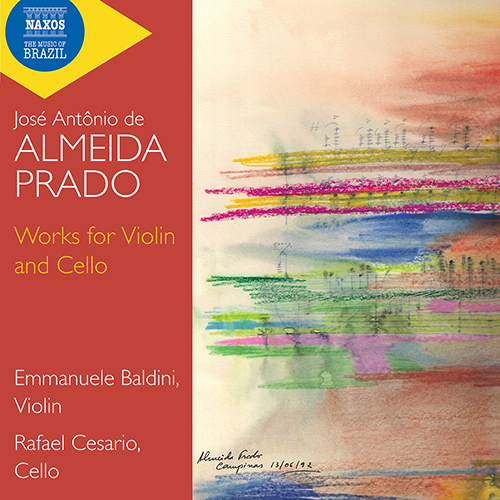
José Antônio de ALMEIDA PRADO (1943–2010)
Works for Violin and Cello
Emmanuele Baldini, Violin • Rafael Cesario, Cello
José Antônio de Almeida Prado was one of the most prolific and creative Brazilian composers of the second half of the 20th century, finding inspiration in everything from the birdsong and forests of his native country to a contemplation of the galaxies. The evocative Le Livre magique de Xangô is considered a foundational work in Almeida Prado’s final, eclectic postmodern phase, during which folk music also re-emerged in works such as Das Cirandas. The lively Solo Violin Sonata and lyrical Capriccio both explore the violin’s full expressive potential, while The Four Seasons tests the skill of younger players.
Release date: JUL 2025
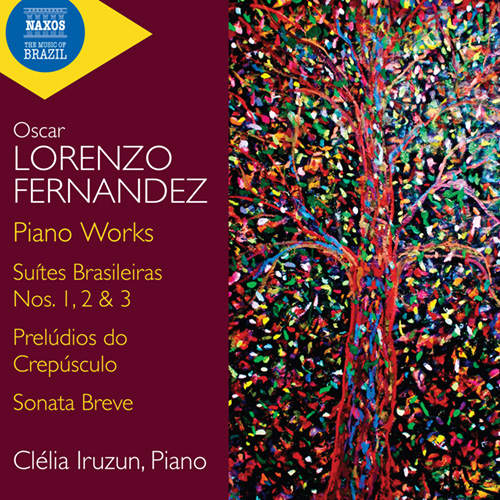
Oscar LORENZO FERNANDEZ (1897–1948)
Piano Works
Suítes Brasileiras Nos. 1, 2 & 3
Prelúdios do Crepúsculo
Sonata Breve
Clélia Iruzun, Piano
Oscar Lorenzo Fernandez belonged to a key group of Brazilian composers including Villa-Lobos, Mignone and Guarneri, who radically transformed the landscape of Brazilian classical music and shaped future generations of composers. Lorenzo Fernandez was essentially a miniaturist, with many of his piano pieces being both richly inventive and short in duration. From the Iberian sonorities of earlier pieces such as the expansive Noturno, via the nationalist flavours of the Suítes Brasileiras, to his final piano work, the technically challenging Sonata Breve, Lorenzo Fernandez’s refined sophistication and originality can be heard in every piece.
Release date: JAN 2026
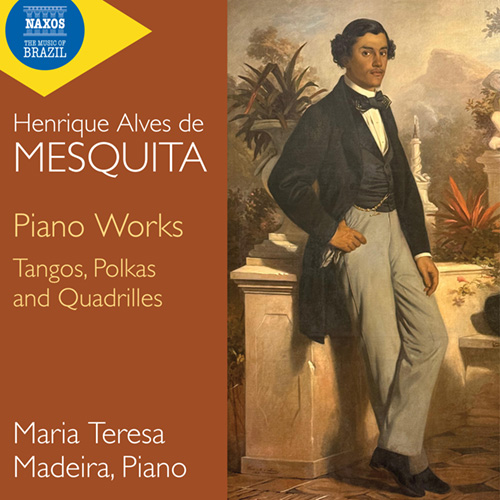
Henrique Alves de MESQUITA (1830–1906)
Piano Works
Tangos, Polkas and Quadrilles
Maria Teresa Madeira, Piano
Henrique Alves de Mesquita was a prolific composer who defied Brazilian society’s systemic exclusion of Black people to achieve prominence as one of the leading figures in the local musical scene of the 19th century. He was highly regarded for his sacred music and operas, which are rarely heard today. After study years in Paris, Mesquita turned his versatility and sophistication towards fashionable music theatre styles such as polkas, tangos and waltzes, conveying emotions ranging from contagious joy to gentle melancholy. It is these lighter pieces that are now considered by many scholars to be one of the main origins of modern Brazilian popular music.
 Watch video trailer
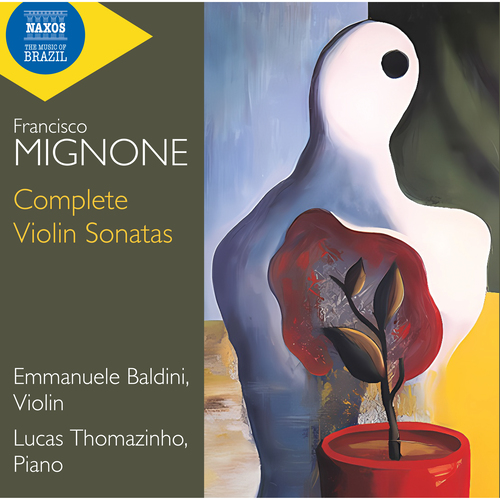
Francisco MIGNONE (1897–1986)
Complete Violin Sonatas
Emmanuele Baldini, ViolinLucas Thomazinho, Piano
Francisco Mignone was a leading figure in the Brazilian music scene of the 20th century, with a free-flowing style and gift for melody that instantly communicated with audiences. He was part of the first generation of modernist Brazilian composers that included Villa-Lobos and Guarnieri. Mignone’s two early unnumbered sonatas emulate the French influence of Fauré and Debussy, but it was not until the 1960s that he returned to the genre. The First and Second Sonatas share a fragmented, experimental character that juxtapose varying forms of tonality and metre, while the Third Sonata features national rhythmic and melodic elements. These sonatas represent some of the most significant works for violin and piano to come from Brazil.
 Listen to Podcast
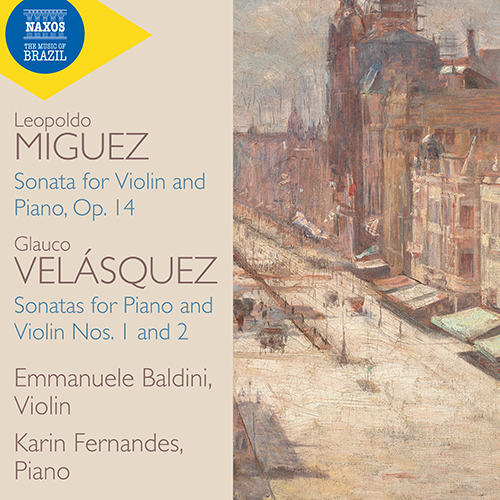
Leopoldo MIGUEZ (1850–1902) • Glauco VELÁSQUEZ (1884–1914)
Sonatas for Violin and Piano
Emmanuele Baldini, Violin • Karin Fernandes, Piano
Leopoldo Miguez and Glauco Velásquez were both leading figures in Brazil’s classical music scene at the turn of the 20th century, bringing back influences from Europe to a homeland in a state of enormous social upheaval. The lyrical character of Miguez’s ambitious Violin Sonata, Op. 14 is developed in a far more sophisticated and contrapuntal manner to anything previously experienced in Brazil, while Velásquez’s two sonatas are even richer in nuance. The tropical Romanticism of these three works marked an important change in Brazil’s chamber music, from pieces intended largely for domestic use to works equal to the noble expression of its new Republic.
‘The huge orchestral piano playing is refreshing, dwarfing the violin sometimes, as it should. Interweaving lines are passed off artfully between the instruments. There is a steady graininess to the violin sound … This is a fine reading and brilliant playing.’
– American Record Guide
‘Internationally acclaimed, Italian violinist-conductor Emmanuele Baldini and
award-winning, Brazilian pianist Karin Fernandes deliver technically accomplished, passionate accounts of these little-known works. Both artists give careful attention to dynamics, phrasing and rhythmic detail, thereby bringing out all the delicate nuances that abound in this music.’
– Classical Lost and Found
Release date: NOV 2024
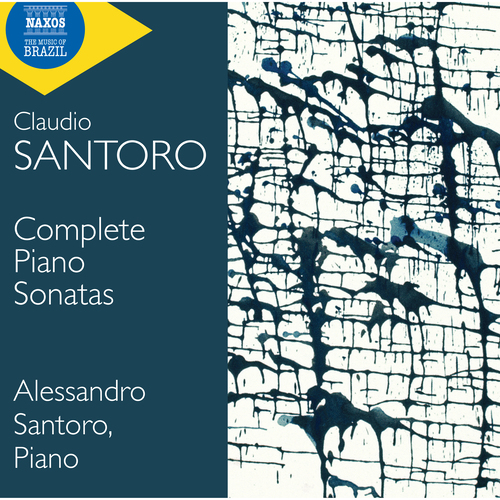
Claudio SANTORO (1919–1989)
Complete Piano Sonatas
Alessandro Santoro, Piano
Written over a 46-year period, Claudio Santoro’s six piano sonatas document the evolution of his creative and formal skills – together they present a survey of the composer’s entire aesthetic development. Always radiating a forceful inner power and with expressive lyricism at their heart, the early sonatas explore twelve-note technique as a unifying element, transitioning to a distinctive Brazilian nationalist character by the Third and Fourth sonatas. The Fifth Sonata, from the end of Santoro’s life, is a synthesis of the various idioms he had used over the decades. This is the first complete recording of Santoro’s piano sonatas, performed by the composer’s son, Alessandro Santoro.
Release date: JAN 2023
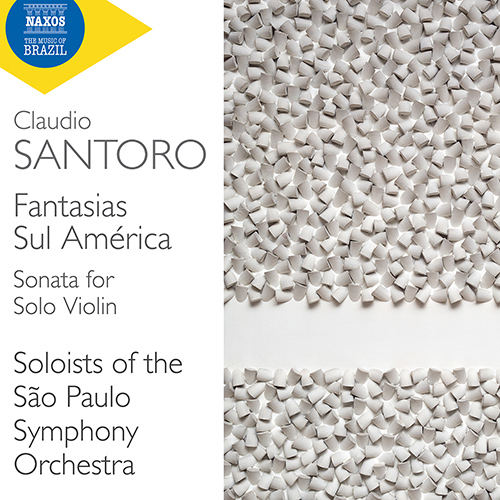
Claudio SANTORO (1919–1989)
Fantasias Sul América
Sonata for Solo Violin
Soloists of the São Paulo Symphony Orchestra
Claudio Santoro was one of Brazil’s leading composers, having written a considerable amount of solo, chamber and orchestral music, including arguably the most important symphonic cycle ever written in that country. The fifteen Fantasias Sul América, composed as competition pieces for individual instruments, represent fascinating syntheses of his style heard in compressed form. Freely atonal and highly virtuosic, these pieces are now standard repertoire for Brazilian soloists, and were even used later by Santoro as material for his Symphony No. 12 (Naxos 8.574406). The youthful Sonata for Solo Violin is a work of extraordinary density and experimentation that reveals an aesthetically consistent dialogue with the much later Fantasias.
‘Performances throughout are faultless; it would be truly wonderful if these works could become more widely known as a consequence of such fine recordings.’
– Gramophone
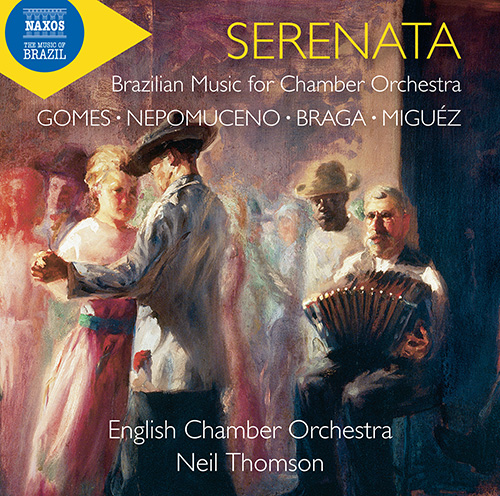
Release date: SEP 2022
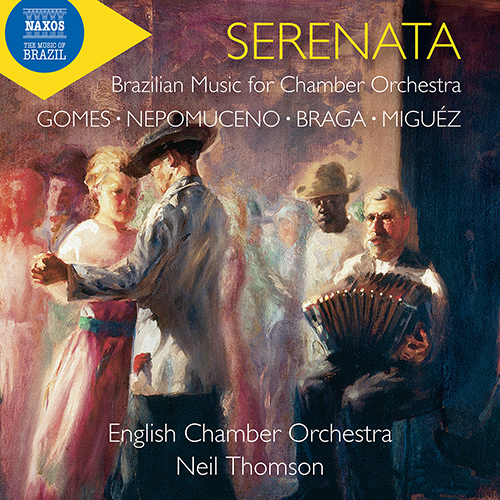
Serenata – Brazilian Music for Chamber Orchestra
GOMES • NEPOMUCENO• BRAGA • MIGUÉZ
English Chamber Orchestra • Neil Thomson
Brazilian composers in the 19th century often sought state scholarships to enable them to study in Europe where they were to become influenced by the German, Italian and French compositional schools. They also became involved in the vogue for writing suites based on ancient dances, such as Nepomuceno’s delightful Ancient Suite, premiered at Grieg’s home, or Braga’s Madrigal-Pavana which evokes the belle époque ballrooms of Rio de Janeiro. Miguéz’s Suite in the Old Style is polyphonic and lively, while Gomes’ Sonata for Strings is his finest non-operatic work.
‘…Neil Thomson and the English Chamber Orchestra are on top form here.’
– Fanfare

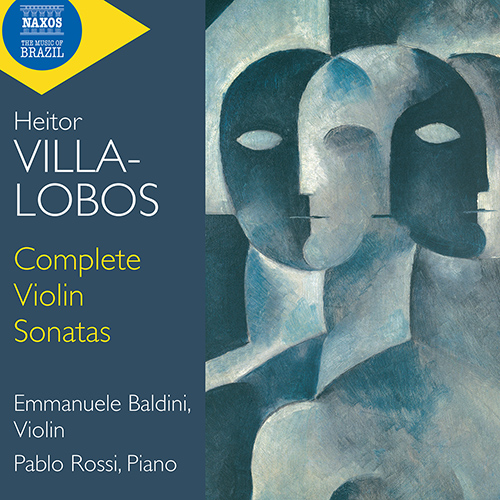
Heitor VILLA-LOBOS (1887–1959)
Complete Violin Sonatas
Emmanuele Baldini, Violin • Pablo Rossi, Piano
Heitor Villa-Lobos’ three violin sonatas date from a key period in his career: the moment at which he matured as a composer, established his personal idiom and achieved his first professional triumphs. Each sonata shares some influence from French late Romanticism or Impressionism, as well as revealing Villa-Lobos’ skill as a string player. The First Violin Sonata’s subtitle of Désespérance (‘Despair’) suits its melancholy lyricism, while the ‘infinite abundance of musical ideas’ in the Second Violin Sonata is characterised by a wide range of emotions. The sophisticated Third Violin Sonata is steeped in the influence of Debussy, but also anticipates Villa-Lobos’ new directions in the 1920s.
‘The insight and commitment of Emmanuele Baldini and Pablo Rossi help make the release an attractive proposition for those new to this music.’
– Gramophone
‘The performers succeed in presenting Villa-Lobos’ music in well-structured and carefully shaped interpretations.’
– Pizzicato ★★★★