
The Music of Brazil

 Watch video trailer
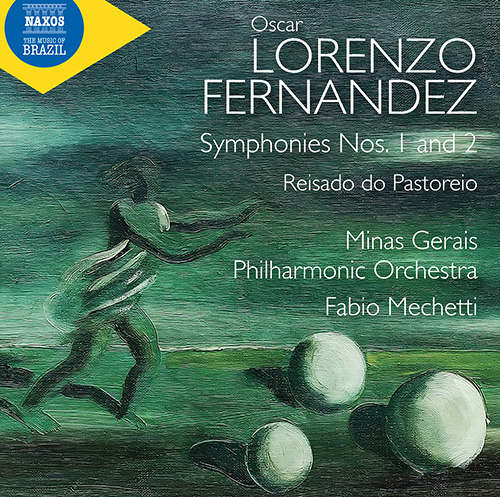
Oscar LORENZO FERNANDEZ (1897–1948)
Symphonies Nos. 1 and 2
Reisado do Pastoreio
Minas Gerais Philharmonic OrchestraFabio Mechetti
Restless and dynamic by nature, Oscar Lorenzo Fernandez was a key figure in the cultural life of Rio de Janeiro, founding numerous influential musical institutions both journalistic and educational. He gained international fame for the primordial power of Batuque, the final dance movement of his Afro-Brazilian influenced Reisado do Pastoreio suite. Without ever abandoning his Brazilian roots, in his later career Lorenzo Fernandez moved away from explicit nationalism towards a more universalist idiom as can be heard in the vigorously themed and atmospheric First Symphony of 1945 and the programmatic Second Symphony, inspired by the life and death of the heroic 17th-century explorer Fernão Dias Paes Leme.
Release date: MAR 2023
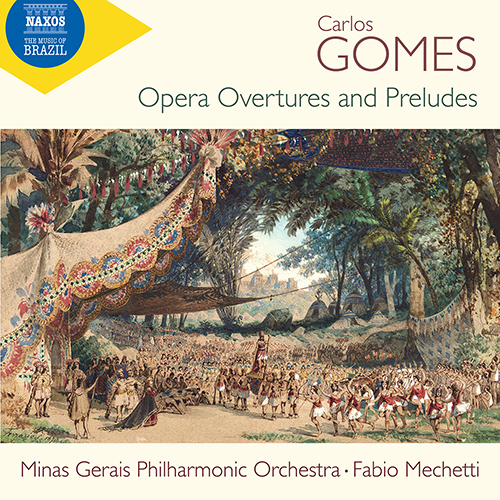
Antônio Carlos GOMES (1836–1896)
Opera Overtures and Preludes
Minas Gerais Philharmonic Orchestra • Fabio Mechetti
Carlos Gomes was not only Brazil’s leading operatic composer, but he also helped pave the way for Italian verismo during the latter part of the 19th century. The preludes and overtures from his operas chart a course from early experimentation with orchestral sonority to a new conception of atmosphere and tension in his historically based dramas. In Alvorada (‘Dawn’) from Lo schiavo his descriptive writing comes close to the status of a symphonic poem. The music from his greatest artistic triumph, Il Guarany, weaves themes into an organic whole, while his final opera, Condor, is reminiscent of French orchestral music in its employment of whole-tone scales.
‘The Minas Gerais Philharmonic play with precision and flair for their founding director and conductor Fabio Mechetti – and, crucially, they make magic in the many hushed moments.’
– Gramophone
‘Fabio Mechetti leads Brazil’s Minas Gerais Philharmonic Orchestra in a performance that combines precision, elegance, and passion, and draws the very best of this excellent ensemble.’
– All About the Arts

Release date: JUL 2022
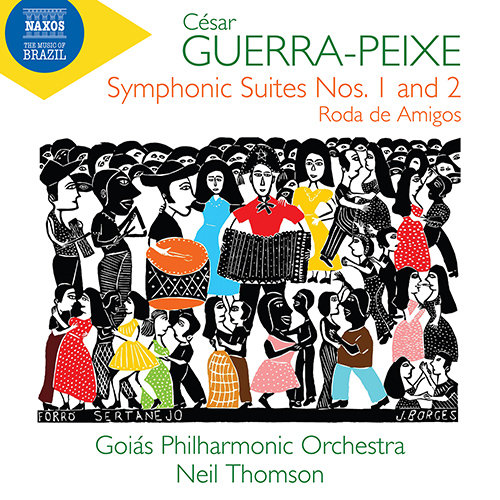
César GUERRA-PEIXE (1914–1993)
Symphonic Suites Nos. 1 and 2 • Roda de Amigos *
Raul Menezes, Flute * • Públio da Silva, Oboe *Patrick Viglioni, Clarinet * • Felipe Arruda, Bassoon *
Goiás Philharmonic Orchestra • Neil Thomson
César Guerra-Peixe was one of the most versatile Brazilian musicians of the 20th century, gaining a particular mastery of orchestration and creating his own inimitable sound through extensive work in radio, television and cinema. The toe-tapping dance rhythms and lyrical expressiveness in his two Symphonic Suites were inspired by research into Brazilian folk traditions, further enhanced by a broad range of vibrantly eloquent global influences. The lighthearted Roda de Amigos mischievously caricatures Guerra-Peixe’s musical circle of friends and their various woodwind instruments.
‘This may be the finest release to date in Naxos’ ongoing Brazilian music series. Kudos to the woodwind soloists of the Goiás Philharmonic, who sound absolutely world-class in each of their turns in the spotlight. Indeed, conductor Neil Thomson galvanizes his forces to deliver performances of all of this music that, in their clarity, vitality and drive, present this splendid music in the best possible light, and the sonics are really vivid too.’
– ClassicsToday.com

Release date: MAR 2024
César GUERRA-PEIXE (1914–1993)
A Retirada da Laguna
Concertino * • Museu da Inconfidência
Abner Landim, Violin *Goiás Philharmonic Orchestra • Neil Thomson
César Guerra-Peixe is one of the leading composers associated with musical nationalism in Brazil. A Retirada da Laguna is a programmatic suite that describes one of the most dramatic moments in the Paraguayan War of 1864–70, while his Concertino is a clever hybrid between folk music timbres and sophisticated high art ambitions. Museu da Inconfidência is one of the composer’s most admired works, taking us through a museum of 18th-century rebellion and heroism. Guerra-Peixe’s Symphonic Suites Nos. 1 and 2 can be heard on Naxos 8.573925, acclaimed by ClassicsToday.com as ‘absolutely world-class’.
Release date: MAY 2025
César GUERRA-PEIXE (1914–1993)
Symphonies Nos. 1 and 2 ‘Brasília’
Nonet
Goiânia Symphony Choir • Goiás Youth Symphony ChoirGoiás Philharmonic Orchestra • Neil Thomson
César Guerra-Peixe’s compact First Symphony and the colourful Nonet date from his years as part of the Música Viva group – a collective of young composers influenced by Hans-Joachim Koellreutter, the German composer and teacher who brought serial techniques to Brazil. Guerra-Peixe’s relationship with serial composition was intense and short-lived, but both of these earlier pieces were admired internationally and remain two of the finest works produced by this movement. From the 1950s onwards, Guerra-Peixe turned to musical nationalism with many successes including his award-winning and eloquently programmatic Second Symphony.
Edino KRIEGER (1928–2022)
Canticum Naturale *
Ludus Symphonicus • Variações Elementares
Flavia Fernandes, Soprano * • São Paulo Symphony ChoirGoiás Philharmonic Orchestra • Neil Thomson
Edino Krieger was a leading figure in Brazilian music as both composer and arts director who influenced a generation of his compatriots during his long life. Krieger’s works can be divided into three phases: serial, neo-Classical, and a fascinating synthesis of traditionalism and the avant-garde. From the second category comes the transitional Variações Elementares whereas his final creative phase, his peak of artistic maturity, is represented by the remainder of the programme. Included is one of his most emblematic pieces, Canticum Naturale, an expansive Amazonian painting in sound, and the virtuosic and expressive Ludus Symphonicus.
Release date: MAR 2025
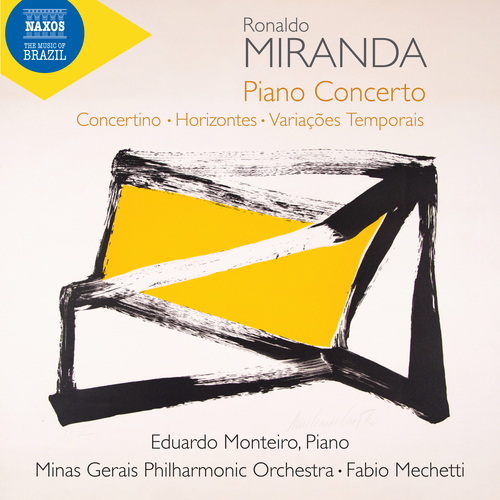
Ronaldo MIRANDA (b. 1948)
Piano Concerto *
Concertino * • Horizontes • Variações Temporais
Eduardo Monteiro, Piano *Minas Gerais Philharmonic Orchestra
Fabio Mechetti
Ronaldo Miranda is a multi-award-winning Brazilian composer with works commissioned by leading artists and institutions. His music is regularly performed in prestigious venues in Brazil and around the world. Miranda’s Piano Concerto is an exciting virtuoso blend of atonality alongside hints of Bartók, contrasting with the flowing scales and delicate patterns found in the Concertino. The prize-winning Horizontes is a symphonic poem that tells the story of Christopher Columbus’s voyage to the New World, while Variações Temporais (Beethoven Revisitado) is an inventive set of variations on some of Beethoven’s most famous motifs and themes.
 Listen to Podcast
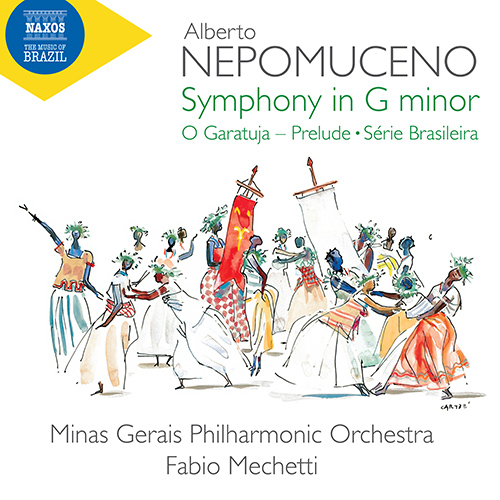
Alberto NEPOMUCENO (1864–1920)
Symphony in G minor • O Garatuja – Prelude • Série Brasileira
Minas Gerais Philharmonic Orchestra • Fabio Mechetti
Alberto Nepomuceno was a herald of Brazilian musical nationalism. He was one of the first composers in his country to employ elements of folklore in his compositions, he encouraged younger composers such as Villa-Lobos, and his music was conducted by Richard Strauss. The Prelude to O Garatuja, an incomplete opera, is one of his best-known works and an example of a truly Brazilian lyric comedy. Série Brasileira is a vivacious suite that employs maxixe rhythms and ends with the feverish batuque dance, while the Symphony in G minor is one of the earliest such examples by a Brazilian, a heroic and lyric structure revealing the influence of Brahms.
‘This is the first instalment in what’s promised to be a 30-disc survey of Brazilian music… If subsequent volumes maintain the high standards heard here, we have a lot to look forward to. Urgently recommended.’
– Gramophone Choice
‘Fabio Mechetti did a great job… We still have this record to applaud the quality of the orchestra, that of the conductor and the music of Nepomuceno.’
– Diapason








Henrique OSWALD (1852–1931)
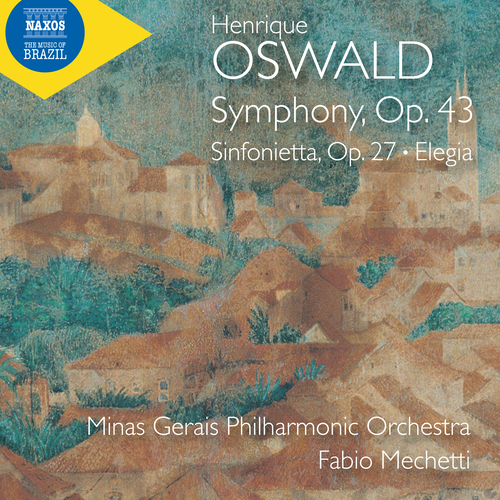
Symphony, Op. 43
Sinfonietta, Op. 27 • Elegia
Minas Gerais Philharmonic OrchestraFabio Mechetti
Henrique Oswald was perhaps the most European of Brazilian composers, having spent a large part of his life in Italy; he also absorbed influences from France and Germany. Oswald’s music always retains a lyrical character with qualities of elegance and radiance, which can be heard in the Sinfonietta. The expressive Elegia, originally conceived for cello and piano, is dedicated to the memory of a friend. With its contrasts between darkness and light, coupled with undeniable beauty, the Symphony is regarded as Oswald’s finest orchestral achievement and one of the most significant works in the Brazilian orchestral literature.
Release date: SEP 2024
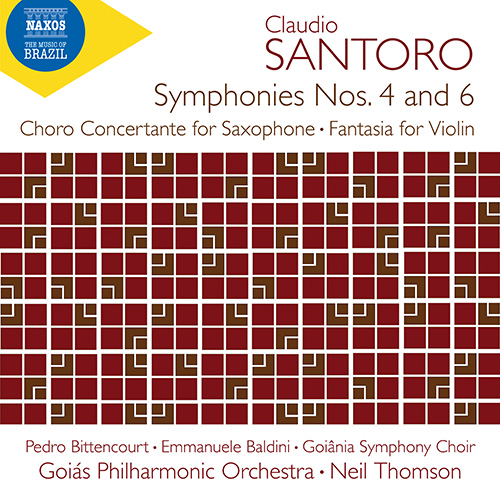
Claudio SANTORO (1919–1989)
Symphonies Nos. 4 and 6
Choro Concertante for Saxophone *
Fantasia for Violin **
Pedro Bittencourt, tenor saxophone * • Emmanuele Baldini, violin ** Goiânia Symphony ChoirGoiás Philharmonic Orchestra • Neil Thomson
The fourth volume in this series explores a pivotal decade in Claudio Santoro’s compositions. In the 1950s he moved from serialism towards nationalism starting with the transitional, reflective Canto de Amor e Paz (‘Song of Love and Peace’) and continuing with Symphony No. 4 which proved to be one of his most accessible and influential works. His Symphony No. 6 of 1958 is short but original, luminous and sombre by turns. The concertante works for saxophone and violin show Santoro’s command of dance rhythms, colourful lyricism and virtuosity.
Release date: MAR 2022
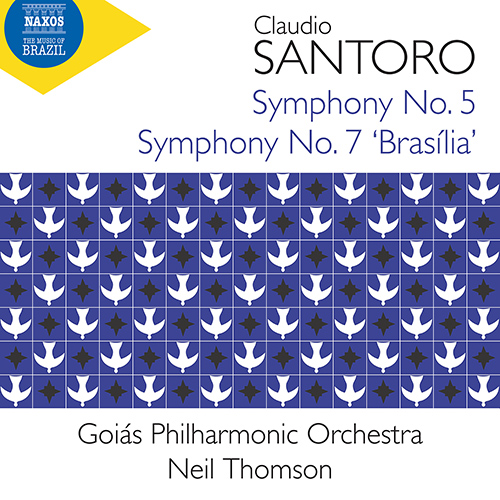
Claudio SANTORO (1919–1989)
Symphonies Nos. 5 and 7 ‘Brasília’
Goiás Philharmonic Orchestra • Neil Thomson
Claudio Santoro was one of Brazil’s most eminent and influential composers. Over a 50-year period, he wrote a cycle of 14 symphonies that is widely acclaimed as the most significant cycle of its kind ever written in Brazil. The two selected works in this inaugural volume of the first complete recording of his symphonies focus on the 1950s, a period when Santoro sought a more direct and communicative idiom using Brazilian elements. His use of folk-based material is nonetheless highly creative, sometimes indeed abstract, as in key moments of Symphony No. 5. Symphony No. 7 is one of his most complex and intense works, a celebration of his country’s new capital Brasília in music of striking modernity.
‘Here is a 20th century composer partially obscured by the modernist death grip on concert programming of those days. His revival is a most positive development and has been greeted with commercial success.’
– AllMusic.com ★★★★
‘The performances by the Goiás Philharmonic Orchestra under its principal conductor Neil Thomson are first-class, as is the quality of the recording.’
– Gramophone


Claudio SANTORO (1919–1989)
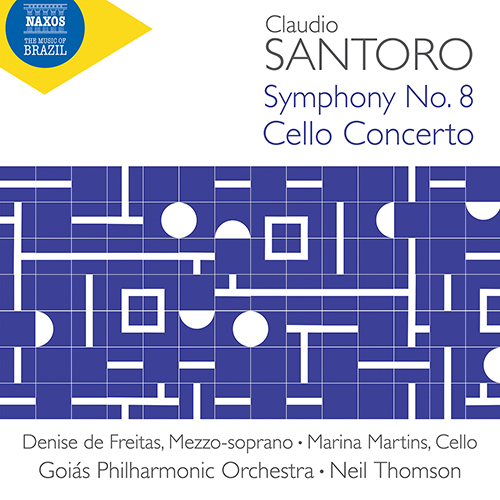
Symphony No. 8 1 • Cello Concerto 2
Três Abstrações • Interações Assintóticas
Denise de Freitas, Mezzo-soprano 1 • Marina Martins, Cello 2Goiás Philharmonic Orchestra • Neil Thomson
The 1960s proved to be a significant decade in Claudio Santoro’s ever-eventful life. The charged atmosphere of the Cello Concerto can be attributed to his experiences in East Berlin at the moment construction started on the Berlin Wall. Despite its challenging solo writing, the concerto is the most symphonically proportioned of all his concertante works. Exceptionally for Santoro, the dramatic Eighth Symphony combines serial techniques with an openly Expressionist idiom. Três Abstrações explores timbres and dynamic contrasts with string orchestra, while Interações Assintóticas is Santoro’s only work to use quarter-tone tuning for some remarkable effects.
Release date: NOV 2022
Claudio SANTORO (1919–1989)
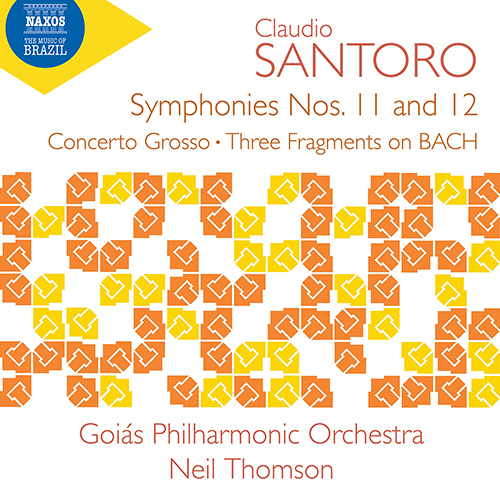
Symphonies Nos. 11 and 12
Concerto Grosso • Three Fragments on BACH
Goiás Philharmonic Orchestra • Thomson
Claudio Santoro’s prolific output includes a cycle of 14 symphonies that is widely recognised as the most significant of its kind from Brazil. All of the works in this programme come from Santoro’s remarkable final decade, in which he allied more traditional and eclectic styles to his earlier experiments. Both the Concerto Grosso and the Three Fragments on BACH were written for student orchestras, but are nonetheless substantial pieces which show his command of writing for strings. The Eleventh Symphony is one of the densest and most dramatic of the cycle, its finale exploding into an evocation of the opening of Brahms’ First Symphony, while the Twelfth Symphony is an unusual ‘sinfonia concertante’ for nine soloists and orchestra.
‘These impressive and rarely heard works are all played with absolute conviction and panache by the Goiás Philharmonic under Neil Thomson, and the recordings are crystal-clear.’
– Gramophone



Release date: NOV 2025
Claudio SANTORO (1919–1989)
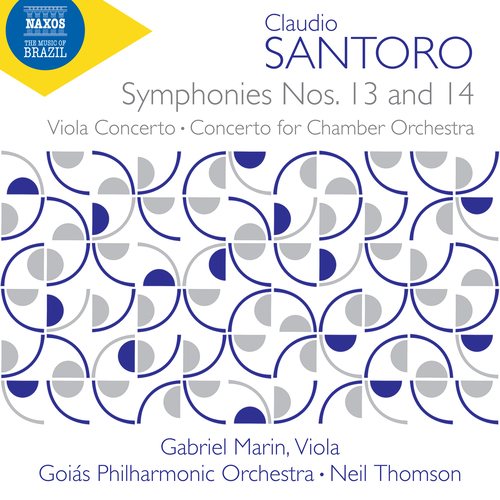
Symphonies Nos. 13 and 14
Viola Concerto * • Concerto for Chamber Orchestra
Gabriel Marin, Viola * • Goiás Philharmonic Orchestra • Neil Thomson
Claudio Santoro’s late works are marked by great concision and considerable emotional density. The music on this album was written in the last months of his life. The Viola Concerto and the Concerto for Chamber Orchestra juxtapose restless energy and expansive – if at times desolate – lyricism. The powerful Symphony No. 13 shows Santoro’s mastery of orchestration and form at its peak, and the compact Symphony No. 14 was to be the last in a cycle widely acclaimed as the most significant of its kind ever composed in Brazil.