
The Music of Brazil
 Watch video trailer
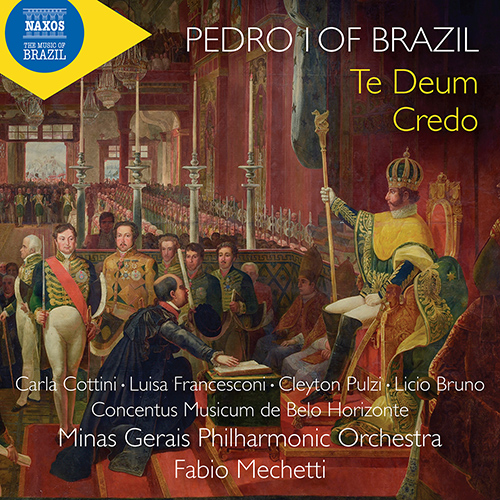
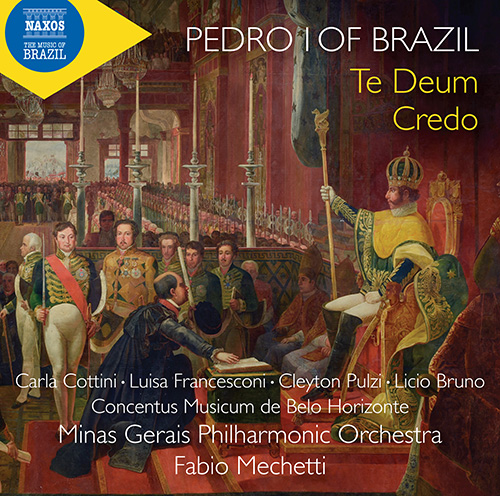
PEDRO I of Brazil (1798–1834)
Te Deum • Credo • Hino da Independência do Brasil
Carla Cottini, Soprano • Luisa Francesconi, Mezzo-soprano • Cleyton Pulzi, Tenor • Licio Bruno, Bass-baritoneConcentus Musicum de Belo Horizonte • Minas Gerais Philharmonic Orchestra • Fabio Mechetti
Dom Pedro I was the first Emperor of Brazil, proclaiming its independence from Portugal in 1822. A gifted musician, Pedro I is one of only a few monarchs to have become known as a composer. A performance of his Abertura (‘Overture’) was organised in Paris in 1832 with some in the audience convinced that it had been composed by Rossini, while the Hino da Independência do Brasil (‘Hymn to the Independence of Brazil’) remains one of the country’s best-loved anthems. Operatic in character, the Te Deum celebrated the baptism of Pedro’s first son, and the joyous Credo is one of his most frequently performed works.
‘The sure orchestral direction of Fabio Mechetti and the choir, prepared by Iara Fricke Matte, provide a triumphant demonstration of how far understanding of the performance of repertoire from the 18th century in Brazil has come over the past few decades, and the recorded sound, captured at the Sala Minas Gerais in Belo Horizonte, is exemplary.’
– Gramophone



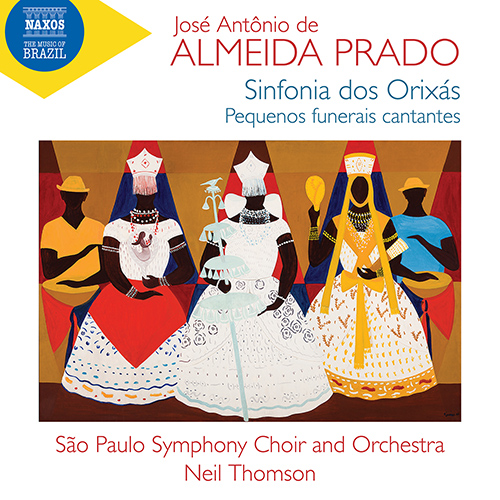
José Antônio de ALMEIDA PRADO (1943–2010)
Sinfonia dos Orixás
Pequenos funerais cantantes *
Clarissa Cabral, Mezzo-soprano * • Sabah Teixeira, Bass-baritone *São Paulo Symphony Choir • São Paulo Symphony Orchestra
Neil Thomson
José Antônio de Almeida Prado was one of the most admired Brazilian composers of his time. The two stylistically diverse works featured on this album exemplify different creative periods in the composer’s life. The prize-winning Pequenos funerais cantantes, which was Almeida Prado’s breakthrough as a composer, is a lament full of unique soundworlds forged from different combinations of choral and orchestral writing. The superbly orchestrated Sinfonia dos Orixás takes as its subject the Orishas (deities in the Yoruba religion) – and is a personal tribute to the rich Afro-Brazilian religious traditions, a sumptuous melodic and rhythmic feast celebrating the forces of nature.
‘Neil Thomson is an excellent conductor who fully enters the spirit of these scores… This is certainly one of the most interesting and culturally important releases ever put on the market.’
– The Art Music Lounge

 Listen to Podcast
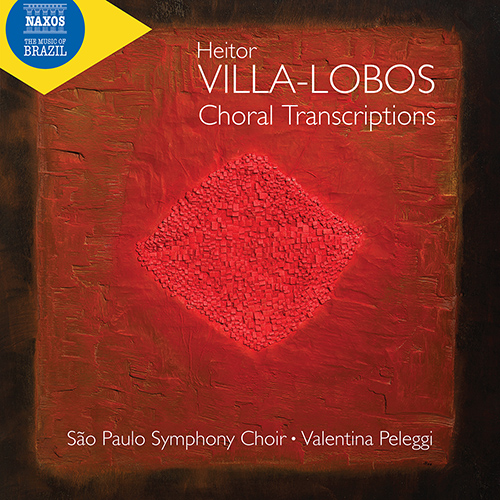
Heitor VILLA-LOBOS (1887–1959)
Choral Transcriptions
São Paulo Symphony Choir • Valentina Peleggi
Choral music holds a central position in Villa-Lobos’ catalogue of works, but among these famous pieces is a series of little-known transcriptions for a cappella choir taken from the standard classical repertoire. They were intended for a teachers' chorus and for use in schools, and through astonishing alchemy they achieve a true ‘orchestration’ of largely piano originals, adding a fresh new repertoire for vocal ensembles. This album also includes the first ever recording of Villa-Lobos’ complete set of a cappella transcriptions from Bach’s The Well-Tempered Clavier.
‘Under the astute direction of Valentina Peleggi, the São Paulo Symphony Choir brings a warm, rich sound to their task. They are at their best in the slow, lyrical vein of works like Mendelssohn's Song Without Words.’
– Limelight ★★★★
‘The São Paulo Symphony Choir invests everything it does with a quality which somehow reflects Villa-Lobos’ dominant spirit within Brazilian music.’
– Choir & Organ ★★★★