
 Translate
































In addition to its own wide-reaching monthly new releases, Naxos also distributes several leading labels in many countries around the world. Here is a choice selection of recent releases from some of these distributed labels.

The classic music label Capriccio was founded by Delta Music in 1982. From the beginning, it was not this label’s aim to compete with the major companies and their classical labels, their stars and their vast archives. Capriccio always wanted to fill the niches that other labels kept neglecting. This philosophy has not changed over the last 25 years. Capriccio is committed to the music fans that look beyond the paths of mainstream classical music and who are curious to discover unknown repertoires, young artists, as well as inventive programs. All this offer artists like Christine Schäfer, Petersen Quartet, Tabea Zimmermann, Vladimir Spivakov and many others.
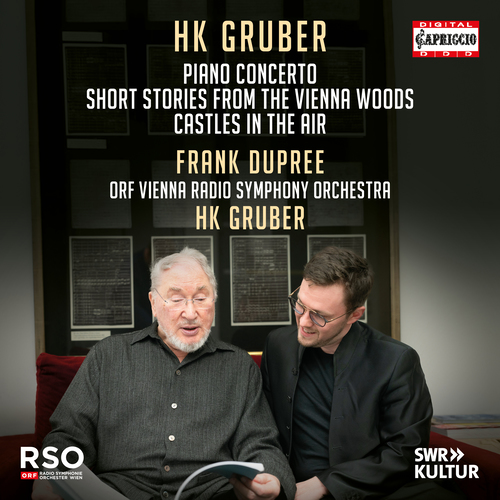
Now over 80 years old, the ever-energetic HK Gruber has become an integral part of the music scene, and not only in Austria. As a composer, chansonnier and music educator with constructive depth and his distinctive, ironical jokes, he unfailingly amazes, moves and evokes laughter in his audiences, in a manner far removed from contrived, calculated, contemporary musical art. His genre-spanning works are audible, vibrant journeys through the incredible diversity of music history, thus shaping his own, entirely unmistakable style. In Frank Dupree and the Vienna Radio Symphony Orchestra, he finds his ideal partners, who skillfully realise this distinctive musical language.
![HINDEMITH, P.: Cardillac [Opera]](https://cdn.naxos.com/sharedfiles/images/cds/hires/C5530.jpg "HINDEMITH, P.: Cardillac [Opera]")
Paris is gripped by fear. A series of murders is leaving a bloody trail through the city. Enter the world of E.T.A. Hoffmann’s novella Das Fräulein von Scuderi, published in 1819 and often cited as one of the earliest German crime stories. And even though the story is set in the Paris of Louis XIV, the work has a deeply romantic quality, driven by a fascination with genius, coupled with dark passions and terrible crimes. In 1925, Hindemith came into contact with the publicist and poet Ferdinand Lion. To Lion’s libretto, and influenced by the New Objectivity movement’s push against expressionism, Paul Hindemith set music that, for all its modernity, consciously takes up historical forms, bringing them into play in a neo-Baroque manner. This release captures the Vienna State Opera’s highly acclaimed, star-studded performance in a gripping, live, premiere recording.
![HUMPERDINCK, E.: Mirakel (Das) (The Miracle) [Pantomime] (Klussmann, Micheler, Berlin Radio Chorus, Berlin Radio Symphony, Tast)](https://cdn.naxos.com/sharedfiles/images/cds/hires/C5543.jpg "HUMPERDINCK, E.: Mirakel (Das) (The Miracle) [Pantomime] (Klussmann, Micheler, Berlin Radio Chorus, Berlin Radio Symphony, Tast)")
![WEILL, K.: Love Life [Vaudeville] (De Lang, Corley, Mvula, Hopkins, Opera North Chorus and Orchestra, J. Holmes)](https://cdn.naxos.com/sharedfiles/images/cds/hires/C5550.jpg "WEILL, K.: Love Life [Vaudeville] (De Lang, Corley, Mvula, Hopkins, Opera North Chorus and Orchestra, J. Holmes)")
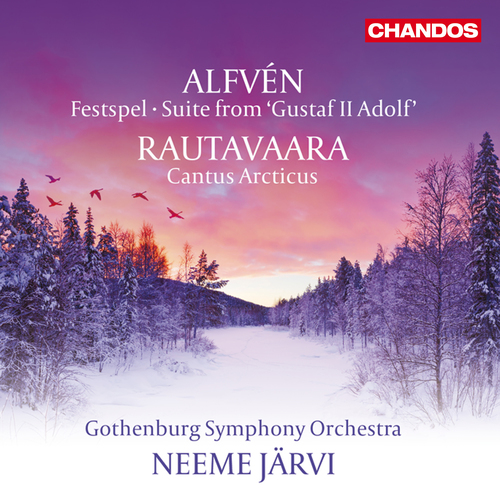
Hugo Alfvén was an accomplished writer and painter as well as musician and composer. Born in Stockholm in 1872, he studied first at Kungliga Musikhögskolan (the Royal College of Music) and then in Berlin, Dresden, Paris, and Brussels. Influenced by Wagner and Richard Strauss, Alfvén’s style is also permeated with the influence of Swedish folk music. Festspel (Festival Play) was commissioned to inaugurate the new art nouveau building for Kungliga Dramatiska Teatern (the Royal Dramatic Theatre) in Stockholm, in 1908. The work is suitably rousing and celebratory for such an occasion. Alfvén was asked in 1932 to write incidental music for a play by Ludvig Nordström, to commemorate the 300-year anniversary of the death of the protestant Swedish monarch at the battle of Lützen, at the end of the Thirty Years War. The suite that he subsequently extracted is a substantial work in its own right. Cantus arcticus is perhaps Rautavaara’s best-known work, and was commissioned by the University of Oulu, in northern Finland, to honour its first formal doctoral graduation ceremony, in 1972. Rautavaara instead took his inspiration from the natural environment of the region, incorporating two-channel tape recordings of birdsong as part of the orchestral texture.
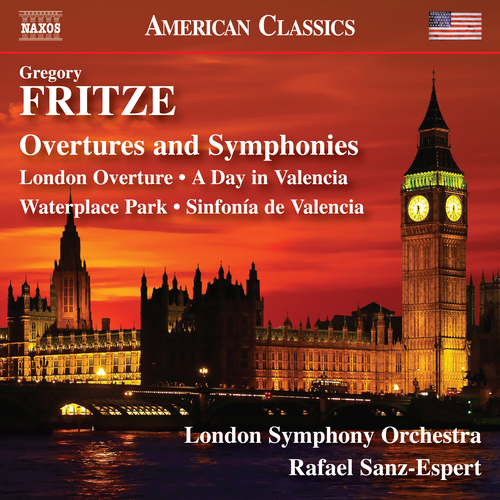
Prize-winning composer Gregory Fritze has written over a hundred compositions for a variety of forces, and is also a greatly admired teacher. The four works on this album share programmatic perspectives. The city of London is evoked in a celebratory overture full of vitality, diversity and pageantry; the two symphonies reflect Fritze’s immersion in the warmth, landscape and festive excitement of the city of Valencia; and the overture Waterplace Park, a popular meeting place in Providence, Rhode Island, is a jovial piece that features five unusual instrumental soloists.
Steven R. Gerber was born in 1948 in Washington, D.C. and now lives in New York City. He received degrees from Haverford College and from Princeton University, where he received a four-year fellowship. His composition teachers included Robert Parris, J. K. Randall, Earl Kim, and Milton Babbitt. He died in 2015.
Music in Dark Times for orchestra, commissioned by Vladimir Ashkenazy, follows the events of 9/11 in 2001 and received its world première performance in March 2009, with Ashkenazy conducting the San Francisco Symphony at Davies Symphony Hall in San Francisco.
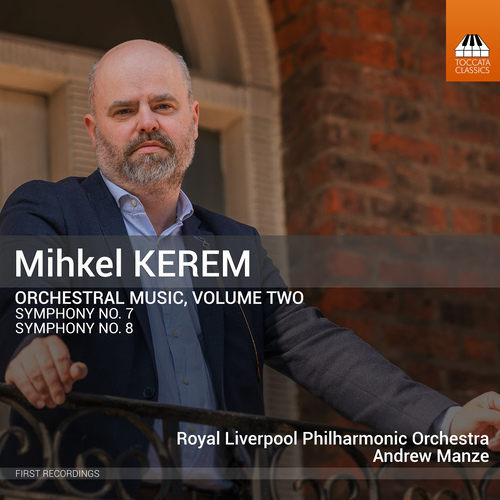
The Estonian composer Mihkel Kerem – born in Tallinn in 1981 and a front-desk violinist in the Royal Liverpool Philharmonic Orchestra since 2015 – used the Covid lockdown to produce no fewer than four symphonies, two of them, his Seventh and Eighth, conceived as a contrasting pair. Kerem’s dark and ominous Seventh Symphony, like that of Sibelius, plots a huge sonata-form arch, growing from and back into its opening material. Its soundworld sits somewhere between Sibelius and Schnittke, combining a sense of natural symphonic growth with dramatic twists of kaleidoscopic textural variety. No. 8, which also nods to Sibelius’ Seventh by quoting its celebrated trombone theme, is a vast, unhurried accelerando, its three linked movements tapping into the Nordic-Baltic tradition of using the controlled power of the orchestra to suggest the vastness of nature.
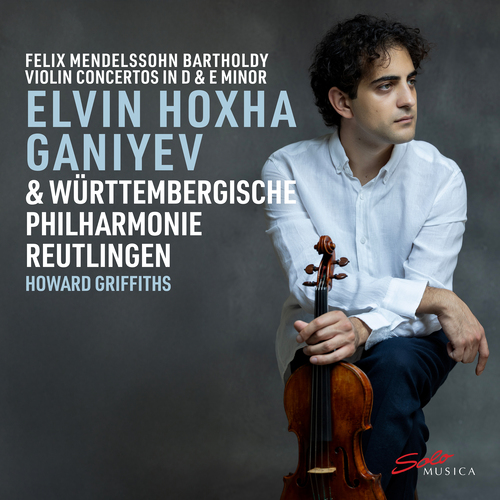
How does a gifted boy become a master? How does an entire era transform from the classical ideal to the romantic vision? Felix Mendelssohn Bartholdy’s two violin concertos provide a compelling answer to these questions. Between the thirteen-year-old prodigy of 1822 and the mature master of 1844, not only does the development of an extraordinary composer unfold, but also the entire spectrum of Mendelssohn’s aesthetics: a love of form combined with a willingness to innovate, a combination of technical perfection with emotional immediacy, a balance between tradition and progress.
Elvin Hoxha Ganiyev is an internationally acclaimed concert violinist who performs with leading orchestras and conductors worldwide. Born in 1997 into a family of distinguished musicians, he began playing the violin at the age of five under the guidance of Server Ganiyev at Bilkent University and made his solo debut at the age of eight with the Bilkent Symphony Orchestra.
The Württemberg Philharmonic Orchestra Reutlingen (WPR) is a renowned symphony orchestra based in Reutlingen, Baden-Württemberg. Howard Griffiths is an internationally active British-Swiss conductor. Born in England, he studied at the Royal College of Music in London and has lived in Switzerland since 1981. As a guest conductor, he works with leading orchestras such as the London Philharmonic Orchestra, the German Symphony Orchestra Berlin, the Mozarteum Orchestra Salzburg, the Tchaikovsky Symphony Orchestra, the Orchestre National de France and the Israel Philharmonic Orchestra. His close collaboration with composers such as Sofia Gubaidulina, Arvo Pärt and Hans Werner Henze has made him a versatile and sought-after artist.
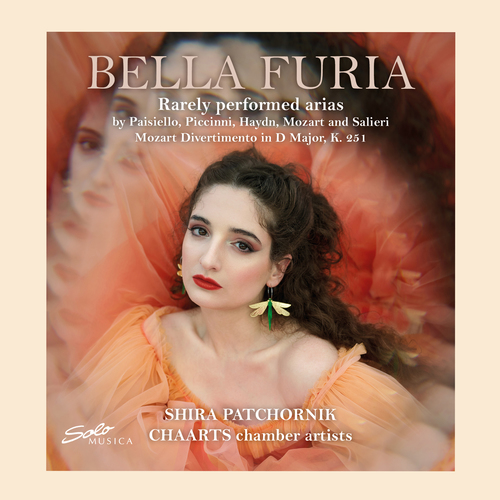
Irresistible soprano Shira Patchornik is a rising star on opera and concert stages.
Mozart’s aria ‘Al Desio di chi t’adora’ from Figaro is a song full of erotic tension addressed to her lover. And perhaps some are still familiar with Haydn’s ‘La vera Constanza’. The rest of this stimulating programme consists of discoveries and treasures from Italian opera of the same period, but largely forgotten. But what is it about?
No opera can do without these characters: the maid, the lover, the chambermaid, the jealous wife, the daughter. Operas from around 1800 are mostly intricate tales of intrigue and love. Sometimes dramatic, sometimes humorous, these stories inspired composers to the highest form of their art. Bella Ragazze, they become witnesses to amorous adventures, they are the projection screen for powerful men, or they themselves become energetic and vengeful protagonists. Shira Patchornik is a shooting star on the big stages and brings us key moments from opera treasures with a stupendous stage presence. She embodies characters in her own unique way and does justice to even the most breakneck coloratura. As if made for it, Mozart’s rarely heard Divertimento joins the entertaining opera action: written as music for entertaining festive gatherings, it displays Mozart’s characteristic humour in almost every moment
![MASCAGNI, P.: Zanetto [Opera]](https://cdn.naxos.com/sharedfiles/images/cds/hires/OC993.jpg "MASCAGNI, P.: Zanetto [Opera]")
Since its foundation in 2013, the Berlin Opera Group has made a name for itself with Berlin premieres that include Donizetti’ Deux hommes et une femme and Betly, together with other operatic rarities. This album is a Deutschlandfunk Kultur recording of the 2021 performance of Pietro Mascagni’s Zanetto from the Konzerthaus Berlin.
Yajie Zhang can also be heard in the role of Ugo d’Asti in Donizetti’s Dalinda (OC989). The orchestra of the Berlin Opera Group plays under the direction of Felix Krieger.
![SMETANA, B.: Dvĕ vdovy (The Two Widows) [Opera]](https://cdn.naxos.com/sharedfiles/images/cds/hires/8.660609-10.jpg "SMETANA, B.: Dvĕ vdovy (The Two Widows) [Opera]")
Considered a lesser-known gem of the operatic repertoire, Smetana’s Dvě vdovy (‘The Two Widows’) is set in a Bohemian country estate in which the contrasting personalities of recently widowed cousins Karolína and Anežka are tested by the attentions of gentleman-farmer Ladislav. Smetana’s expert theatrical craftsmanship seamlessly blends Czech dances and choruses with beautiful cavatina-like solos. With the humane warmth of its chamber-like comedy and deftly transparent orchestration, Smetana created a style of conversational opera in The Two Widows that was much admired by Richard Strauss.
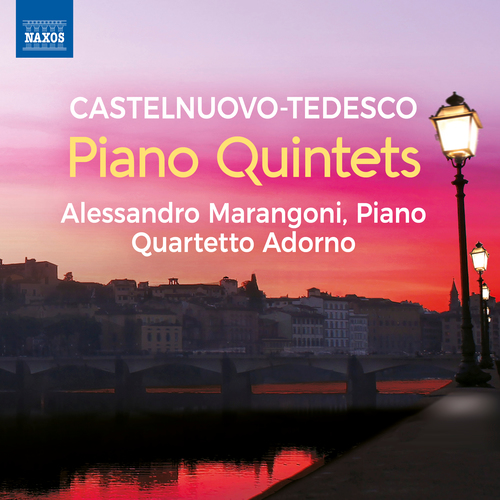
Castelnuovo-Tedesco’s chamber works were composed early and late in his career. He considered the Piano Quintet No. 1 in F major from 1932 to be the best of all his chamber works from that period. It exudes Romantic candour and contrapuntal richness, full of lively themes and with a colourful atmosphere. The beautiful Piano Quintet No. 2, composed in 1951, draws on the composer’s memories of a serene and rustic Tuscany. Quartetto Adorno’s ‘reference-worthy performance’ (Classicstoday.com) of the complete string quartets is on 8.574580.
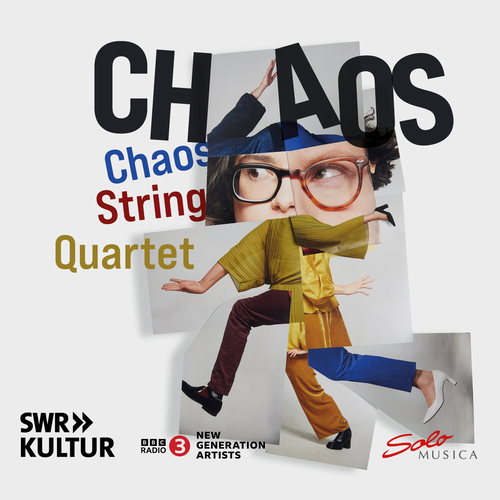
While often feared, chaos is also a powerful source of creation – an idea the Chaos String Quartet fully embraces. Their name reflects this philosophy, inspired by Friedrich Nietzsche’s belief that one must have chaos within to create something beautiful, like a “dancing star.”
The quartet’s own beginning was a leap of faith. Formed after a fateful meeting at a masterclass, the members came together to embark on the exciting and unpredictable adventure of a string quartet. This theme of creative disorder is central to their music, including their album featuring works arranged for string quartet, which explores the sound of chaos.
Their unique approach has earned them significant recognition, including being named BBC New Generation Artists (2023–2025) and performing at prestigious venues like Wigmore Hall. The quartet also inspires the next generation as Young Artists in Residence in Vienna. By turning unpredictability into profound beauty, they remind us that from chaos can emerge a unique and compelling order.
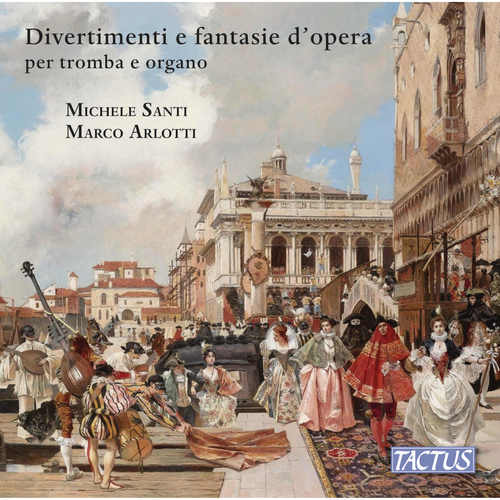
The dazzling and spectacular sonority of the “trumpet and organ” duo was etched into contemporary history by the splendid recordings made starting in the 1960s for the label “Erato” by Maurice André and Marie-Claire Alain. Since then, a plethora of performers on both instruments have explored – with varied outcomes – works composed for their ensemble, transcribed and adapted music written for other instruments, and encouraged composers to expand the repertoire. The duo Santi-Arlotti, already established by their concert fame, stands out for their meticulous research and the originality of their musical proposals, which have been appreciated since their first album, released in 2017 for Tactus (TC850003). This album was entirely dedicated to variations on famous opera themes (Verdi, Rossini, Bellini, Donizetti, Dall’Argine) composed by Arban, Forestier, Zanichelli, Cacciamani, Rossari, and Spiga. Their repertoire is the fruit of passionate research, as evidenced by the beautiful Concerto by Bortolotti, drawn from a precious Bolognese manuscript and skillfully adapted for the organ by Marco Arlotti, presented in this recording.
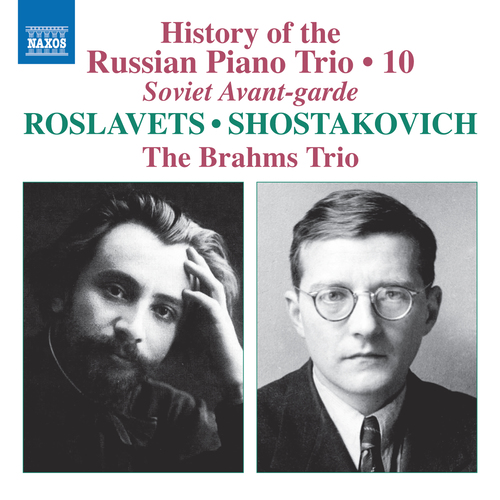
Nikolay Roslavets was one of the great musical innovators of the 1920s, described by Stravinsky as ‘the most interesting Russian composer of the 20th century,’ but vilified by the Soviet regime on account of his constant experimentation. His Piano Trio No. 4 is notable for its romantic and passionate spirit, and complex polyphony. Shostakovich’s Piano Trio No. 2 is one of the most harrowing and revered of all his chamber works. The Piano Trio No. 1, a remarkable composition for a 16-year-old student, is a work of romantic intensity cast in a musical language recognisably that of Shostakovich.
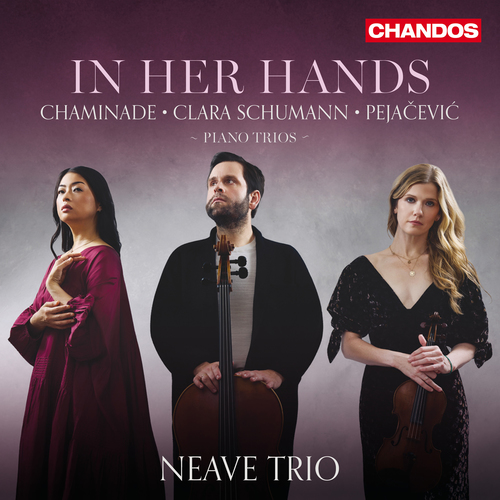
Hailed by the magazine BBC Music for its ‘generous and warm-hearted, utterly beguiling playing’, the GRAMMY-nominated Neave Trio has emerged as one of the finest young ensembles of its generation. For this, their eighth album, they have once again selected a programme of works by female composers. Written in 1846, the Piano Trio of Clara Schumann was considered a great success by her friends and supporters (notably by Brahms) but her lack of self-confidence clouded her own view of the piece. Intellectually curious and a voracious reader from an early age, Dora Pejačević was largely self-taught as a composer. She composed her first piano trio (in D major) in 1905 (when she was twenty) and the second followed in 1910, by which time Pejačević’s musical language had already evolved into its distinctive late-romantic style. Chaminade’s Piano Trio No. 2 in A minor was published 1887, with a dedication to the great French cellist Jules Delsart. The successful première had been given at the Salle Érard on 4 February 1886. Chaminade went on to play the A minor Trio regularly during the 1890s, to substantial critical acclaim.
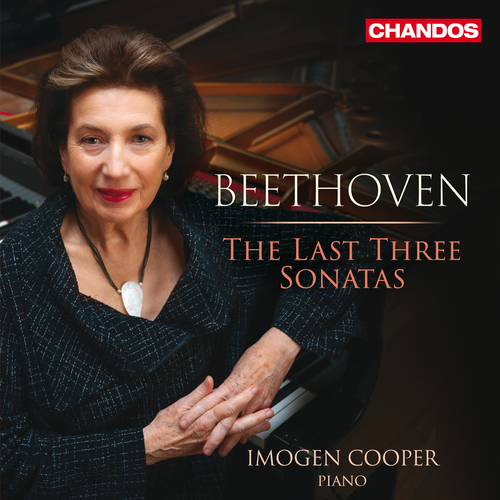
Regarded as one of the finest interpreters of classical and romantic repertoire, Imogen Cooper is internationally renowned for her virtuosity and lyricism. Dame Imogen writes: ‘It has taken many years for me to perceive the last three sonatas by Beethoven as the evolving journey I now feel them to be. A combination of wariness of Op. 109 and overawe of Op. 111 kept me solely concentrated on Op. 110, which I can hardly regret. Nor do I regret thereby coming late in life to Opp. 109 and 111. Having come to see the shortcomings of my perception as surmountable, I found that the joys and riches of these wonderful works presented themselves with much more vivid colours than had I tussled with them whilst I was tussling with myself. The case was, incidentally, similar with the “Diabelli” Variations, Op. 120, which I finally approached and embraced in my sixties, with crystal clarity of intention, and unadulterated joy. Now it would be hard for me to play any of the last three sonatas alone, so potent is the journey from first to last. And how privileged my hands feel, having wondered and wandered in the heavenly heights of the last pages of Op. 111, to travel down the keyboard and bring this astonishing last sonata, and indeed the whole body of thirty-two sonatas, to a close, with a quiet chord of C major – no long note value, no fermata. Just silence.’
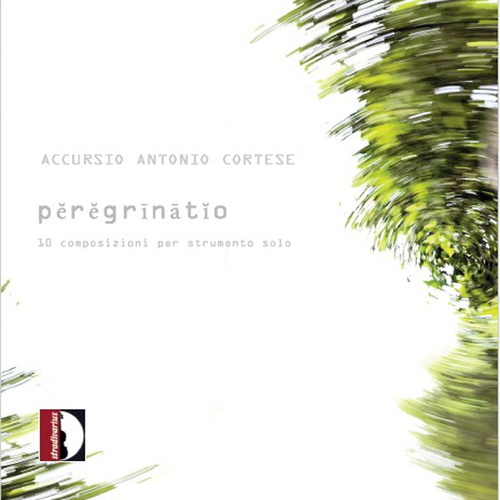
At the age of five, Accursio Antonio Cortese began studying music and the organ with his grandfather, D. Imbornone. At the V. Bellini Conservatory (now A. Scarlatti) in Palermo, he earned a Piano Diploma with O. Buogo and a Bachelor’s and Master’s Degree in Composition with honors and special mention under M. Betta. He earned a Master’s Degree in Composition with I. Fedele at the Accademia Nazionale di Santa Cecilia with top honors. He specialized in film music composition with L. Bacalov and opera with G. Battistelli, both at the Accademia Chigiana in Siena. He studied conducting with C. Caruso, choral music and choral conducting with M. Ghiglione. He furthered his knowledge of jazz music by attending international seminars in Siena and at Roccella Jazz. He has a substantial catalog of symphonic, chamber, sacred, operatic, and film compositions. His music has been performed in Italy, the USA, Argentina, Finland, Russia, Switzerland, France, and Romania, in prestigious venues. His music is published by: Suvini Zerboni – sugar music (Milan); Sconfinarte editions (Brescia); and Isuku Verlag (Munich).
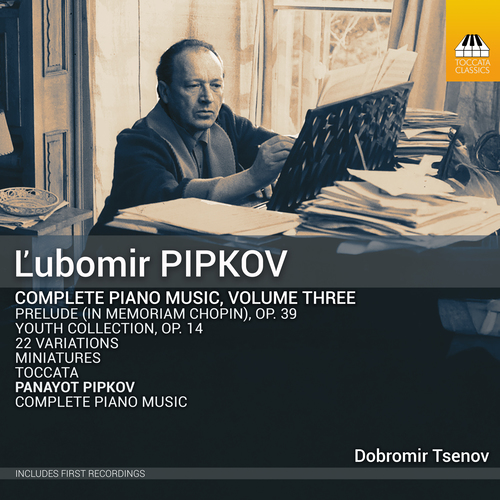
With this volume Dobromir Tsenov completes his survey of the solo-piano music of his compatriot Ľubomir Pipkov (1904–74), one of the leading members of the ‘second generation’ of Bulgarian composers who helped establish a national tradition of classical music, blending western forms with the rhythms of local folksong and folk-dances. The first complete recording of the piano music of his father, Panayot Pipkov (1871–1942), one of the ‘first generation’, sets it in context, in its mix of folk roots and Lisztian bravura.
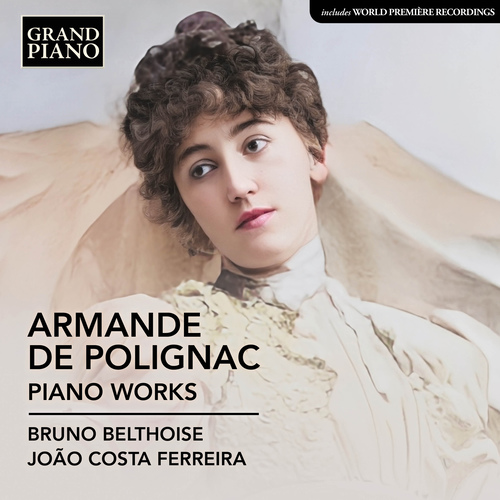
Armande de Polignac was one of an unprecedented number of female composers emerging at the beginning of the 20th century. With training from the likes of Gabriel Fauré and Vincent d’Indy she was able to devote her life to music at the highest level of professionality. From the introspective early Préludes via the luxuriant Russian-infused Échappées to the remarkable sonic realism of Cloches, these recordings reveal Armande de Polignac as one of the greatest French female composers of her time.
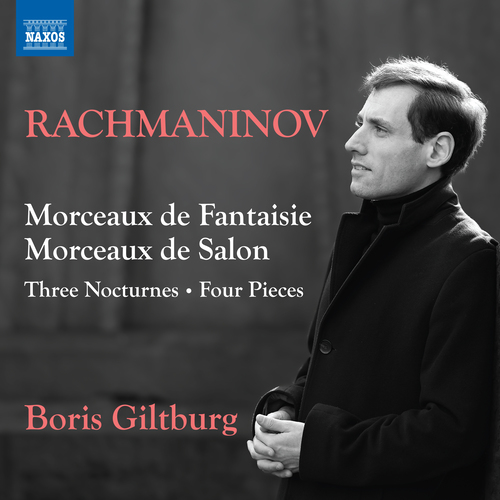
Composed at the age of 19, Rachmaninov’s earliest published cycle of piano pieces, the Morceaux de Fantaisie, contains the Prélude in C sharp minor, destined to become his signature work, and the Mélodie in E major, much loved by Tchaikovsky. The expressive Morceaux de Salon show Tchaikovsky’s influence and some of the grief felt by Rachmaninov after his mentor’s death. With the inclusion of the melodically rich Nocturnes and the Four Pieces, the earliest to survive in his hand, this collection shows both the young composer finding his voice and the timeless Rachmaninov we recognise today.
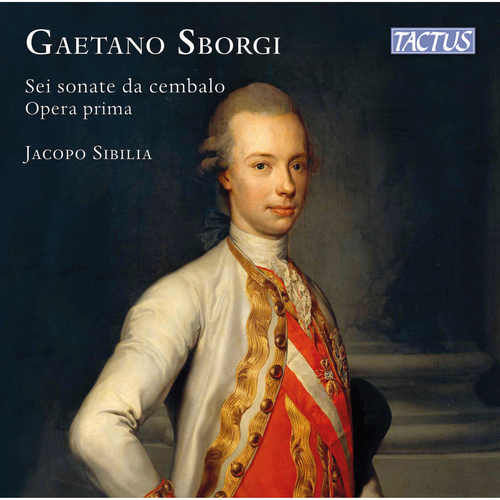
We do not know precisely the date of birth and death of Gaetano Sborgi, a composer who lived between the second half of the eighteenth century and the beginning of the nineteenth. We can say with reasonable certainty that Sborgi was born in Florence, as in the frontispiece of his sonatas he states that he is Florentine. Sborgi was chapel master and piano-forte teacher at the Imperial Academy of Fine Arts in Florence. He studied with his brother (or father according to Picchianti) Gasparo and then moved to Naples in the Conservatory of S. Onofrio, where he had Marco Santucci as a companion and where he stayed for seventeen years. Back in Florence “he made himself known. … with several of his theatrical pieces of real good taste, and in others of different kinds. He had three works of piano sonatas printed, which show his genius and talent”. Six harpsichord sonatas dedicated to Lorenzo Niccolini, ciamberlano of Peter Leopold I and Ferdinand III, can be included in the context of those compositions that show the gradual transition from the traditional harpsichord with plucked strings to the new conception, piano et forte, with struck strings. Jacopo Sibilia uses a copy of a 1783 Stein fortepiano, which can be played with two different types of action, in order to make the performance more expressive and harmonious.
![SCHUMANN, R.: Fantasie in C Major, Op. 17 • LISZT, F.: Piano Sonata in B Minor [Vinyl]](https://cdn.naxos.com/sharedfiles/images/cds/hires/IBA-LP010.jpg "SCHUMANN, R.: Fantasie in C Major, Op. 17 • LISZT, F.: Piano Sonata in B Minor [Vinyl]")
This special edition brings together landmark recordings from Idil Biret’s extensive concert tours behind the Iron Curtain between 1964 and 1990, a period that saw her perform Schumann and Liszt in the most prestigious halls of the Soviet Union and East Germany. Encouraged by legends like Emil Gilels and Nadia Boulanger, Biret became a musical ambassador in divided Europe – giving rare recitals in Leningrad, Leipzig, Dresden, and Moscow, including a televised concert in 1976 and performances with the Leipzig Gewandhaus Orchestra. Featured here are two of the most profound works in the Romantic repertoire: Schumann’s Fantasie in C, Op. 17 and Liszt’s Sonata in B minor. These recordings capture the intensity and emotional depth of Biret’s interpretations, forged through profound musical exchange in a politically charged era.
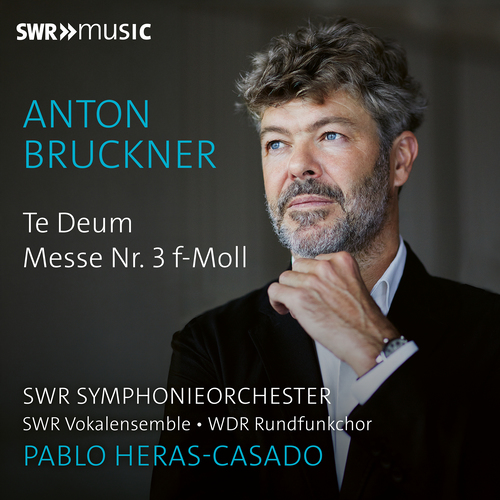
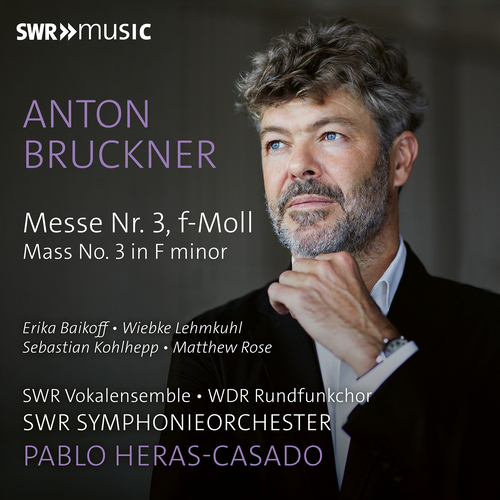
When Anton Bruckner premiered his Te Deum at the Vienna Musikverein in 1886, he later referred to it as the “pride of my life.” This rare display of self-assurance is striking, given that Bruckner was otherwise known for his artistic self-doubt and frequently revised his compositions. But in this case, he was certain – and the critics agreed: the Te Deum became one of his greatest successes, surpassing even many of his symphonies in public acclaim.
The story of the Mass in F minor unfolded rather differently. Commissioned by the Imperial Court Chapel in Vienna (Wiener Hofmusikkappelle), it was composed nearly two decades before the Te Deum. Bruckner subjected the work to multiple revisions up until 1893 – a creative process typical of him. He conducted the premiere himself and even covered the considerable costs, after the Hofkappelle had initially dismissed the Mass as “unsingable.” Only gradually did the work establish itself in the repertoire. The recordings of this album were made in 2024 and 2025, bringing together an outstanding cast of highly acclaimed singers under the direction of a conductor of international standing.
Flutronix, the forward-thinking musical duo comprised of Nathalie Joachim and Allison Loggins-Hull, presents Black Being, a four-movement song cycle for flutes, electronics, and chamber orchestra that explores and reclaims the black female experience.
Black Being features Grammy-nominated performer and composer Nathalie Joachim, who has been praised as “a fresh and invigorating cross-cultural voice” (The Nation), and performer, composer, and producer, Allison Loggins-Hull, called a “powerhouse” by The Washington Post, with the Chicago Sinfonietta under the direction of conductor Mei-Ann Chen.
Praised at its premiere as “the most stunning live performance” and named among the Top 10 Classical Music Events of 2021 by the Chicago Tribune, the work incorporates evocative poetry by North Carolina Poet Laureate Jaki Shelton Green, revealing facets of the collaborators’ lives rarely shared within a classical-concert frame.
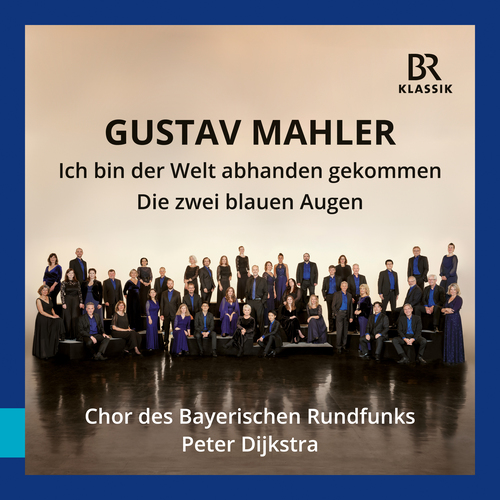
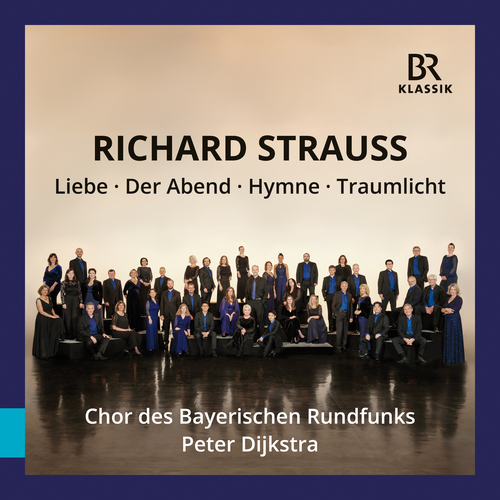
In Romantic music, themes of “Night and Dream” evolved from peaceful concepts into powerful symbols of escape from worldly suffering, promising utopia or even salvation through death. This recording features choral works by composers like Mahler, which exist thanks to the masterful arrangements of Clytus Gottwald.
Concerned by a decline in choral composition during the late 19th century, Gottwald began transcribing late-Romantic instrumental and vocal pieces for a cappella choir. His arrangements of Mahler’s songs are prime examples. Songs of a Wayfarer explores a rejected lover’s ambiguous final rest, while Ich bin der Welt abhanden gekommen depicts a profound retreat from society.
One might question if a collective choir can convey such personal themes. However, Gottwald’s technique skillfully interweaves the vocal parts, creating a unified musical texture without a distinct soloist. This approach mirrors the late-Romantic style of integrating all musical elements, making the choir a powerful and fitting medium for expressing these deeply subjective emotions.

The Swedish composer Moses Pergament (1893–1977) – Finnish-born of Lithuanian-Jewish stock – chose the poems he set to music from a wide range of sources: those heard in this first-ever recording of his songs are mostly in Swedish but also in a variety of other languages. They likewise cover the gamut of human emotion, from buoyant folksongs and children’s verses via lyrical expressions of love and loss to stark meditations on suffering and death. Many of Pergament’s poets evoke the natural world in their expression of emotion, but his music never yields to sentimentality: he treats each song as a microcosm, expressed with drama and dignity. Time was when Pergament’s vocal music was performed by singers of the calibre of Birgit Nilsson, Elisabeth Söderström and Nicolai Gedda; it is high time it was rediscovered.
![HANDEL, G.F.: Israel in Egypt [Oratorio] (Burton, B. Allen, Chabay, Conant, Prince-Joseph, The Dessoff Choirs, Symphony of the Air, Boepple)](https://cdn.naxos.com/sharedfiles/images/cds/hires/VOX-NX-2812.jpg "HANDEL, G.F.: Israel in Egypt [Oratorio] (Burton, B. Allen, Chabay, Conant, Prince-Joseph, The Dessoff Choirs, Symphony of the Air, Boepple)")
![HANDEL, G.F.: Resurrezione (La) [Oratorio] (Töpler-Marizy, Kertész-Gabry, Lisken, Fackert, Wenk, Santini Chamber Orchestra, Ewerhart)](https://cdn.naxos.com/sharedfiles/images/cds/hires/VOX-NX-2811.jpg "HANDEL, G.F.: Resurrezione (La) [Oratorio] (Töpler-Marizy, Kertész-Gabry, Lisken, Fackert, Wenk, Santini Chamber Orchestra, Ewerhart)")
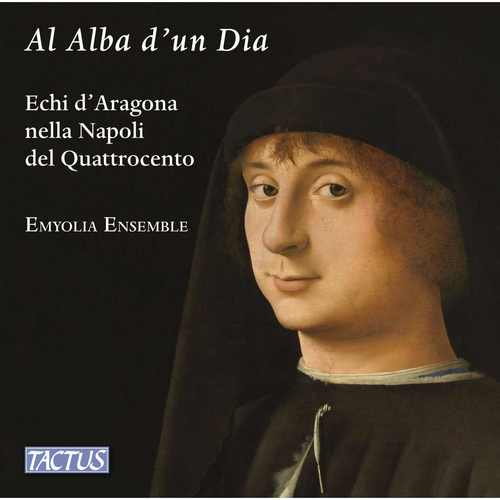
During the 15th century, the Aragonese dynasty reshaped the cultural geography of the Mediterranean, shifting its center of gravity from Valencia to Naples. With Alfonso the Magnanimous, starting in 1435, the Neapolitan capital was transformed into one of the most vibrant crossroads of Renaissance Europe, a meeting point between Franco-Burgundian polyphony, Italian lyric poetry, and Iberian vocal repertoires.
This sonic heritage outlines a musical landscape rich in nuance and articulation, which permeated different spheres of social life: from the official sphere of representation to collective religious practices, and even to forms of public and festive expression. The music resounded in ceremonial halls, cloisters, and squares, adapting to multiple functions – celebratory, spiritual, playful – and reflecting the complexity of a culture that made music a distinctive sign of identity and prestige. It is the voice – now intimate, now solemn, now joyful – of a layered and dynamic musical civilization, which made Naples one of the sonic capitals of Renaissance Europe.
The Emyolia Ensemble’s choice to perform polyphonic and contrapuntal pieces using three lutes and a dulcimer has the dual purpose of making the musical texture more homogeneous while, at the same time, highlighting – through the only percussion instrument used – the cantus, the voice that conveyed the author’s message to their audience.
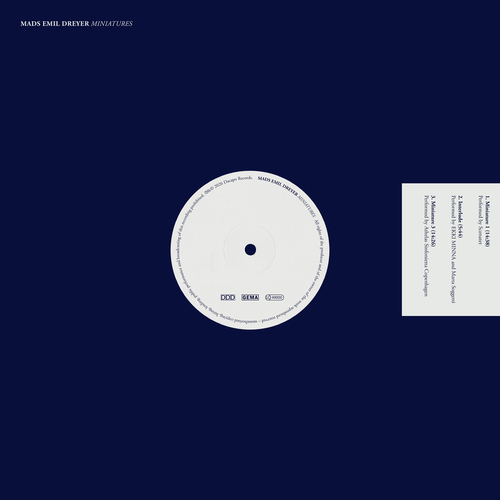
In his Miniatures series, Danish composer Mads Emil Dreyer (b. 1986) explores the uncanny gap between acoustic and electronic sound. Pairing glockenspiels and strings with ‘shadow’ sine tones via transducers, Dreyer creates a hybrid soundworld of shimmering, fuzzy beauty. Like Monet’s cathedral paintings, these works view a central object through changing light and weather. From intimate quartets to chamber orchestration, this is music of childlike innocence haunted by a dark, digital presence.
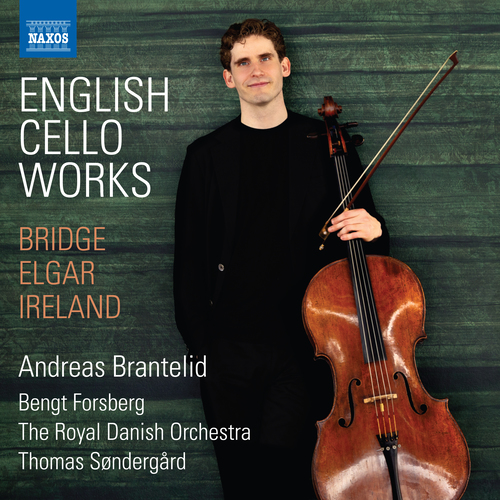
Edward Elgar’s Cello Concerto in E minor is a cornerstone of the cello repertoire, a product of the composer’s summer seclusion in the English countryside in 1919. A masterpiece of moods, it encompasses the world-weary and poignant but also the quicksilver and passionate. Two other cello works written at around the same time proved pivotal in their composers’ careers. John Ireland’s Cello Sonata in G minor fuses brooding, terse muscularity with lyricism and bravura, while Frank Bridge’s two-movement Cello Sonata in D minor reflects pre-War Romanticism coupled with wartime melancholy and defiance.
![HANDSTEIN, J.: Giacomo Puccini – Die Welt zum Weinen bringen • PUCCINI, G.: Arias and Orchestral Works [4 discs]](https://cdn.naxos.com/sharedfiles/images/cds/hires/900939.jpg "HANDSTEIN, J.: Giacomo Puccini – Die Welt zum Weinen bringen • PUCCINI, G.: Arias and Orchestral Works [4 discs]")
GIACOMO PUCCINI – MAKING THE WORLD CRY
An audio biography by JÖRG HANDSTEIN
Puccini’s music touches the hearts of millions. But how well do we really know the man, his work, and his era? What was his life like? What shaped his genius? This new audio biography from BR-KLASSIK – vividly and captivatingly narrated by Udo Wachtveitl and accompanied by lush music – offers the answers.
When Mimì utters her last words, Tosca throws herself on her dead lover, or when Cio Cio San takes her child in her arms once more, opera audiences worldwide reach for tissues. This was Puccini’s goal: far piangere – “to make people cry”. His success in this brought him immense fame and fortune, but how did he craft such enduring art? This audio biography reveals the perfectionist behind the works, a man who spent years refining his operas to make them feel as if they were part of real life.
Puccini’s personal life is often reduced to his notorious passions for women, cars and hunting, along with the tragedy surrounding the suicide of his maid, Doria Manfredi. He was undoubtedly a “macho” through and through, but as he confided to his soulmate Sybil Seligman, “not even my friends know who I really am.“ In this audio biography, with its many quotations, Puccini shares numerous aspects of his story himself, often surprising listeners with his humour, self-deprecation and critical reflection (though his behaviour remained unchanged). We hear of his affairs, miseries, joys and struggles. We accompany him on his bicycle, aboard an ocean liner, duck hunting, in family disputes, and in moments of triumph in New York. And we witness his country – Italy, tragically torn by crisis and eventually sliding into war and fascism.
The main focus, however, is his music, and not just his famous arias and operas. From the church music of his student days to experimental stage works like La Fanciulla del West and Il Trittico, this audio biography charts the remarkable development of his career and uncovers many musical gems.
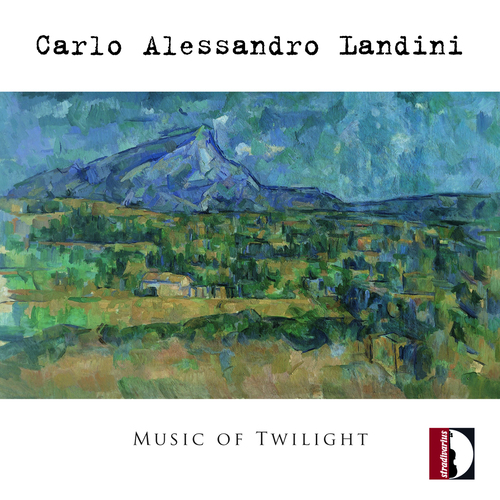
Time brings with it many changes in the course of a lifetime. ‘The only constant in life is change’, stated the ancient Greek philosopher Heraclitus. The Italian composer Carlo Alessandro Landini, whose string quartet was premiered by the renowned Arditti Quartet at the Darmstadt Summer Courses in 1994 and has made him famous in Germany since, has always been concerned with change and transformation, both embodying the deepest essence of music.
In the meantime, his works have become calmer, more balanced, exuding aesthetic beauty and harmony through their tonal inventiveness. The listener is surprised by the extremely subtle sound visions that the pieces presented here suggest. They could be understood today as counter-designs – probably due to the composer’s spiritually oriented creativity – to our restless times. This leads us right into the heart of these four works.
On the background of his creativity, Landini believes in the special proximity of all art to the realm of metaphysics. He is virtually inspired by this aspect and sets out in his compositions in search of what holds the world together. His more recent works convey his message of a ‘world soul’ of some kind. His music requires a listener who opens up in order to broaden the shared horizon and feel more strongly what is happening between heaven and earth. Landini continuously unfolds his music from a nucleus. The composer demands intensive, sensitive listening to space and time from himself, his performers and his listeners. Olivier Messiaen, whose student Landini had been, must have encouraged and inspired him in this.
![VASKS, P.: 80th Anniversary Edition [3 discs]](https://cdn.naxos.com/sharedfiles/images/cds/hires/ODE1482-2T.jpg "VASKS, P.: 80th Anniversary Edition [3 discs]")
This special three-album edition celebrates Pēteris Vasks’ 80th anniversary in 2026. The release consists of Vasks’ first three award-winning album releases on Ondine. The debut album of Vasks’ music on Ondine, featuring his 2nd Symphony and Violin Concerto ‘Distant Light’, was a major international breakthrough for the composer, earning two Cannes Classical Awards in 2004, including ‘Album of the Year’.
In addition to the second orchestral album (with Symphony No. 3 and Cello Concerto No. 1), released in 2006, this album also includes Vasks’ major choral masterpiece, the Missa, performed by the award-winning Latvian Radio Choir and Sinfonietta Riga conducted by Sigvards Kļava, one of the great exponents of Vasks’ music for many years.
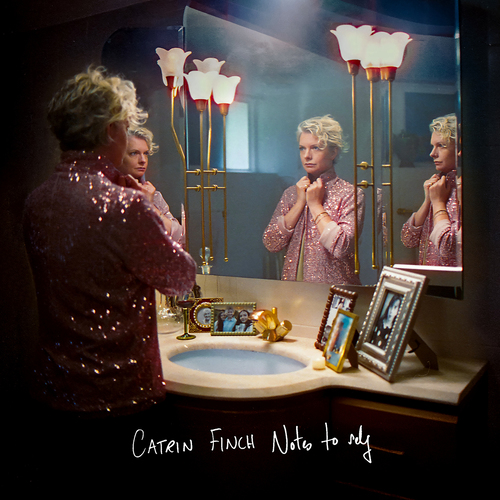
Catrin Finch releases Notes to Self, her first solo album in a decade, featuring personal tracks dedicated to her 13-year-old self. Accompanied by letters, the album reflects on her 40-year career, exploring vulnerability, transformation, and life under public scrutiny. As a gay woman, cancer survivor, and mother, Finch channels her struggles and triumphs into music, marking a bold, introspective evolution in her artistry.
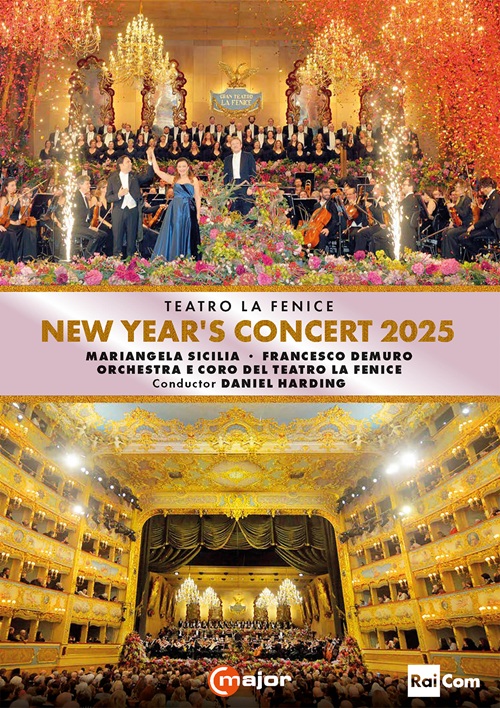
The Teatro La Fenice opened in 1792 and is one of the most renowned and most beautiful theaters in the world. “Amid mirrors, flowers and confetti, New Year’s Eve at La Fenice is a ritual” (MusicPaper). The Teatro Fenice’s Concerto di Capodanno – one of the world’s most celebrated New Year’s concerts – welcomes Daniel Harding back to the podium. After the monumental opening with Beethoven’s Fifth, soloists Mariangela Sicilia and Francesco Demuro perform beloved arias by Rossini, Leoncavallo, Puccini, Wolf-Ferrari, Bizet, Gounod and Verdi. Interwoven with the concert are scenes of Aterballetto dancers, choreographed by Marcos Morau, performing in Venice’s most iconic locations. The soloists’ “perfect vocal blend” in Libiamo ne’ lieti calici truly stands out (MusicPaper).
![WAGNER, R.: Tristan und Isolde [Opera] (Semperoper Dresden, 2024)](https://cdn.naxos.com/sharedfiles/images/cds/hires/770708.jpg "WAGNER, R.: Tristan und Isolde [Opera] (Semperoper Dresden, 2024)")
Semperoper Dresden presents an historic performance of Tristan and Isolde, directed by Marco Arturo Marelli and conducted by world-leading conductor Christian Thielemann. The sound he obtains from the Wagnerian score “fills the room with elegiac longing, drawing listeners into the emotional depths of the famous lovers.” (Opera Online) Klaus Florian Vogt, in his debut as Tristan, is “fully present and convincing with natural phrasing and clear diction” (Opernmagazin), while Camilla Nylund as Isolde “convinced with her still incredibly lyrical, light soprano” (Sächsische Zeitung). At the zenith of his career, Christian Thielemann manages to set a new standard with his permeation of this difficult score and leads the Staatskapelle Dresden to new heights of artistic expression. “It would be most wonderful if this Tristan never ended.” (Opernmagazin). “Brilliant performances that bring you to your knees”. (Sächsische Zeitung)
Make sure to subscribe to Naxos newsletters for other great offers.