
 Translate

































In addition to its own wide-reaching monthly new releases, Naxos also distributes several leading labels in many countries around the world. Here is a choice selection of recent releases from some of these distributed labels.

Since its foundation in 1998, ArcoDiva Recording Company Prague has become one of the leading independent producers of classical music recordings in the Czech Republic and the wider Central European region that emerged following the political changes of 1989. The company’s catalogue comprises more than 250 releases, many of which have received prestigious international awards and critical acclaim. ArcoDiva recordings are distributed worldwide exclusively by NAXOS, both as physical releases (CDs) and through all major streaming services and digital music platforms worldwide.
The ArcoDiva catalogue features numerous prestigious projects, including Joachim Raff’s opera Dame Kobold, Paul Wranitzky’s Oboe and Violin Concertos, and Antonín Dvořák’s oratorio Saint Ludmila (SACD, produced in cooperation with the Prague Spring International Music Festival). The label has also released recordings of symphonies by Gustav Mahler and works by major Czech composers such as Bedřich Smetana, Antonín Dvořák, Bohuslav Martinů and Leoš Janáček, alongside music by contemporary composers including Stanley Grill and Jim Lahti.
ArcoDiva has collaborated with many distinguished ensembles and orchestras, including the Czech Philharmonic, the Prague Radio Symphony Orchestra, the Prague Symphony Orchestra, the Brno Philharmonic, Prague Philharmonia, the Prague Chamber Orchestra, the Moravian Philharmonic Olomouc, the Chamber Orchestra Mannheim, Wranitzky Kapelle, Quattro Orchestra, and the West Bohemian Symphony Orchestra Mariánské Lázně, among others.
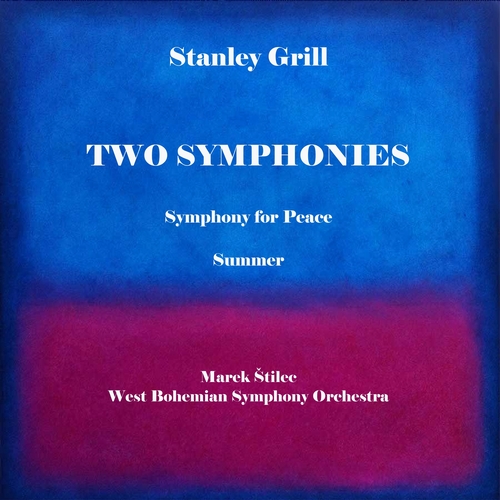
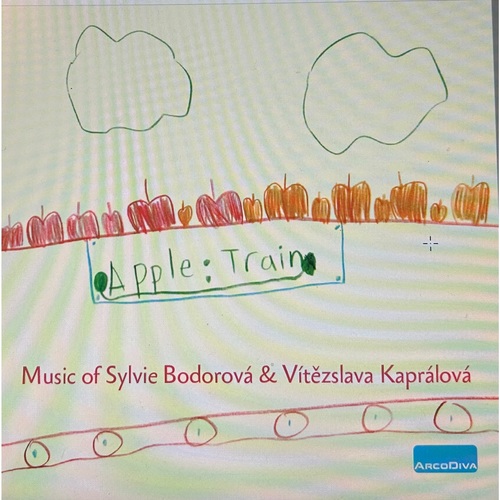
This release features music from Stanley Grill’s MUSIC FOR THE EARTH and MUSIC FOR PEACE projects. Summer (a symphony) was composed while out walking on during a very hot August. From out of the hot blue sky came the sound of brass choirs, and from the green trees, choruses of strings and woodwinds. Cicadas were calling.
Work on Symphony for Peace started late in 2023 as wars raged in both Ukraine and the Middle East. Unlike other wars that have been fought since the last century, these are wars that pose a threat of escalating on a world-wide scale.
Not that music ever brought peace. But, as Lenny Bernstein famously said, ‘This will be our reply to violence: to make music more intensely, more beautifully, more devotedly, than ever before.’ Scattered throughout the score, in somewhat altered form, are melodies by various composers ranging from the Renaissance through the 20th century that were settings of the words ‘dona nobis pacem.’
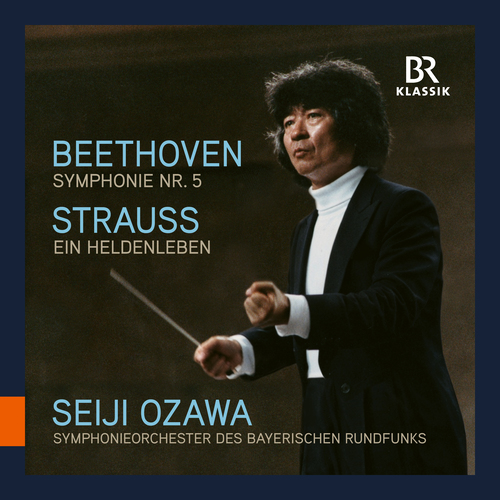
The Japanese conductor Seiji Ozawa (1935–2024) conducted the Bavarian Radio Symphony Orchestra in Munich only twice – yet on both occasions, nothing less than musical history was made. In July 1983, Ozawa conducted Stravinsky’s Le sacre du printemps and Beethoven’s Egmont Overture in the Herkulessaal of the Munich Residenz, as well as Beethoven’s First Piano Concerto with Martha Argerich as the soloist – a performance that has already been released on disc (catalogue no. 900701). Then, in January 1990, he appeared at the Philharmonie im Gasteig with the programme presented here for the first time on disc, featuring striking and unprecedented interpretations of Beethoven’s Fifth Symphony and Strauss’s tone poem Ein Heldenleben.
The first reviewer of Beethoven’s Fifth Symphony, E. T. A. Hoffmann, marvelled at the dramatic human struggle ‘through night towards the light’ it expresses, seeing it as shaped in a purely musical manner, with structural density and the utmost rigour. It was not until the second half of the 19th century that the work became known as the “Fate Symphony”, in accordance with the heroic image of the man and artist Ludwig van Beethoven, which had by then become established. Accordingly, the symphony was said to depict Beethoven’s suffering and triumph as he wrestles titanically with fate, especially his personal fate of deafness. The Romantic notion of the artist as a suffering outsider was subsequently projected onto Beethoven’s life and work – and especially onto his Fifth.
Richard Strauss’s tone poem Ein Heldenleben, composed when he took up the post of Court Kapellmeister in Berlin, also deals with the life of a hero. With this work, too, Strauss (like many of his contemporaries) sought to build on Beethoven’s legacy and to extend the composer’s powerful and expressive musical language using modern means. The tone poem A Hero’s Life, which received its world premiere on March 3, 1899 in Frankfurt am Main, could, according to a letter by Strauss, be interpreted as a modern counterpart to the Eroica, which is also based on classical sonata form. The score itself lacks the programmatic explanations for the six sections, which were only formulated just before the premiere – presumably not even by Strauss himself. Nevertheless, the composer, who was often identified with his ‘hero’, was accused of musical self-aggrandisement.

Paper Pianos is a multimedia project co-created by composer Mary Kouyoumdjian and librettist Nigel Maister, with music performed by Alarm Will Sound and music director Alan Pierson. A finalist for the Pulitzer Prize in Music, the work draws on taped interviews with refugees and refugee resettlement workers to tell a deeply moving story of dislocation, longing, optimism, and the search for safer harbours. This full-length performance was recorded live on February 25, 2023 at the Experimental Media and Performing Arts Center (EMPAC) in Troy, NY.
![RACHMANINOV, S.: Piano Concerto No. 3 (performance at Istanbul Festival, 2 July 1983) [vinyl]](https://cdn.naxos.com/sharedfiles/images/cds/hires/IBA-LP013.jpg "RACHMANINOV, S.: Piano Concerto No. 3 (performance at Istanbul Festival, 2 July 1983) [vinyl]")
In July 1983, Idil Biret stunned audiences at the Istanbul Festival with her masterful interpretation of Rachmaninov’s Piano Concerto No. 3, performed alongside the Leningrad Orchestra under Alexander Dmitriev. The conductor declared that no woman in the Soviet Union could play the work with such mastery, and only a handful of men could match her artistry. More than three decades later, in July 2017, Biret performed at Rachmaninov’s restored Ivanovka estate, presenting his Moments Musicaux with profound sensitivity. These landmark concerts, preserved on this LP, affirm Biret’s enduring authority in Rachmaninoff and her rare, deeply moving musicianship.
![Scenes from Finland – SIBELIUS, J. • PALMGREN, S. • ENGLUND, E. • TUUKKANEN, K. [Hybrid SACD]](https://cdn.naxos.com/sharedfiles/images/cds/hires/CHSA5391.jpg "Scenes from Finland – SIBELIUS, J. • PALMGREN, S. • ENGLUND, E. • TUUKKANEN, K. [Hybrid SACD]")
Sibelius’s Scaramouche, a ballet-pantomime commissioned in 1912 by his publishers, for a play by Poul Knudsen. His story line reflects the immense early twentieth-century interest in clowns and the commedia dell’arte, and in erotic desire, death, and the macabre, the same phenomena that produced Stravinsky’s Pétrouchka and Schoenberg’s Pierrot Lunaire. Best known as a composer of piano music, Sibelius’ younger contemporary Selim Palmgren also wrote music for the theatre, and his score for the fairy-tale play Tuhkimo ja kuninkaantytär (Tuhkimo and the Princess), dates from 1902–03. Larin– Kyösti’s play recounts the adventures of a passionate youth, Tuhkimo, and combines features of the familiar Cinderella story with elements drawn from a wide range of folk tales and fables. Einar Englund studied composition with Palmgren (and later Aaron Copland). His soundtrack for Erik Blomberg’s 1952 film Valkoinen peura (The White Reindeer) was particularly acclaimed and won best prize for original music in the Jussi Awards (the Finnish Oscars) in the year of its release. Kalervo Tuukkanen taught for three years at Viipuri University before serving as Kapellmeister in Pori, on Finland’s Baltic coast, in 1942– 44. He was one of the founding members of Suomen Säveltäyät (the Finnish Composer’s Association) and his composition Karhunpyynti (Bear Hunting) was awarded a silver medal in the 1948 Cultural Olympics in London (where Finland impressively topped the medal table). Joulusarja (Christmas Suite) is taken from his 1953 score for a production of the play Die Erzählung des letzten Hirten (The Tale of the Last Shepherd) and its five movements covers the key moments in the Christmas story.
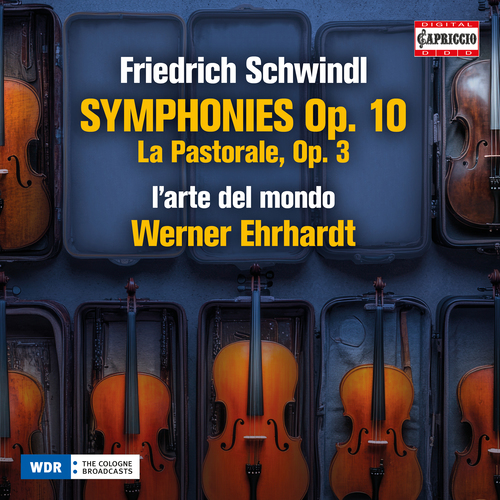
Completely forgotten today, Friedrich Schwindl (1737–1786) was a highly esteemed violinist and composer in his time. Although his name appears repeatedly in the writings of Leopold Mozart, Charles Burney and Daniel Schubart, the construction of his biography remains very fragmentary. Born in Amsterdam, the stages of his life can be traced along the Rhine, from the Netherlands to Switzerland. The focus of his work was instrumental music, especially symphonies, of which 31 survive. They display the influence of the Mannheim School, but with a more folk-like character. This release represents a fascinating historical rediscovery, brought to life with virtuosity and authenticity by the musicians of the l’arte del mondo orchestra under Werner Ehrhardt.
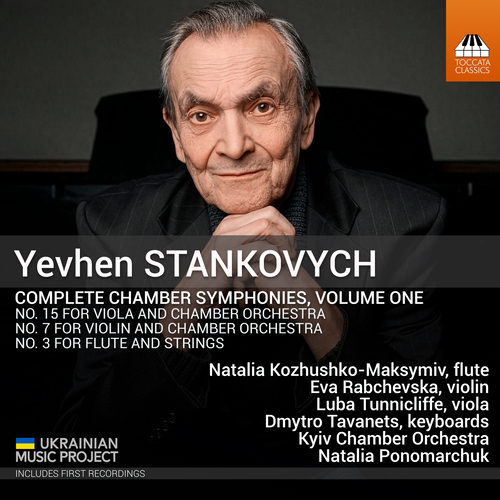
Between 1972 and 2018 the Ukrainian composer Yevhen Stankovych – born in 1942 and now the senior figure in Ukrainian music – produced a series of seventeen Chamber Symphonies, many of them doubling as concertos. This substantial body of music has remained largely unheard until now, even inside Ukraine, and should prove a major discovery for audiences everywhere. These works cover a kaleidoscopic range of moods – lyrical, rhythmically propulsive, bashfully hesitant, buoyantly assertive, elegiac, optimistic – expressed in a direct language with its distant roots in the mild modernism of Berg, Britten, Janáček, Shostakovich and like composers. Stankovych’s achievement is unparalleled in the history of music not simply because of the sheer number of his Chamber Symphonies – they also contain some of the finest music of the past half-century.
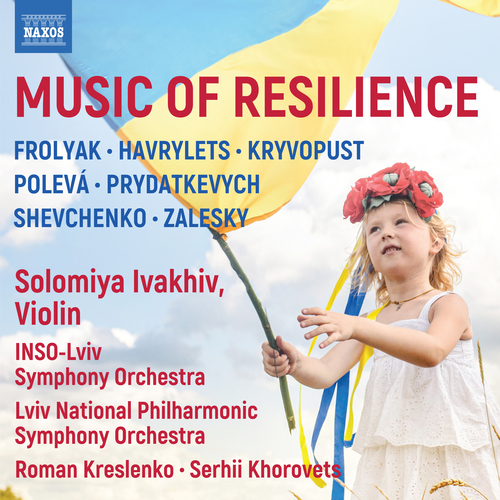
Hailed by Fanfare magazine as ‘one of the major artists of our time’ Ukrainian violinist Solomiya Ivakhiv continues to give voice to her country’s rich musical heritage in Music of Resilience. The album explores her homeland’s ongoing war and features new works: Victoria Vita Polevá’s searing lament, Bucha. Lachrimosa, and two pieces by Bohdan Kryvopust, the powerfully commemorative On the River and the folk-music inspired Ukrainian Suite. Hanna Havrylets’ Ex Libris dates from 1993 and employs folk music techniques that draw on ornamentation more than development. Representing an earlier generation, the richly Romantic works by Osyp Zalesky and Roman Prydatkevych are heard here in arrangements by Bohdana Frolyak. As an encore, Ivakhiv plays Yuriy Shevchenko’s arrangement of Ukraine’s national anthem.
![BORTNIANSKY, D.S.: Creonte [Opera]](https://cdn.naxos.com/sharedfiles/images/cds/hires/TOCC0807.jpg "BORTNIANSKY, D.S.: Creonte [Opera]")
In 1776, during a spell in Italy early in his career, the Ukrainian composer Dmytro Bortniansky (1751–1825) wrote Creonte, an opera seria based on Sophocles’ tragedy Antigone and poised, like early Mozart, on the cusp between Baroque and Classical styles. Although a success in its day, Creonte then vanished for 250 years, until it was discovered by chance in a Portuguese library. It may have been hidden there because its tale of love versus power ends with a surprising democratic twist – a daring move in those autocratic times. Since Creonte is the first surviving opera by a Ukrainian composer, its revival in Kyiv in 2024 became a gesture of defiance, a symbol of national importance underlining the continued vigour of Ukrainian culture even in wartime. This remarkable recording then followed, made in sessions between Russian bombing, black-outs and power-cuts – itself a testimony to Ukrainian national resilience.
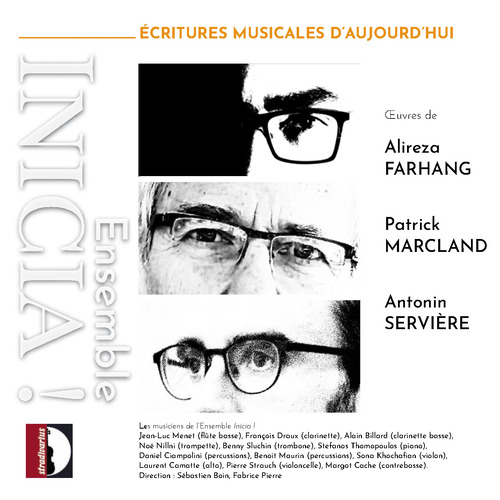
Inicia! is a collective of three composers (Alireza Farhang, Antonin Servière, and Patrick Marcland) founded in 2020, with the aim of promoting contemporary musical creation in the Nice region. Engaging renowned musicians, the ensemble presents concerts in which particular attention is paid to scenography, staging, and choreography, with a focus on trans-disciplinarity and dialogue between art forms. In 2021, they produced and performed the music for Laurence Marthouret’s triptych of choreographic works, Rituals. The Inicia! ensemble has collaborated with the CIRM (National Center for Musical Creation in Nice, now extincted) and L’Entrepont at the 109 Contemporary Culture Center, located in Nice.
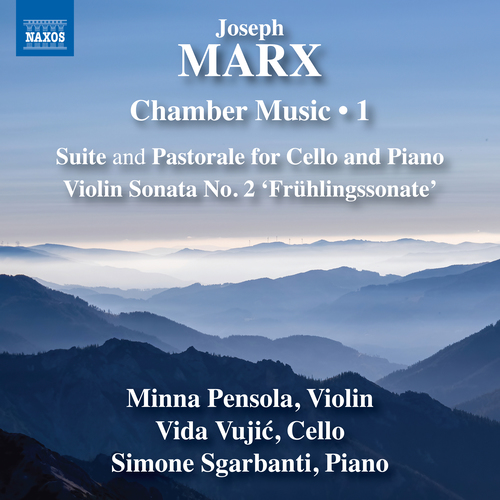
This first volume of Joseph Marx’s chamber music charts a period of 30 years from the cello works of 1913–14 to the Violin Sonata No. 2, written in 1944, shortly before he ceased all composition. The Pastorale is characteristically subtle with impressionistic devices harnessed to ever-changing variations. The Suite in F major, for which the Pastorale was originally intended, balances a rural idyll with more sombre elements, informed by a noble Classical design. Violin Sonata No. 2, subtitled Frühlingssonate (‘Spring Sonata’), consciously re-uses material from earlier works to form a lyrical dance-like work irradiated by ingenious harmonic twists.
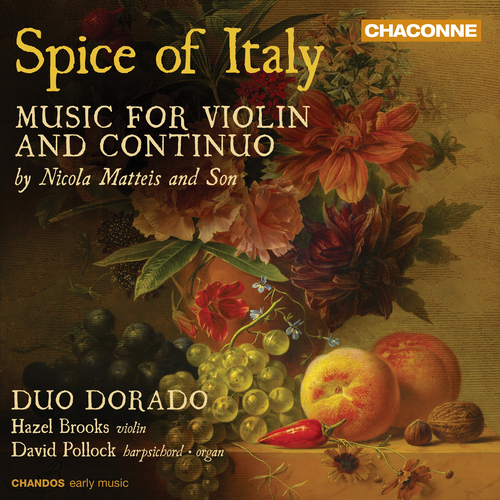
“Following our exploration of violin sonatas by Finger (CHAN 0824), immersing ourselves in the music of his London contemporaries was a logical next step. Although not wholly unknown nowadays, both Matteis Senior and his son lack the full recognition that they deserve, being overlooked in their countries of origin because they emigrated, and in their new homelands because they were foreign. Determined to put this to rights, we spent innumerable hours exploring their music, spellbound by their vibrant and ever-varying musical worlds. It was a struggle to choose which pieces to record, and plenty more remain, which we sadly had to leave aside. Violin playing today has its roots in the Italian style of players such as Matteis, and we take it for granted that the violin can move us with abundant expressive colours and effects. The situation in Restoration London was different. Musical style was largely French and no one had heard playing like that of Matteis Senior before. The first significant Italian violinist to arrive in England, he must have seemed like a musical visitor from outer space. His influence, through his performing, teaching, and publications, cannot be overestimated. Violin playing and musical taste shifted wholeheartedly towards the Italian style, and in [Roger] North’s words, which inspired the title of this recording, ‘nothing in towne had a relish without a spice of Itally’.” – Hazel Brooks / Duo Dorado
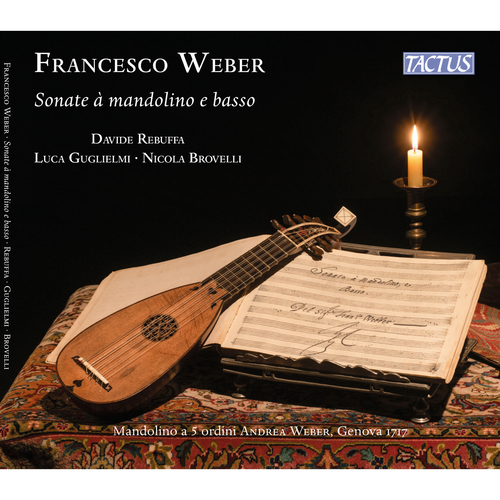
The 12 Sonatas for mandolino and continuo by Francesco Weber represent one of the most interesting collections of compositions for the baroque mandolino that have come down to us. Despite his German surname clearly suggesting German ancestry, Francesco Weber, was an Italian lutenist / theorbist / mandolinist and composer, whose career was mainly in England. My research started from his will – drawn up in London under the name of John Francis Weber on April 13, 1745 – and proved several months after his death on June 5, 1751, in which the “Republic of Genova” is often mentioned concerning assets and family properties. The 5-course mandolin used for this recording was built in Genoa in 1717 by Andrea Weber (1658–1740). It is the only surviving example by this maker, and one of the very few surviving Genoese baroque “mandolinos.” It is an instrument recently discovered in a private collection, therefore completely unknown even to early mandolin experts, before this recording. An even more extraordinary aspect that distinguishes this disc is the fact that it represents a truly exceptional case – perhaps unprecedented at least in the field of early plucked string instruments – in which the music of a composer is recorded using an instrument built by his father.
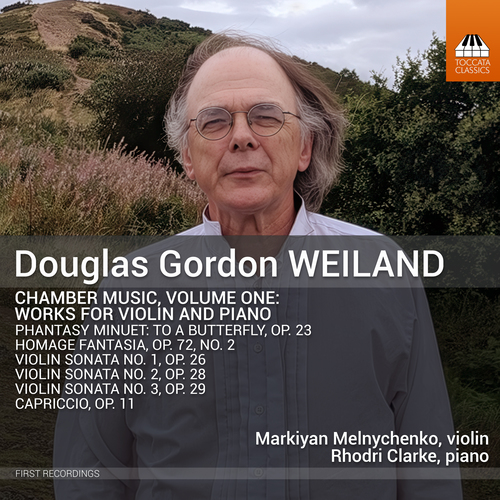
The music of Douglas Gordon Weiland – born, like Elgar, in Worcestershire, in 1954 – is one of the better-kept secrets of British musical life: very little of his substantial catalogue of orchestral, chamber and choral works has been recorded. This first volume in a projected series reveals a composer with an individual musical language, an angular lyricism informed by echoes of Elgar, Vaughan Williams and Frank Martin, its quieter moments having something of the autumn elegance of late Brahms and its more propulsive passages the energy and rough humour of Nielsen and Robert Simpson. Weiland was himself a professional violinist for some years, moreover, and he writes for the instrument with deep understanding.
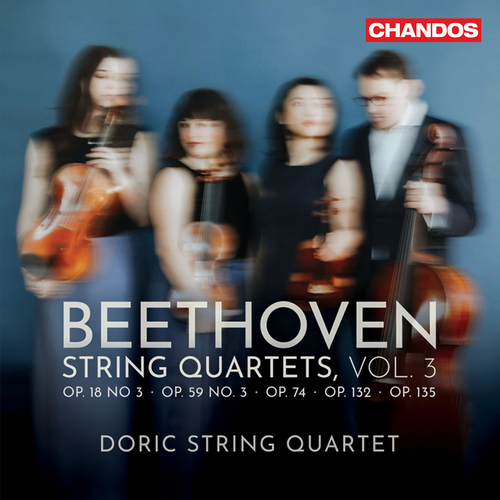
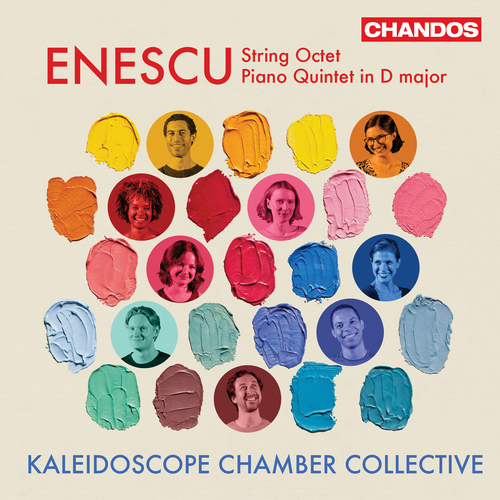
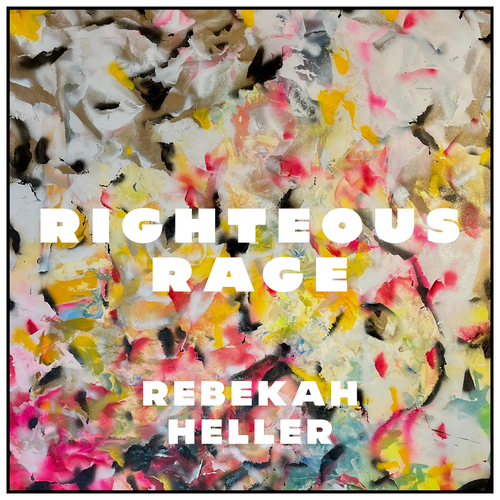
This album is my love letter to the bassoon, and to bassoonists, who are the most generous and lovely collaborators. After a decade of commissioning a slew of new solo works, I longed for the collaborative aspect of bassoon ensemble playing. Although this album is realized as a solo project, the idea behind the commissioning of these pieces is to create a deep and varied repertoire for bassoon choir to be performed with myriad voices, and to encourage others to keep adding to this new library. I’m grateful to my bassoonist colleagues who joined me in exploring early premieres of many of these works at the Fridman Gallery in June of 2024 (you can find their names in the thank yous).
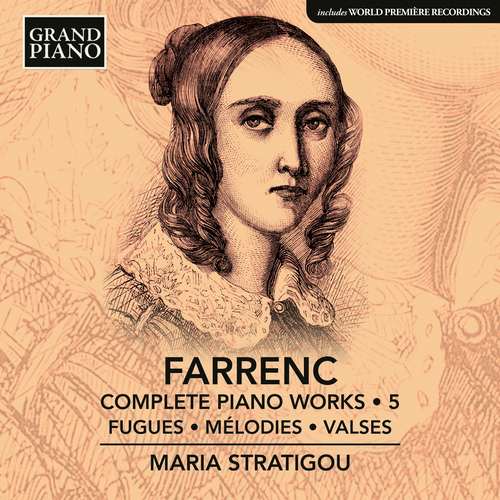
Louise Farrenc won the admiration of her contemporaries as one of the most respected pianists, composers and pedagogues in 19th-century Paris. She was acclaimed as a performer of Beethoven’s music, and her graceful Mélodie in A flat major was included in an 1846 anthology of works by an array of composers inspired by the music of Beethoven. Farrenc’s Impromptu in B minor appeared in another publication, Vogt’s Musical Album of Autographs, alongside compositions by 62 other musicians including Berlioz, Gounod and Liszt. The Fugues were never published in Farrenc’s lifetime and are heard here in a world premiere recording. ‘[Stratigou] has a full mastery of Farrenc’s romantic style and a technique to match’ (American Record Guide on Volume 3, GP942).
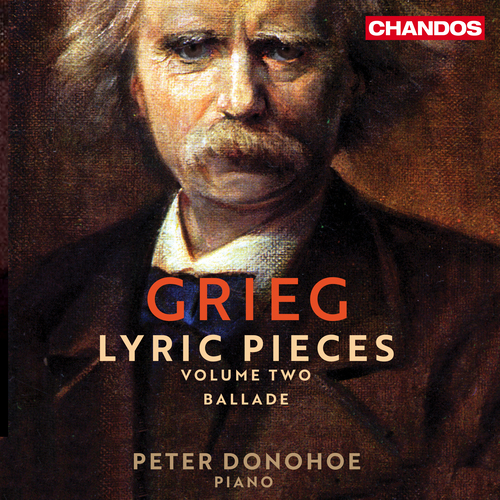
Born in Manchester in 1953, Peter Donohoe studied at Chetham’s School of Music for seven years, graduated in music from Leeds University, and went on to study at the Royal Northern College of Music with Derek Wyndham, and then in Paris with Olivier Messiaen and Yvonne Loriod. He is acclaimed as one of the foremost pianists of our time, for his musicianship, stylistic versatility, and commanding technique, a critic concluding in Musical Opinion that ‘I cannot imagine a living pianist capable of improving upon Donohoe’s outstanding artistry’. Following his previous volume of Grieg’s Lyric Pieces (CHAN 20254), this double-album presents the remaining 39 pieces, alongside the Ballade, Op. 24. Born in Bergen in 1843, Grieg is widely regarded as Norway’s “National Composer”. Grieg wrote for the piano throughout his career, but eschewed the German Sonata in favour of miniatures, which he named Lyriske stykker (Lyric pieces). Often influenced by the folk-music of his native Norway, these works were published in 10 volumes. Rather than recording them sequentially, Peter Donohoe has arranged the pieces in an order of his own choosing.
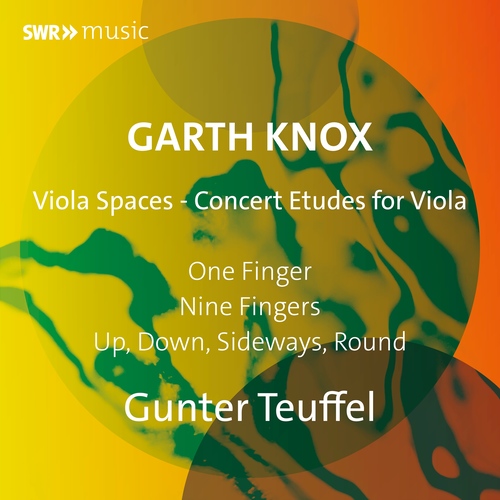
Garth Knox’s Viola Spaces consists of eight compact works, each built around a specific extended technique for the viola. Multiphonics, harmonics, alternative pizzicato forms, bow-pressure effects, and noise-based sounds are shaped into concise musical studies that expand the instrument’s expressive and technical range.
Günter Teuffel is widely recognized for his long-standing engagement with contemporary viola repertoire. As performer, teacher, and former solo violist, he has contributed significantly to the understanding and dissemination of modern playing techniques and new music for the instrument. This release brings together Knox’s inventive cycle and Teuffel’s broad experience within the field of contemporary viola music, offering a focused look at the instrument’s modern possibilities.
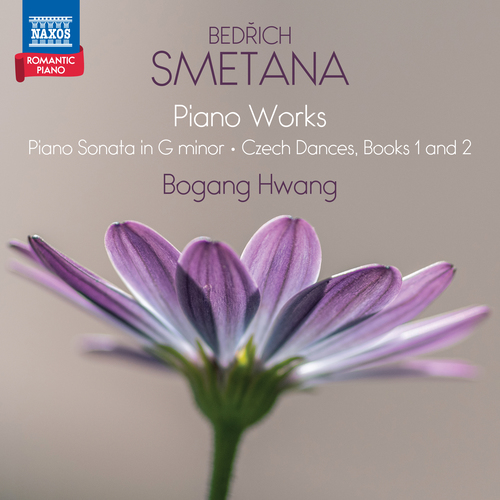
Regarded as the father of Czech music Bedřich Smetana was a pioneer in developing a national style that culminated in his popular symphonic cycle Má vlast. Composed after he had become deaf the Czech Dances are Smetana’s last major piano works. Sparkling with distinctive character and inventiveness Book 1 elevates the humble polka to the level Chopin achieved with his mazurkas, while Book 2 was inspired by the old Moravian and Bohemian dances played to Smetana by his neighbour, a local amateur violinist. Coloured with Lisztian harmonic richness, the Piano Sonata in G minor combines Romantic expressiveness with puckish good humour.
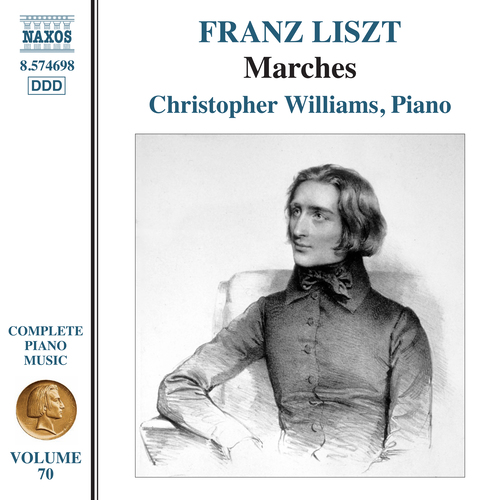
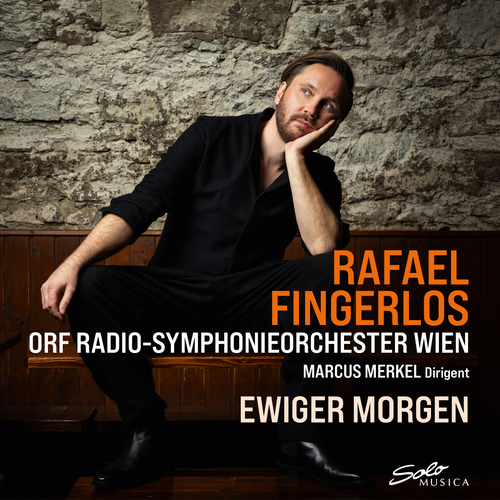
What began as a tribute to Vienna turned into a deeply personal musical memorial project: an album projected started in early 2025 exploring the diverse musical tradition of the Austrian capital took on a whole new meaning following the sudden death of sound engineer, recording director and co-producer Georg Burdicek.
For many years, Georg Burdicek was an artistic companion, a close confidant and one of the first supporters of the singer Rafael Fingerlos. Following his unexpected death, the project initially came to a standstill. The decision to continue with the recordings ultimately became a conscious tribute to a friend whose influence lives on in every note of the album.
Thus, what began as an original homage to Vienna evolved into a musical journey through memory, loss and hope. Works by Korngold, Richard Strauss, Brahms, Schumann, Beethoven, Bruch, Cornelius, Lortzing and others combine opera, art song, operetta and folk song into a programme that speaks of longing, transience and faith in a new dawn. Richard Strauss’s Morgen! in particular becomes a symbol of hope that does not console us by glossing over the pain but rather emerges from it.
The result is a programme that centres on themes such as memory, loss and hope. In this context, the selected works take on a new emotional depth and speak of farewell, consolation and the strength to carry on. The album deliberately concludes with the simplicity of the folk song – as an expression of heritage, humanity and closeness. The album is thus not only a tribute to Vienna, but also a musical memorial to Georg Burdicek.
The album was completed thanks to the tremendous support of the ORF Vienna Radio Symphony, conducted by Marcus Merkel, as well as many long-standing musical companions. It deliberately ends not with pathos, but with the simplicity of the folk song – as a return to one’s roots, humanity and closeness.
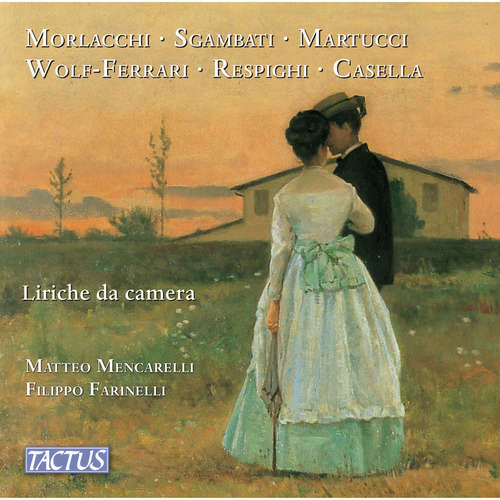
The voice of baritone Matteo Mencarelli – accompanied by Filippo Farinelli on the piano – magnificently interprets the chamber music anthology presented in this release: a journey through Italian lieder repertoire spanning the transition from the 19th to the 20th century. The overview of the featured composers (including a world premiere recording of works by Francesco Morlacchi) traces an intriguing path in which the use of poetic texts by both ancient and contemporary authors defines the thread running through the album. From the literary sources employed by the composers of the Italian Historical 20th century – ranging from Dante Alighieri to Gabriele D’Annunzio, via 19th century German poetry and unique figures such as the Neapolitan poetess Laura Beatrice Mancini-Oliva – spring musical masterpieces in which the composers seek and find emancipation from the dominance of 19th-century theatrical melodrama, thereby realigning the genre of vocal chamber music with the European lied tradition.
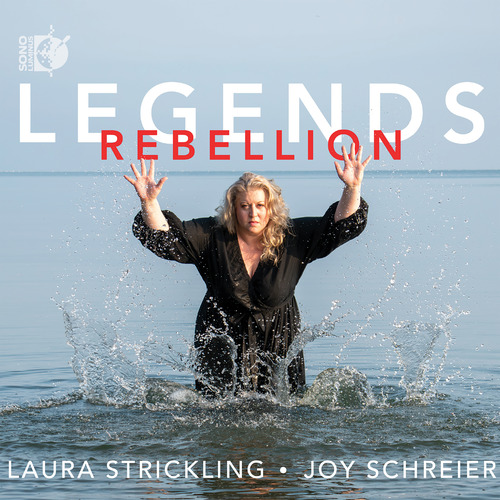
LEGENDS: Rebellion is the next installment in a series of recordings celebrating women as storytellers and bearers of cultural memory. Featuring world-premiere recordings, GRAMMY-nominated, long-time collaborative duo soprano Laura Strickling and pianist Joy Schreier returns to add to the evolving legend of modern art song in an album exploring rebellion in many forms: political, emotional, erotic, maternal, and spiritual. From Afghan women’s landay poetry composed in defiance of oppression, to mythic heroines reclaiming their own narratives, to an unflinching portrayal of new motherhood and a powerful meditation on love as resistance. Pushing against conventional expectations of what art song “should” be, this album offers a kaleidoscopic array of harmonic and rhythmic languages alongside compelling, deeply human texts; a program that fascinates, challenges, informs, and delights – inviting both devoted listeners of art song and those less familiar with the genre into a richly expressive sonic world celebrating contemporary song as a space for courage, vulnerability, witness, and transformation.
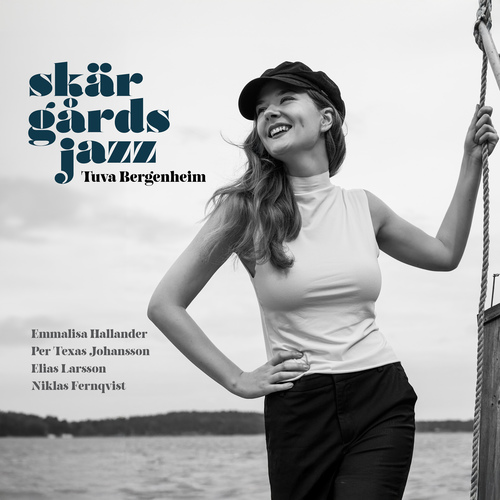
24-year-old Tuva Bergenheim is a Swedish drummer, composer, and bandleader from Stockholm who, with her debut album Skärgårdsjazz (‘Archipelago Jazz’), creates a dreamy and melancholic sound where Swedish jazz meets pop, folk ballads (visa), and Nordic folk music. Unlike other Swedish jazz artists, there are no influences here of traditional vocal jazz or the American standard repertoire. As a drummer, composer, and lyricist, she shapes a personal sound that defies expectations – dreamy, melancholic, and a unique blend of old Sweden and modern jazz. Produced and composed by Bergenheim herself, Skärgårdsjazz is a nostalgic tribute to what has shaped all her summers – the docks of the Swedish archipelago, salt-sprayed cliffs, and a melancholic feeling of the transience of time.
![HÉROLD, F.: La Fille mal gardée [Ballet] (Royal Ballet, 2025)](https://cdn.naxos.com/sharedfiles/images/cds/hires/OA1399D.jpg "HÉROLD, F.: La Fille mal gardée [Ballet] (Royal Ballet, 2025)")
Escape to the countryside with Frederick Ashton’s ballet about a capricious girl who hopes to marry her love. Brimming with humour and choreographic invention, La Fille mal gardée is the perfect ballet for all the family.
Lise is the only daughter of Widow Simone, the owner of a prosperous farm. She is in love with the young farmer Colas, but her mother has higher ambitions for her, hoping to marry her off to Alain, the son of the wealthy proprietor Thomas. Desperate to marry Colas rather than Alain, Lise contrives to outwit her mother’s plans.
When La Fille mal gardée premiered in Covent Garden on 28 January 1960, it instantly won all hearts. Inspired by Jean Dauberval’s French ballet, Ashton’s version combines exuberant good humour and an affectionate portrayal of village life. The Royal Ballet’s Founder Choreographer, Ashton hoped to capture the ‘leafy pastoral of perpetual sunshine…the suspended stillness of a Constable landscape of my beloved Suffolk, luminous and calm’. Osbert Lancaster’s colourful designs bring the charm of the countryside to life.
![VERDI, G.: Nabucco [Opera] (Arena di Verona, 2025)](https://cdn.naxos.com/sharedfiles/images/cds/hires/773408.jpg "VERDI, G.: Nabucco [Opera] (Arena di Verona, 2025)")
With a spectacular cast and the staging direction of Stefano Poda, this production of Verdi’s Nabucco presents the Arena di Verona in a postmodern aesthetic brought to light through a futuristic vision, cosmic symbolism and absolute abstraction. Anna Netrebko gifts the festival’s audience with a powerful interpretation of one of Verdi’s most demanding roles: her Abigaille is ‘beautiful, vivacious, magnetic’ (La Stampa) and ‘tackles this formidable challenge with great confidence’ (Rivista Musica). Amartuvshin Enkhbat is ‘a marvellous performer of Nabucco, deeply moving’ (Forum Opera). ‘Pinchas Steinberg conducts the choir and orchestra of the Arena di Verona with verve, power, brio and fire’ (Der Merker), a magnificent performance that culminated in a rendition of Va’ pensiero brimming with pathos and intensity.
![HANDEL, G.F.: Giulio Cesare in Egitto [Opera] (Salzburg Festival, 2025) (Blu-ray, HD)](https://cdn.naxos.com/sharedfiles/images/cds/hires/773304.jpg "HANDEL, G.F.: Giulio Cesare in Egitto [Opera] (Salzburg Festival, 2025) (Blu-ray, HD)")
![HANDEL, G.F.: Giulio Cesare in Egitto [Opera] (Salzburg Festival, 2025) (NTSC)](https://cdn.naxos.com/sharedfiles/images/cds/hires/773208.jpg "HANDEL, G.F.: Giulio Cesare in Egitto [Opera] (Salzburg Festival, 2025) (NTSC)")
![PUCCINI, G.: Bohème (La) [Opera] (Arena di Verona, 2024) (Blu-ray, HD)](https://cdn.naxos.com/sharedfiles/images/cds/hires/773704.jpg "PUCCINI, G.: Bohème (La) [Opera] (Arena di Verona, 2024) (Blu-ray, HD)")
![PUCCINI, G.: Bohème (La) [Opera] (Arena di Verona, 2024) (NTSC)](https://cdn.naxos.com/sharedfiles/images/cds/hires/773608.jpg "PUCCINI, G.: Bohème (La) [Opera] (Arena di Verona, 2024) (NTSC)")
Make sure to subscribe to Naxos newsletters for other great offers.