
 Translate































In addition to its own wide-reaching monthly new releases, Naxos also distributes several leading labels in many countries around the world. Here is a choice selection of recent releases from some of these distributed labels.

Toccata Classics is a label dedicated to producing recordings of the huge amount of top-notch classical music that the concert halls and major record companies are ignoring. We make a point of seeking out interesting composers from less familiar musical cultures and from all periods, in the Nordic and Baltic countries, in central and eastern Europe, Britain, the Americas, Australia and further afield. The expedition on which Toccata Classics has embarked might never end, but it will be an exciting voyage of discovery nonetheless. And we hope that you will want to come on board for the journey. Subscribe to our newsletter for the latest updates and deals – and membership of our Discovery Club brings you discounts across the board.
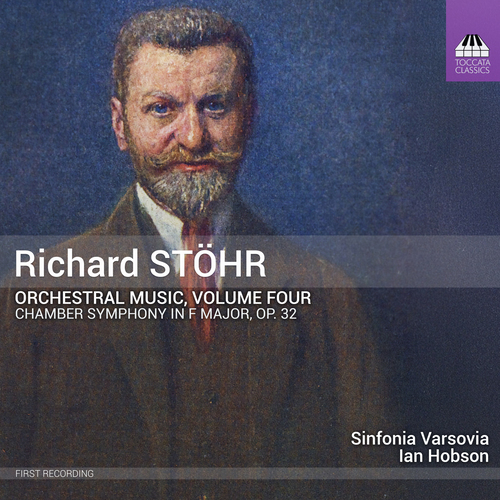
From the early days of the twentieth century until the Anschluss forced him into American exile, Richard Stöhr (1874–1967) was one of the more prominent personalities in Viennese musical life, as composer, teacher and author. Earlier releases in this series of recordings revealed him to have an individual voice, somewhere between Bruckner, Mahler, Korngold and Strauss. It can be heard in its full glory in his Chamber Symphony of 1912, a sunlit score modest in its orchestral demands but expansive in its ambit and generous in its ceaseless flow of gorgeous melody.
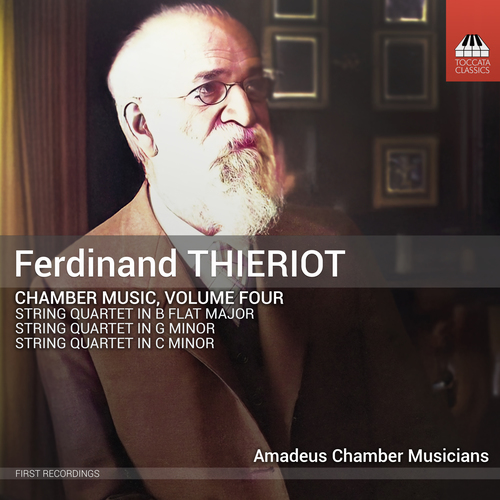
The Hamburg-born Ferdinand Thieriot (1838–1919) not only shared a teacher – Eduard Marxsen – with Brahms; both composers, who remained friends in later years, use a similar musical language, one which is richly melodic and effortlessly contrapuntal. The musicologist Wilhelm Altmann wrote that ‘Thieriot’s chamber music is without exception noble and pure. He writes with perfect command of form and expression’ – as the works on this fourth Toccata Classics volume prove, in their exquisite balance of depth and beauty, of Brahmsian richness and Schubertian spontaneity.
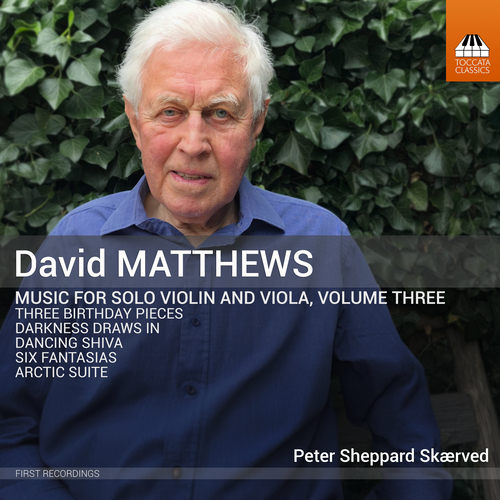
David Matthews and Peter Sheppard Skærved have been collaborating on a series of works for violin and viola for many years now, with Matthews setting Sheppard Skærved formidable technical challenges, and Sheppard Skærved surprising Matthews by finding a way to overcome the difficulties in his path. Behind all the pyrotechnics, this partnership is generating one of the largest, and most musically rewarding, body of compositions for violin and viola by any living composer. Many of Matthews’ pieces record his experience of nature or offer tributes to friends, with the works heard in this third volume also tracing a journey from darkness to light.
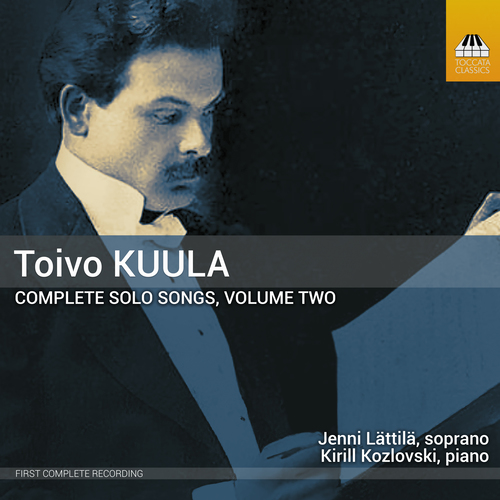
Toivo Kuula (1883–1918) is one of the many composers who died at a tragically young age – 34 in his case: he was hit by a bullet fired after a brawl at a victory celebration at the end of the Finnish Civil War. The immediacy of the music he wrote during his short life points to the immensity of the loss not only to Finnish culture but to music more generally – as this second album of two, presenting his entire output of songs for solo voice and piano, makes abundantly clear. The range of moods captured here is striking; the most passionate of these songs generate an operatic intensity in their short span, in a style that balances directness of expression and rich late-Romantic harmonies.

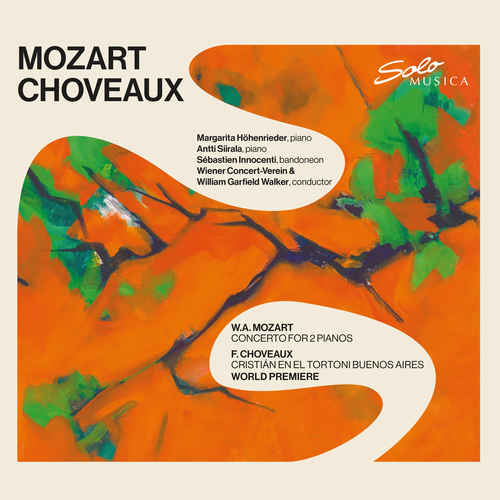
The first time Margarita Höhenrieder heard the Finnish pianist Antti Siirala, she was a member of the jury for the International Beethoven Competition in Vienna in May 1997. Many years later, Antti Siirala was appointed Professor for Piano at the University of Music and Theatre Munich – a happy coincidence that gave both the opportunity to make music together. The very first time they played together, we sensed a special musical relationship: a similar ideal of sound and a very deliberate way of listening to one another. Embarking with a fellow-musician on an artistic journey – such as making Mozart sound convincing on modern instruments, searching for the right tempo, rhythm, vivid phrasing, thrilling dynamics – is a highly creative process and certainly an inexhaustible source of inspiration. As an exciting contrast to their Mozart interpretations, they offer the South American sounds and rhythms of the bandoneon and the typically wistful melodies of the tango Cristián en el Café Tortoni Buenos Aires by Françoise Choveaux – a quite different but equally stimulating challenge. Höhenrieder also was introduced to the great bandoneon player on our recording, Sébastien Innocenti, by Françoise Choveaux. Margarita Höhenrieder is always treading unusual paths.
Together with her friend, the painter Bernd Zimmer, she holds creative performances: “2 left hands,” in which Bernd Zimmer creates a picture with his left hand while Margarita Höhenrieder plays works exclusively for the left hand. The well-known jazz musician Ingfried Hoffmann, Hjálmar Hegi Ragnarsson from Iceland and Francoise Choveaux wrote compositions especially for this performance.
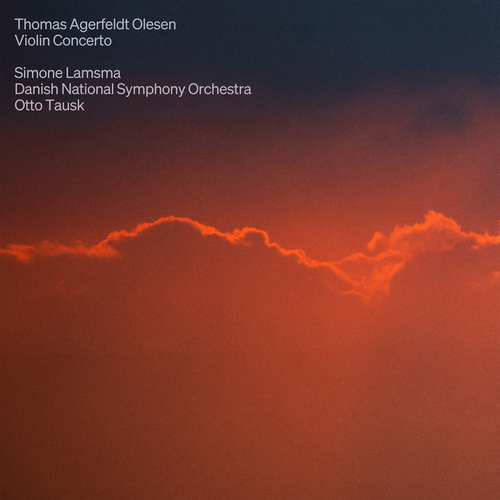
Thomas Agerfeldt Olesen’s Violin Concerto (2024) unfolds in a single, 30-minute movement, a journey from lyrical fragility to tempestuous conflict and back to calm. The violin asserts itself in virtuosic cadenzas that probe, challenge, and converse with the orchestra, replacing the spoken interventions of the earlier Piano Sonata. Simone Lasmas, with the Danish National Symphony Orchestra under Olesen specialist Otto Tausk, brings brilliance, intensity and introspection to this compelling new work.
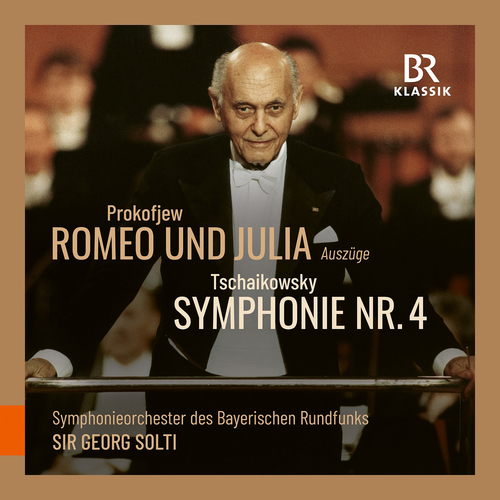
Sir Georg Solti was a frequent guest conductor with the Bavarian Radio Symphony Orchestra. Born in Hungary in 1912, he played a decisive role in rebuilding the Bavarian National Theatre after the war. From the 1960s onwards, he was considered one of the world’s leading conductors alongside Leonard Bernstein and Herbert von Karajan. Georg Solti returned to Munich once more for a special concert on February 10, 1984, with the Bavarian Radio Symphony Orchestra in the Herkulessaal of the Munich Residenz. Aged 71 and at the height of his career, he conducted excerpts from Sergei Prokofiev’s ballet Romeo and Juliet and Pyotr Ilyich Tchaikovsky’s Fourth Symphony. Works by these two Russian composers, as well as Bruckner and Mahler, suited him particularly well, as they sounded musically spirited and exceptionally transparent.
Claudio Santoro’s late works are marked by great concision and considerable emotional density. The music on this album was written in the last months of his life. The Viola Concerto and the Concerto for Chamber Orchestra juxtapose restless energy and expansive – if at times desolate – lyricism. The powerful Symphony No. 13 shows Santoro’s mastery of orchestration and form at its peak, and the compact Symphony No. 14 was to be the last in a cycle widely acclaimed as the most significant of its kind ever composed in Brazil.

This series of award-winning recordings by the Finnish Radio Symphony Orchestra and conductor Nicholas Collon continues with a new album of orchestral works by Richard Strauss (1864–1949). This release includes Strauss’ longest and final major orchestral work, the Alpine Symphony together with Four Songs, Op. 27 sung by soprano Louise Alder, one of the most in demand singers today.
The First Symphony was largely inspired by the composer’s tempestuous love affair with the widowed Baroness Imma von Doernberg, whom Walton met in 1929 and with whom he was living on the Continent in the early 1930s. Although the work was long in gestation, with a particular delay in the composition of the finale, the result was universally acclaimed as an outstanding success, with John Ireland commenting “unlike any other English symphony, this is in the real line of symphonic tradition. It is simply colossal, grand, original, and moving to the emotions to the most extreme degree... It has established you as the most vital and original genius in Europe”. Walton’s star was in the descendent through the 1950’s, with a poor reception to his opera Troilus & Cressida, and equally negative comments for his Cello Concerto, which was widely considered to be embarrassingly old-fashioned in its essentially neo-romantic idiom. Commissioned by Gregor Piatigorsky (at the suggestion of Heifetz), the work was first performed in Boston under Charles Munch in January 1957, with the UK première under Sir Malcolm Sargent following a month later. Walton was unable to attend that concert as he was hospitalised following a car accident on the journey to London from his home in Italy. Now widely perceived as one of Walton’s most important late scores, the work is performed here by Sinfonia of London’s principal cellist Jonathan Aasgaard.

![BEETHOVEN, L. van: Fidelio [Opera]](https://cdn.naxos.com/sharedfiles/images/cds/hires/VOX-NX-2800.jpg "BEETHOVEN, L. van: Fidelio [Opera]")
Only available for streaming and download.
![ROSSINI, G.: Adina [Opera]](https://cdn.naxos.com/sharedfiles/images/cds/hires/8.660606.jpg "ROSSINI, G.: Adina [Opera]")
Rossini’s Adina is a one-act farsa sentimentale or semiseria set in a seraglio in Baghdad where we find the Caliph determined to marry Adina who is also loved by Selimo. To this standard story Rossini brought an unexpected psychological depth, augmented by coloratura arias and male choruses of richness and daring. However, for unknown reasons he omitted a vital Terzetto, which has made the work problematic to fully realise in performance. This recording employs the Terzetto from Giovanni Pacini’s opera La schiava in Bagdad, a solution first proposed in 1861, much to the benefit of the opera’s pacing.
![DELLAIRA, M.: Arctic Explorations [Opera] (C. Levin, N. Haslett, Nuka Alice, Brittain, New Amsterdam Singers, The Harlem Chamber Players, Longstreth)](https://cdn.naxos.com/sharedfiles/images/cds/hires/8.669054.jpg "DELLAIRA, M.: Arctic Explorations [Opera] (C. Levin, N. Haslett, Nuka Alice, Brittain, New Amsterdam Singers, The Harlem Chamber Players, Longstreth)")
![VIVALDI, A.: Mio cor, povero cor, “La Ninfa e il Pastore” [Serenata] (Rapisardi-Savio, Zanolli, Bianchini, Orchestra da Camera di Milano, Loehrer)](https://cdn.naxos.com/sharedfiles/images/cds/hires/VOX-NX-2820.jpg "VIVALDI, A.: Mio cor, povero cor, “La Ninfa e il Pastore” [Serenata] (Rapisardi-Savio, Zanolli, Bianchini, Orchestra da Camera di Milano, Loehrer)")
Only available for download and streaming.
‘As a teenager, I studied violin privately for about a year. Despite my best efforts, I never truly learned to play—couldn’t even manage a simple melody. Yet the raw, untamed sounds of the violin—the fleeting, wild noises it could produce—captivated me. Even now, though I still can’t play a tune, I remain enchanted by its voice: the subtle, mournful cries and the bright, shimmering whispers.
String instruments have long been my silent idols, their voices resonating with a deep, almost mystical beauty. Since I began composing, I’ve been drawn again and again to their warmth, vibrancy, and the intensity of their impassioned screams. Over the years, I’ve written many works for strings—each one an attempt to enter, and perhaps never fully master, their enigmatic world. String Works gathers pieces I’ve written for strings across the past decade. Creating them has been my joy, my privilege, and my constant fascination: an unfolding journey into a soundworld as elusive, strange, and beautiful as the strings themselves.’ – Moon Ha
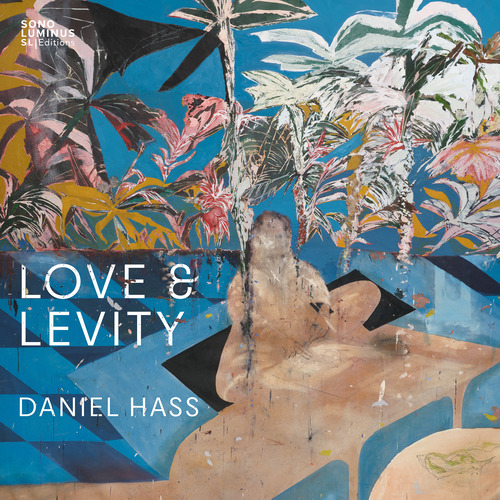
‘These two quartets were written in the summer of 2021. There was a pandemic going on, and I spent most of the summer in my apartment, reading books and feeling the momentum of life melting away in the heat.
Early that summer, I read Haruki Murakami’s first novel, “Hear the Wind Sing,” and in the introduction he tells an anecdote from a baseball game:
”In the bottom of the first inning, Hilton slammed Sotokoba’s first pitch into the left field for a clean double. The satisfying crack when the bat met the ball resounded throughout Jingu Stadium. Scattered applause rose around me and in that instant, for no reason and based on no grounds whatsoever, it suddenly struck me: I think I can write a novel.”
This story had an effect on me similar to the crack of the bat, as I’d never written concert music but had always wanted to.
My only idea of how to start composing was to improvise at the piano. There are parts of the piano quartet that are direct transcriptions of these sessions, such as the cadenza-like development section of the first movement. But even the most structured-sounding passages began as improvisations before being arranged into an almost naively typical sonata structure. The piano quartet, while clearly an “early” piece, introduced me to my own language, and got me addicted to composing.
I started writing Love and Levity, my first string quartet, immediately after finishing the piano quartet. The Renaissance Quartet wasn’t even really a thing yet, but I knew who I was writing it for. I consider the piece to be, at its core, Beethovenian: in its thematic and structural tautness, but even more so in its motion towards excess–staying on an idea for too long, playing something too fast or too slow, too quiet or too loud. The title came from this anachronistic romanticism, this desire to talk about big feelings, but always with a bit of humor, always a bit weird.
Jazz and contemporary songwriting are as important to this music as the classical tradition. The scherzo movement, “Hermit’s Waltz,” is a jazz piece, complete with a transcription of an actual solo taken by guitarist Jacob Drab. The outer movements feature chords, melodies, and instrumental techniques taken from American folk musics such as rock, bluegrass, and the blues. These musics are not only emblems of New York, the city I call home, but contain the DNA of virtually all contemporary music. I leave it to you to discover what any of that means, and how it all came out.’ – Daniel Hass
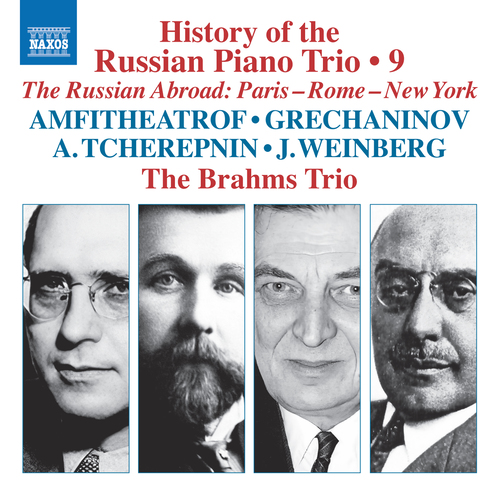
Paris was the musical destination for many Russian émigré composers between the two World Wars, with both Grechaninov, from an older generation, and Tcherepnin, from a younger one, living in the city. Grechaninov’s Piano Trio No. 2 in G major is a brightly decorative work, whereas Tcherepnin’s concise, refined orientalism in the Piano Trio, Op. 34 is influenced by French modernism and the Russian avant-garde. Daniele Amfitheatrof moved to Rome where he wrote his beautiful, sunlit Piano Trio, richly imbued with the aura of Puccini and Mascagni. The dazzling Piano Trio on Hebrew Themes by New York-based Jacob Weinberg incorporates synagogue and Russian tunes, quotations from Bizet, Beethoven, Schubert and Schumann, as well as tango rhythms.
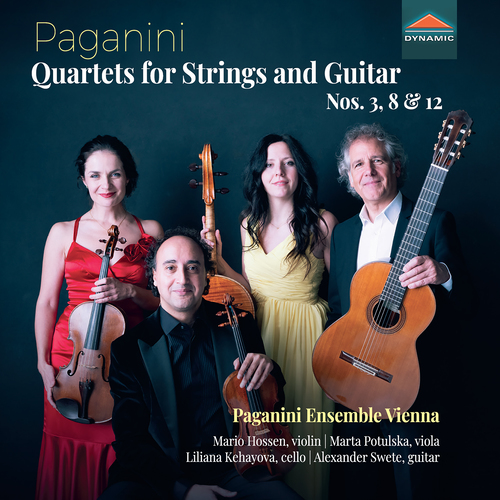
Of Paganini’s fifteen quartets with guitar only six were published during his lifetime. They represent his finest body of chamber compositions as can be heard in the three quartets for violin, viola, guitar and cello, Op. 4. Of them, No. 3 in A major is a masterpiece, with French-styled inspiration, rich lyricism and piquant invention, while the virtuosic, almost concertolike No. 8 in A major embodies his quatuor brillant writing, with its Rossinian resonances. No. 12 in A minor is the most ‘symphonic’ of the three, containing formal originality, one of the most moving of Paganini’s slow movements, and his most serious-minded finale.
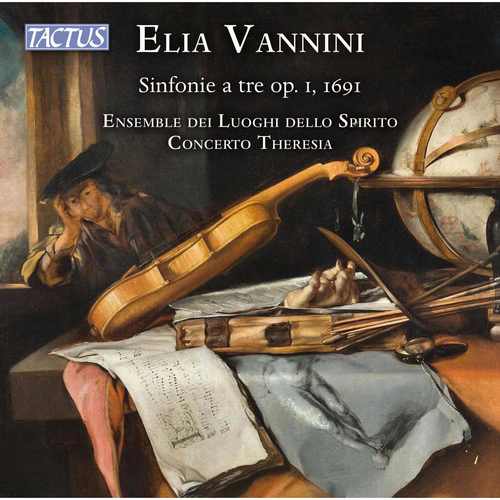
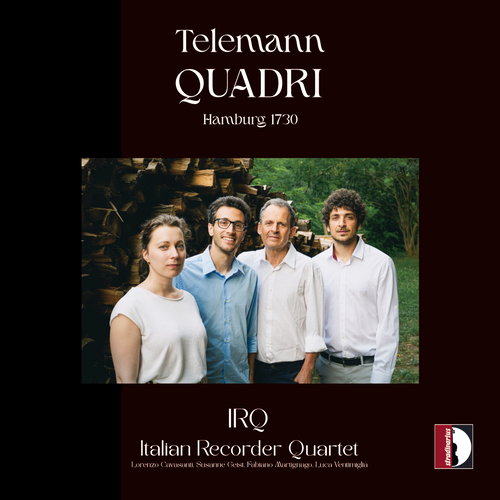
Discover the groundbreaking trio sonatas of Elia Vannini, a master of the Italian Baroque. Born in 1644, Vannini served for over two decades as maestro di cappella in Ravenna, yet his Opus 1, published in 1691, broke from tradition. Instead of sacred vocal music, he presented these inventive Sinfonie a Tre – a bold, instrumental statement that showcased his skill as a composer and educator. This recording by Concerto Theresia brings Vannini’s revolutionary and elegantly crafted works to life, offering a fascinating glimpse into the sound world of 17th-century Italy. A must-listen for aficionados of early music and Baroque discovery.
Only available for download and streaming.
Only available for download and streaming.
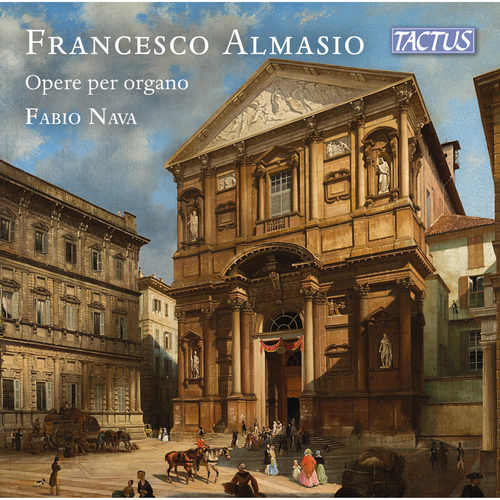
Francesco Almasio (Milan, 21 April 1802 – Milan, 14 November 1871) was one of the main protagonists of the musical life of Milan during the nineteenth century and is considered the father of the reformation of sacred music in Italy. He was Kapellmeister and organist in several Milanese churches, and the very first teacher in the organ course at the Conservatory of Milan: the few surviving manuscripts of sacred music compositions of his, and the printed corpus of his organ pieces, reveal the everyday life of his liturgical and teaching activities. Francesco Almasio was born in Milan to Pietro Almasio (1780–1846), from Legnano, who also was a Kapellmeister and organist, and Maria Porri; his father made him study the piano, the organ and composition. Organist Fabio Nava uses the historic Bossi-Urbani organ from 1886 in the Prepositurale Church of Leffe (Bergamo) to best render this recording of Francesco Almasio’s organ works. In addition to the original compositions, the organ transcriptions by the Milanese composer are particularly interesting. In addition to famous pieces such as Eja Mater from Rossini’s Stabat Mater and the symphony from Giuseppe Verdi’s La Forza del Destino, he surprisingly adapts two movements from Beethoven’s Septet for organ, enriching the sacred and liturgical repertoire of his time with chamber music genre.
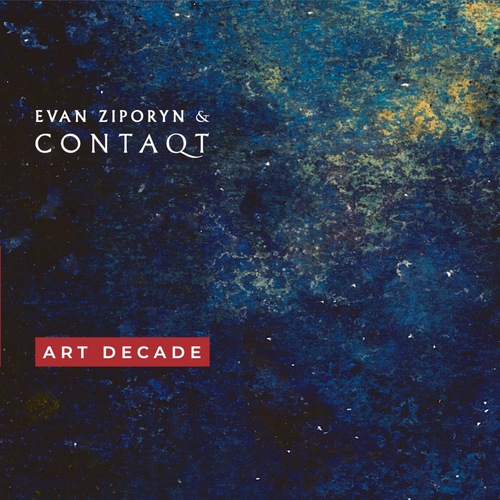
It’s impossible to overstate how the ambient and “art rock” oeuvre of David Bowie, Brian Eno and Robert Fripp influenced a generation; add the painterly minimalism of Harold Budd, whose own place in the firmament shimmers with gems like Avalon Sutra and, with Eno, the epic Ambient 2: The Plateaux of Mirror, and we have all the ingredients for the exploratory wonders that permeate the aptly titled ART DECADE (after Bowie’s haunting meditation from 1977’s Low).
The album is a wide-ranging collaboration that unites composer, producer, arranger and multi-instrumentalist Evan Ziporyn with Toronto’s renowned ContaQt ensemble, led by percussionist Jerry Pergolesi. Featuring all-new interpretations of these classics from the early ’70s psych-prog output of King Crimson, Bowie’s famed “Berlin trilogy,” and Eno’s Ambient 1-4 series, Art Decade is more than just a tribute album.
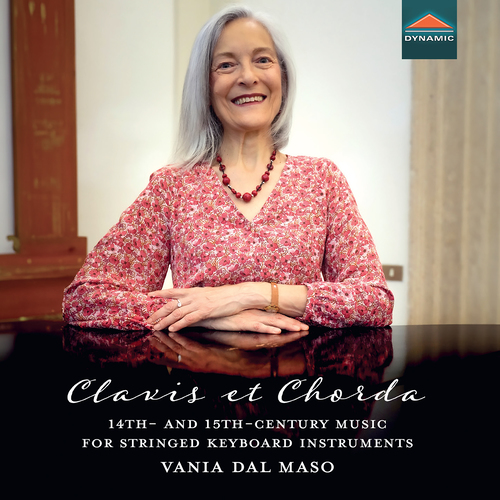
Performer and scholar Vania Dal Maso has constructed an innovative programme exploring music for stringed keyboard instruments from the fourteenth and fifteenth centuries. Based on the study and interpretation of sources, both on the instruments’ construction and musical interpretation, she explores the profoundly different sounds and tone-colours of the clavichord, hammered clavicymbalum and clavicytherium. The music ranges widely in forms and genres from across Europe, including music sourced from the oldest-known manuscript for keyboard instruments – the Robertsbridge Codex (c. 1320) – to create the widest possible stylistic panorama of keyboard music of the time.
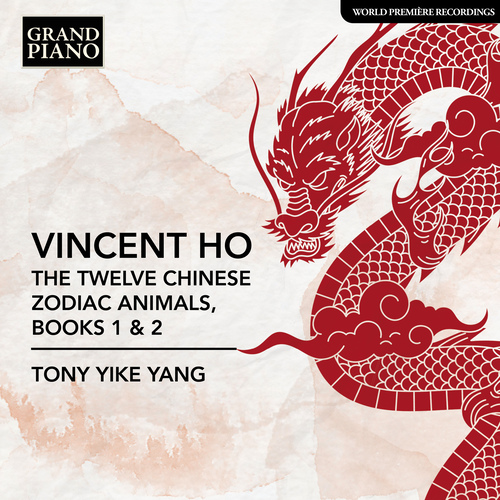
The music of multi-award-winning composer Vincent Ho has been described by The New York Times as ‘brilliant and compelling’, not least for his music’s beauty and expressive breadth. Ho wrote The Twelve Chinese Zodiac Animals as a gift for his eight-year-old daughter, to enrich her musical education as she learned the piano and to introduce her to Chinese cultural themes and performance practices in pianistic form. The cycle presents the musical spirits of the animals with captivating musical caricatures in two books, the second of which is a selection of preludes and fugues for more advanced players. They are performed by Tony Yike Yang, one of Canada’s finest young pianists and the youngest laureate in the history of the International Chopin Piano Competition in Warsaw.
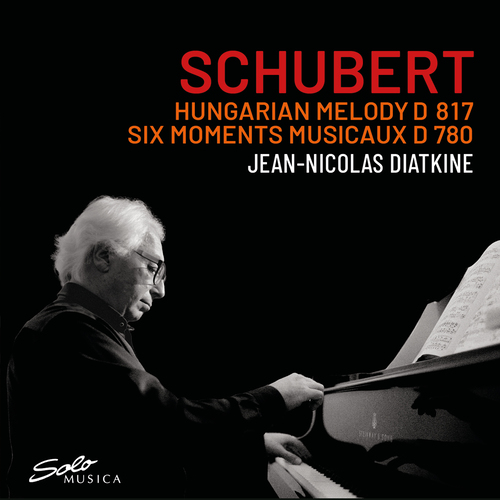
Listening to Schubert’s music is an invitation into an enchanting, imaginary world. Its allure is so powerful that both listener and performer are swept away, surrendering to a dreamlike state that momentarily eclipses reality. Paradoxically, creating this very sense of enchantment demands the opposite from the performer: exceptional technical mastery and a meticulous attention to the score's finest details. In the course of my research, I found confirmation throughout the pages that this power of suggestion was a natural and involuntary effect of the composer’s personality. His friend, the singer Vogl, wrote: “There are two ways of composing: one, as in Schubert’s case, comes into the world in a state of clairvoyance or somnambulism, without the intervention of the composer’s free will, but only as he must, following the force majeure of his inspiration. The other way is made up of free will, reflection, effort and science.” (B. Massin, Franz Schubert, p. 460). The Six Moments Musicaux D.780 probably composed between 1823 and 1824 and published in 1828, are divided into two books, each containing three pieces.
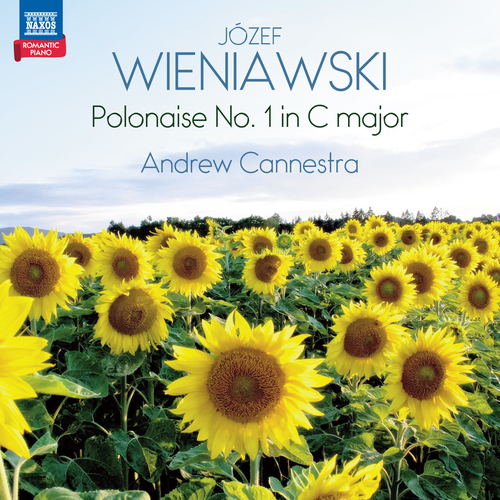
Józef Wieniawski, younger brother of Henryk, was a prolific Polish composer and virtuoso pianist renowned throughout Europe. After studies in Paris he spent two years in Weimar studying with and absorbing the compositional style of Franz Liszt – Wieniawski’s work combines the pianistic flair and poetic intensity of both Liszt and his fellow countryman Chopin. These qualities can all be heard in the virtuoso Polonaises and the tragic Ballade as well as the Piano Sonata in B minor – the pinnacle of Józef Wieniawski’s many contributions to the piano repertoire. Andrew Cannestra’s recording of Polonaise No. 1 is available for streaming and download on a digital single (9.70388).
A programme uniting two sonatas from different eras offers a fascinating study in contrast and connection. The works by Schubert and Berio are not only separated by centuries but also happen to be the final sonatas published in their composers’ lifetimes. A water-themed piece serves as a bridge, connecting their distinct worlds.
Schubert’s Sonata in G major, D. 894, inhabits a poetic world of profound ambiguity, caught between smiles and melancholy. A known innovator, Schubert often challenged the traditional four-movement structure he inherited.
Centuries later, Luciano Berio also pushed the boundaries of the form in Sonata (2001), the capstone of his piano repertoire. Berio described its structure as a series of distinct blocks unified by recurring transitional elements. He likened the experience to a train journey: while the landscapes outside are ever-changing, the steady rhythm of passing pylons provides continuity, all observed from the same window.
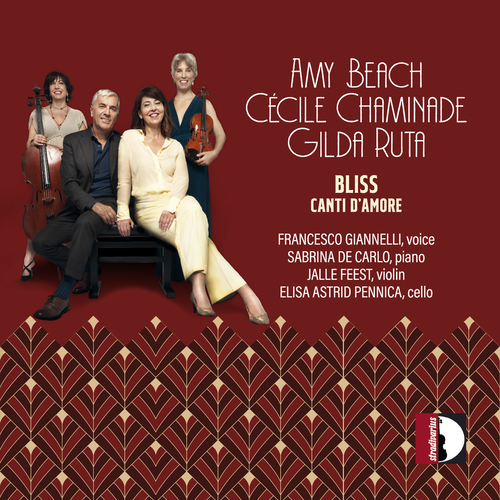
‘Why our title, Bliss? It is a word that evokes a joy so perfect, so blessed, that it transcends daily life and is distilled into the work of art. The songs contained in this album explore the sentiment of love in its various shades, from feelings of desire to regret for absence, from passion to surrender, from tenderness to melancholy. Amy Beach, Cécile Chaminade and Gilda Ruta transformed the evocative power of love poetry into music, capturing in their canti d’amore moments of pure ecstasy and heartrending beauty. But Bliss refers not only to the ecstasy of love; it is also the ecstasy of artistic creation, the act of expression by which these composers gave voice to their sentiments, unfettered and in absolute sincerity.’ – Sabrina De Carlo
What distinguishes Fauré’s Requiem from numerous other settings of the requiem text is its rather intimate, restrained, almost chamber-music nature, a ‘lullaby of death’, as it has also been called, initially more as a criticism of a work that for most of the time avoids depicting the dread of death and the Last Judgement. Fauré’s reply ‘But this is how I feel about death: as a happy liberation, as a striving for happiness in the hereafter rather than as a painful transition’ not only perfectly describes essential characteristics of his Requiem, but also reveals it to be a very personal expression of the composer’s very own artistic nature.
Only available for download and streaming.
Gabriela Lena Frank’s Conquest Requiem brings to life the complexities of colonisation, identity and survival through the story of Malinche, a Nahua woman from the Gulf Coast of Mexico who was given to the Spaniards as a young slave. Using a fusion of Western liturgical traditions, indigenous Nahua poetry and Latin influences, this powerful work deals with the fundamental question of how to reconcile a legacy of historical violence that continues to shape modern issues. Antonio Estévez’s wildly popular Cantata Criolla – considered one of the greatest choral pieces of the 20th century in Latin America – is the composer’s most celebrated work.
In Die Erfüllung, Op. 183, Vagn Holmboe (1909–96) gives voice to Novalis’ vision of a world transformed by love and spirit. Written for soprano, baritone, double choir, and winds, the music breathes with luminous serenity and cosmic wonder. Kathrin Lorenzen and René Bloice-Sanders join the Mogens Dahl Chamber Choir and the wind quintet V Coloris under Mogens Dahl in this radiant rediscovery.
Only available for download and streaming.
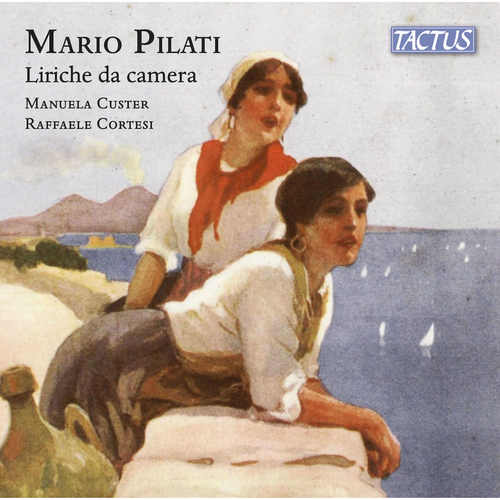
Mario Pilati was born in Naples on 16 October 1903. His life was very short, intense and troubled. Together with his siblings, he was introduced as a child into the study of music, as was the custom in Neapolitan upper middle-class families. He immediately showed a great talent as a pianist and an overflowing creativeness: at the age of 13 he had already decided that music was to be his profession. His father attempted to thwart his artistic calling by making him enrol in a technical school, but, with the help of his mother, he managed to go on with his musical studies: at the early age of 20 he took a diploma with honours in composition at the Conservatorio S. Pietro a Majella of Naples, under the guidance of Antonio Savasta. He immediately looked for a job, in order to become independent of his family: his father not only disapproved of his musical career, but also never accepted his engagement with Antonietta Margiotta, whom he married in 1928 and with whom he had three daughters, Annamaria, Laura and Giovanna. The award-winning specialists Manuela Custer and Raffaele Cortesi (already protagonists of the recent recording Liriche su testi di Dante, TC840003) are the interpreters of the rediscovery of the vocal chamber music of the brilliant Neapolitan composer.
![TOBIAS, R.: Joonas [Oratorio]](https://cdn.naxos.com/sharedfiles/images/cds/hires/ODE1456-2D.jpg "TOBIAS, R.: Joonas [Oratorio]")
This release is the world première recording of Estonia’s first major work in art music in its original score and sung in Estonian. Rudolf Tobias (1873–1918) is widely celebrated in Estonia as the ‘father of Estonian music’ and considered as the first Estonian composer to have obtained a degree in composing after completing his studies at the St Petersburg Conservatoire. In this recording the composer’s magnum opus, Joonas (Jonah Oratorio) is performed by a first-class Estonian line up led by the award-winning ensembles Estonian Philharmonic Chamber Choir, Tallinn Chamber Orchestra and conductor Tõnu Kaljuste.
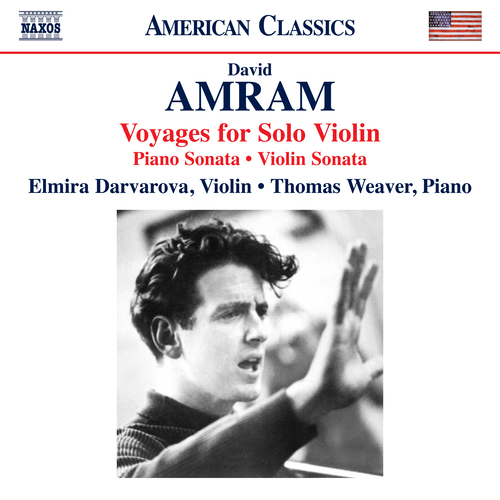
David Amram’s career as a versatile composer, conductor and multi-instrumentalist has spanned more than 70 years. Recorded here in its world premiere, Voyages for Solo Violin in three movements evokes ancient Egypt, Native American and African roots music and, in the words of the composer, “the tradition of the fiddler as a keeper of the flame.” Ranging from prayer-like melodies to blues and polyrhythms, the Piano Sonata is one of the most jazz-influenced of any 20th-century work in this genre, while the Violin Sonata brings classical and jazz idioms together in music that inspired a collaboration with the writer Jack Kerouac.
This recording project is dedicated to two composers who played a crucial role in shaping Central German music in the 18th century: Johann Ernst Bach and Georg Anton Benda. Capella Jenensis and Ælbgut present their works side by side for the first time, exploring their stylistic characteristics and their influence on musical developments in Thuringia. Alongside Bach’s cantata Mein Odem ist schwach, once attributed to Johann Sebastian Bach, the album features rarely performed symphonies and vocal compositions. With newly prepared editions, this music is now brought back to life–a significant contribution to rediscovering a nearly forgotten musical heritage.
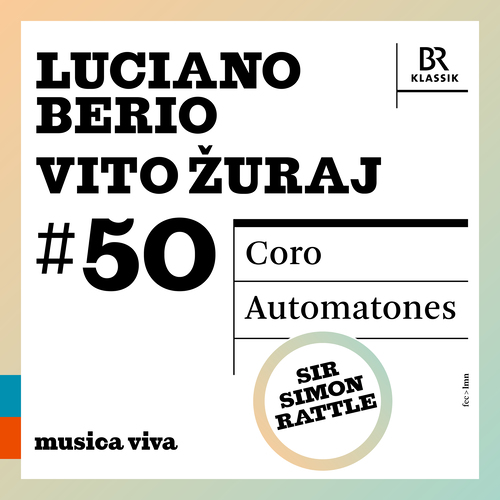
From the outset, Sir Simon Rattle’s conducting career has been marked by a spirit of innovation and renewal – and contemporary music in all its facets continues to play a significant role in his work. So it was only natural that, upon taking up his post as chief conductor of the Bavarian Radio Chorus and Symphony Orchestra, he should dedicate a concert to musica viva. The programme featured the world premiere of Vito Žuraj’s Automatones as well as Luciano Berio’s Coro. Sir Simon Rattle has conducted the latter piece several times before, but this performance marks the first recording under his baton. This is due to the unique demands that the composition places on recording technology: choir singers and orchestra musicians are positioned in pairs on the podium to overcome the visual and acoustic separation of choir and orchestra voices. This presented a particular challenge to the Bavarian Radio recording team, but they rose to it successfully, as can be heard on the new album from BR-KLASSIK.
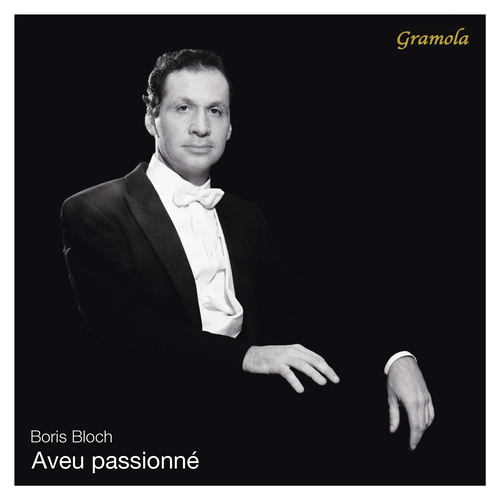
‘This recording, as well as the most recent album created under the number 10, bears the name Aveu passionné, on the one hand because of the Tchaikovsky piece of the same title (“Passionate Confession”), and on the other, because of my most profound connection to all the works gathered here.
“Of his diligence,” it says in Lessing’s Hamburg Dramaturgy, “everyone may boast.” Well then: this edition documents nothing more and nothing less than the eternal and unattainable goal of reaching for the stars. Underlying all art is the desire to burst the boundaries of human life in order to attain higher understanding.
Robert Musil posed the question: “What remains of art?” He answered it himself succinctly: “We remain, as changed beings.” ’ – Boris Bloch
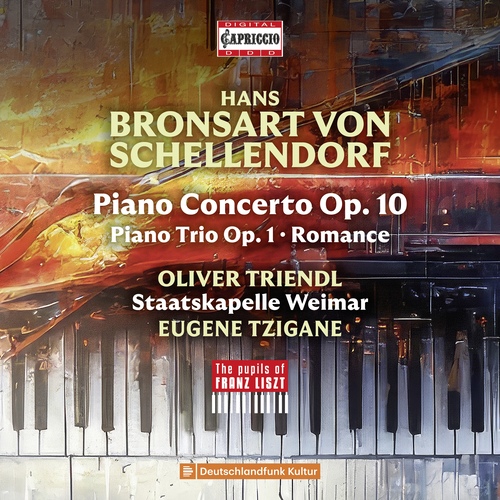
It’s only recently that Bronsart von Schellendorf’s career as a composer has been more widely acknowledged. Liszt, however, was aware of Bronsart’s prowess, referring to his orchestral work Frühlings-Fantasie as ‘beautiful and invaluable’ and later declaring ‘I value him as a character and a musician.’ Even a cursory listen to the Piano Concerto reveals a composer working in ambitious dimensions and with an extrovert musical language. Rich in melodic and emotional content, Bronsart’s piano writing gives ample opportunity for virtuoso display while delivering his musical arguments with power and precision. Bronsart's good friend Hans von Bülow, another pupil of Liszt, had toured the work from 1870 onwards. He took the concerto abroad, performing it at a concert in Manchester under the baton of Charles Hallé in 1877, by which time the work had secured a foothold in the repertory, albeit temporary.
Hardenack Otto Conrad Zinck (1746–1832), a student of C. P. E. Bach, blended empfindsamer Stil with Italianate elegance and Danish folk elements. This album presents his ‘Six Keyboard Sonatas and an Ode’ (1783), performed by the Danish clavichordist Mads Damlund, revealing Zinck’s expressive imagination through sparkling keyboard textures and lyrical melodies, offering a delightful rediscovery for modern audiences.
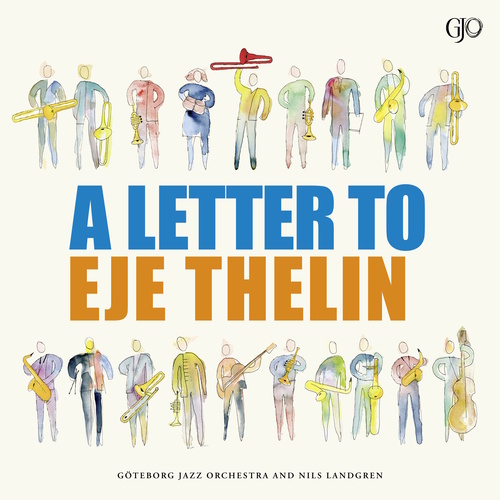
With the release “A Letter to Eje Thelin,” the Göteborg Jazz Orchestra (GJO) has recreated the brilliant Swedishtrombonist Eje Thelin’s (1938–1990) final suite, “Raggruppamento,“ as it was intended–with the trombone infocus. Nils Landgren is the present-day executor.Landgren, who is now one of Sweden’s foremost trombonists, participated as a young musician in the trombonesection during the Radiojazzgruppen’s (RJG) premiere performance of the suite in 1989. He had even takentrombone lessons from Eje Thelin and fondlyremembers Eje, who was present at the premiere but marked byillness and thus unable to play himself. Eje’s part was played at the premiere by guitarist Göran Klinghagen.According to Eje’s son, John Thelin, Nils Landgren is today the foremost interpreter of his father’s music, and hecan clearly hear Eje’s influences in Nils’s trombone playing.
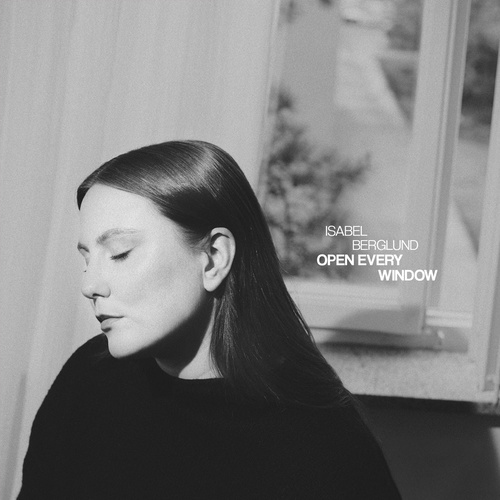
Composed and written entirely by the artist, Open Every Window offers a contemporary take on vocaljazz that feels both timeless and uniquely personal. Through soulful melodies and honest lyrics,drawing inspiration from icons like Dianne Reeves, Stevie Wonder and Carole King, the albumexplores themes of identity, connection and creative freedom. With intimate vocal performances, thoughtful arrangements, and a clear artistic vision, Open Every Window establishes Isabel Berglundas a compelling new presenceon the Scandinavian and international jazz scenes
![OFFENBACH, J.: The Tales of Hoffmann [Opera]](https://cdn.naxos.com/sharedfiles/images/cds/hires/OA1395D.jpg "OFFENBACH, J.: The Tales of Hoffmann [Opera]")
Journeying back to his school days, Hoffmann relives his childhood romance with Olympia, a model student in every sense. Doomed love follows him into adulthood, where the dancer, Antonia, is taken from him too soon. Meanwhile, the sensual courtesan Giulietta has her own secret agenda. As memory and fantasy becomes increasingly blurred, will Hoffmann find the enigmatic Stella before it is too late?
Olivier award-winning director Damiano Michieletto returns to The Royal Opera for a new production of Offenbach’s The Tales of Hoffmann. Conductor Antonello Manacorda, with whom Michieletto previously collaborated on Carmen, leads Juan Diego Flórez in the role of the poet E.T.A. Hoffmann, Alex Esposito as the Four Villains, Julie Boulianne as Nicklausse and Ermonela Jaho, Olga Pudova and Marina Costa-Jackson as Hoffmann’s unforgettable trio of lovers.
![SCARLATTI, A.: Il Trionfo dell’onore [Opera]](https://cdn.naxos.com/sharedfiles/images/cds/hires/DYN-38077.jpg "SCARLATTI, A.: Il Trionfo dell’onore [Opera]")
Alessandro Scarlatti’s Il trionfo dell’onore (The Triumph of Honour) – his only comic opera – was first performed in Naples in 1718. With its distinctive recitatives and expressive arias, and a cast including four pairs of lovers, it can be considered one of the forerunners of opera buffa. The central character is the unrepentant seducer Riccardo Albenori, a Don Giovanni-like figure though without the villainous aura. In this opera, Scarlatti ensures not only perceptive psychology but a rich variety of arias, duets and quartets that generate the work’s pathos as well as its humour and eroticism.
![STRAUSS, R.: Intermezzo [Opera]](https://cdn.naxos.com/sharedfiles/images/cds/hires/2.110780.jpg "STRAUSS, R.: Intermezzo [Opera]")
Richard Strauss described his two-act opera Intermezzo as a ‘bourgeois comedy with symphonic interludes’. The soprano role of Christine with her shimmering cantilenas represents Strauss’s wife Pauline, while the successful Court Conductor Robert Storch is Richard Strauss’s alter ego in a reality drama that was avant-garde for its time. This acclaimed production from director Tobias Kratzer brings Intermezzo into the present day, highlighting Strauss’s own clever switches between reality and fiction with stunning visual effects and a superbly characterful cast.
Make sure to subscribe to Naxos newsletters for other great offers.